

Protecting Customer Privacy: How to Remove PII from Call Center Transcripts

In our previous blog note, we discussed a methodical approach to converting call center audio recordings into text on an industrial scale. This capability is a game changer for companies in many different industries since it allows them to obtain relevant customer data (customer satisfaction, churn reason, etc.) that only a few years ago was inaccessible and used to take a lot of human effort and resources to unlock.

One of the key points to be compliant with current regulations is the importance of removing sensitive information about the users from the datasets used with analytical proposes. This sensitive information is what we call PII (Personal Identifiable Information). If this data is not properly handled or removed from the datasets used to extract users’ insights, it may result in costly lawsuits against businesses. This article will discuss different techniques to remove PII data from audio conversations previously converted to text “dialogs.”

Different techniques to remove PII information

Plenty of tools are available on the market to remove PII information. All these tools perform the same function but with different techniques under the hood, varied results, and varied costs. The core functionality is to take a text input that “contains” sensitive information and return an anonymized text. These tools also allow the user to define which PII attributes should be considered in the scope for anonymization (first names, surnames, phone numbers, emails, IP, etc.). Figure 1 shows a graphical representation of how a PII removal tool should work.

Figure 1: an example of how a PII removal tool works.

Until recently the best practice was to utilize a rules-based system to look for PII attributes, tag/treat those attributes as early as possible in the data ingestion processes that moved data into the Enterprise for processing. All of this is to protect customers’ confidentiality and reduce other types of business risks. 

Before modern machine learning systems, rule-based systems were the standard way to anonymize data. These systems use a set of rules to define if a word belongs to a certain entity type (in this case, these entities can be names, email addresses, phone numbers, etc.) and mask the input text based on these rules. However, this kind of solution implementation has limitations and maintenance costs as new attributes come into the business:

  1. Rigidness: the rule-based systems will catch only the entities’ values that the rules defined by the user comprehend. In other words, they are rigid. Because of that, if a new entity value doesn’t fulfill one of the predefined rules it won’t be caught by the system. For example, if the user tries to catch names by using a rule (a fixed list of names), if an example with a name that isn’t included in the rule’s list, then the system won’t mask that new value as a name.
  2. Contextual limitations: some names can have another meaning (being a noun or an adjective) depending on the context. For example, Rose is cleaning the vase. Depending on the context, a Rose can be a name or a noun (the flower). These kinds of cases take a lot of work to catch for rule-based systems.

As Large Language Models are becoming more widely available and affordable to use, modern AI-based PII systems tackle these problems by taking into account the labels that may accompany the PII attribute and even the context where the PII attribute(s) are embedded. Because of that, their accuracy in finding and mapping these PII entities is much more accurate than the old-fashioned systems.

In this article, we will evaluate two different approaches to finding PII fields: classic entity recognition systems and LLM-based systems. The entity recognition systems look at a word context to define whether that world is a PII field or not. In this case, the tool used was Google DLP (Data Loss Prevention). This tool has an entity recognition model that recognizes up to 150 different types of fields with sensitive information. On the other hand, the LLM-based systems use an LLM and a prompt designed for the PII recognition task and mask the PII values detected in the piece of text given as input. One of the key advantages of this approach is that it allows the user to define custom PII fields to be masked (outside, for example, the 150 default ones available in Google DLP) by simply modifying the prompt used for this task. Customization is the key advantage of this approach.

The benchmark

For this benchmark, we used the pii-masking-200k dataset. This is a public dataset that contains 200,000 pieces of text with PII data labeled. This dataset contains up to 54 different PII categories and the pieces of text are in four different languages (English, French, German, and Italian). It provides a comprehensive source of truth for model comparison since it contains many different PII categories in many languages.

For this particular benchmark, we focused on five PII categories: first name, last name, email address, phone number, and address. This constraint reduced the sample size to 3826 elements. For each estimator and each PII category, we quantified the number of times when that category was correctly and incorrectly found. We considered that a piece of text is incorrectly labeled when the model doesn’t assign the expected label and when the model assigns an incorrect label (i.e.: an estimator masks Mouriño Street as [LAST_NAME] Street).

As we mentioned before, we used Google DLP, Data Loss Prevention, to represent the classical entity recognition models. For the LLM-based approach, we tested many different models using the same prompt. These models are GPT 3.5, GPT 4, GPT 4o (OpenAI), Anthropic Claude v2 (AWS), Gemini 1.5 Flash, and text-unicorn@001 (Google Cloud). Since some improvement can be obtained by customizing the prompt for each model, the idea behind this experiment is to separate the poor-performing LLMs from the high-performers. The obtained results are displayed in Table 1. The detailed results by each category can be found in Table 2 to Table 8 (see the appendix).
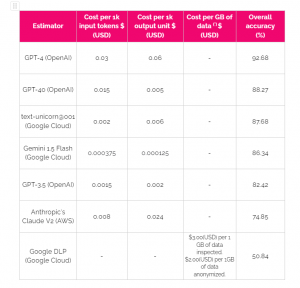
Table 1 – benchmark results summary. The cost data was updated on 2024-06-26. OpenAI and AWS models’ costs are expressed per 1K tokens whereas for Google models are per 1K characters

The main takeaways from this benchmark are:

  1. The estimator with the best performance is the GPT-4-based system, and the one with the worst performance is Google DLP.
  2. If we take into account the price, the system with the best price-performance trade-off is the Gemini 1.5 Flash-based system. This is because it costs 10 times less than the GPT-4-based one and it has a performance only 6% lower if we consider the overall accuracy.
  3. For Google DLP, it’s particularly surprising that it is unable to catch any address value. By doing a deep dive into the examples, we found out that it tends to confuse surnames as addresses (i.e.: Johnson Street is anonymized as [SURNAME] Street).
  4. All the systems have a great performance for email address (the model with the worst performance, GPT-3.5, has a 94.13% accuracy for this label) recognition.

Choosing the Right PII Removal Method

In this article, we compared several estimators to find PII attributes in text and to remove them. This is a crucial step in any call center analytics system (and, in general, in any system that works with text data with sensitive information) since it allows the removal of users’ personal information.

We observed an important variability in the performance of the two solution approaches and across the different LLMs.

If we look only at the overall accuracy, the best performer estimator is the GPT-4-based system (OpenAI), and the worst performer is Google DLP (Google Cloud). However, if we include the cost in the equation, the best option by far is the Gemini 1.5 Flash-based system (Google Cloud Platform). This anonymization system has an overall accuracy comparable to the GPT-4-based system but for a fraction of the cost (10 times less).

PII identification, tagging, and treatment performance should not be forgotten about. Cloud and service accounts require that quotas be adjusted according to performance demands for the given use cases and volumetrics being targeted.

For each particular use case, it is important to take into account the specific requirements for it. Because of that, it is important to assess the required accuracy to be compliant with the product requirements, the cost that this accuracy implies, and accepted latency (if the system will be a stream system, then the latency will be an important factor in choosing the best-suited estimator for the use case).

The latest relevant aspect to point out is that there is no perfect model. This idea is crucial for PII remotion use cases because, in some situations, very demanding standards regarding data anonymization must be fulfilled. Because of that, to be fully sure that the system does its trick in the way it should, from Making Science we always recommend keeping the human in the loop. The presence of human validation of the output generated by the LLM-based system will ensure that the solution fulfills the minimum requirements regarding PII entities’ remotion.

Accuracy by label by model appendix
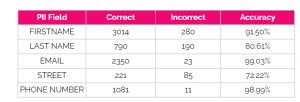
Table 2 – GPT-4 accuracy by PII field
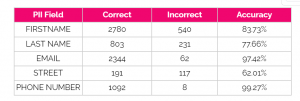
Table 3 – GPT-4o accuracy by PII field
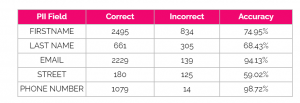
Table 4 – GPT-3.5 accuracy by PII field
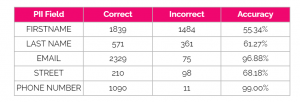
Table 5 – Anthropics’s Claude v2 accuracy by PII field
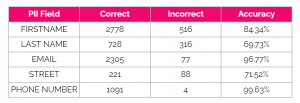
Table 6 – text-unicorn@001 accuracy by PII field
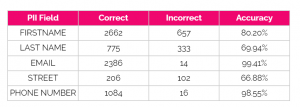
Table 7 – Gemini Flash 1.5 accuracy by PII field
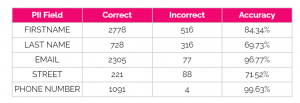
Table 8 – test-unicorn@001 accuracy by PII field
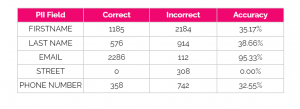
Table 9 – Google DLP accuracy by PII field

Conclusion

This exploration into PII removal from call center transcripts reveals a critical takeaway for businesses: achieving both accuracy and cost-efficiency is possible. While the advanced capabilities of GPT-4 delivered accuracy, the cost factor cannot be ignored. This is where Gemini 1.5 Flash shines, providing top-notch performance at a significantly lower cost, making it a compelling solution for organizations of all sizes.

At Making Science, we understand the importance of balancing powerful AI solutions with robust security measures. We are committed to helping businesses unlock the full potential of their call center data while upholding the highest ethical and security standards. Our team of experts can help you develop and implement a tailored PII removal strategy that leverages the latest technologies, including Gemini 1.5 Flash, while ensuring complete and reliable data anonymization. Contact us to learn how we can tailor a solution to your specific needs.
Unlocking Business Value with Retrieval-Augmented Generation: The Future of GenAI is Contextual

The promise of Generative Artificial Intelligence (GenAI) seems limitless -from crafting compelling marketing copy to answering complex customer queries, but while large language models (LLMs) are impressive, they often lack the specific, up-to-date knowledge needed to truly deliver on their potential – especially in a business context. This is where a new technology, Retrieval-Augmented Generation, or RAG, steps in. This innovative approach is transforming how AI systems process and deliver information, bridging the gap between impressive language generation and real-world application. 

The Problem with Generic AI

Imagine deploying a chatbot trained on a general LLM to answer customer questions about your products. While it might eloquently describe the general concept of your offerings, it could falter when faced with questions about specific features, latest updates, or stock availability. This is because LLMs are trained on massive datasets that may not include your organization’s unique information or recent updates. 

The result? Inaccurate or irrelevant responses that frustrate users and erode trust in your AI implementation.

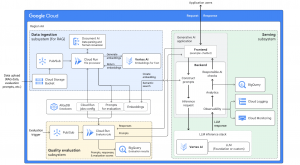
Infrastructure for a RAG-capable generative AI application using Google Cloud services

RAG: Injecting Context and Accuracy into GenAI

RAG is a technique that enhances the capabilities of Generative AI and large language models (LLMs) by combining them with external knowledge sources. Think of it as giving an AI system the ability to fact-check and update its knowledge in real time. Google’s recent Data and AI Trends 2024 report highlights the growing importance of operational data in unlocking the potential of generative AI for enterprise applications, making RAG a crucial technology for businesses looking to leverage GenAI.

How RAG Works: A Simplified View

  1. Knowledge Integration: All relevant data is transformed into a standardized format and stored in a searchable knowledge library.
  2. Vectorization: Advanced algorithms convert this information into numerical representations called vectors embeddings, enabling efficient searching and retrieval.
  3. Query Processing: When a user asks a question, RAG translates the query into a vector and searches the knowledge library for relevant information.
  4. Contextualized Response: The LLM receives both the user’s query and the retrieved contextual information, generating an accurate, specific, and up-to-date response.

Key Benefits of RAG for Your Business

Most importantly, RAG enhances the accuracy and relevance of AI-generated responses by providing users with precise answers grounded in the organization’s specific data, boosting trust and satisfaction. It also enables real-time information access, equipping AI with the latest data to ensure responses are always current and relevant—a crucial capability for dynamic fields like finance or customer service. 

Moreover, RAG can lead to significant cost savings. By indexing relevant information and retrieving only the most pertinent data to answer a question, RAG allows the use of much smaller prompts. This is particularly advantageous when dealing with large datasets, such as an entire website. New models like Gemini-1.5 can handle up to 2 million tokens, but calling such a model for every simple query would be prohibitively expensive. RAG optimizes this process, making it more cost-effective.

By delivering personalized and context-aware interactions through chatbots, virtual assistants, and other GenAI-powered applications, RAG can significantly improve the customer experience. Furthermore, RAG empowers employees with access to comprehensive and contextualized information, facilitating better-informed decisions and streamlining decision-making processes across the organization.

Examples of RAG in Action

The applications for RAG are vast, offering exciting possibilities for businesses across various sectors. Here are a few examples of how RAG is bridging the gap between powerful language generation and real-world problem-solving:

  • Elevated Customer Service with Smarter Chatbots: Imagine chatbots that go beyond generic responses. RAG empowers chatbots to tap into a wealth of knowledge, pulling up specific product details, troubleshooting guides, or even personalized order information. This means faster, more accurate resolutions for customers and reduced strain on human support teams.
  • Data-Driven Insights from Social Listening: Social media is a goldmine of customer sentiment, but sifting through the noise can be overwhelming. RAG can supercharge social listening by not only identifying brand mentions but also analyzing the context and sentiment behind them. This allows businesses to understand customer perceptions, track campaign effectiveness, and identify emerging trends with greater precision.
  • Next-Level Personalization for Loyalty Programs: Generic rewards don’t resonate with today’s discerning customers. RAG can analyze individual customer data, from purchase history to browsing behavior, to tailor loyalty program recommendations and offers. Imagine receiving a discount on a product you’ve recently viewed or being rewarded for consistent engagement with a brand you love. This level of personalization fosters stronger customer relationships and drives loyalty.

Integrating RAG into Existing Systems

While the potential of RAG is immense, integrating it into existing systems requires careful planning and execution. Businesses must consider factors such as data preprocessing, model selection, and parameter tuning to ensure optimal performance. Additionally, organizations should be prepared to address potential challenges, such as data quality issues or the need for specialized hardware to handle large-scale deployments. By working with experienced partners and allocating sufficient resources, businesses can successfully navigate these complexities and unlock the full value of RAG for their specific use cases.

Conclusion: The Future of AI is Contextual

RAG represents a significant leap forward in Generative AI, moving beyond generic language generation towards truly intelligent systems capable of understanding and responding to the nuances of your business. As RAG technology continues to evolve, we can expect to see more sophisticated applications. Future systems might not only provide information but also take actions based on that information, opening up new possibilities for automation and decision-making support.

At Making Science, we understand that the future of Generative AI lies in its ability to process and leverage information within its proper context. While RAG is still an evolving field, its potential to transform business operations is undeniable. As experts in data-driven solutions, Making Science is committed to helping our clients navigate the evolving landscape of Generative AI and unlock the power of technologies like RAG to drive business success.

Unlocking Growth with GenAI: Transforming Marketing, Sales and Customer Service

The recent Making Science and Google Cloud event series delved into the transformative power of Generative AI (GenAI). From text to images, GenAI is revolutionizing how businesses operate and engage with their audiences. However, one area that’s generating immense excitement is conversational AI, particularly its impact on customer service and engagement.

GenAI: A World of Possibilities

GenAI encompasses a range of technologies that enable machines to generate human-quality content. This includes text generation for marketing materials, creating realistic images and videos, and even composing music. The vast applications empower businesses to personalize customer journeys, optimize marketing campaigns, and streamline content creation.

But GenAI’s capabilities extend beyond text and images, venturing into the audio realm. This includes:

  • Speech Synthesis: GenAI can generate realistic and natural-sounding speech from text, enabling lifelike interactions with virtual assistants and chatbots.
  • Voice Conversion: Imagine transforming your voice into different languages or even different voices entirely. GenAI makes it possible, opening doors for personalized audio experiences and accessibility solutions.
  • Audio Editing and Enhancement: GenAI can remove background noise, improve audio quality, and generate sound effects, creating a more immersive and engaging audio experience.

These advancements in GenAI for audio lay the foundation for sophisticated conversational AI applications. By combining natural language processing with high-quality audio generation, businesses can create truly interactive and engaging customer experiences.

The Rise of Conversational AI

Within the GenAI landscape, conversational AI stands out for its ability to revolutionize customer interactions. Powered by natural language processing and machine learning, conversational AI tools like chatbots and virtual assistants can understand and respond to human language in a natural, contextually relevant way. This opens doors to:

  •  24/7 Customer Support:  Say goodbye to limited support hours and long wait times. Conversational AI provides instant responses and assistance, ensuring customers feel heard and valued around the clock.
  •  Personalized Interactions:  Gone are the days of generic responses. Conversational AI tailors interactions based on individual customer preferences and past interactions, creating a truly personalized experience.
  •  Increased Efficiency:  By automating routine tasks and handling a high volume of inquiries, conversational AI frees up human agents to focus on complex issues, boosting overall efficiency and productivity.
  •  Valuable Insights:  Every interaction with conversational AI provides valuable data and insights into customer behavior and preferences. This information can be used to refine marketing strategies further, personalize offerings, and improve the overall customer experience.

Conversational AI in Action: Real Estate and Beyond

The impact of conversational AI is already being felt across various industries. We are helping one of the main leaders of the real estate sector in Spain, an important company in Spain, implement conversational AI to transform property search, virtual tours, and mortgage assistance. Potential buyers can now receive instant answers to their questions, explore properties virtually, and even get pre-qualified for mortgages – all through a seamless conversational interface.

Beyond real estate, the potential applications are endless. Retail giants leverage conversational AI for personalized product recommendations and virtual try-on solutions. Financial institutions use it for account support, loan applications, and fraud detection. The possibilities are limited only by our imagination.

The Future of Customer Engagement

As GenAI continues to evolve, conversational AI will play an increasingly central role in shaping customer experiences. Businesses embracing this technology will be well-positioned to build stronger customer relationships, drive efficiency, and achieve sustainable growth.

Making Science and Google Cloud are committed to helping businesses unlock the power of GenAI and conversational AI. Contact us today to explore how these technologies can transform your customer engagement and take your business to the next level.

Boost your e-commerce with Trust Generative AI

In the competitive world of e-commerce, standing out requires more than just good products. User experience, information accuracy, and the ability to attract and retain customers are crucial. This is where Trust Generative AI (TGAI), a generative AI platform designed to transform the way you run your online shop, comes in. In this blog, we will explore three key value propositions of TGAI: generating product descriptions, creating landings in multiple languages, and developing SEO-optimized category landings.

Product descriptions generation

One of the greatest challenges for an e-commerce business is maintaining accurate, engaging, and up-to-date product descriptions. TGAI uses generative AI to create detailed and persuasive descriptions in a matter of seconds.

Benefits:

  • Scalability: Produces numerous product descriptions quickly, ensuring that each item has a complete and unique description.
  • Accuracy: Generated descriptions are detailed, reducing errors and misunderstandings about the expected product.
  • Attractiveness: By incorporating attractive keywords and phrases, descriptions capture the attention of the target customer.
  • Time-saving: Frees up valuable time that can be spent on other critical areas of the business, for example, creativity.

With TGAI, you can ensure that every product in your catalog has a description that not only informs but also convinces and sells.

Landings in multiple languages

Global expansion is a goal for many e-commerce sites, but the language barrier can be a significant challenge. TGAI facilitates this process by generating landings in multiple languages with the same quality and effectiveness as the original versions.

Benefits:

  • Global Accessibility: Reach a wider audience by offering content in their native language.
  • Consistency: Maintain a uniform message and tone across all markets.
  • Speed: Launch international campaigns quickly without the need for extensive translation.

Break down the language barrier and take your e-commerce to new horizons with TGAI.

SEO-optimized category landings

Landing pages are essential to attract traffic and convert visitors into customers. TGAI generates category landings that are not only visually appealing but are also optimized for SEO, ensuring maximum engagement with consumers.

Benefits:

  • SEO Optimized: Landings are designed with SEO best practices, improving your search engine rankings.
  • Maximized engagement: Relevant and engaging content that keeps users interested and increases conversions by selecting the keywords that drive the most conversions.
  • Flexibility: Quickly adapt landings according to trends and consumer behavior.

With TGAI, you can be confident that each landing page will not only attract traffic but also keep visitors engaged, increasing conversion rates.

Conclusion

In the dynamic e-commerce environment, the ability to adapt and evolve is crucial. TGAI offers a comprehensive solution to improve the user experience, expand your global reach, and optimize your content to attract and retain customers. By integrating your strategy into your e-commerce, you not only simplify complex processes but also position yourself one step ahead of the competition.

Ready to take your e-commerce to the next level? Find out what TGAI can do for you and transform the way you manage your online storefront.


[button color=”accent-color” hover_text_color_override=”#fff” size=”large” url=”www.makingscience.com/contact” text=”Contact Us” color_override=”#ff0067″]

Cloud Strategies for Business Growth and Innovation – Lessons learned from Cloud Maturity Journey Podcast Series

Last week marked the release of the inaugural episode of Cloud Maturity Journey, a podcast series delving into key strategies for establishing a robust cloud foundation for your business. In this debut chapter, we were joined by two remarkable professionals, Israel Olalla, Cloud Customer Engineer Manager at Google Cloud and Miguel Lopez, CTO at Making Science, who, alongside moderator Jaime Desviat, Cybersecurity Analyst at Making Science, discussed the various challenges enterprises encounter when embracing cloud technology, as well as current industry trends and how these challenges are being addressed.

Recent technological trends such as AI, online shopping, and cloud storage have spurred the emergence of cloud technologies. The cloud provides storage when needed, and resources when scarce and enables architectures to be scalable and resilient in times of resource scarcity. Despite this, many companies unknowingly rely on cloud services for everyday tasks such as email accounts, storage, and online meetings.

Furthermore, the cloud has democratized access to resources, allowing resource-constrained businesses to swiftly and affordably access what they need. This has significantly empowered small enterprises to conduct tests and trials previously only feasible for larger corporations.

Challenges and the Talent Gap

Present challenges primarily revolve around the scarcity of specialists. While many individuals possess general qualifications, few have detailed technical expertise on each platform. Consequently, businesses face novel technologies they cannot fully leverage due to talent shortages. Another notable challenge lies in migrating long-standing technologies from legacy environments, often resulting in wasted efforts attempting to improve systems that could be more efficiently rebuilt in the cloud.

Cloud Adoption Trends

Current statistics indicate cloud adoption rates in Spain at 30%, compared to 46% across the European Union. While startups predominantly embrace cloud infrastructure due to financial constraints, larger enterprises struggle more with the transition. Sectors such as tourism, e-commerce, hospitality, and particularly airlines are the latest to migrate to the cloud.

Future Trends and the Evolving Landscape

AI and machine learning will continue to shape the cloud landscape, unlocking greater potential as capacities expand. Multi-cloud environments are emerging, allowing companies to cherry-pick components from various platforms based on their needs and performance. Additionally, the gaming industry is transitioning to cloud environments alongside the proliferation of IoT.

Throughout this episode, we’ve explored how the cloud not only resolves storage and resource challenges but also levels the playing field, enabling businesses of all sizes to innovate and compete on equal footing. However, significant challenges remain, including the shortage of skilled specialists and the complexities of transitioning legacy technologies to cloud environments. Nevertheless, these challenges signal a promising future for cloud technologies.

Looking Ahead

Our ‘Cloud Maturity Journey’ continues in the next episode – a deep dive into optimal cloud architectures. Join us as we explore how a robust architecture can be the cornerstone of business success, impacting competitiveness, profitability, and customer experience.

Listen to the full episode of Cloud Maturity Journey to learn more about building a solid cloud foundation for your business.

Maximizing your content across channels with Google PMax campaigns? ad-machina makes it easier

Unlocking the Potential of Performance Max: ad-machina for PMax is here

In the current competitive and unpredictable landscape, there is the challenge of connecting with customers at the right time and place. To effectively address this challenge with the right message, it is imperative to automate campaigns and optimize performance cost-effectively. The new Google Ads campaign type, Performance Max, offers the opportunity to establish an omnichannel and automated presence. Are you prepared for the amount of content generation required for this type of campaign? Can you afford to manually update all the assets of your company constantly? ad-machina makes it easier.

But first, what is Google Performance Max? 

Google Performance Max represents a paradigm shift in digital advertising, offering businesses an unprecedented level of control and optimization. Leveraging advanced machine learning algorithms, Performance Max enables advertisers to maximize their reach across all Google channels, including YouTube, Display, Search, Discover, Gmail, and Maps. But, it’s not as straightforward as it may seem. PMax campaigns demand a significant amount of content generation, which can prove to be overly demanding for the marketing department. For example, a key challenge in setting up a Performance Max campaign isn’t just about deciding on the bidding strategy or targeting the audience. It’s also about ensuring there’s a diverse range of assets available for each channel and an updated database. This is where ad-machina comes into play, enabling businesses to leverage PMax effectively while efficiently optimizing the team’s time.

What is ad-machina for PMax?

ad-machina arrives to help you optimize all your Performance Max campaigns. We provide substantial benefits such as streamlining the process of optimizing PMax campaigns, enabling companies to customize their ads with text, image and video based on search terms, and automating the adaptation of ads to changes in the business landscape. As a result, it’s crucial to synchronize Performance Max campaigns with these daily tactical and strategic decisions.

It offers three key enhancements:

  • Enhanced assets
  • Adaptive listing groups
  • Fine-tuned search themes and audiences

Enhanced assets

ad-machina for PMax optimizes asset creation through automated processes, minimizing dependence on the creative team. By producing textual and audiovisual content for Performance Max campaigns, the platform incorporates essential details like offers, maximum discounts, minimum prices, and flagship products. Moreover, ad-machina strategically integrates the brand into visual assets, boosting brand visibility. This approach not only guarantees maximum impact but also facilitates precise measurement and optimization of visual creative templates, representing a significant advancement in campaign effectiveness and efficiency.

Adaptive listing groups

ad-machina for PMax transforms listing group management by integrating various data sources. By seamlessly connecting with Google Merchant feed and first-party data such as offer calendars, category manager recommendations, and insights from competitiveness monitoring tools, ad-machina for PMax establishes a strong basis for dynamic product grouping. This fusion of information facilitates agile decision-making, enabling precise adjustment of listings based on factors like price competitiveness, product margins, offer schedules, and category manager priorities. The outcome is a flexible and strategically aligned product lineup, poised for optimal profitability. This pioneering approach offers a substantial competitive advantage in the online marketplace.

Fine-tuned search themes and audiences

ad-machina for PMax employs sophisticated analysis of account search term history to curate the most impactful search themes for each listing group. This process guarantees peak performance by eliminating redundancy among asset groups. Furthermore, ad-machina doesn’t stop at search themes; it also crafts custom audiences. This innovative feature is designed to equip the Google Ads algorithm with the most refined signals available. These signals are characterized by their specificity and coherence, ensuring a targeted approach that maximizes campaign effectiveness. This strategic combination of search themes and custom audiences sets the stage for optimal results in online advertising efforts.

Conclusion

We know that having Google PMax is essential to maximize the performance of your campaigns, however having ad-machina for PMax is taking it a step further. You’ll still be able to communicate with your target audience through the appropriate channels, but with ad-machina, we make it easier for you to find the right message.

Optimizing Your Cloud Journey: Choosing the Right Database on Google Cloud Platform

In today’s data-driven world, businesses require robust and scalable database solutions to manage their ever-growing data. Google Cloud Platform (GCP) offers a robust suite of database solutions designed to meet various needs, from small projects to large-scale enterprise applications. 

Each database model in Google Cloud  is tailored for specific use cases, balancing cost-effectiveness with powerful features like serverless architectures. This approach, where Google Cloud manages the server infrastructure and scaling, is particularly beneficial for databases by simplifying operations, enhancing scalability, and improving fault tolerance, all without manual server management intervention. 

In this blog post, we will explore the diverse range of databases available within Google Cloud, focusing on their unique capabilities and use cases across different categories: relational, in-memory, document, and key-value databases.

Why is this topic important?

Selecting the right database solution is pivotal for companies striving to thrive in the digital era. Efficient data management not only enhances application performance but also ensures seamless scalability to accommodate growing data volumes. Moreover, robust database solutions contribute to improved data security, compliance adherence, and overall operational efficiency. By understanding the features and benefits of different database models within GCP, businesses can make informed decisions that align with their specific requirements and long-term objectives.

The complexity of managing diverse data sets, ensuring high performance, maintaining scalability, and optimizing costs poses significant challenges for businesses. Traditional database solutions often struggle to keep pace with evolving demands, leading to performance bottlenecks, scalability issues, and inflated operational costs. Moreover, ensuring data security and compliance in an increasingly interconnected digital ecosystem presents additional challenges. GCP’s database solutions address these challenges by offering advanced features, seamless scalability, flexible pricing models, and robust security measures, empowering businesses to overcome obstacles and drive innovation.

Google Cloud Database Solutions: A spectrum of power and flexibility

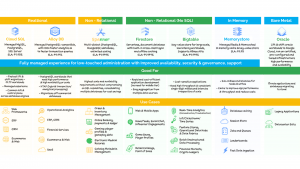
GCP boasts a variety of database models, each catering to specific use cases. Whether you require the versatility of relational databases, the lightning-fast speed of in-memory solutions, or the scalability of NoSQL options, Google Cloud has you covered with four different types of database solutions -Relational, In-Memory, Document, and Key-Value- tailored for enhanced performance, scalability, cost efficiency, simplified management, and robust security. 

From Memorystore’s fast speeds to Cloud Spanner’s global consistency, GCP ensures efficient application functionality and user experience. As data volumes grow, GCP databases seamlessly scale while offering flexible pricing to optimize costs. Fully managed services free development teams from infrastructure management, allowing focus on innovation, while robust security features prioritize data protection.

Relational Databases: Ensuring data integrity and simplifying complex queries for business applications

  1. Bare Metal Solution for Oracle

For users seeking minimal latency and optimal performance, GCP’s Bare Metal Solution is a standout choice. This setup is ideal for Oracle databases, providing direct access to hardware without the abstraction layers typical in virtualized environments. This results in reduced overhead and enhanced efficiency—key for applications demanding high-speed data processing.

  1. Cloud SQL: Fully Managed and Scalable

Cloud SQL caters to those needing a managed relational database with robust features. It supports seamless migrations, integrates flawlessly with other GCP services like GKE and GCE, and ensures data security through encryption both at rest and in transit. Its flexible pricing adapts to various organizational needs, making it a go-to for diverse applications.

  1. AlloyDB: The Popular Powerhouse

AlloyDB stands out in GCP’s portfolio as a highly popular choice, thanks to its advanced features over traditional PostgreSQL. This database supports massive scalability and high performance with its columnar data model and intelligent caching mechanisms. While AlloyDB’s cost might be higher, its capabilities justify the investment for enterprises requiring cutting-edge database technology.

  1. Cloud Spanner: Global Consistency Redefined

Unique among its peers, Cloud Spanner offers a globally distributed design while maintaining strong consistency and a near-perfect uptime SLA of 99.999%. This database is ideal for applications that require reliable, wide-reaching data access without compromising on performance.

In-Memory Database: Enabling real-time experiences and lightning-fast data retrieval for users

For applications requiring ultra-fast data access, Memorystore provides in-memory data storage with response times under a millisecond. Available in both basic and standard tiers, it offers configurations tailored to different reliability and performance needs, including fault recovery and scalable resources.

Document Database: Offering flexibility to store and manage evolving data structures for content-rich applications

Firestore excels in managing document-oriented data with ease. It offers real-time synchronization, offline access, and robust query capabilities, making it perfect for dynamic apps that need to stay updated continuously. Its serverless approach ensures developers can focus on building features without managing the underlying infrastructure.

Key-Value Database: High performance and scalability for frequently accessed data, enhancing responsiveness 

When handling vast amounts of data with low latency, Cloud Bigtable is the solution. It supports extensive scalability and integrates seamlessly with the Hbase API, making it suitable for high-throughput applications such as real-time analytics and ad-tech.

Choosing the Right Database in Google Cloud Platform

The choice of a database in GCP largely depends on specific application needs and budget constraints. While AlloyDB currently stands as a popular choice due to its advanced features and broad adoption within Google’s services, each database model offers unique benefits. Understanding these options will help you select the most appropriate database solution, ensuring your applications run efficiently and cost-effectively.

Making Science: Your Trusted Guide in the GCP Database Landscape

Making Science has a wealth of knowledge and experience in navigating the world of GCP databases. Our team can assist you in assessing your needs, identifying the perfect database solution, and ensuring seamless integration within your GCP environment. Contact Making Science today and unlock the full potential of your data with the power of GCP’s database solutions!

Apigee: Revolutionizing API Management

In today’s digital landscape, APIs (Application Programming Interfaces) are key enablers of innovation, collaboration and digital transformation. They enable seamless communication and data exchange between applications, fostering collaboration and driving the creation of next-generation digital experiences. But managing APIs effectively can be a complex challenge. This is where Apigee by Google Cloud Platform comes in, a tool that empowers users to manage APIs with unparalleled scalability, security, and performance.

What is Apigee?

Apigee is a leading API management solution that empowers businesses to take control of their API strategy, acting as a front-end to backend services through proxies to the APIs themselves. These proxies manage backend service traffic, enforcing policies like rate limiting and security measures. Apigee supports various protocols including REST, SOAP, GraphQL, gRPC, and OpenAPI.

It goes beyond simply managing APIs; it unlocks significant business value by ensuring scalability, security, and performance. This blog post dives into the core functionalities of Apigee and explores how it can transform your business.

Basic Concepts:

What is an API?

APIs (Application Programming Interfaces) are sets of protocols that enable different software applications to interact and share data. They define methods and data formats, establishing a contract for integration within software development. Within Google Cloud, APIs are seen as standardization tools that allow developers to harness GCP services and integrate them seamlessly into their applications.

What is a RESTful API?

RESTful APIs adhere to REST (Representational State Transfer) principles, known for their speed, scalability, and flexibility in data handling. They facilitate data access through HTTP requests and are widely used in contemporary software development for their ability to interface with varied computing resources such as storage, databases, and machine learning services.

Apigee’s Powerhouse Features:

  • AI-Powered Design: Duet AI streamlines API design using natural language, ensuring clear specifications and faster development.
  • Enhanced API Hub: Manage APIs effectively with open-standard specs, auto-generated code (proxies, integrations), and support for Vertex AI/ChatGPT deployments.
  • Advanced Security: Machine learning safeguards your APIs with automated threat detection and actionable recommendations.
  • High-Performance Proxies: Unmatched traffic management and reliability ensure smooth API experiences.
  • Deployment Flexibility: Apigee Hybrid offers hybrid and multi-cloud deployment options for on-premise or cloud environments.
  • Simplified Development: Streamlined tools for design, testing, and documentation empower developers to build robust APIs efficiently.

Apigee: Powering Business Value Through Innovative Use Cases

Apigee goes beyond simply managing APIs; it empowers businesses to achieve real-world results. Here’s how Apigee tackles common challenges and unlocks strategic value:

  • Fuel Cloud-Native Development: Build modern, scalable applications with on-demand scaling and load balancing capabilities.
    Unlock Legacy Data: Modernize legacy systems by creating secure, RESTful APIs that expose valuable functionalities. Apigee’s API proxies help modularize components for easier integration.
  • Unmatched Security and Governance: Secure web applications and APIs with a layered approach combining Apigee, Cloud Armor, and reCAPTCHA Enterprise. Safeguard your APIs with advanced security features like automated threat detection, access controls, and API quota management. Maintain data privacy and ensure compliance with industry regulations.
  • Monetize Your APIs: Generate new revenue streams by creating monetizable APIs with flexible pricing models (subscriptions, freemium, pay-per-use). A developer portal within Apigee streamlines discovery and consumption, fostering a thriving developer ecosystem.
  • Empower Developers: Provide intuitive tools for API design, testing, and documentation, accelerating developer onboarding and innovation. Duet AI further streamlines development by generating code and specifications from natural language descriptions.
  • Bridge the Digital Divide: Act as a bridge between legacy systems and modern cloud applications. Expose legacy functionalities through secure APIs, enabling seamless data exchange and a smoother digital transformation journey.
  • Optimize Operations: Automate API management tasks, freeing up IT resources for strategic initiatives. Gain valuable insights from analytics dashboards to optimize API offerings and ensure smooth, reliable operations with features like traffic management, throttling, and security enforcements.

Investing in the Future

Apigee is a future-proof solution that scales with your business needs. Its multi-cloud support allows for flexible deployment across on-premise, private cloud, and public cloud environments. Additionally, Apigee readily integrates with other Google Cloud Platform services, creating a powerful ecosystem for building and managing scalable, secure, and innovative applications.

By leveraging Apigee’s comprehensive API management capabilities, businesses can unlock significant value, driving revenue growth, fostering innovation, and achieving a competitive edge in the digital landscape.

Unleashing Apigee’s full potential requires expertise alongside the technology. Making Science, a leading digital consultancy can help. Our certified professionals will partner with you to design a customized Apigee plan that tackles your specific needs, from legacy modernization to monetization. Contact us today to unlock Apigee’s power and embark on your future-proof API journey.

Unlocking Agility and Efficiency: A Guide to Serverless Computing with Google Cloud Platform

Cloud computing has revolutionized application development, and serverless computing is emerging as a powerful force within this landscape. This approach streamlines the process by offloading server management to cloud providers, allowing developers to focus solely on core functionalities.

While the term implies an absence of servers, serverless computing  refers to a development model where server provisioning and management become the responsibility of the cloud provider. Developers write code and define triggers (events) that initiate code execution. This frees them from the burden of infrastructure maintenance,  enabling:

  • Faster development cycles: Focus on core functionalities instead of server management.
  • Improved scalability: Automatic scaling based on traffic fluctuations ensures smooth operation.
  • Reduced costs: Pay only for the resources used, eliminating fixed server costs.

Why serverless computing?

With the exponential growth in cloud computing, an increasing number of companies are opting for Serverless solutions. This style of developing and deploying applications continues to transform the tech industry due to its capacity to accelerate development processes, scalability, and efficiency.

Serverless architecture allows developers to focus on application logic without having to manage the underlying infrastructure. Therefore, they are only responsible for programming functions and trigger events. Meanwhile, cloud service providers are in charge of managing the infrastructure, ensuring automatic scaling and billing only for the resources used.

It is worth noting that serverless does not mean there are no servers involved but rather that by adopting this solution, the team gets rid of the responsibility of managing and maintaining the infrastructure, delegating that responsibility to the service provider.

Serverless Tools provided by Google Cloud

Google Cloud stands out as a leader in serverless solutions, offering a robust suite of tools and features for developing and deploying highly scalable web and mobile applications without the necessity of managing servers.

The Google Cloud serverless model scales servers automatically according to traffic and with a pay-as-you-go model: 

  • Cloud Functions: It is a function service that allows you to execute code in response to events (such as HTTP requests, Pub/Sub notifications, or changes in Cloud Storage). You only pay for the runtime of the code, making it a cost-effective solution for short-duration workloads or traffic spikes.
  • Cloud Run: It is a serverless service that allows you to run containers on an infrastructure managed by Google. It is similar to Kubernetes but without the complexity of cluster management. It also adjusts automatically to traffic, billing for the resources used.

Additional Google Cloud Serverless Services:

  • Cloud Storage: Secure and scalable data storage, working in along with Cloud Functions.
  • Cloud SQL: Managed relational database integrated easily with Cloud Functions.
  • Cloud Spanner: Globally distributed database for applications with high availability and scalability requirements.

Benefits of using Serverless Solutions powered by Google Cloud

Among the main advantages provided by Serverless solutions, we can highlight the way in which it allows its clients to save money and accelerate the development of applications.

Google Cloud Serverless clients deploy their applications 95% faster and reduce infrastructure costs by 75%. That is why at Making Science, we use and continue to train with the latest technologies, thus taking advantage of the underlying benefits.

The main advantages provided by this technology include the following:

  • Development in any language: Developers can write code in any language or framework, such as Python, Java, JavaScript, Node.js…
  • Enhanced Developer Productivity: With this architecture, the service provider is responsible for the automatic scaling, updating the operating system, and provisioning the infrastructure. This allows the development teams to focus on innovation and not infrastructure, thereby increasing the company’s productivity.
  • Pay-per-use model: Serverless platforms, such as Cloud Run or Cloud Functions scale automatically based on the number of running instances needed to handle incoming requests. So, when there is no traffic, the service automatically scales down to zero. Therefore, customers only pay for the resources they are using, unlike servers that are constantly running.
  • Usage visibility: The Serverless Model provides visibility into system and usage information, including user times.

Conclusion

In recent years, there has been a significant increase in the adoption of serverless technologies. According to a serverless technology survey by O’Reilly in 2019, over 40% of organizations have adopted this serverless technology.

Making Science champions innovation through serverless computing with Google Cloud Platform. This approach streamlines development by offloading server management, allowing our team to focus on core functionalities.  Leveraging Google’s robust infrastructure ensures exceptional quality and performance.  Furthermore, the pay-per-use model optimizes costs, fostering sustainable growth as Making Science stays at the forefront of technological advancements.

CDP: Beyond Customer Data, a holistic view of the business

Customer Data Platforms (CDPs) have undergone significant evolution in recent years, expanding their scope and capabilities beyond customer data management. Today, companies are looking for more comprehensive solutions that integrate data from various areas to obtain a holistic view of the business and make more strategic decisions. In this context, the concept of Central Data Platform (CDP) emerges, a centralized platform that unifies data from customers, products, finances, operations, and other areas, allowing for comprehensive information management.

The event “Optimizing CDP with Google Cloud”, held on March 5th at Google’s offices in Madrid, addressed this evolution and the keys to making the most of the capabilities of CDPs in the cloud. Here are the 6 most relevant lessons from the event:

1. Focus on activation:

  • Prioritize obtaining immediate value: It is not necessary to start with a large-scale CDP project. It is advisable to start with an MVP that focuses on data activation, that is, on its use to make decisions and execute actions immediately.
  • Efficiency from the start: With just two relevant data sources, it is already possible to obtain results and value from the CDP. Two data sources, one activation.

2.Flexibility and adaptability:

  • Composable CDP: Starting with the focus on activation, the necessary pieces and data should be gradually incorporated without overloading the platform. Each company has unique needs, so the CDP must be flexible and adaptable to these needs.

3.Long-term vision:

  • Digital transformation strategy: The implementation of a CDP is not a one-time project, but a long-term strategy that requires a clear vision and a sustained commitment from the company.
  • Durable technologies and data: Technologies and data types should be selected that can last over time and adapt to market and business changes.

4. Beyond Customer Data:

  • Expanding the scope: A CDP is not limited to customer data, but can integrate financial, product, personnel, marketing and other information relevant to the company.
  • Advanced personalization: The integration of diverse data allows us to move from general targeting to individualized personalization and, finally, to hyper-personalization using technologies such as Generative AI (GenAI).
  • Unique experiences: The CDP can use this data to create personalized experiences for each customer, increasing satisfaction and loyalty.

5. Benefits for the entire company:

  • Interdepartmental collaboration: Although CDP projects are often led by marketing and sales departments, over time and with the accumulation of data, they can be very useful for other teams such as finance, product, customer service, operations, and more.
  • Internal efficiency: The CDP can boost collaboration between different departments and improve the efficiency of internal processes.

6. Evolution towards the Central Data Platform:

  • Integration and comprehensive management: Companies are looking for more comprehensive solutions that integrate data from various areas into a single centralized platform.
  • Strategic decision making: The Central Data Platform allows for comprehensive information management, facilitating strategic decision making and predictive analysis.

At Making Science, we are convinced that the CDPs and Central Data Platforms are key tools for the digital transformation of companies.

If you want to know more about how we can help you implement a CDP or a centralized Central Data Platform in your company, do not hesitate to contact us.

Save the date:

Our next event in Google Cloud’s Madrid offices will take place on the 24th of April. We will soon share more details about the topic, speakers and surprises that we have prepared.