

Moving beyond UX/UI with the new paradigm of CX/AX design

At Making Science, we’ve always been committed to staying ahead of tech transformation. We’re excited to share that our UX/UI department is evolving into CX/AX Design – a change that represents our vision for the future of digital experiences.

This transition comes at a pivotal moment. After years of remarkable growth and innovation at Making Science, we’ve witnessed firsthand how rapidly the technology landscape is transforming. This evolution in our approach isn’t merely a rebranding – it’s a strategic shift that prepares our clients for the next wave of digital engagement.

Why we’re expanding our focus

For years, User Experience (UX) and User Interface (UI) have been the industry standard terms for describing digital product design. These concepts have served us well, focusing our attention on creating intuitive, beautiful interfaces for human users.

However, as noted UX pioneer Jakob Nielsen recently observed in his article “Hello AI Agents: Goodbye UI Design, RIP Accessibility,” we’re entering an era where direct human interaction with interfaces may no longer be the primary mode of digital engagement.

At Making Science, we’ve anticipated this shift. By expanding our focus to Customer Experience (CX) and Agent Experience (AX), we’re ensuring our work remains relevant and impactful in an increasingly AI-mediated world.

The dual future of design with CX and AX

Customer experience (CX)

CX takes a holistic view that extends beyond interface interactions:

  • The entire customer journey across all touchpoints
  • Emotional responses and satisfaction at each stage
  • Brand perception before, during, and after engagement
  • Seamless integration of online and offline experiences
  • Service design and delivery

While UX focuses on how users interact with specific products, CX considers the entirety of a customer’s relationship with a brand or organization.

Agent experience (AX)

Here’s where we’re truly breaking new ground. Agent Experience (AX) recognizes the emerging reality that AI agents will increasingly mediate between humans and digital services:

  • Designing for AI agents that navigate interfaces on behalf of users
  • Creating structured data and content that both humans and AI can efficiently process
  • Developing interaction patterns optimized for both direct human manipulation and agent-based operations
  • Ensuring our digital products work seamlessly in an agent-first ecosystem

Transforming possibilities for our clients

This evolution significantly expands what we can deliver:

  • Comprehensive ecosystem design: We now address not just how your product works, but how it fits into your customers’ lives and interacts with emerging technologies.
  • Future-proofed digital assets: Your digital presence will be prepared for both traditional human users and the coming wave of AI agent interaction.
  • Strategic advantage: Our approach bridges UX fundamentals with business strategy and technological innovation, positioning your brand ahead of competitors.
  • Excellence across all touchpoints: While expanding our scope, we remain committed to creating beautiful, usable interfaces for direct human interaction.

Our unique AI methodology 

At Making Science, we’ve been developing our proprietary Synthetic Users Methodology to gain unprecedented insights into how both humans and AI agents interact with digital experiences.

This methodology has become our own “search for intelligent life” – uncovering behaviors and patterns that traditional methods simply can’t detect. The insights we’ve gained have been instrumental in our evolution toward CX/AX Design, allowing us to create experiences that not only meet current needs but anticipate future demands.

Honoring fundamentals while embracing the future

This strategic shift doesn’t abandon the principles that have guided exceptional design for decades. Rather, it expands our perspective to address new realities. The fundamentals of human psychology, visual design, and usability remain relevant – but they’re now applied in increasingly sophisticated contexts.

As Nielsen points out, AI agents don’t replace human users – they serve them. Our goal remains creating exceptional experiences that serve human needs, whether directly or through technological mediation.

Partner with Making Science

As we embrace this new approach, we invite forward-thinking organizations to join us in exploring the expanded possibilities of CX/AX Design. The tech landscape continues to evolve at a breathtaking pace, and together, we can create solutions that work brilliantly today while anticipating the needs of tomorrow.

Ready to transform your digital experience?

Our CX/AX Design team is ready to help elevate your digital presence. Whether you’re looking to enhance your customer journey, prepare for an AI-first future, or simply create more engaging digital experiences, we have the expertise and vision to help you succeed.

Google Analytics 4: Why you need a Data Analyst today more than ever before

Are you tapping into the full potential of your digital data or just scratching the surface? Google Analytics 4 is here to change the rules of the game… but only if you know how to play.

📍 Introduction

Since its launch, Google Analytics 4 (GA4) has positioned itself as the new standard in digital analytics. But what makes it so special? And why are so many companies looking for Data Analyst profiles specialized in GA4?

In this post, we explore what GA4 is, why it has replaced Universal Analytics, what this change implies for your company, and how an analyst can turn data into real growth. If you manage digital channels, ecommerce, paid media or UX, then read on.

💡 Fun fact: according to Google, more than 50% of companies that have migrated to GA4 are still not properly exploiting their data due to a lack of analysts or advanced configuration.

🎯 What makes GA4 different?

1. It measures people, not just sessions

GA4 focuses on the user, not on visits. This allows you to analyze the real journey of your customers across channels, devices and platforms.

It no longer matters how many users visited your site, but who they are and what they do.

2. Personalized events: you decide what matters

No more measuring only page views. In GA4 you can track specific interactions: clicks, forms, scrolls, downloads etc. And the best part: everything is flexible, without depending on your IT team at every step.

3. Predictive models within everyone’s reach

GA4 gives you predictions such as conversion or abandonment probability, so you can prioritize actions based on data, not assumptions.

🧠 What if you knew which users are about to stop shopping… before they do?

4. Goodbye cookies, hello privacy

GA4 complies with regulations such as GDPR and adapts without cookies, which is key if your company wants to continue to scale without penalties.

👨‍💻 Why do you need a Data Analyst with GA4 experience?

It is simple: because having data is not the same as understanding it. Let alone acting on it.

✔️ An analyst turns data into decisions

  • Configures relevant events and conversions
  • Detects opportunities and problems before anyone else
  • Relates data to business: sales, leads, profitability

✔️ Able to design useful dashboards for each team

A good analyst doesn’t just extract data, he translates it for Marketing, Product or C-Level. The result? Aligned teams and faster decisions.

✔️ Automate, predict and scale

With GA4 and BigQuery, your Data Analyst can build attribution models, automated reports, or identify hidden patterns that make (or lose) you money.

📌 Raw data is just noise. Advanced analytics turns it into music for your business.

🔚 Conclusion 

Google Analytics 4 has redefined how we measure and understand the digital experience.
However, to take advantage of its full potential, you need a Data Analyst who knows how to extract it, customize it and align it with your business strategy.

At Making Science, we help companies like yours turn analytics into impact. If you’re ready to transform your data into decisions, it’s time to take the next step.

🎯 Do you already have the person to turn your GA4 into a growth engine?

Did you find this article useful?
Share it, leave us a comment, or message us to show you how we work with advanced analytics at Making Science!

Because data doesn’t change your business. The decisions you make with it do.

Key Takeaways for Travel Brands from Digital Travel Connect

I recently had the privilege of engaging with numerous travel industry professionals at Digital Travel Connect. The energy and insights were fantastic, and it’s always valuable to connect with people facing the same challenges and opportunities. My workshop, in particular, sparked some really important conversations, and I walked away with a renewed sense of the direction travel brands need to take.

One of the most persistent issues raised was the challenge of generic bidding. It’s a David vs. Goliath situation out there. Too many travel operators, especially smaller and mid-sized businesses, are consistently outbid by the major Online Travel Agencies (OTAs) for those crucial generic keywords. This dynamic creates a bottleneck, restricting these operators largely to branded search terms and severely limiting their ability to expand their reach and acquire new customers cost-effectively. We must find strategies to level the playing field and empower these brands to compete for valuable generic traffic.  

Closely related to this is the ongoing puzzle of SEO and landing page optimization. Driving direct bookings is the holy grail for travel brands, as it allows them to maximize margins and own the customer relationship. However, achieving this requires a sophisticated approach to SEO and the creation of compelling, high-converting landing pages. Many brands struggle with this, lacking the resources or expertise to consistently produce optimized content that ranks well and drives action. This is a missed opportunity, as users are searching for information, and we need to ensure our clients’ properties appear at the top of the search results.  

These challenges aren’t just abstract concepts; they have a real impact on the bottom line. Travel brands need actionable solutions that enable them to:

  • Compete effectively for generic search traffic, breaking free from the constraints of branded search.  
  • Optimize their digital presence to capture more direct bookings, increasing profitability and customer ownership.  
  • Deliver personalized, relevant digital experiences that meet the evolving expectations of today’s travelers.  

This is where I believe Making Science can make a real difference. Our expert report, “How automated solutions can transform your performance marketing,” directly addresses these pain points. We delve into the power of AI and automation to revolutionize performance marketing strategies, with a particular focus on our ad-machina technology.

Ad-machina automates and personalizes SEM campaigns at scale. This is crucial for tackling both the bidding and the SEO challenges. By generating highly relevant ads tailored to specific search queries, ad-machina helps brands improve their visibility, increase click-through rates, and ultimately drive more conversions. It also enables the creation of personalized landing pages, ensuring a seamless user experience from search to booking.  

I left Digital Travel Connect energized and optimistic. The travel industry is dynamic and resilient, and by embracing innovative solutions, brands can overcome these challenges and achieve sustainable growth. I encourage everyone to explore our expert report; it provides a roadmap for navigating the complexities of digital marketing and unlocking the full potential of your travel brand.

[button open_new_tab=”true” color=”accent-color” hover_text_color_override=”#fff” size=”medium” url=”https://www.makingscience.com/networking/pmw-report/” text=”Download the Expert Report” color_override=”#f0076f”]


Sharpen Your Focus: How AI-Powered Audience Segmentation Boosts Marketing ROI

We all know that connecting with the right customers is paramount. However, in today’s fast-paced marketing environment, not all customers are created equally – nor should be treated as such.

Marketers need precision, and that’s where the power of AI-driven audience segmentation comes into play. At Making Science, our proprietary solution, Clustering, tackles the challenge of maximizing your marketing impact by separating customers and prospects by behavior. 

Clustering dives deep into behavioral, transactional, and contextual signals instead of relying on outdated demographic assumptions . This allows us to identify distinct user groups based on their actual engagement and purchase patterns. While lookalike audiences can be a part of the strategy, Clustering truly shines when it comes to remarketing and re-engaging your existing customer base – the individuals who have already shown interest in your brand.

Let’s imagine a thriving online retailer brand that specializes in sustainable and ethically sourced apparel. They’ve built a loyal customer base, but their broad marketing campaigns sometimes miss the mark, reaching many individuals with little interest in their unique products.

By implementing Clustering, our retail brand can analyze past purchase history, website interactions (like browsing specific product categories or spending time on their sustainability page), and even responses to previous marketing efforts. This data allows Clustering to identify key audience segments within their existing customer base:

  • “Eco-Conscious Enthusiasts”: Customers who frequently purchase items from their sustainable collection and actively engage with content related to ethical sourcing.
  • “Urban Style Seekers”: Customers who gravitate towards their trendier, city-inspired pieces and often engage with fashion-forward content.
  • “Loyal Repeat Buyers”: Customers with a history of multiple purchases across various product lines, indicating strong brand affinity.
  • “Just Browsing”: Customers who aren’t ready to purchase.

These audience segments allow for multiple marketing activation activities. For example, instead of sending generic promotions to their entire email list, they can now tailor their messaging. The “Eco-Conscious Enthusiasts” might receive exclusive previews of new sustainable arrivals or invitations to a webinar on ethical fashion. The “Urban Style Seekers” could be targeted with lookbooks featuring the latest trends and styling tips. And the “Loyal Repeat Buyers” might receive personalized thank-you offers or early access to sales events.

For a digital ads campaign, these audience segments can be sent to ad platforms to help with targeting, bidding and even exclusion lists. While bidding algorithms in these tools provide some level of segmentation, Clustering is based on propensity and predictive modeling. The online retailer can also use these segments for audience expansion or to build similar audiences.   

The impact? By focusing their efforts on high-value segments identified by Clustering, our online retail brand can expect to see a significant boost in sales from their existing customers and a considerable reduction in the media cost it takes to achieve each conversion. Our benchmarks show that businesses leveraging similar AI-powered audience segmentation can achieve a 20% incremental sales increase and a 20% reduction in cost per conversion.

Additionally, all the cluster results are transparent. Normally models are black boxes, but in addition to each cluster, the information about the users in that cluster are also provided. This information could be used to inform creative, website landing pages, messaging and more.

So let’s stop wasting marketing budgets on lukewarm leads. Embrace the precision of AI-powered audience segmentation with Making Science and start connecting with the customers who truly matter. Ready to see how Clustering can transform your marketing results? Reach out to our team today to learn more.


[button open_new_tab=”true” color=”accent-color” hover_text_color_override=”#fff” size=”medium” url=”https://www.makingscience.com/contact/” text=”Contact Us” color_override=”#f0076f”]

Google Cloud NEXT ’25: The Rise of Agentic AI for Transformative Customer and Employee Experiences

At Google Cloud NEXT ’25, the buzz was all about Agentic AI – a new paradigm that goes beyond traditional AI by creating intelligent systems that can reason, plan, and remember. As a Google Cloud Premier Partner, Making Science witnessed how these AI agents are set to revolutionize business operations, customer experiences, and employee productivity. The business impact of these innovations cannot be overstated – we’re seeing the emergence of “digital workers” who can execute complex tasks across systems, adapting and learning as they go.

The Business Case for Agentic AI

Before diving into the technical announcements, it’s essential to understand why Agentic AI represents such a significant business opportunity, considering that successful implementation go beyond simple prompt engineering to create systems that can perceive their environment, plan actionable steps, execute those plans, and learn over time:

  • Labor augmentation, not replacement: Rather than replacing human workers, agents augment human capabilities by handling routine tasks, surfacing relevant information, and providing decision support.
  • Breaking down system silos: Agents can work across multiple systems and databases, eliminating the fragmentation that plagues most business operations.
  • Significant ROI potential: Early adopters are already seeing dramatic results – 20-80% reductions in processing time for key workflows, 30-50% increases in employee productivity, and millions in cost savings.
  • The four pillars of agent design: The most powerful implementations balance autonomy, memory, tool integration, and multi-agent collaboration to solve complex business problems.

As we move into 2025, organizations are shifting from prompt engineering to true AI system architecture, creating agents that reason and adapt alongside their human counterparts.

Building Blocks for a Multi-Agent Ecosystem: Business Implications

Google’s approach to Agentic AI is designed to make these benefits accessible to organizations of all sizes. Their new multi-agent ecosystem offers several key business advantages:

  • Faster time-to-value: With the new Agent Development Kit (ADK), organizations can build sophisticated AI agents in a fraction of the required time – days or weeks instead of months.
  • Lower development costs: The ability to build agents with under 100 lines of code dramatically reduces the specialized expertise required.
  • Future-proof investments: The open Agent2Agent (A2A) Protocol ensures that agents built today can interact with future agents, regardless of which technology they’re built on.

Beyond Technology: Business Integration That Matters

What sets Google’s approach apart is their focus on integrating with businesses’ existing investments:

  • Technology stack flexibility: Organizations can use their preferred agent frameworks (LangGraph, Crew AI) while benefiting from Google’s infrastructure and management capabilities.
  • No data duplication required: Agents can work directly with existing NetApp data, eliminating costly and time-consuming data migrations.
  • Enterprise software integration: Pre-built connections to leading enterprise applications mean agents can immediately start working with systems like Salesforce, ServiceNow, and SAP.

Google Agentspace: Democratizing AI for Measurable Business Results

While custom agent development delivers value, the most immediate impact for many organizations comes from Google Agentspace – a solution designed to put AI agents in every employee’s hands without requiring technical expertise.

Business Benefits of Agentspace

Organizations like Cohesity, Gordon Food Services, KPMG, Rubrik, and Wells Fargo are already seeing tangible benefits:

  • Reduced information search time: Employees spend up to 20% of their time searching for information across systems. Agentspace’s integration with Chrome Enterprise dramatically reduces this unproductive time.
  • Accelerated decision-making: The Idea Generation Agent helps teams evaluate options based on business criteria, leading to faster and better-aligned decisions.
  • Enhanced knowledge work productivity: The Deep Research Agent can compile and synthesize information from multiple sources, performing in hours research tasks that would take employees days.

High-Impact Agent Categories: Real Business Results

Beyond the technology, what’s most compelling are the measurable business outcomes organizations are already achieving with these agents:

1. Customer Agents: Transforming Customer Experience and Economics

What these agents do: Customer Agents serve as intelligent interfaces between organizations and their customers across multiple channels. They can understand complex queries, access relevant information across systems, process transactions, and provide personalized assistance with human-like conversational abilities.

Business Impact Metrics:

  • 20-50% reduction in customer service costs
  • 15-30% increase in customer satisfaction scores
  • 2-5x improvement in first-contact resolution rates

Real-world use cases:

  • A fast-food chain implemented an AI drive-through system processing tens of thousands of orders daily, reducing average order time by 30% while increasing average order value by 15%
  • A luxury automotive manufacturer integrated conversational search and navigation in their vehicles, increasing feature usage by 40% and improving customer satisfaction with in-car experiences by 25%
  • A home improvement retailer developed an AI assistant that offers expert guidance 24/7, reducing return rates by 18% through better pre-purchase guidance while improving conversion rates by 22%
  • A financial services provider in Asia reduced call handling times by 20% while increasing upsell/cross-sell success rates by 35% through more personalized recommendations

2. Creative Agents: Redefining Marketing Economics

What these agents do: Creative Agents assist marketing, design, and content teams by generating and adapting creative assets, personalizing content for different audiences, optimizing campaigns based on performance data, and suggesting innovative approaches. They can work across text, images, video, and audio to accelerate the creative process.

Business Impact Metrics:

  • 80-90% reduction in content production costs
  • 50-70% faster campaign development cycles
  • 15-25% improvement in campaign performance

Real-world use cases:

  • A global agency network built an AI platform for its employees to concept, produce, and measure campaigns, reducing production costs by 65% while accelerating time-to-market by 3x
  • A CPG conglomerate implemented gen AI for content development across multiple brands, seeing a 25% ROI with creative production costs down 70%
  • A marketing technology company developed an AI platform for ad creation and optimization, helping clients achieve 31% higher click-through rates and 22% lower cost-per-acquisition

3. Data Agents: Turning Data Into Business Advantage

What these agents do: Data Agents support data teams by automating routine tasks like data preparation, quality monitoring, and metadata generation. They can build data pipelines, perform anomaly detection, assist with model selection, and enable non-technical users to query data using natural language, democratizing data access across the organization.

Business Impact Metrics:

  • 40-60% reduction in data preparation time
  • 30-50% faster time to insight
  • 2-3x increase in data-driven decision-making across the organization

Real-world use cases:

  • A global toy manufacturer has increased product launch success rates by 28% by analyzing sentiment and consumer preferences in real-time
  • A streaming service increased user retention by 15% through AI-powered personalization for hundreds of millions of users
  • A pharmaceutical company built an agent combining search trends and internal data to forecast disease outbreaks, improving vaccine distribution efficiency by 34%

4. Coding Agents: Redefining Software Economics

What these agents do: Coding Agents assist developers throughout the software development lifecycle. They can generate code based on requirements, refactor existing code, identify bugs, create tests, review code for security vulnerabilities, and help with documentation. These agents understand code context and can work across multiple programming languages and frameworks.

Business Impact Metrics:

  • 30-50% increase in developer productivity
  • 15-25% reduction in defects
  • 40-60% faster feature delivery

Real-world use cases:

A major technology company revealed that more than 25% of their new code is already generated by AI and reviewed by engineers, leading to:

  • 35% faster feature delivery
  • 22% fewer production incidents
  • Significant reductions in technical debt

A telecommunications company built a coding tool to accelerate application development, enabling teams to create specialized applications 3x faster than before.

5. Security Agents: Protecting Business Value While Reducing Costs

What these agents do: Security Agents enhance cybersecurity operations by automating threat detection, investigation, and response. They can analyze alerts for context and severity, investigate potential malware, identify vulnerabilities, and recommend remediation actions. These agents significantly improve the efficiency and effectiveness of security teams.

Business Impact Metrics:

  • 50-70% reduction in alert investigation time
  • 30-45% decrease in mean time to detect (MTTD)
  • 25-40% reduction in mean time to respond (MTTR)

Real-world use cases:

Several major financial institutions, data providers, and telecommunications companies have reported:

  • Significant reductions in security operations center (SOC) staffing costs
  • Faster identification and remediation of security incidents
  • Enhanced ability to detect sophisticated attacks

Google Workspace: AI-Powered Productivity with Measurable ROI

Google Workspace enhancements demonstrate how AI can deliver immediate productivity benefits across the organization:

Business Impact Metrics:

  • 15-25% reduction in time spent on routine tasks
  • 20-35% faster data analysis and insight generation
  • 30-50% improvement in content creation efficiency

Key innovations driving these results include:

  • Help Me Analyze: Automatically identifies insights from spreadsheet data, reducing analysis time by up to 70%
  • Docs Audio Overview: Transforms written content into audio, increasing content consumption by 45%
  • Google Workspace Flows: Automates routine workflows, saving employees an average of 5-7 hours per week

Making Science Perspective: From Innovation to Implementation

As a Google Cloud Premier Partner and the first company in Spain to complete the Generative AI Specialization process, Making Science is uniquely positioned to help organizations capture the business value of Agentic AI. Our approach goes beyond technical implementation to encompass the entire transformation journey.

Comprehensive Transformation Approach

At Making Science, we recognize that successful AI implementation requires more than just technical expertise:

  1. Strategic Use Case Identification: We help organizations identify the most impactful applications of Agentic AI for their specific business challenges, prioritizing opportunities for quick wins and long-term transformation.
  2. Change Management and Governance: We assist with the critical human and organizational aspects of AI adoption, developing governance frameworks, training programs, and change management strategies to ensure successful adoption.
  3. Roadmap Development: We create phased implementation plans that balance quick wins to build momentum with strategic initiatives that deliver sustainable competitive advantage.
  4. Technical Excellence: Our specialized AI team brings deep expertise in Google Cloud’s AI tools and frameworks, ensuring optimal implementation and integration with existing systems.

Proven Implementation Methodology

Based on our work with early adopters, we recommend a three-phase approach:

1. Quick-Win Agent Implementation (30-60 Days)

Start with pre-built agents in high-impact areas like customer service or employee support to demonstrate value quickly. We’ve helped clients achieve 20-30% efficiency gains in these areas within the first 60 days.

2. Strategic Agent Development (60-120 Days)

Use the Agent Development Kit to build custom agents for your organization’s unique processes, focusing on high-value, repetitive workflows. Our clients typically see 35-50% productivity improvements in targeted processes.

3. Multi-Agent Ecosystem Development (120+ Days)

Implement the Agent2Agent protocol to create sophisticated multi-agent systems that transform entire business functions. The most mature implementations achieve 50-80% efficiency improvements and open entirely new business capabilities.

The organizations that move quickly in this space will gain significant competitive advantages—not just in cost efficiency but also in their ability to deliver superior customer and employee experiences.

In our next blog post, we’ll explore Google’s latest Data and Business Intelligence innovations. Stay tuned!

Ready to capture the business value of Agentic AI? Contact our team at Making Science to discover how we can help accelerate your organization’s AI transformation with measurable ROI.

Google Cloud NEXT ’25: Reimagining Infrastructure and Security for the AI Era

As a Google Cloud Premier Partner, the Making Science team was on the ground at Google Cloud NEXT ’25, witnessing firsthand the most significant infrastructure and security innovations Google unveiled to power the next generation of AI-driven enterprises. This year’s event showcased Google’s groundbreaking “AI Hypercomputer” – a revolutionary approach to infrastructure that promises to dramatically reduce the cost and complexity of deploying enterprise AI.

AI Hypercomputer: Business Value Beyond Traditional Infrastructure

The AI Hypercomputer represents a fundamental shift in how businesses should think about their infrastructure investments in the AI era. Rather than simply offering faster processors, Google has reimagined the entire stack to optimize for what matters most to businesses: maximizing AI output while minimizing costs.

Business Benefits of the New Infrastructure

What sets Google’s approach apart is its focus on delivering “more intelligence per dollar.” Their new Gemini 2.0 Flash model, powered by AI Hypercomputer, achieves 24x higher intelligence per dollar compared to GPT-4o and 5x higher than competing models. For businesses, this translates to:

  • Dramatically lower costs for AI initiatives: The ability to run AI workloads at a fraction of previous costs means even medium-sized organizations can now afford enterprise-scale AI deployments.
  • Faster time to market: Reduced training and inference times enable organizations to develop and deploy AI solutions in days rather than months.
  • More powerful AI applications: The increased computational efficiency means organizations can build more sophisticated AI solutions without proportional increases in cost.

Storage and Inference: Removing the Bottlenecks to AI ROI

Google addressed two of the biggest challenges organizations face when implementing AI at scale: storage bottlenecks and inference costs.

Storage Innovations That Impact the Bottom Line

New storage solutions deliver tangible business benefits:

  • Up to 70% reduction in data access latency: The new Anywhere Cache technology means AI systems spend less time waiting for data and more time delivering results.
  • Dramatic reductions in storage costs: Organizations no longer need to over-provision expensive high-performance storage to ensure AI workload performance.
  • Simplified data management: These solutions automate complex data placement decisions, reducing the specialized expertise needed to maintain AI infrastructure.

Inference Optimization: Where AI ROI Is Recognized

While model training gets headlines, inference (using trained models in production) typically accounts for 80-90% of AI compute costs. Google’s new inference optimizations deliver:

  • 30% reduction in serving costs: Making AI solutions more economically viable for everyday business use cases.
  • 60% reduction in response time: Enabling real-time AI applications that weren’t previously feasible.
  • 40% increase in throughput: Allowing businesses to serve more users without proportional infrastructure increases.

Bringing AI On-Premises: Sovereignty, Compliance, and Performance Benefits

For regulated industries like healthcare, financial services, and government, Google’s announcement that Gemini will be available on-premises through Google Distributed Cloud (GDC) is a game-changer. This innovation delivers three critical business benefits:

  1. Compliance without compromise: Organizations in highly regulated industries can now deploy state-of-the-art AI while maintaining complete data sovereignty and meeting the strictest regulatory requirements.
  2. Reduced data transfer costs and latency: For organizations working with massive datasets, bringing AI computation closer to data storage eliminates expensive and time-consuming data transfers.
  3. Enhanced security posture: With GDC now authorized for U.S. Government Secret and Top Secret levels, organizations can implement AI solutions that meet the highest security standards.

Networking Innovation: Business Benefits Beyond Performance

The new Cloud Wide Area Network (Cloud WAN) addresses key business challenges by:

  • Reducing networking costs by up to 40%: Enabling organizations to redirect these savings to other strategic initiatives.
  • Simplifying multi-region operations: Making it easier for global businesses to deliver consistent customer experiences worldwide.
  • Enhancing application responsiveness: Improving customer satisfaction and employee productivity through more responsive applications.

Unified Security: Business Protection in an AI-First World

As AI adoption accelerates, so do the security challenges. Google’s new Unified Security approach delivers business benefits that extend far beyond technical protection:

Tangible Security Benefits for the Bottom Line

  • Reduced security staffing costs: AI-powered security operations help address the cybersecurity talent shortage by automating routine tasks, allowing security professionals to focus on strategic initiatives.
  • Faster threat detection and response: The new alert triage agent can investigate and validate threats in seconds rather than hours, reducing the potential financial impact of breaches.
  • Reduced cyber insurance premiums: The expanded Risk Protection Program with Beazley and Chubb can lead to significant savings on cyber insurance, with discounts based on Google Cloud security posture.
  • Reduced business risk: With Mandiant expertise integrated into the platform, organizations benefit from world-class threat intelligence and incident response capabilities.

Business Freedom Through Multi-Cloud and Sovereignty

Google’s approach to multi-cloud and sovereignty empowers organizations to:

  • Maintain business continuity across clouds: Use Google Cloud services alongside AWS and Azure investments without disruptive migrations.
  • Meet evolving regulatory requirements: As data sovereignty regulations evolve globally, Google’s sovereign cloud offerings ensure businesses can maintain compliance without sacrificing capabilities.
  • Reduce vendor lock-in risk: Using Google’s analytics and AI services with data in other clouds provides flexibility and leverage in vendor negotiations.

Making Science Perspective: Turning Infrastructure Innovation into Business Advantage

As a Google Cloud Premier Partner, Making Science understands that the actual value of these infrastructure and security innovations lies not in the technology itself but in how they can transform business operations and create competitive advantage.

How We Help Clients Capitalize on These Innovations

At Making Science, we’re already working with clients to:

  • Optimize AI infrastructure costs: We’ve helped clients reduce their AI infrastructure costs by 30-50% by leveraging Google’s new AI Hypercomputer architecture.
  • Accelerate AI time-to-value: By implementing Google’s latest inference optimizations, we’ve helped organizations deploy AI solutions in weeks rather than months.
  • Enhance security posture while reducing costs: Our security modernization approach leverages Google’s AI-powered security tools to improve protection and reduce operational costs simultaneously.
  • Navigate sovereignty and compliance requirements: We provide expert guidance on leveraging Google’s sovereign cloud and distributed cloud options to meet global regulatory requirements.

The Business Imperative

The organizations that will thrive in the AI era will not necessarily be those with the largest budgets but those that most effectively leverage these new infrastructure capabilities to deliver better customer experiences, streamline operations, and innovate faster.

In our next blog post, we’ll explore Google’s latest innovations in Agentic AI for transforming customer and employee experiences. Stay tuned!

Ready to transform your infrastructure for the AI era? Contact our team at Making Science to discover how Google Cloud’s latest innovations can accelerate your organization’s AI journey while delivering measurable business results.

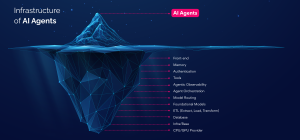
Beyond the Surface: The Hidden Architecture of Enterprise AI Agents in 2025

In the rapidly evolving landscape of enterprise AI, the difference between good and exceptional implementation lies in the architecture beneath. Here’s the insider’s perspective on what truly powers today’s most successful AI agent deployments.

The New Reality of Enterprise AI

Imagine walking into a modern enterprise where AI agents orchestrate complex operations with apparent effortlessness—scheduling meetings across time zones, analyzing market trends in real-time, and handling thousands of customer interactions simultaneously. This visible excellence represents merely the tip of the actual system. The real innovation? It’s in the sophisticated engineering that lies beneath.

The journey to this point has been remarkable. From basic chatbots in 2023 to rudimentary AI assistants in 2024, we’ve now entered an era of truly autonomous AI agents. But this evolution isn’t just about better language models – it’s about the intricate architecture that makes enterprise-grade AI possible.

Beneath the Surfaces: Deconstructing the AI Agent Infrastructure

  1. The Visible Layer: Where Human Meets Machine

The sleek interfaces of platforms represent the visible face of AI agents. But this polished exterior relies on sophisticated front-end engineering. Modern implementations leverage technologies not just for aesthetics, but to create intuitive interactions that adapt to human user needs. When a sales representative requests market analysis or a developer needs code review, this layer translates complex operations into natural conversations, leading to a redefinition of our concept of User Interface/User Experience.

  1. The Intelligence Layer: Beyond Simple Processing

At the heart of enterprise AI lies an intricate network of complex computing systems. Memory management platforms ensure conversations maintain context across all the participants, during weeks or months. Dynamic model routing systems instantly determine whether a financial analysis requires different processing than a creative task. This orchestration happens in milliseconds, invisible to the end user but crucial for enterprise-grade performance.

  1. The Control Framework: Enterprise-Grade Security and Governance

In today’s regulatory environment, control systems aren’t optional – they’re critical layers. Enterprise AI agents operate within a sophisticated framework that ensures:

  • Advanced MFA protects sensitive operations
  • Real-time monitoring provides unprecedented operational visibility
  • Advanced orchestration enables complex multi-agent workflows
  1. The Foundation: Scale, Speed, and Reliability

The true differentiator in enterprise AI isn’t the models – it’s the infrastructure. Cloud-native architectures powered by advanced containerization ensure global scalability. Next-generation databases enable instant information retrieval across petabytes of data. This foundation turns theoretical AI capabilities into practical business advantages.

The Engineering Reality: Why 90/10 Matters

The true value of enterprise AI agents lies not in individual AI models but in the engineering that enables their practical application. This 90% engineering, 10% LLM split reflects a crucial truth: successful AI implementation requires more robust infrastructure than cutting-edge algorithms.

Consider a global enterprise deploying an AI agent for customer support. While the LLM handles natural language understanding, the engineering infrastructure:

  • Manages millions of concurrent conversations
  • Ensures sub-second response times
  • Maintains security compliance across jurisdictions
  • Seamlessly integrates with existing business systems
  • Scales resources based on demand

The Road Ahead: Next-Generation Enterprise AI

As we move forward, the architecture of enterprise AI continues to evolve. The future of enterprise AI lies not in incrementally better language models, but in more sophisticated infrastructure.

  • Advanced orchestration systems enabling true multi-agent collaboration
  • Predictive scaling systems that anticipate business demands
  • Hybrid architectures blending cloud and edge computing
  • Enhanced security frameworks for autonomous decision-making
  • Sophisticated observability tools for AI governance

The Strategic Imperative

Understanding the full depth of AI agent architecture isn’t just technical knowledge – it’s a strategic advantage. Organizations that appreciate and invest in robust AI infrastructure position themselves to leverage the full potential of this transformative technology.

The visible “magic” of AI agents rests upon a foundation of sophisticated engineering. As you consider implementing AI agents in your enterprise, remember that success lies not just in choosing the right AI models, but in building and maintaining the robust infrastructure that powers them.

Ready to explore how AI agents can transform your business operations? Contact our team to discuss your AI strategy and learn how we can help build the infrastructure for your success.

Making Science Chooses Google Agentspace

  • Over 800 users from Making Science, a pioneer in business AI applications, are already participating in the progressive adoption of the technology
  • Making Science validating real-world use cases, developing adoption methodologies, and building technical accelerators to share their experience with clients
  • This implementation strengthens Making Sciences’ position as a Google Cloud Premier Partner with six specializations, including Generative AI

Chicago, April 9th, 2025 – Making Science, a technology and marketing consultancy specializing in digital business acceleration and a pioneer in business-applied artificial intelligence, has deployed Google Agentspace, Google Cloud’s innovative platform based on generative AI and intelligent agents.

More than 800 Making Science users are already participating in the progressive adoption of Agentspace, which enables conversational interaction from a single interface with corporate applications such as Salesforce, SAP, Jira, BigQuery, and Atlassian, among many others, facilitating decision-making, data access, and execution of complex tasks. Upcoming milestones include the automation of key processes, such as sending SAP invoices directly from the platform.

Making Science has deployed this system as part of a broader approach to AI adoption that includes various gen AI solutions, with a structured department-by-department training model, an internal “AI Champions” program to support adoption and the integration of impact and return metrics.

“Choosing Google Agentspace reaffirms our commitment to technological innovation and our ability to lead real digital transformation from within. This initiative allows us not only to gain efficiency but also to learn from experience to better support our clients in their own generative artificial intelligence adoption processes,” explains José Antonio Martínez Aguilar, Founder and CEO of Making Science.

This implementation reinforces Making Science’s leadership as a pioneering company in the adoption of disruptive technologies and is part of its strategic plan, “AI Transformation Quarter”. This is a global program that promotes the integration of generative AI tools, process automation, and continuous training of the company’s teams.

Prepared to Lead Implementation for Clients

In addition to making its own processes more efficient, the adoption of Agentspace throughout its structure, from technical teams to business areas, positions Making Science as a strategic ally for companies interested in integrating this technology into their operations. Leveraging this hands-on experience, the company is validating use cases, developing adoption methodologies, and creating technical accelerators and integration templates. In parallel, knowledge and expertise are being generated to connect Agentspace with complex business environments and measure its impact with clear metrics of return and business value.

“With Agentspace, we advance in our collaboration with Google Cloud to enhance artificial intelligence in business environments. This technology represents the future of interaction with corporate data and applications. By implementing Agentspace at Making Science, we can transfer real learnings to our clients, accelerating adoption and maximizing impact,” comments Álvaro Verdeja, COO – Cloud, AI, Cyber and Software at Making Science.

As a Google Cloud Premier Partner, Making Science strengthens its ability to accompany organizations in the implementation of solutions based on generative artificial intelligence, with an approach that combines technical knowledge, operational experience, and business vision. This implementation aligns with Google Cloud’s strategy to drive AI technology adoption through its network of certified partners.

Maximizing your Advertising Investment: The need for Measurement and the power of a Budget Optimizer like OptiPhi

Today’s media landscape is a maze. Multiple online and offline channels, fragmented audiences, multiplying touchpoints… In this complex environment, the pressure on marketing teams to demonstrate Return on Investment (ROI) and justify every dollar spent is more intense than ever. It’s no longer enough to “be present”; it’s crucial to understand what works, how it works, and, above all, where to invest the next dollar to achieve maximum impact. This is where precise measurement and intelligent budget optimization become fundamental.

Why do we need to measure accurately?

Without proper measurement, media investment decisions are based on intuition, partial data, or vanity metrics that don’t reflect the real impact on the business. The challenges are clear:

  • Fragmentation: Consumers interact with brands through numerous channels and devices. How do you understand the complete journey and the role of each touchpoint?
  • Data silos: Information is often scattered across different platforms and partners, making a unified view of performance difficult.
  • Real impact vs. correlation: Did that campaign really generate sales, or did it simply coincide with a market trend? It’s vital to distinguish causality.
  • Short-term and long-term vision: Some actions generate immediate results, while others build brand over the long term. How do you balance both needs?

The key question: Where do I allocate my budget?

Measuring is the first step, but the real challenge is translating that measurement into concrete actions, especially in budget allocation. The fundamental question every marketing manager must answer is: “Given my budget, how should I distribute it across different channels and campaigns to maximize my objectives (sales, leads, brand awareness, etc.)?”
This is where the need for a Media Budget Allocator comes into play.

Current solutions and their limitations

Currently, companies try to solve this puzzle in different ways, each with its limitations:

  • Partner reports (agencies, publishers):
    • What they provide: Detailed reports on performance within their specific platforms or channels (e.g., social media campaign results, search ad clicks, GRPs on TV).
    • Limitations: Siloed view. Each partner optimizes for their own channel, without offering a global and neutral perspective on how different media interact. They may have inherent biases towards their own solutions. They make it difficult to compare “apples to apples” between very different channels (e.g., TV vs. TikTok).
  • Other technologies (web analytics tools, isolated attribution platforms, MMM, BI): 
    • What they provide: Data on user behavior on the website, long-term insights, attribution models (often focused only on digital or last-click), dashboards with key metrics.
    • Limitations: They may lack a holistic view that robustly integrates offline and online. Digital attribution models alone don’t capture the impact of mass media or external factors (economy, seasonality, competition). MMM models focus on the long term, making short-term decision-making difficult. BI tools show the past but often lack the predictive or integrated optimization capabilities to guide future budget allocation automatically. They require complex integrations and expertise to extract actionable insights for planning.

The comprehensive solution: OptiPhi

This is where an advanced platform like OptiPhi makes a difference. It’s not just another measurement tool but a true strategic optimizer of media investment:

What does OptiPhi provide? EVERYTHING Necessary:

  • Holistic and unified vision: OptiPhi integrates data from all relevant sources: online, offline, sales, external factors (competition, seasonality, macroeconomics). It breaks down silos.
  • Robust measurement (MMM + Attribution): It combines the best of both worlds. It uses Marketing Mix Modeling (MMM) to understand the strategic impact of all channels (including offline and external factors) in the long term, and enriches it with a cookieless attribution model for tactical digital detail at the platform and strategy level on a daily basis. All within a Unified Measurement Framework.
  • Risk-free testing: Conduct experiments to validate the introduction of new platforms or strategies into your models without risk, favoring model calibration and continuous improvement.
  • Deep understanding of ROI: It measures the real impact of each marketing activity on business KPIs, separating the incremental contribution from background noise.
  • Predictive capability: It doesn’t just look at the past. OptiPhi uses advanced models to simulate future scenarios, facilitating decision-making and investment justification. You can ask: “What would happen if I increase my TV investment by 10% and reduce search by 5%?”
  • Budget optimization: This is key. Based on your objectives and constraints, OptiPhi recommends the optimal allocation of the budget across channels and campaigns to maximize return. It tells you exactly where to put each dollar.
  • Speed and agility: It provides insights and recommendations month by month, allowing for faster adaptation to market conditions.
  • Neutrality: As an independent technology platform, it offers an objective view without bias towards any specific channel or partner. Furthermore, the platform can be implemented in the client’s environment, maintaining the privacy of their data.

Conclusion: From intuition to intelligent optimization

In today’s competitive environment, managing the media budget based on partial data or intuition is too high a risk. The need for accurate measurement and, above all, for a tool that translates those insights into optimal budget allocation is critical.
Traditional solutions offer value but often in a fragmented or incomplete way. A true budget optimizer like OptiPhi provides the holistic vision, predictive capability, and optimization recommendations necessary to navigate the complexity of the media landscape and ensure that every dollar invested works as efficiently as possible to achieve your business objectives.
Are you ready to stop guessing and start optimizing your media investment strategically?
Discover more about OptiPhi here

Enhancing UX/UI Research with Synthetic Users: The Future of Design Testing

Today, user research is a fundamental part of designing digital experiences. It helps us better understand users’ needs, behaviors, and expectations to create more intuitive and functional products. However, traditional research methods, such as interviews and usability testing, are often costly, time-consuming, and difficult to scale. This is where synthetic user research comes into play, an innovation that uses artificial intelligence and autonomous agents to create virtual user profiles and simulate their interactions.

In this article, we explore how synthetic users are changing the way we conduct UX/UI research, their current limitations, and how Making Science is addressing these challenges with its own advanced synthetic user model.

What Are Synthetic Users? 

Synthetic users are profiles generated by AI that simulate the characteristics, needs, and behaviors of real users. These profiles can be created automatically, using data and AI algorithms that mimic the diversity and complexity of a real audience. Tools like Delve AI and Synthetic Users allow anyone to generate detailed personas with information about their background, frustrations, goals, and psychological characteristics. Through these platforms, design teams can quickly create profiles representing a diverse sample of users without the need to recruit real individuals.

Advantages of Research with Synthetic Users

Scalability and Efficiency The main advantage of synthetic users is their ability to simulate multiple profiles in a short period. By eliminating the need to manage and coordinate groups of real users, design teams can quickly obtain relevant data from a wide variety of people. This makes research much more scalable and efficient, especially when fast results are needed.

Cost Reduction Recruiting real users, conducting interviews, and performing usability testing can be costly and logistically challenging. With synthetic users, these costs are significantly reduced, as there is no need to compensate participants or manage the logistical aspects of research sessions.

Simulating Controlled Scenarios With synthetic users, teams can simulate very specific scenarios and observe how virtual users interact with a product or service. This flexibility allows for usability testing with different types of users in controlled contexts, making it easier to identify problems before launching a product to the market.

Limitations of Synthetic Users

While synthetic users offer great advantages, they are not a complete solution. There are some important limitations to consider:

Lack of Real Empathy Although synthetic profiles can be incredibly detailed, they cannot replace genuine interaction with real users. Interviews and usability testing provide an emotional connection that helps designers deeply understand the motivations, friction points, and emotions behind user behavior. Synthetic users, no matter how sophisticated, lack the human complexity necessary to simulate authentic emotional experiences.

Superficially Accurate Simulations Synthetic users can provide valuable feedback, but they often lack the complexity that real users can provide. The insights generated by AI may be overly optimistic or simplistic, making it necessary to complement them with real-world research to obtain a more comprehensive view.

Reliance on Previous Data Synthetic users rely on previous data to create profiles, meaning their accuracy depends on the quality of that data. If this information is limited or outdated, the resulting profiles and insights may not reflect actual user behavior.

How Making Science is Redefining Synthetic Users

Understanding these limitations, at Making Science we have developed our own advanced synthetic user model designed to overcome many of these challenges. Unlike conventional solutions that focus mainly on demographic data, our model integrates multiple layers of information, including:

  • Market behavior
  • Technological context
  • Socioeconomic aspects
  • Behavioral trends
  • Customer journey insights

Additionally, we enrich our model with sectorial and brand insights—incorporating information about the sector, competitive landscape, and brand-specific elements such as product offerings, pricing strategies, and positioning. This approach allows us to simulate more realistic user experiences that account for industry-specific dynamics and brand perception.

But what truly sets our model apart is its ability to incorporate real data from various sources, such as user interviews, focus groups, and client reports. It can even be enriched with call center data, ensuring a deeper and more authentic understanding of user behavior.

Moreover, our model excels in early-stage validation. It can test redesign proposals at the sketch or wireframe stage, providing actionable insights to determine whether the new approach improves the user experience. This capability accelerates decision-making and enhances design outcomes, helping teams iterate with greater confidence.

Use Cases in UX/UI Research

While synthetic users should not fully replace real-user research, they have an important role in the lifecycle of UX/UI research. Some of the most relevant use cases include:

Exploratory Research: Synthetic users are ideal for the early stages of research, where the goal is to explore potential issues and generate hypotheses. By creating synthetic personas based on demographic and behavioral data, designers can gain an initial understanding of their audience before diving into more costly and complex studies.

Concept and Prototype Testing: Before conducting tests with real users, design teams can use synthetic users to evaluate design ideas, prototypes, and features. This allows for quick validation of concepts and adjustments before rolling out prototypes to real users.

Feature Validation: Synthetic users can be used to validate new features or changes in a product. Through simulations, designers can observe how different user segments interact with the product and whether the new features meet their needs.

AI and the Validation of Interface Affordance One of the most exciting advancements that AI already enables is the validation of the affordance of our interfaces. Simply put, affordance refers to an interface’s ability to indicate how an element should be used intuitively. AI can analyze and predict how users will interact with certain interface elements, helping us improve accessibility, clarity, and usability in our designs. Thanks to simulations with synthetic users, we can observe and adjust interactions before implementing changes in a real product, allowing us to optimize the user experience more efficiently.

The Future of Synthetic Users in UX/UI Research

The field of synthetic user research continues to evolve. At Making Science, our advanced synthetic user model not only integrates complex layers of demographic and behavioral data but also enriches profiles with real user feedback from interviews, focus groups, client reports, call center interactions, and sector-specific insights. This unique approach allows for more nuanced and realistic simulations.

Additionally, our model’s ability to test wireframes and sketches sets it apart, enabling early detection of design challenges and quicker iteration cycles.

However, it is essential to remember that research with real users should always be the foundation of any design strategy. Synthetic users are a powerful tool to complement research, but they should not replace a deep analysis of users’ needs, expectations, and emotions.

TL;DR 

Synthetic user research is opening up new opportunities for design and product development teams. While it doesn’t replace real-user work, it provides a scalable and cost-effective alternative to obtain preliminary insights and validate ideas quickly. The key is knowing when and how to use this technology effectively, integrating it into a broader and balanced research approach.

At Making Science, we support our clients in implementing these innovative technologies to improve their user research processes. Our proprietary synthetic user model stands out by integrating both demographic insights and real user data, even from call centers, and enriching the analysis with sector-specific and brand insights. Additionally, we validate redesign concepts at the wireframe stage, optimizing user experiences from the earliest phases. The future of UX/UI research is promising, and we are ready to lead this change.


[button open_new_tab=”true” color=”accent-color” hover_text_color_override=”#fff” size=”medium” url=”https://www.makingscience.com/contact/” text=”Accelerate your Business” color_override=”#f0076f”]