

Measurement: What Tool to Use and When? Your Essential Guide

Introduction: Navigate the Data Maze and Decide with Confidence

CMOs, do you sometimes feel lost in a sea of data and measurement tools? You’re not alone. With so many options available, from attribution to Marketing Mix Modeling (MMM), knowing what tool to use and when is crucial for making informed decisions. This post is your compass. We’ll explain the main measurement tools (what they are, why, when, where, who, and how to use them) to help you build a solid data foundation and avoid the “AI chaos.” The goal is for you to master your measurement strategy, maximizing the impact of every marketing euro. Ready to unravel the mystery?

The CMO’s Challenge: Too Many Tools, Too Few Clear Answers?

The problem isn’t a lack of data, but rather data saturation and confusion about how to turn it into actionable insights. Many CMOs face the question: “How do I build my data foundation before diving into the ‘AI chaos’?” The answer lies in a clear understanding of the available measurement tools and how they fit into your overall strategy. Not all tools are suitable for everything, and knowing when to apply each one is the key to smart investment and data-driven decision-making.

Your Measurement Arsenal: When to Use Each Tool

For a complete and effective measurement strategy, you need a well-defined arsenal of tools. Here, we explain the most important ones and their purpose:

1. Attribution

What is it? Attribution assigns credit for a conversion to one or more touchpoints in the customer journey. Common models include first-click, last-click, linear, or data-driven. When to use it? It’s ideal for understanding short-term, user-level impact and optimizing specific digital campaigns. For example, if you want to know which ad or keyword led directly to a sale. It’s fundamental for granular measurement. Key Advantage: It allows you to optimize the performance of active campaigns and the allocation of your budget within digital channels.

2. Marketing Mix Modeling (MMM)

What is it? MMM is an econometric technique that measures the impact of all marketing activities (online and offline) on sales and other KPIs over time, considering external factors. When to use it? It’s perfect for medium- to long-term strategic planning, budget allocation between channels (TV, digital, print, etc.), and optimizing overall marketing ROI. It helps you understand diminishing returns and the real effect of your investment at a macro level. Key Advantage: It offers a holistic and platform-agnostic view, which is crucial in a cookie-less world, and it’s excellent for strategic measurement.

3. Budget Allocator

What is it? A tool that uses attribution and MMM data to recommend the optimal allocation of your marketing budget across different channels and campaigns, based on your objectives (maximize sales, ROI, etc.). When to use it? When you need to make quick and precise decisions about where to invest your next dollar, or to simulate different investment scenarios and see their impact. It’s the bridge between analysis and practical measurement action. Key Advantage: It translates insights into actionable recommendations for maximum efficiency.

4. Brand Lift Studies

What is it? Studies that measure the impact of your advertising campaigns on brand metrics such as awareness, consideration, preference, or purchase intent. When to use it? For branding campaigns or when the main objective is not a direct conversion, but rather building the brand and its long-term perception. It complements performance measurement. Key Advantage: It quantifies the intangible value of brand building.

The Perfect Synergy: How to Combine Your Measurement Tools

The key is not to choose one over the other, but to understand how they work together. A comprehensive measurement strategy often involves:

  • MMM for long-term strategic allocation and understanding macro factors.
  • Attribution for optimizing specific digital campaign performance and short-term impact.
  • Budget Allocator for translating MMM and attribution insights into dynamic investment decisions.
  • Brand Lift Studies to ensure that performance investments don’t sacrifice brand health.

By combining these tools, CMOs can build a robust Data Foundation that not only prepares them for the future of AI but also enables them to make much smarter and more efficient marketing decisions today. Effective measurement is the basis of everything.

Conclusion: Your Marketing Future Depends on Smart Measurement

In today’s complex marketing ecosystem, success is not a matter of luck, but of precise measurement and a clear strategy. By understanding the strengths and the right time to use tools like attribution, MMM, budget allocators, and brand lift studies, CMOs can move from uncertainty to confidence. It’s the path to building solid data foundations that will not only help you avoid the “AI chaos” but also drive you toward sustainable growth.

Ready to organize your measurement strategy and unlock the true power of your data? Start evaluating your tool arsenal today! If this post was helpful, share it and tell us, what is your biggest challenge in marketing measurement? Because at Making Science, we believe that to measure is to know, and to know is power!
AI in eCommerce: Automation, personalization, and SEO-driven growth

The eCommerce landscape is undergoing a seismic transformation, and at the heart of this change is artificial intelligence in ecommerce. From dynamic personalization to intelligent automation, AI is revolutionizing how online retailers engage with customers, streamline operations, and scale rapidly. But beyond functionality, AI also plays a pivotal role in optimizing ecommerce SEO by enhancing user experience, content performance, and search visibility. This article explores how AI is reshaping eCommerce, with a special focus on SEO applications, AI-powered content creation, and strategic implementation for sustainable growth.

The rise of AI in eCommerce

Once a futuristic concept, artificial intelligence (AI) is now a core driver of innovation in eCommerce. Technologies like machine learning, natural language processing (NLP), and computer vision enable online businesses to analyze behavior, predict intent, and personalize experiences at scale.

Several key factors are accelerating the integration of AI in eCommerce and SEO:

  • Rising customer expectations: Shoppers expect seamless, personalized journeys. AI delivers relevant product suggestions, smart search, and real-time support, all of which improve engagement and SEO performance.
  • Data overload: Every action online produces data. AI helps process this information to refine targeting, content, site structure, and user flow. These are essential elements of modern SEO.
  • Accessible tools and platforms: AI-driven technologies for SEO, automation, and analytics are now widely available, even for smaller businesses.
  • Competitive pressure: Businesses leveraging AI stay ahead in rankings, customer experience, and content strategy. Those who don’t risk falling behind in the SERPs.


Key applications of AI in eCommerce

AI is transforming every stage of the customer journey and its impact on SEO is tangible. Here are the most relevant use cases:

1. Personalized product recommendations

AI algorithms analyze browsing and purchase behavior to deliver product suggestions tailored to each user. This boosts click-through rates, conversion, and engagement.

2. Intelligent site search

AI-powered search understands natural language and user intent, delivering more relevant results. This improves UX and reduces bounce rates.

3. AI chatbots and virtual assistants

Chatbots offer instant assistance, helping users navigate, answer questions, and discover products. They increase time on site and reduce exit rates.

4. Fraud detection

While more focused on security, AI’s ability to detect fraud ensures business continuity and protects brand trust, which indirectly supports long-term organic reputation.

5. Inventory optimization

AI helps predict demand, manage SKUs, and automate reordering. This ensures product availability, prevents 404 errors, and supports healthy indexing for an SEO strategy.

6. Dynamic pricing

AI adjusts prices based on demand, competition, and behavior. When integrated with structured data, this can boost visibility in SERPs and AI platforms.

AI-powered content creation and optimization

One of the most disruptive innovations in SEO is AI-generated and AI-optimized content. AI is now capable of supporting the entire content lifecycle, from ideation to performance monitoring.

  • Scalable content generation: AI can produce large volumes of SEO-friendly product pages, category descriptions, or blog content quickly and efficiently.
  • Real-time SEO optimization: AI tools assist with keyword placement, heading structure, internal linking, and metadata optimization, all essential for ranking.
  • Content refreshing and repurposing: AI can identify outdated or underperforming content and suggest updates based on current trends and algorithms.

Content remains king, but AI might be the strategist. For more on this topic, read our article AI Mode: What does it mean for SEO?.

Benefits of using AI for SEO in eCommerce

AI doesn’t just automate, it enhances your entire SEO strategy. Here’s how:

  • Improved rankings and traffic: Smarter keyword targeting, optimized content, and enhanced UX drive stronger organic performance.
  • Higher engagement signals: Personalized experiences and faster site interactions translate into better dwell time and lower bounce rates.
  • Consistent content quality: AI helps maintain tone, structure, and SEO integrity across large-scale content production.
  • Automated technical SEO: AI tools flag issues like broken links, duplicate content, or slow pages—and can sometimes fix them automatically.
  • Better decisions, faster: AI surfaces actionable insights from SEO data, allowing marketers to test and iterate in real time.

How to implement AI in your SEO strategy

Integrating AI doesn’t require a full overhaul. You can begin with incremental changes:

  • Set clear SEO objectives: Define KPIs such as impressions or ranking improvements and align your GEO strategy accordingly.
  • Start with SEO quick wins: Use AI for content briefs, metadata generation, keyword clustering, or product copy creation.
  • Choose scalable tools: Opt for AI platforms that integrate with your CMS, analytics, and SEO software stack.
  • Leverage expert support: Collaborate with SEO and AI specialists to create a roadmap that balances automation with strategy.
  • Continuously test and refine: Use testing and search performance data to evaluate impact and guide improvements.

The future of AI in eCommerce and SEO

AI is not just the present, it’s defining the future of how we search, shop, and grow digitally. Expect to see:

  • Visual search optimization: AI allows users to search via images. Brands that optimize images with alt text and structured data will stand out.
  • Voice search and conversational SEO: AI voice assistants are changing how queries are made, requiring long-tail and natural language content strategies.
  • Immersive experiences through AR and AI: AI will support augmented reality shopping environments that are SEO-optimized and user-intent aligned.
  • Hyper-personalized content: AI will tailor every interaction and content piece to individual users, increasing relevance and improving rankings.

Our AI and SEO approach at Making Science

At Making Science, we stay ahead of these shifts through a dedicated SEO and Content TECH & AI friendly strategy, powered by our proprietary technology Trust Generative AI. This platform transforms how we scale and optimize content, adapting it to current search engine demands and user behavior.

We guide our clients through this transition, helping them identify opportunities, scale content production, and strengthen long-term organic visibility with confidence.

Want to know how we can help your brand grow? Let’s talk.

Conclusion

Artificial intelligence in ecommerce is more than a trend, it’s the strategic engine behind personalization, automation, and search performance. From improving UX and engagement to optimizing content and metadata, AI empowers brands to scale efficiently and win in the SERPs. As AI continues to evolve, integrating it into your SEO strategy will be key to staying competitive in today’s digital economy.

Campaign Manager 360 for Dummies: What is and what it is for.


Do you really know who’s seeing your ads? Campaign Manager 360 does.

Imagine planning an expedition without a compass. That’s what launching digital campaigns is like without a tool to coordinate, measure, and optimize them in real-time. This is where Campaign Manager 360 comes in, the logistical brain behind many of the ads you see daily.

In this post, we’ll explain what Campaign Manager 360 is, how it works, and why it’s a key piece in any modern media strategy. Even if you don’t directly manage campaigns, understanding this platform will give you a new perspective on how brands capture digital attention.


What is Campaign Manager 360?


Campaign Manager 360 (CM360) is the digital campaign management platform from Google Marketing Platform. It acts as the control center that coordinates everything that happens from the moment an ad is designed until its impact is evaluated.

From trafficking creatives to attributing conversions, CM360 allows marketing teams to:

  • Have a unified view of all their campaigns.
  • Monitor which ads are served, where, to whom, and when.
  • Accurately measure the impact of those ads.

💡 Think of CM360 as the orchestra conductor ensuring every instrument (channel, creative, audience) plays in harmony.


What is Campaign Manager 360 used for?


1. Trafficking: Well-orchestrated advertising logistics


With CM360, you can upload ads, define delivery parameters (site, segment, schedule, frequency), and launch campaigns in an organized way. Everything is managed from a centralized interface.

Example: You can decide that a remarketing campaign should only activate for mobile users between 6:00 PM and 11:00 PM in certain cities.


2. Tracking: Advanced user action monitoring


Thanks to its tag and pixel system, CM360 tracks what happens after an ad impression: clicks, visits, conversions, bounces, etc. This information is essential for understanding the user’s journey.

Key data point: You can attribute conversions using first-click, last-click, or linear models, among others.


3. Reporting: Data-driven decisions, not assumptions


CM360 generates customized reports that allow you to identify what works and what doesn’t. The result: more effective campaigns, with higher returns and better budget utilization.

Tip: You can automate reports to send them to stakeholders or integrate them with Looker Studio for more impactful visualizations.


What advantages does it offer over other tools?


  • Full integration with Display & Video 360, Search Ads 360, Google Analytics 4, and BigQuery.
  • Granular control over impressions, frequency, and segmentation.
  • Cross-channel visibility, even in cookieless environments if configured correctly.
  • Transparent auditing, ideal for agencies and advertisers managing multiple accounts.

📊 One platform, multiple insights: that’s CM360.


Is Campaign Manager 360 for me?


If you work at an agency, are responsible for performance, or manage campaigns with multiple creatives, channels, and markets, the answer is yes. CM360 will not only help you be efficient but also demonstrate results with solid, traceable data.


Conclusion: The next step towards smarter campaigns


Campaign Manager 360 doesn’t design your ads, but it ensures they reach the right place, at the exact time, and to the ideal user. It’s the silent engine that transforms creativity into measurable results.

Ready to level up your media strategy? Discover how CM360 can be your best ally for more efficient, controlled, and profitable campaigns.

👉 Want to know how to integrate it into your marketing stack? Leave us a comment or contact us, and we’ll help you take the first step.

What is Retail Media and Why is it the Big Bet for Digital Marketing in 2025

Have you wondered why giants like Amazon or Carrefour are investing millions in digital advertising? Or why more and more brands are shifting their traditional media budgets to e-commerce platforms? The answer lies in one phrase: Retail Media.

This new channel is revolutionizing how brands impact consumers at the exact moment they’re ready to buy. In this article, we’ll tell you what Retail Media is, why it has become one of the biggest bets for 2025, and how you can leverage it within your programmatic strategy.


What is Retail Media?


In Retail Media, retailers themselves (physical stores or e-commerce) are responsible for selling advertising space on their websites, apps, or even in physical stores. In other words, they become media outlets. Platforms like Amazon, Carrefour, and El Corte Inglés are already doing this.

These ads appear directly in the consumer’s journey, when they are already Browse to buy, which means the conversion intent is very high.


Why is it Growing So Much?


There are several key reasons that explain the boom in Retail Media:

  • The disappearance of cookies: Retailers have extremely valuable first-party data, making them an ideal alternative for cookieless strategies.
  • High conversion: Ads are closer to the point of purchase than ever before.
  • Environment control: The retailer controls the inventory, data, and results, which offers greater transparency.
  • Omnichannel trend: Retail Media also includes in-store formats (screens, digital signage) or retargeting outside the retailer’s environment.


Main Retail Media Platforms


Among the most relevant globally, we find:

  • Amazon Ads
  • Walmart Connect
  • Carrefour Links
  • Criteo Retail Media

In Europe and Spain, we also see big players like El Corte Inglés, MediaMarkt, and FNAC embracing this model.


What are the Benefits for Brands?


  • Greater precision in segmentation thanks to real purchase data.
  • More reliable measurement closer to the business result (direct sale).
  • Synergies with programmatic or search campaigns.
  • Flexibility in formats: display, search, video, audio, in-store, etc.


And for Retailers?


  • New revenue source (monetization of digital inventory).
  • Greater control over the messages that appear on their properties.
  • Opportunity to create a closed and highly optimizable ecosystem.

Furthermore, they can build their own media network, as Carrefour is doing with Carrefour Links.


How to Integrate Retail Media into Your Programmatic Strategy


Retail Media is not an isolated form of advertising. It can and should be integrated within a complete digital strategy:

  • Using DSPs like Amazon DSP or Criteo to activate audiences in secure environments.
  • Performing omnichannel measurement, connecting online and offline purchase data.
  • Coordinating creatives with flexibility, depending on the retailer.
  • Applying CDPs and DMPs to cross-reference your own data with the retailer’s.

Retail Media is not a passing fad; it’s a real transformation in how brands, platforms, and consumers interact. In 2025, it will be a key channel in the media mix, especially in a cookieless environment with more demanding results.

Are you ready to take your media strategy to the next level? The time to explore Retail Media is now.

Boost E-commerce Sales: The Power of Personalization with Salesforce

In today’s crowded digital marketplace, e-commerce businesses face a relentless challenge: standing out and converting browsers into loyal buyers. Generic, one-size-fits-all approaches simply don’t cut it anymore. Customers expect experiences tailored specifically to them. This is where Salesforce Personalization unlocks a powerful advantage, transforming how online retailers connect with their audience and directly leading to a significant boost in e-commerce sales.

Why Personalization is No Longer Optional for E-commerce

Think about your own online shopping habits. Are you more likely to buy from a store that remembers your preferences, suggests products you genuinely might like, or sends you offers relevant to your past purchases? Chances are, the answer is yes. In fact, studies consistently show that consumers prefer personalized experiences and are more likely to convert when they receive them. Without personalization, e-commerce businesses risk losing customers to competitors who offer a more relevant and engaging journey.

How Salesforce Personalization Fuels Sales Growth

Salesforce Personalization isn’t just about adding a customer’s name to an email. It’s a sophisticated platform that uses data and artificial intelligence to understand individual customer behavior and deliver truly unique experiences across every touchpoint. Here’s how it drives sales:

  • Real-time Behavioral Insights: Salesforce Personalization continuously collects and analyzes customer interactions on your website, app, and other channels. It understands what products they view, what they add to their cart, what they click on, and even how long they linger on a page. This real-time understanding allows for immediate, relevant responses.
  • Dynamic Product Recommendations: Based on individual Browse history, purchase patterns, and even the behavior of similar customers, the platform can display highly relevant product recommendations. This could be “customers who bought this also bought…” or “you might like this based on your recent views,” significantly increasing the likelihood of an impulse or add-on purchase.
  • Personalized Website Experiences: Imagine a homepage that changes for each visitor, highlighting products they’ve shown interest in, or promotions relevant to their past interactions. Salesforce Personalization can dynamically adjust content, banners, and even navigation paths to create a unique and highly engaging Browse experience.
  • Tailored Email and Mobile Campaigns: Moving beyond generic newsletters, Salesforce Personalization enables segmented and individualized email campaigns. This means sending abandoned cart reminders with relevant product suggestions, personalized sale alerts, or follow-up emails based on recent purchases, all designed to encourage conversion.
  • Optimized Offers and Promotions: By understanding a customer’s value and preferences, businesses can deliver targeted discounts and promotions that are more likely to resonate and drive a purchase, avoiding wasted marketing spend on irrelevant offers.

The Tangible Impact on Your Bottom Line

The direct result of implementing Salesforce Personalization is clear:

  • Higher Conversion Rates: When product suggestions are relevant and experiences are tailored, customers are far more likely to complete a purchase.
  • Increased Average Order Value (AOV): Effective recommendations encourage customers to add more items to their cart, boosting the overall value of each transaction.
  • Enhanced Customer Loyalty: A personalized experience makes customers feel valued and understood, fostering stronger relationships, encouraging repeat purchases, and turning one-time buyers into lifelong advocates.
  • Reduced Cart Abandonment: Timely, personalized reminders and incentives can bring customers back to complete their purchases, recovering potentially lost sales.

The Bottom Line

In the competitive e-commerce landscape, personalization is no longer a luxury; it’s a strategic imperative for sustainable growth. Salesforce Personalization provides the tools to understand your customers deeply and engage with them on a truly individual level, directly translating into higher conversion rates, increased sales, and a stronger, more loyal customer base.

Integrating Influencer Marketing into Your Business Strategy: What No One Tells You

There’s a question that marketing teams are asking more and more often—and it’s not “Should we do influencer marketing?” It’s: How can we integrate it better? 🤔

Because it’s no longer about one-off campaigns or scattered creative collaborations throughout the year. Influencer marketing has earned its place—not as an add-on, but as a strategic growth channel that drives results on multiple fronts: attention, affinity, conversion, community, content, and insights. 📈

The difference now isn’t whether you’re doing it. It’s where you place it within your brand and business architecture. 🧠

And that requires a shift in perspective, from viewing influencers as occasional activations to understanding their cross-functional role within the brand ecosystem.

We’ve identified four key principles that are making a difference in the strategies that actually work. They’re not magic formulas, but they do define how leading brands are integrating this channel with clarity and vision. 🚀


When Content Connects, Business Grows

Leading brands don’t see creator content as a tactical boost or a nice-to-have inspirational touch. They integrate it as a core part of their communication, distribution, and audience relationship systems. Because they’ve grasped something essential: content with credibility moves people more than any brand promise can.

When a brand expresses itself through people with cultural authority, it’s not just seen. It’s felt. And what is felt is remembered. Shared. Bought. Defended.

We’re not talking about a trend or a new performance channel. We’re talking about a sharper, more genuine way to connect with people—where attention is no longer bought, but earned. And it’s earned with content that delivers value, reflects values, triggers emotion, and builds conversation. 💬

According to the 2025 Social Media Study by IAB Spain, 48% of users say they check social media before making a purchase, and 44% state that their final decision was influenced by the content they saw there. This percentage rises to 66% among Generation Z. This shows that when content truly connects with the audience, it directly impacts buying behavior. 📱🛍️


A Living Network of Influence—Not Just a Collection of Collaborations

The strongest strategies aren’t measured by the number of posts or the variety of profiles in a spreadsheet. They’re measured by the consistency of the relationship between brand, creator, and audience. 🔁

The value isn’t only in the content that gets published, but in what that content builds over time: narrative, reputation, positioning.

That’s why more brands are thinking in terms of networks of affinity, not “influencer lists.”

They’re not chasing follower counts—they’re seeking alignment. They build long-term relationships with people who share their vision, codes, and style. And that allows them to amplify their message naturally, broadly, and meaningfully across channels. 

The difference between an influencer campaign and an influence strategy is simple: One makes an impact. The other makes an impact and sustains it.

According to CreatorIQ’s 2024 Benchmark Report, brands that foster long-term partnerships with creators see up to 38% higher engagement rates compared to one-off collaborations.


Influencer Marketing Is Not Just Communication—It’s Brand Intelligence

One of the greatest strengths of creator content is that it doesn’t just create impact. It reflects, informs and measures. Every piece of content, every reaction, every comment… is a live source of cultural data. 📡

It tells us how your audience speaks. What moves them. What they share. What they question. What they reject.

That’s why a well-integrated strategy not only drives media or sales KPIs—it also enhances positioning, the funnel, and business insights. The channel works best when it’s not operating in isolation, but when it’s connected to everything else. It’s not just another puzzle piece. It’s the thread that can tie many pieces together—and give them meaning. 


Integration Isn’t Doing More—It’s Making Everything Work Together

Here’s one of the most common mistakes: confusing integration with accumulation. You don’t need more formats, more platforms, more scattered actions. You need your pieces to speak to each other. Influencer marketing should drive business, not just visibility. And your brand should show up where things are happening—not as a spectator, but as a part of the culture. 💡

The value doesn’t lie in “trying new things.” It lies in consolidating learnings, scaling what works, and sharpening what resonates. It’s not about making noise—it’s about having relevant presence. 📍

It’s not about putting your logo in more places, but about placing it in the right contexts, with the right people, in a consistent and coherent way. 


We see this every day. And if you’re reading this, you probably already know that it’s no longer about simply being present… it’s about doing it right.

Because in the end, the difference between just another campaign and a channel that reshapes your brand’s trajectory lies in how you choose to integrate it from now on.


Are you ready to make the leap and take your brand to the next level? 🚀

Unlocking B2C Sales Growth with Salesforce Data Cloud: A Data-Driven Approach

📊In today’s fast-paced B2C world, simply having customer data isn’t enough. Businesses are swimming in information – from website visits and past purchases to social media interactions and customer service queries.

💡The real challenge is making sense of it all and using it to genuinely increase sales.

💡This is where Salesforce Data Cloud steps in, offering a powerful way to transform raw data into actionable insights and drive significant growth.

❓What’s the Big Deal with Data in B2C?

Think about it: every customer interaction leaves a digital footprint. For B2C companies, understanding these footprints is key. If you know what your customers like, how they behave, and what their preferences are, you can offer them exactly what they need, at the right time, and through the right channel.

🎯This personalized approach isn’t just a nice-to-have anymore; it’s a sales imperative.

🚀How Salesforce Data Cloud Makes Data Work for You

Salesforce Data Cloud isn’t just another database; it’s a sophisticated platform designed to unify all your customer data in one place. Imagine having a single, comprehensive view of every customer, no matter where their information originated. This “single source of truth” allows you to:

  • Understand Your Customers Deeper: By bringing together data from marketing, sales, service, and e-commerce, Data Cloud creates rich, 360-degree customer profiles. You can see their entire journey, from their first interaction to their latest purchase, and beyond.
  • Segment Your Audience Smarter: Gone are the days of broad marketing campaigns. With unified data, you can create highly specific customer segments based on detailed behaviors, demographics, and preferences. This means sending the right message to the right person.
  • Personalize Experiences at Scale: Once you understand your segments, Data Cloud enables you to personalize every touchpoint. From tailored product recommendations on your website to customized email offers and relevant ad placements, personalization makes customers feel understood and valued.
  • Drive Proactive Engagements: With real-time data insights, you can anticipate customer needs and engage them proactively. For example, if a customer browses a specific product category repeatedly, you can send them a timely offer or information about those items, increasing the likelihood of a sale.

💰From Data to Dollars: The Sales Impact

The direct link between Salesforce Data Cloud and increased B2C sales is clear. When you understand your customers intimately and engage with them personally, several things happen:

  • Higher Conversion Rates: Relevant offers and personalized experiences lead to more purchases.
  • Increased Average Order Value: When customers find exactly what they’re looking for, or discover related products they genuinely need, they tend to spend more.
  • Improved Customer Loyalty: Personalized interactions build trust and make customers feel valued, encouraging repeat business and long-term relationships.
  • Optimized Marketing Spend: By targeting the right customers with the right message, your marketing efforts become more efficient and yield a better return on investment.

✅The Bottom Line

Salesforce Data Cloud empowers B2C businesses to move beyond scattered data and embrace a truly data-driven approach to sales growth. By unifying customer information, enabling smarter segmentation, and facilitating highly personalized experiences, it allows companies to connect with their customers on a deeper level, ultimately leading to significant increases in revenue and customer loyalty.

🤝Making Science has extensive experience in implementing and optimizing these types of Salesforce solutions, helping businesses unlock the full potential of their customer data to achieve their sales goals.

Google Analytics 4: Why you need a Data Analyst today more than ever before

Are you tapping into the full potential of your digital data or just scratching the surface? Google Analytics 4 is here to change the rules of the game… but only if you know how to play.

📍 Introduction

Since its launch, Google Analytics 4 (GA4) has positioned itself as the new standard in digital analytics. But what makes it so special? And why are so many companies looking for Data Analyst profiles specialized in GA4?

In this post, we explore what GA4 is, why it has replaced Universal Analytics, what this change implies for your company, and how an analyst can turn data into real growth. If you manage digital channels, ecommerce, paid media or UX, then read on.

💡 Fun fact: according to Google, more than 50% of companies that have migrated to GA4 are still not properly exploiting their data due to a lack of analysts or advanced configuration.

🎯 What makes GA4 different?

1. It measures people, not just sessions

GA4 focuses on the user, not on visits. This allows you to analyze the real journey of your customers across channels, devices and platforms.

It no longer matters how many users visited your site, but who they are and what they do.

2. Personalized events: you decide what matters

No more measuring only page views. In GA4 you can track specific interactions: clicks, forms, scrolls, downloads etc. And the best part: everything is flexible, without depending on your IT team at every step.

3. Predictive models within everyone’s reach

GA4 gives you predictions such as conversion or abandonment probability, so you can prioritize actions based on data, not assumptions.

🧠 What if you knew which users are about to stop shopping… before they do?

4. Goodbye cookies, hello privacy

GA4 complies with regulations such as GDPR and adapts without cookies, which is key if your company wants to continue to scale without penalties.

👨‍💻 Why do you need a Data Analyst with GA4 experience?

It is simple: because having data is not the same as understanding it. Let alone acting on it.

✔️ An analyst turns data into decisions

  • Configures relevant events and conversions
  • Detects opportunities and problems before anyone else
  • Relates data to business: sales, leads, profitability

✔️ Able to design useful dashboards for each team

A good analyst doesn’t just extract data, he translates it for Marketing, Product or C-Level. The result? Aligned teams and faster decisions.

✔️ Automate, predict and scale

With GA4 and BigQuery, your Data Analyst can build attribution models, automated reports, or identify hidden patterns that make (or lose) you money.

📌 Raw data is just noise. Advanced analytics turns it into music for your business.

🔚 Conclusion 

Google Analytics 4 has redefined how we measure and understand the digital experience.
However, to take advantage of its full potential, you need a Data Analyst who knows how to extract it, customize it and align it with your business strategy.

At Making Science, we help companies like yours turn analytics into impact. If you’re ready to transform your data into decisions, it’s time to take the next step.

🎯 Do you already have the person to turn your GA4 into a growth engine?

Did you find this article useful?
Share it, leave us a comment, or message us to show you how we work with advanced analytics at Making Science!

Because data doesn’t change your business. The decisions you make with it do.

Key Takeaways for Travel Brands from Digital Travel Connect

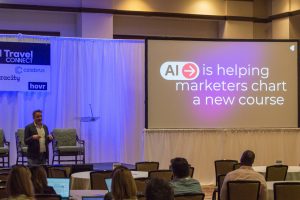
I recently had the privilege of engaging with numerous travel industry professionals at Digital Travel Connect. The energy and insights were fantastic, and it’s always valuable to connect with people facing the same challenges and opportunities. My workshop, in particular, sparked some really important conversations, and I walked away with a renewed sense of the direction travel brands need to take.

One of the most persistent issues raised was the challenge of generic bidding. It’s a David vs. Goliath situation out there. Too many travel operators, especially smaller and mid-sized businesses, are consistently outbid by the major Online Travel Agencies (OTAs) for those crucial generic keywords. This dynamic creates a bottleneck, restricting these operators largely to branded search terms and severely limiting their ability to expand their reach and acquire new customers cost-effectively. We must find strategies to level the playing field and empower these brands to compete for valuable generic traffic.  

Closely related to this is the ongoing puzzle of SEO and landing page optimization. Driving direct bookings is the holy grail for travel brands, as it allows them to maximize margins and own the customer relationship. However, achieving this requires a sophisticated approach to SEO and the creation of compelling, high-converting landing pages. Many brands struggle with this, lacking the resources or expertise to consistently produce optimized content that ranks well and drives action. This is a missed opportunity, as users are searching for information, and we need to ensure our clients’ properties appear at the top of the search results.  

These challenges aren’t just abstract concepts; they have a real impact on the bottom line. Travel brands need actionable solutions that enable them to:

  • Compete effectively for generic search traffic, breaking free from the constraints of branded search.  
  • Optimize their digital presence to capture more direct bookings, increasing profitability and customer ownership.  
  • Deliver personalized, relevant digital experiences that meet the evolving expectations of today’s travelers.  

This is where I believe Making Science can make a real difference. Our expert report, “How automated solutions can transform your performance marketing,” directly addresses these pain points. We delve into the power of AI and automation to revolutionize performance marketing strategies, with a particular focus on our ad-machina technology.

Ad-machina automates and personalizes SEM campaigns at scale. This is crucial for tackling both the bidding and the SEO challenges. By generating highly relevant ads tailored to specific search queries, ad-machina helps brands improve their visibility, increase click-through rates, and ultimately drive more conversions. It also enables the creation of personalized landing pages, ensuring a seamless user experience from search to booking.  

I left Digital Travel Connect energized and optimistic. The travel industry is dynamic and resilient, and by embracing innovative solutions, brands can overcome these challenges and achieve sustainable growth. I encourage everyone to explore our expert report; it provides a roadmap for navigating the complexities of digital marketing and unlocking the full potential of your travel brand.

[button open_new_tab=”true” color=”accent-color” hover_text_color_override=”#fff” size=”medium” url=”https://www.makingscience.com/networking/pmw-report/” text=”Download the Expert Report” color_override=”#f0076f”]


Sharpen Your Focus: How AI-Powered Audience Segmentation Boosts Marketing ROI

We all know that connecting with the right customers is paramount. However, in today’s fast-paced marketing environment, not all customers are created equally – nor should be treated as such.

Marketers need precision, and that’s where the power of AI-driven audience segmentation comes into play. At Making Science, our proprietary solution, Clustering, tackles the challenge of maximizing your marketing impact by separating customers and prospects by behavior. 

Clustering dives deep into behavioral, transactional, and contextual signals instead of relying on outdated demographic assumptions . This allows us to identify distinct user groups based on their actual engagement and purchase patterns. While lookalike audiences can be a part of the strategy, Clustering truly shines when it comes to remarketing and re-engaging your existing customer base – the individuals who have already shown interest in your brand.

Let’s imagine a thriving online retailer brand that specializes in sustainable and ethically sourced apparel. They’ve built a loyal customer base, but their broad marketing campaigns sometimes miss the mark, reaching many individuals with little interest in their unique products.

By implementing Clustering, our retail brand can analyze past purchase history, website interactions (like browsing specific product categories or spending time on their sustainability page), and even responses to previous marketing efforts. This data allows Clustering to identify key audience segments within their existing customer base:

  • “Eco-Conscious Enthusiasts”: Customers who frequently purchase items from their sustainable collection and actively engage with content related to ethical sourcing.
  • “Urban Style Seekers”: Customers who gravitate towards their trendier, city-inspired pieces and often engage with fashion-forward content.
  • “Loyal Repeat Buyers”: Customers with a history of multiple purchases across various product lines, indicating strong brand affinity.
  • “Just Browsing”: Customers who aren’t ready to purchase.

These audience segments allow for multiple marketing activation activities. For example, instead of sending generic promotions to their entire email list, they can now tailor their messaging. The “Eco-Conscious Enthusiasts” might receive exclusive previews of new sustainable arrivals or invitations to a webinar on ethical fashion. The “Urban Style Seekers” could be targeted with lookbooks featuring the latest trends and styling tips. And the “Loyal Repeat Buyers” might receive personalized thank-you offers or early access to sales events.

For a digital ads campaign, these audience segments can be sent to ad platforms to help with targeting, bidding and even exclusion lists. While bidding algorithms in these tools provide some level of segmentation, Clustering is based on propensity and predictive modeling. The online retailer can also use these segments for audience expansion or to build similar audiences.   

The impact? By focusing their efforts on high-value segments identified by Clustering, our online retail brand can expect to see a significant boost in sales from their existing customers and a considerable reduction in the media cost it takes to achieve each conversion. Our benchmarks show that businesses leveraging similar AI-powered audience segmentation can achieve a 20% incremental sales increase and a 20% reduction in cost per conversion.

Additionally, all the cluster results are transparent. Normally models are black boxes, but in addition to each cluster, the information about the users in that cluster are also provided. This information could be used to inform creative, website landing pages, messaging and more.

So let’s stop wasting marketing budgets on lukewarm leads. Embrace the precision of AI-powered audience segmentation with Making Science and start connecting with the customers who truly matter. Ready to see how Clustering can transform your marketing results? Reach out to our team today to learn more.


[button open_new_tab=”true” color=”accent-color” hover_text_color_override=”#fff” size=”medium” url=”https://www.makingscience.com/contact/” text=”Contact Us” color_override=”#f0076f”]