

Agentic Commerce: The New Era of Retail

 The days of endless online browsing are over. Welcome to Agentic Commerce, the era where your shopping is done for you, not just by you.

For retailers and brands using the Google Marketing Platform (GMP), this isn’t just a technical upgrade; it’s a fundamental reimagining of how you connect with high-intent shoppers. From autonomous digital assistants that research on a customer’s behalf to protocols that turn a search query into a completed purchase in seconds, 2026 is the year retail gets “agentic”.

What is Agentic Commerce? (And Why Should You Care?)

Think of your favorite, most helpful sales associate. Now, imagine that an associate lives in your customer’s pocket, knows their exact style, budget, and past purchase history, and can scour thousands of listings in milliseconds to find the perfect match.

Agentic commerce is an era where consumers delegate parts of their buying journey, like discovery, comparison, and even payment, to intelligent AI systems.

  • Discovery moves from keywords to intent: Shoppers no longer type “red sneakers size 10.” Instead, they tell an agent, “Get me ready for the New York Marathon,” and the agent manages the shoes, the energy gels, and the training plan.
  • Zero-click transactions: By the end of 2026, experts predict many consumers may stop visiting brand websites entirely for routine purchases, relying on agents to handle the transaction directly.

The New Open Standard: Universal Commerce Protocol (UCP)

To make this seamless future a reality, Google and industry leaders like Shopify, Target, and Walmart have launched the Universal Commerce Protocol (UCP).

Universal Plug-and-Play for Retail

In the past, every retailer had to build a unique connection for every new shopping app or platform. This created a mess of bespoke integrations. UCP essentially provides a common language for agents, businesses, and payment providers to talk to each other effortlessly.

Native Checkout in AI Mode

Google is adding a “Buy” button directly on surfaces like AI Mode in Search and the Gemini app. Because UCP standardizes the commerce workflow, shoppers can check out from eligible U.S. retailers right as they’re researching, using payment methods and shipping info already saved in Google Wallet. Shopify merchants’ products are also now available for purchase on AI chatbots for checkout, including Chat GPT, Microsoft Copilot, and Gemini.

Retailer Tip: Even with this frictionless flow, the retailer remains the Merchant of Record. You maintain control over your business logic, inventory, and, most importantly, the customer relationship.

Supercharging GMP for Commerce

For advertisers, the “agentic” shift is starting across GMP. The goal is simple: move away from fragmented tactics and toward intelligence-driven systems that make marketing more accountable.

1. Activating Commerce Audiences

DV360 now allows brands to leverage first-party shopper data from Commerce Media Networks (CMNs). This means you can target shoppers based on actual purchase intent rather than just broad demographics.

  • Precision Targeting: Access audiences like “Toddler shoppers” or “Laundry detergent buyers” directly within the DV360 UI.
  • Unified Reach: These audiences can be activated across 3rd-party exchanges, YouTube, and even Demand Gen campaigns.

2. Measuring What Matters (SKU-Level Insights)

The era of “spray and pray” is over. New measurement betas allow retailers to upload offline and online sales data to track performance at the SKU level.

  • Closed-Loop Reporting: Finally, retailers will be able to bridge the gap between a CTV (Connected TV) impression and an actual purchase.
  • Incremental Growth: Use real-time visibility to adjust campaigns in the moment rather than waiting for end-of-month reports.

3. Branded “Business Agents”

Retailers can now launch their own Business Agent directly on Search. Think of it as a virtual sales associate that speaks in your brand’s voice.

  • Custom Training: Agents will have the ability to be trained on your specific product data and customer insights.
  • Direct Offers: While a shopper is chatting with your agent, you can present exclusive Direct Offers to close the sale right when they’re ready to buy.

Strategic Trends to Watch in 2026

To succeed in this new era, your data strategy must evolve as fast as AI. Here are three trends that will define the winners:

Trend Why it Matters
Data Quality is AI Quality AI only works if the data is accurate, fresh, and permissioned. Fragmented or old data leads to missed opportunities.
Generative Engine Optimization (GEO) Just as you optimized for SEO, you must now optimize your product attributes so AI agents can easily discover and parse them.
Authenticity over Scarcity Shoppers are fatigued by “limited-time drops.” They now prioritize long-term value and utility, guided by their personal AI partner.

Moving from Experimentation to Integration

Innovation in the retail space is exploding rapidly. Retailers went from processing 8.3 trillion tokens on Google’s API in late 2024 to over 90 trillion tokens in 2025. This 11X increase shows that retailers aren’t just thinking about agentic commerce – they are already implementing it.

The most successful brands in 2026 won’t be the ones with the biggest budgets, but the ones with the most unified operational foundations. By connecting your first-party data, media, and commerce through tools like DV360 and protocols like UCP, you ensure your brand is “answer-ready” the moment a consumer’s personal AI goes looking for a recommendation.

To learn more about ensuring your brand is ‘answer-ready’ in this new ecosystem, get in touch with our team of experts.

[button color=”accent-color” hover_text_color_override=”#fff” size=”large” url=”www.makingscience.com/contact” text=”Get in touch!” color_override=”#ff0067″]
Attribution in the Privacy Era: How Predictive Models Close the Gap for CMOs?

Introduction: The Attribution Challenge in a Cookie-less World

In today’s dynamic digital marketing landscape, CMOs face a monumental challenge: how to measure the true impact of every marketing investment when user privacy is paramount? The post-cookie era has left a void, making it difficult to understand which channels and touchpoints truly drive conversions. This is where attribution becomes the indispensable compass. But how can we gain a clear, actionable view of attribution in an environment with increasingly strict data regulations? The answer lies in the adoption of advanced predictive models. This post will explore how these tools are redefining budget decision-making, allowing marketing leaders to optimize their strategies with confidence and precision.

The Problem with Traditional Attribution

For years, attribution relied on simplistic models like “last-click” or “first-click,” which failed to capture the complexity of the customer journey. These models, often dependent on third-party cookies, are now insufficient. The demise of cookies and growing privacy concerns have created a “privacy gap” that directly impacts CMOs’ ability to make informed decisions about their marketing budget allocation. Without a clear understanding of what drives performance, decisions become less strategic and more speculative, potentially leading to inefficient spending.

The Solution: Predictive Models and Machine Learning

The key to closing this gap lies in the power of predictive models and machine learning. These technologies allow for the analysis of large volumes of first-party and contextual data, identifying patterns and correlations that traditional methods cannot. By leveraging sophisticated algorithms, we can go beyond simple correlation to understand causation, assigning appropriate credit to each touchpoint in the customer journey, even in scenarios with limited or anonymized data. This not only improves the accuracy of attribution but also allows CMOs to anticipate trends and proactively optimize their campaigns.

Tangible Benefits for CMOs

For CMOs, implementing predictive models for attribution translates into tangible benefits:

  • Optimized Budget Decisions: By understanding the true ROI of each channel, CMOs can allocate their budgets more intelligently, maximizing the impact of every dollar spent.
  • Improved Customer Experience: Accurate attribution allows for personalized interactions and more relevant messaging, enhancing the overall customer experience.
  • Privacy Compliance: These models are designed to operate with aggregated and anonymized data, ensuring compliance with privacy regulations like GDPR and CCPA.
  • Competitive Advantage: Companies that master predictive attribution will gain a significant advantage by being able to react faster to market changes and consumer preferences.

Conclusion: The Future of Attribution is Predictive

In summary, attribution in the privacy era is no longer an unsolved puzzle. Predictive models offer a clear roadmap for CMOs, enabling them to make informed and strategic budget decisions, even in an evolving data landscape. It’s time to move beyond guesswork and embrace the power of artificial intelligence to unveil the true impact of your marketing efforts.

Are you ready to transform your attribution strategy and take your marketing to the next level? Share your thoughts and experiences in the comments! Because as the famous marketing consultant said, “To measure is to know, but to predict is to master.”

3 Scenarios for Smarter Media Planning (and Your Budget Will Love It)

Introduction: Are You Ready to Optimize Your Media Investment Like Never Before?

In the competitive world of marketing, CMOs know that every dollar counts. It’s no longer enough to launch campaigns and hope for the best; you need data, strategy, and the ability to adapt quickly. This is where Optiphi comes in. But what is Optiphi? It’s our advanced solution that integrates Marketing Mix Modeling (MMM), attribution models, and a powerful Budget Allocator to give you a 360° view of your media performance. Why is it crucial for you? Because it allows you to simulate and compare different investment scenarios to maximize your results, regardless of your time horizon. How does it achieve this? Let’s dive in.

The Challenge of Media Planning in the Short, Medium, and Long Term

Media planning is both an art and a science. The real challenge for CMOs is balancing short-term tactics to achieve immediate goals with long-term strategic investments that build brand and loyalty. How do you ensure your budget is optimally allocated for both, without sacrificing one for the other? Traditional approaches often fall into the trap of short-term vision, neglecting the cumulative impact. This is where the versatility of Optiphi becomes your greatest asset.

Optiphi in Action: 3 Scenarios for Your Media Strategy

Optiphi offers you the flexibility to model and compare different budget allocation scenarios, allowing you to tailor your strategy to your specific objectives. Let’s look at three clear examples:

Scenario 1: Short-Term Conversion Maximization

If your goal is to drive immediate conversions and meet quarterly sales targets, Optiphi helps you identify the channels and investment combinations that generate the highest sales volume in the shortest time. Using the latest attribution insights and channel elasticity analysis, Optiphi will recommend where to invest aggressively to see quick results. This is ideal for promotional campaigns or periods of high product demand.

Scenario 2: Balancing Growth and Sustainability in the Mid-Term

For a mid-term view, Optiphi allows you to balance achieving sales goals with building a solid foundation for future growth. Here, the tool considers not only direct conversions but also the impact on brand awareness and customer loyalty. Optiphi will show you how to distribute your budget to maintain a steady flow of new acquisitions while strengthening your relationship with existing customers, optimizing your investments with a 6 to 12-month perspective.

Scenario 3: Long-Term Brand Building and Leadership

When the goal is market leadership and building a strong brand in the long term, Optiphi focuses on MMM to analyze the long-term effects of your investments. It considers carryover effects and synergies between channels that may not show immediate ROI but are fundamental to the brand’s sustainable health and growth. Optiphi will help you justify investments in channels that have a slower but deeper impact on brand perception and preference, ensuring your long-term budget aligns with your company’s strategic vision.

Conclusion: The Power of Flexible Planning with Optiphi

In summary, Optiphi is more than just a tool; it’s a strategic partner that empowers CMOs to make budget allocation decisions with confidence and precision. By integrating MMM, attribution, and a budget optimizer, it offers you the ability to simulate and adapt your media strategy to any time horizon, maximizing your ROI and ensuring the fulfillment of your objectives, whether short, medium, or long-term.

Ready to transform your media planning and see the true potential of your investment? Discover how Optiphi can be your competitive advantage! If you found this post helpful, share it with your team, and tell us, which of these scenarios resonates most with your current challenges?

Clickless Advertising: How to Measure What Isn’t Touched (and Why You Should Start Now)

How do you measure the success of a campaign if no one clicks? In the new cookieless era, the answer is not only possible but essential.

Clickless advertising has gone from being a rarity to a priority for brands focused on brand recognition, mass reach, and effectiveness in environments where the click simply doesn’t exist. With the rise of channels like YouTube on Smart TVs, DOOH, digital audio, and CTV, it is time to move beyond models based solely on direct interaction.

In this post, we tell you what clickless advertising is, why it matters in 2025, and how you can measure it effectively with Google Marketing Platform (GMP) to demonstrate real results in campaigns where visual impact is worth more than the click.


What is Clickless Advertising and Why is It Gaining Ground?


Clickless advertising encompasses campaigns where the goal is not for the user to click, but for them to remember, recognize, and interact with the brand later on. This type of impact is generated in environments where direct interaction is not possible (or does not make sense):

  • YouTube on Connected TV
  • Spotify, podcasts, or programmatic audio
  • DOOH (Digital Out Of Home), such as digital billboards or screens in shopping centers
  • CTV (Connected TV)

With the progressive phasing out of third-party cookies and the increase in media consumption without a browser, measuring without clicks is no longer an option—it is a necessity.

📊 According to Nielsen, 65% of offline sales are influenced by advertising without direct interaction.


GMP: Your Ally for Measuring What Cannot Be Clicked


The key is to adopt new measurement tools and methods based on aggregated data, modeling, and first-party data. This is where Google Marketing Platform shines as a comprehensive solution:

🎯 Campaign Manager 360: Measuring Impressions and Viewability CM360 allows you to track impressions, viewability, frequency, and cross-channel reach. It is the central hub for validating that your message has reached the right audience.

🧠 Google Analytics 4: Behavior After Exposure Even without clicks, GA4 helps analyze user behavior after viewing an ad: direct traffic, brand searches, completed forms, etc. Thanks to its advanced attribution models, it compensates for the lack of cookies and protects privacy.

🔗 Integrated Platform: GMP as an Ecosystem The combination of CM360 + GA4 + DV360 + SA360 allows for a holistic view of campaign performance, uniting awareness and performance metrics under one umbrella.


Strategies That Work (Even if No One Clicks)


🧪 Brand Lift and Brand Awareness Use studies like YouTube Brand Lift or post-exposure surveys to measure ad recall, consideration, or purchase intent.

🗺️ Geo-testing and Incrementality Compare exposed and unexposed regions with tools like GeoLift to evaluate the real impact on searches or sales.

👤 First-Party Data and Indirect Signals Analyze direct traffic, brand searches, and completed forms after exposure. Supplement with user panels or surveys.

🔒 Consent Mode v2 and Conversion Modeling Even without cookies, you can estimate conversions with modeling and platforms like Ads Data Hub, ensuring compliance with privacy regulations.


Real-Life Cases That Prove It


  • YouTube on CTV: Campaigns with a +20% brand recall, without clicks or calls to action.
  • Spotify Ads: Direct correlation between full ad listens and peaks in brand searches.
  • DOOH in shopping centers: Increase in store visits (footfall) and geolocated sales following campaigns without digital interaction.


Conclusion: Measuring Without Clicks Is Not Only Possible, It Is Essential


In a cookieless world with increasingly dispersed consumers, clickless advertising represents the natural evolution of digital marketing. It is no longer just about chasing interactions, but about understanding the real impact of the message on the user’s mind and decisions.

GMP gives you the tools to do this with precision, respect for privacy, and an omnichannel approach.

💬 And you, are you ready to measure without relying on the click? If you want to know how to implement this type of measurement in your strategy, let’s talk. Because the future of marketing is not measured in clicks, but in connections.

DCO for Hotels: A Step-by-Step Guide to Creating Personalized Campaigns

Does Your Hotel Speak the Same Language as Your Guests?

Imagine seeing an ad for a family vacation when all you’re looking for is a romantic getaway. Frustrating, right? Personalization is no longer a ‘nice-to-have’—it’s a critical consumer demand in the digital landscape, and this is where DCO for hotels (Dynamic Creative Optimization) comes into play.

In this article, we’ll walk you through how to simply and effectively phase a DCO strategy within the hospitality environment, leveraging tools like Campaign Manager 360 (CM360) and Google Studio. If you work in hotel marketing and want to boost your campaigns’ relevance (and results), keep reading.


Step 1: Define Your Audience and Identify Key Signals

Before firing up your creative or tech engines, start with the most important element: people.

Ask yourself:

  • Who are my priority users?
  • What digital signals can I use for segmentation?

Some key variables in the hotel sector include:

  • Travel dates
  • Type of accommodation sought
  • Geographic location
  • Originating channel
  • Device type

🧭 A business traveler booking a weeknight stay from a mobile device should not receive the same ad as a family browsing on a tablet on a Sunday afternoon.

Pro Tip: Begin with 3-4 well-defined signals and a controlled set of audiences. Less is often more in the initial phase.


Step 2: Build Modular and Scalable Creatives in Studio

The magic of DCO for hotels lies in the ability to construct ads that automatically adapt to the user. To achieve this, you need to structure your messaging into reusable blocks within Google Studio.

Build a simple data feed featuring:

  • Destination (city, region, or experience type)
  • Room Type (suite, family, standard…)
  • Promotional Benefit (discount, free breakfast, flexible cancellation)
  • Call to Action (Book Now, Learn More, etc.)

🛠️ This modular approach allows you to mix and match elements without having to create hundreds of distinct creative variations.

Bonus Tip: Utilize templates that work across both display and rich media formats, ensuring they maintain visual brand consistency.


Step 3: Activate the Campaign in Campaign Manager 360

With the creatives finalized, it’s time to configure the campaign in CM360. This is where you connect the tailored messages with the defined audiences and establish the delivery rules.

Basic Checklist:

  • Associate each dynamic creative with the appropriate target audience.
  • Apply advanced segmentation (by geography, language, device, frequency, etc.).
  • Use the dynamic preview to verify that every combination in your feed is displaying correctly.

🔍 Pre-flight review is crucial to prevent unexpected issues at launch.


Step 4: Analyze, Adjust, and Evolve

A DCO campaign is not a “set-it-and-forget-it” launch. On the contrary, it is a living system that improves with every data point it collects.

Key metrics to monitor:

  • CTR per creative combination
  • Conversions per message type
  • Website dwell time
  • Cost Per Acquisition (CPA)

Iterate and Optimize:

  • Adjust the creative feed based on real-world performance.
  • Add or remove modules according to seasonality or current offers.
  • A/B test different CTAs and benefits.

📈 What works for romantic getaways today may not be effective for family stays tomorrow.


Conclusion: Personalization That Drives Bookings (and Results)

Phasing your DCO strategy for hotels isn’t complicated if you know where to start. Define your key signals, build a solid modular foundation, connect everything in CM360, and let the data be your guide.

In a competitive market like hospitality, differentiation means speaking to the right user with the perfect message at the precise moment. With the right tools, you can achieve this without an excessive workload.

👉 Ready to start your first hotel DCO pilot? At Making Science, we help you scale personalized campaigns with a data-driven and creative approach. Contact us and discover how to transform your campaigns into memorable brand experiences.

MMM: The New CMO’s Secret Weapon for Budget Optimization

What is MMM and Why Do You Need It Now?

In the fast-paced world of marketing, CMOs face constant pressure to demonstrate the return on investment (ROI) of every campaign. But how do you truly know what’s working and where to invest the next dollar? This is where Marketing Mix Modeling (MMM) comes in. What exactly is MMM? It’s a powerful analytical technique that uses econometric models to quantify the historical impact of all your marketing activities (digital advertising, TV, radio, print, promotions, etc.) on your sales and other key KPIs. Why is it crucial now? Because in a fragmented data landscape with increasing privacy restrictions, MMM offers a holistic, platform-agnostic view, allowing you to make smarter, data-driven budget allocation decisions. At Making Science, we understand that optimizing spend is vital, and MMM is your perfect ally.

The Budget Allocation Challenge

Traditionally, marketing budget allocation has been a complex exercise, often based on intuition or limited data. With the proliferation of channels and the difficulty of tracking the complete customer journey due to privacy regulations, many CMOs struggle to understand the real impact of each investment. Should you invest more in social media or TV? What’s the saturation point for your investment in a specific channel? Without a robust methodology, these questions remain unanswered, leading to suboptimal decisions and ultimately, lower ROI. This is where MMM truly shines.

MMM: The Science Behind Your Marketing Decisions

Marketing Mix Modeling (MMM) goes beyond last-click attribution, analyzing historical marketing data, sales data, external factors (like seasonality or competitor actions), and macroeconomic variables. By using advanced econometric models and statistical techniques, MMM can:

  • Quantify Impact: Determine the incremental impact of each marketing channel on your sales.
  • Optimize Allocation: Recommend the optimal allocation of your budget across different channels to maximize ROI.
  • Predict Performance: Forecast the future performance of your campaigns based on different investment scenarios.
  • Understand Interaction: Reveal how different marketing channels interact with each other, identifying synergies and cannibalization effects.

This comprehensive insight offered by MMM allows CMOs to not only understand what worked in the past but also to plan confidently for the future.

Key Benefits of MMM for CMOs

Implementing Marketing Mix Modeling (MMM) offers significant advantages for any CMO looking to improve their budget decision-making:

  • Holistic and Aggregated View: Provides a complete understanding of marketing performance at a macro level, without relying on individual user data, making it ideal for the privacy era.
  • ROI Optimization: Identifies the most profitable investments and helps reallocate the budget towards channels with the greatest impact.
  • Strategic Planning: Allows for simulating different investment scenarios and forecasting their impact on results, facilitating long-term planning.
  • Greater Accountability: Offers a solid, data-driven basis for justifying spending decisions to leadership.

With MMM, CMOs can move from guesswork to precision, ensuring every dollar invested works its hardest.

Empower Your Budget with MMM

In short, Marketing Mix Modeling (MMM) is not just an analytical tool; it’s the new secret weapon for CMOs who want to dramatically improve their budget allocation decisions in an increasingly privacy-centric world. It empowers you to understand the true contribution of each of your marketing efforts and optimize your spending for maximum impact.

Are you ready to stop guessing and start making data-backed marketing decisions? Explore how MMM can transform your strategy! Leave a comment or share this post if you believe MMM is the future of marketing budget optimization. Because in marketing, as in life, “what isn’t measured isn’t improved… and what is modeled, is optimized!”


Conversational search: from keywords to conversations

The search scenery is evolving. We’re witnessing a shift from simple keyword matching to complex interpretations of user intent. Thanks to advances in natural language processing and generative AI such as ChatGPT or AI Mode, search engines are no longer just answering queries. They’re starting to engage in conversations with the users.

This evolution is reshaping how people interact with search engines and, as a result, what SEO means today. Instead of focusing only on keyword placement, we must now understand context, nuance, and user expectations. SEO has become less about visibility and rankings and more about relevance within AI-driven answers.

Generative AI in action: generated content, instant answers & brand visibility

Generative AI is revolutionizing the way companies approach content creation. Brands can now produce SEO-friendly content at scale, brainstorm topics quickly, and streamline their editorial processes. AI tools enable marketers to respond faster to trends and user questions.

On the other side, search engines are leveraging AI to provide instant answers directly within the search results without the need for users to click, altering the value of traditional content placement.

Now, the strategic goal is not just ranking, it’s getting your brand cited as a trustworthy source within those AI-generated responses. Visibility in this new environment requires a deep understanding of how AI interprets and works through information.

Does Google penalize AI-generated content?

One of the most common myths today is that Google penalizes content created with AI. This is not true. What Google penalizes is low-quality, unoriginal, or unhelpful content, regardless of how it was produced.

The foundation remains the E-E-A-T principle: experience, expertise, authoritativeness, and trustworthiness. AI can help scale content, but human review and editing are very important to ensure that the output meets quality standards.

We should think of AI as our first draft assistant, not the final editor.

How keyword research is evolving with AI

Traditional keyword research focused on finding exact-match phrases and long-tail variations, but with AI, we can do better. AI tools now can identify emerging trends, related questions, and semantic clusters that reflect how people actually speak and search.

The new approach changes from asking, “Which keyword should I use?” to “How can I completely cover a user’s intent?” By combining AI-driven insights with real search data, marketers can discover opportunities based on actual conversations rather than isolated keywords.


What do we do in Making Science to appear in conversational search

Appearing in traditional featured snippets is one thing, but getting your content referenced in generative AI answers requires a more refined strategy. Here are some best, tested practices we follow to boost your visibility:

  • Answer clear, specific questions within the first few paragraphs.
  • Use natural, conversational language. Avoid jargon if possible.
  • Implement structured data.
  • Build topical authority by covering topics from multiple angles (topical clusters).
  • Optimize brand-entity associations by consistently linking your brand to specific themes.

The goal is no longer just to “rank #1,” but to be seen as a credible source by AI systems interpreting search queries.


Key takeaways

  • AI is transforming every phase of SEO, from research to content, to the search results themselves.
  • Content is still the king, but it must be genuinely useful, accurate, and crafted for real human intent.
  • Brands that blend AI tools with strategic thinking and human creativity will gain a significant edge in the evolving search landscape.

What is Retail Media and Why is it the Big Bet for Digital Marketing in 2025

Have you wondered why giants like Amazon or Carrefour are investing millions in digital advertising? Or why more and more brands are shifting their traditional media budgets to e-commerce platforms? The answer lies in one phrase: Retail Media.

This new channel is revolutionizing how brands impact consumers at the exact moment they’re ready to buy. In this article, we’ll tell you what Retail Media is, why it has become one of the biggest bets for 2025, and how you can leverage it within your programmatic strategy.


What is Retail Media?


In Retail Media, retailers themselves (physical stores or e-commerce) are responsible for selling advertising space on their websites, apps, or even in physical stores. In other words, they become media outlets. Platforms like Amazon, Carrefour, and El Corte Inglés are already doing this.

These ads appear directly in the consumer’s journey, when they are already Browse to buy, which means the conversion intent is very high.


Why is it Growing So Much?


There are several key reasons that explain the boom in Retail Media:

  • The disappearance of cookies: Retailers have extremely valuable first-party data, making them an ideal alternative for cookieless strategies.
  • High conversion: Ads are closer to the point of purchase than ever before.
  • Environment control: The retailer controls the inventory, data, and results, which offers greater transparency.
  • Omnichannel trend: Retail Media also includes in-store formats (screens, digital signage) or retargeting outside the retailer’s environment.


Main Retail Media Platforms


Among the most relevant globally, we find:

  • Amazon Ads
  • Walmart Connect
  • Carrefour Links
  • Criteo Retail Media

In Europe and Spain, we also see big players like El Corte Inglés, MediaMarkt, and FNAC embracing this model.


What are the Benefits for Brands?


  • Greater precision in segmentation thanks to real purchase data.
  • More reliable measurement closer to the business result (direct sale).
  • Synergies with programmatic or search campaigns.
  • Flexibility in formats: display, search, video, audio, in-store, etc.


And for Retailers?


  • New revenue source (monetization of digital inventory).
  • Greater control over the messages that appear on their properties.
  • Opportunity to create a closed and highly optimizable ecosystem.

Furthermore, they can build their own media network, as Carrefour is doing with Carrefour Links.


How to Integrate Retail Media into Your Programmatic Strategy


Retail Media is not an isolated form of advertising. It can and should be integrated within a complete digital strategy:

  • Using DSPs like Amazon DSP or Criteo to activate audiences in secure environments.
  • Performing omnichannel measurement, connecting online and offline purchase data.
  • Coordinating creatives with flexibility, depending on the retailer.
  • Applying CDPs and DMPs to cross-reference your own data with the retailer’s.

Retail Media is not a passing fad; it’s a real transformation in how brands, platforms, and consumers interact. In 2025, it will be a key channel in the media mix, especially in a cookieless environment with more demanding results.

Are you ready to take your media strategy to the next level? The time to explore Retail Media is now.

CM360: What do we have left to cover to maximize our digital campaigns?

Have you ever wondered what we need to get the most out of CM360’s capabilities? In this post, we are going to tell you, step by step, why the CM360 optimization journey is long but exciting and what benefits you will get when you know the tool well.

Introduction

In a constantly evolving advertising environment, the question is simple: How to leverage CM360 to achieve more effective digital campaigns? This post will serve as a guide to understand where we are, what we have left to cover, and why it is key to your digital marketing strategy.

What is CM360?

Campaign Manager 360 (CM360) is Google’s platform designed to plan, manage, and measure digital campaigns globally.

Who uses it?

Agencies, advertisers, and marketers who seek to centralize their reporting and obtain unified data.

Why is it relevant now?

The evolution of the cookieless environment and new attribution models force us to rethink what to do and when to maintain advertising effectiveness.

How do we achieve it?

By analyzing what technical and strategic improvements to implement in CM360 to gain time, agility, and precision in decision-making.

Key fact: According to recent studies, companies that master CM360 increase their campaign ROI by 15% to 20%. Ready to discover where to start?

What’s happening today with CM360?
Currently, CM360 is the standard for managing large-scale digital campaigns. However, there is still much room to take advantage of it, especially when we talk about:

  • Integration with other tools in the Google stack (such as GA4, DV360, Google Ads, The Trade Desk, Netflix, or Adobe Gen Studio).

  • Improvements in advanced reporting to better understand the path to conversion.

  • Management of floodlights and audiences that respond to new data-driven models.

The key is knowing where to focus.

What do we have left to cover?

Optimization of the initial setup

Dedicating time to a well-defined structure saves headaches later.
→ Did you know that a clear taxonomy in CM360 reduces errors by 30%?

Reporting automation

A well-configured dashboard saves your team hours and gives you real-time insights.
→ Includes reports like Path to Conversion, Time Lag, or Conversion Funnels.

Implementation of cookieless strategies

With the disappearance of cookies, measurement and activation must adapt. This is where CM360 along with GA4 offers you precise data.

(This is just a visual reference of the type of dashboard you can implement)

Why is it important to keep improving in CM360?

If you want your campaigns to be more effective and your strategy to be more agile, continuing to evolve in CM360 is essential. Every small change directly impacts your ROI and, above all, gives you greater control and transparency over your advertising investment.

Think of CM360 as a treasure map: if you know how to read it well, it leads you directly to the data that will help you grow.

Conclusion: Move forward with a steady pace

In short, there is still much to cover in the world of CM360, but every step you take is an opportunity to optimize results, better understand your audience, and make your advertising investment smarter.

Do you want us to help you get the most out of the tool? Share this post with your team or leave us a comment with your questions! As someone wise said: “It’s not just the destination, it’s the journey.” 🚀

Key Takeaways for Travel Brands from Digital Travel Connect

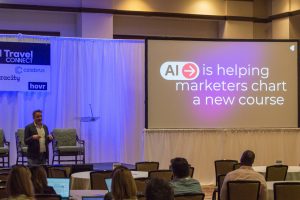
I recently had the privilege of engaging with numerous travel industry professionals at Digital Travel Connect. The energy and insights were fantastic, and it’s always valuable to connect with people facing the same challenges and opportunities. My workshop, in particular, sparked some really important conversations, and I walked away with a renewed sense of the direction travel brands need to take.

One of the most persistent issues raised was the challenge of generic bidding. It’s a David vs. Goliath situation out there. Too many travel operators, especially smaller and mid-sized businesses, are consistently outbid by the major Online Travel Agencies (OTAs) for those crucial generic keywords. This dynamic creates a bottleneck, restricting these operators largely to branded search terms and severely limiting their ability to expand their reach and acquire new customers cost-effectively. We must find strategies to level the playing field and empower these brands to compete for valuable generic traffic.  

Closely related to this is the ongoing puzzle of SEO and landing page optimization. Driving direct bookings is the holy grail for travel brands, as it allows them to maximize margins and own the customer relationship. However, achieving this requires a sophisticated approach to SEO and the creation of compelling, high-converting landing pages. Many brands struggle with this, lacking the resources or expertise to consistently produce optimized content that ranks well and drives action. This is a missed opportunity, as users are searching for information, and we need to ensure our clients’ properties appear at the top of the search results.  

These challenges aren’t just abstract concepts; they have a real impact on the bottom line. Travel brands need actionable solutions that enable them to:

  • Compete effectively for generic search traffic, breaking free from the constraints of branded search.  
  • Optimize their digital presence to capture more direct bookings, increasing profitability and customer ownership.  
  • Deliver personalized, relevant digital experiences that meet the evolving expectations of today’s travelers.  

This is where I believe Making Science can make a real difference. Our expert report, “How automated solutions can transform your performance marketing,” directly addresses these pain points. We delve into the power of AI and automation to revolutionize performance marketing strategies, with a particular focus on our ad-machina technology.

Ad-machina automates and personalizes SEM campaigns at scale. This is crucial for tackling both the bidding and the SEO challenges. By generating highly relevant ads tailored to specific search queries, ad-machina helps brands improve their visibility, increase click-through rates, and ultimately drive more conversions. It also enables the creation of personalized landing pages, ensuring a seamless user experience from search to booking.  

I left Digital Travel Connect energized and optimistic. The travel industry is dynamic and resilient, and by embracing innovative solutions, brands can overcome these challenges and achieve sustainable growth. I encourage everyone to explore our expert report; it provides a roadmap for navigating the complexities of digital marketing and unlocking the full potential of your travel brand.

[button open_new_tab=”true” color=”accent-color” hover_text_color_override=”#fff” size=”medium” url=”https://www.makingscience.com/networking/pmw-report/” text=”Download the Expert Report” color_override=”#f0076f”]