

Learn more

Making Science launches RAISING, its new AI technology division to power marketing strategies 

  • RAISING combines the company’s business expertise in data science to develop advanced AI-based solutions.


  • This new division includes technological tools such as ad-Machina, Gauss AI, and Trust Generative AI, offering innovative solutions for measuring and optimizing marketing strategies.


Chicago, IL, January 08, 2025 – Making Science, a technology and digital marketing consultancy specializing in e-commerce and digital transformation, has announced the launch of RAISING, its new technology division that combines the company’s business expertise with data science to develop advanced solutions based on Artificial Intelligence. This new venture aims to transform brands’ marketing strategies through predictive, generative, and automated AI technologies, optimizing results throughout the entire funnel.


AI-based solutions to transform marketing

RAISING integrates cutting-edge tools that reinforce its technology proposition. These include ad-machina, Making Science’s flagship technology that uses generative AI to automate the creation and multi-platform activation of personalized ads in real-time. The tool has proven its effectiveness on platforms such as Performance Max and Meta, achieving up to 30% more conversions compared to traditional methods. Its advanced functionalities allow the dynamic adaptation of text, image, or video ads to market and user needs, incorporating detailed data analysis, automatic translation, and large-scale optimization, ensuring more effective and profitable campaigns, which relevant companies such as Banco Santander or MediaMarkt have already integrated into their business plans.


Another key product of this new division is Gauss AI, which is designed to predict user behavior and optimize attribution, measurement, and media planning strategies. This system helps companies to identify the most relevant and profitable interactions, increasing the effectiveness of their campaigns. Trust Generative AI is positioned as a versatile and secure tool for content generation at scale, automating internal and external processes in areas such as marketing, SEO, and human resources while ensuring regulatory compliance and ultimate human control.


A step forward in technological innovation

The launch of RAISING reinforces Making Science’s position as a benchmark in technological innovation applied to marketing. 


According to José Antonio Martínez Aguilar, founder and CEO of Making Science: “With the launch of RAISING, we reaffirm our commitment to innovation and our ability to deliver disruptive technology solutions that transform how brands engage with their audiences. With this division, we want our clients to optimize their results and access new opportunities in an increasingly competitive and complex digital environment, offering technology (SaaS) so that their own teams can develop their business strategies”.


In conjunction with the launch of RAISING, Making Science also announced a fully paid capital increase of €10 million in its subsidiary Making Science Marketing & AdTech. This investment is part of the investment agreement with the SOPEF II fund (Spain Oman Private Equity Fund), managed by MCH, to enhance the company’s growth and expansion.


Keyword Advertising and the Future of Social Commerce on TikTok

TikTok has revolutionized the way we consume content, so it’s no surprise that the platform is now taking the next step in digital marketing. With the launch of keyword advertising in the US, entirely new opportunities are opening up for brands to reach their target audience more directly and effectively.

TikTok has become a go-to search engine, and according to TikTok over half of its users are actively searching, and more than 20% search for something within 30 seconds of opening the app. This feature lets brands connect with users at the exact moment they’re searching, tailoring ads to their specific needs. 

What is Keyword Advertising on TikTok?

Keyword advertising on TikTok works similarly to traditional search engine advertising. When a user searches for a specific word or phrase on TikTok, your ad can appear at the top of the search results. This gives you a unique opportunity to reach users actively searching for products or services you offer.

By targeting specific keywords, you can reach a highly relevant audience that’s already interested in what you’re selling. Your ads will appear directly where users are searching, increasing their visibility and making them more likely to be clicked. With detailed performance metrics, you can easily track the success of your campaigns and make data-driven adjustments to your bids and messaging to reach different audiences and keywords.

Preparing for the Future

While keyword advertising is currently only available in the US, it’s important to start preparing now. Here are some tips:

  • Identify Relevant Keywords: What words and phrases do your target audience use to find products or services like yours?
  • Optimize Your Product Catalog: Ensure your product information is accurate, complete, and easy to find.
  • Create Engaging Content: Develop video content that is both informative, SEO-based, and entertaining to attract new customers.
  • Stay Updated: Keep up with the latest news and trends in TikTok marketing.

Full-Funnel Marketing on TikTok

To maximize your investment in TikTok, you should use a full-funnel strategy. This means combining different types of ads and content to reach users at all stages of the customer journey.

  • Awareness: Use broad audiences and engaging content to create awareness of your brand.
  • Consideration: Target specific audiences and use more informative content to show how your products or services solve customers’ problems.
  • Conversion: Use clear calls to action and create a seamless purchase process to drive conversions.
  • Loyalty: Build long-term relationships with your customers by creating loyalty programs and engaging them in conversations.

Additionally, tracking needs to be in place to leverage your marketing efforts based on your data. Include server-side tracking for the most precise full-funnel marketing.

At Making Science Company, we have in-depth knowledge of TikTok and can help you with everything from developing a tailored TikTok strategy, create engaging content (either from scratch or based on content you already have), optimizing your campaigns for maximum ROI to stay up-to-date with the latest trends. 

Contact us for more information on how you can seize the Q4 Opportunity on TikTok.

[button open_new_tab=”true” color=”accent-color” hover_text_color_override=”#fff” size=”medium” url=”https://www.makingscience.com/contact/” text=”Contact Us” color_override=”#f0076f”]

Google Backpedals on Third-Party Cookie Deprecation: A Win for the Industry, a Focus on User Choice

Google has significantly shifted its approach to third-party cookies, opting to maintain their use while introducing a new framework that prioritizes user control. After years of delays and industry concerns, this decision marks a departure from the company’s plan to fully deprecate cookies. Read more about the official announcement from Google here: https://privacysandbox.com/news/privacy-sandbox-update/

The rationale behind Google’s decision is clear: they listened to industry concerns about cookie-free futures. By preserving cookies while introducing enhanced privacy controls, Google aims to strike a balance between protecting user data and maintaining a thriving digital advertising ecosystem.

The core of Google’s strategy is to empower users, as they intend to provide users with greater transparency and choice over how their data is used, allowing them to opt in or out of tracking. This approach could level the playing field, as both cookie-based and cookie-less solutions will have the opportunity to compete for user attention.

Even though details about Google’s proposed changes are still emerging, this announcement brings undoubtedly a sense of relief to the industry. Businesses will have more time to adapt and invest in alternative tracking technologies while also addressing privacy concerns.

Our Nick Tiano, Chief Revenue Officer, expressed,

“I think with the steps Google took, they were clearly listening to regulators and the adtech industry. This pivot appears to be warranted and is a major commitment from Google to give users and adtech providers a choice on the matter of 3P cookies. Now the Sandbox and other privacy-forward solutions can compete on merit and user preferences (or opt outs) will dictate performance and ultimately what technologies win out, 3P cookies or alternatives.”

Ultimately, Google’s decision to maintain third-party cookies while emphasizing user control represents a thoughtful compromise. It’s a move that could shape the future of digital advertising for years to come. Read more about Google’s decision here: https://www.thedrum.com/news/2024/01/04/marketers-publishers-brace-impact-1-third-party-chrome-cookies-vanish-today or get in touch with our experts.

[button open_new_tab=”true” color=”accent-color” hover_text_color_override=”#fff” size=”medium” url=”www.makingscience.com/contact” text=”Get In Touch” color_override=”#ff0067″]


Boost your e-commerce with Trust Generative AI

In the competitive world of e-commerce, standing out requires more than just good products. User experience, information accuracy, and the ability to attract and retain customers are crucial. This is where Trust Generative AI (TGAI), a generative AI platform designed to transform the way you run your online shop, comes in. In this blog, we will explore three key value propositions of TGAI: generating product descriptions, creating landings in multiple languages, and developing SEO-optimized category landings.

Product descriptions generation

One of the greatest challenges for an e-commerce business is maintaining accurate, engaging, and up-to-date product descriptions. TGAI uses generative AI to create detailed and persuasive descriptions in a matter of seconds.

Benefits:

  • Scalability: Produces numerous product descriptions quickly, ensuring that each item has a complete and unique description.
  • Accuracy: Generated descriptions are detailed, reducing errors and misunderstandings about the expected product.
  • Attractiveness: By incorporating attractive keywords and phrases, descriptions capture the attention of the target customer.
  • Time-saving: Frees up valuable time that can be spent on other critical areas of the business, for example, creativity.

With TGAI, you can ensure that every product in your catalog has a description that not only informs but also convinces and sells.

Landings in multiple languages

Global expansion is a goal for many e-commerce sites, but the language barrier can be a significant challenge. TGAI facilitates this process by generating landings in multiple languages with the same quality and effectiveness as the original versions.

Benefits:

  • Global Accessibility: Reach a wider audience by offering content in their native language.
  • Consistency: Maintain a uniform message and tone across all markets.
  • Speed: Launch international campaigns quickly without the need for extensive translation.

Break down the language barrier and take your e-commerce to new horizons with TGAI.

SEO-optimized category landings

Landing pages are essential to attract traffic and convert visitors into customers. TGAI generates category landings that are not only visually appealing but are also optimized for SEO, ensuring maximum engagement with consumers.

Benefits:

  • SEO Optimized: Landings are designed with SEO best practices, improving your search engine rankings.
  • Maximized engagement: Relevant and engaging content that keeps users interested and increases conversions by selecting the keywords that drive the most conversions.
  • Flexibility: Quickly adapt landings according to trends and consumer behavior.

With TGAI, you can be confident that each landing page will not only attract traffic but also keep visitors engaged, increasing conversion rates.

Conclusion

In the dynamic e-commerce environment, the ability to adapt and evolve is crucial. TGAI offers a comprehensive solution to improve the user experience, expand your global reach, and optimize your content to attract and retain customers. By integrating your strategy into your e-commerce, you not only simplify complex processes but also position yourself one step ahead of the competition.

Ready to take your e-commerce to the next level? Find out what TGAI can do for you and transform the way you manage your online storefront.


[button color=”accent-color” hover_text_color_override=”#fff” size=”large” url=”www.makingscience.com/contact” text=”Contact Us” color_override=”#ff0067″]

Campaign Manager 360 Updates & Preparation for 3PCD

With Google’s impending deprecation of third party cookies later this year and the industry’s continued emphasis on user privacy, tried and true programmatic advertising norms and practices of the past will cease to exist. At Making Science, we believe this change gives us an opportunity to rethink our existing ways of working, and support our clients as they navigate this changing environment.

We’re shifting from one-to-one precision targeting, to focusing on first-party data. From deterministic measurement, to a future powered by modeled measurement. From data processing within AdTech product platforms, to on-device data processing. These changes also inevitably mean changes to AdTech product platforms, such as Campaign Manager 360.

Campaign Manager 360 Reporting and Attribution Recommendations

Without third party cookies, cross-site and cross-device tracking will look quite different. Luckily, due to modeling, reporting will still be possible but many existing CM360 reporting and attribution features will need to be removed and/or adjusted accordingly. 

For instance, the Attribution Modeling Tool will be significantly impacted. Data-driven attribution (DDA) will be limited, but it will still be a possible attribution model. We recommend using either DDA or Floodlight attribution models. For now, these will likely be the only attribution models available to compare via the Attribution Modeling Tool post 3PCD.

Check out this update from Google for a specific list of reports and metrics being impacted. Sign up for the Making Science Google Marketing Platform Newsletter to stay up to date on the latest product news!

Actions to Take in Preparation for 3PCD

Advancements in privacy-safe advertising techniques and these product updates mean there are some important actions for advertisers to take to update and maintain reporting capabilities.

Google recommends advertisers:

  • Use the Google Tag or Google Tag Manager as your method for deploying Floodlight tags
  • Review Floodlights and disable the attribution tracking setting for any Floodlights that aren’t needed for attribution or bidding purposes
  • Enable consent mode
    • Required in EEA
  • Turn on Enhanced Attribution in CM360
  • Confirm conversion domains at the placement level
  • If using CM360 for tracking, set up Tracking Ads Tags

Taking these actions and utilizing these features will ensure your CM360 account is able to take advantage of the latest privacy-safe technology Google is integrating into their products. 

An Exciting Future Ahead

While there are clearly many product and expectation adjustments to be made, Google is confident that despite the impact from 3PCD, CM360 will still meet customer goals surrounding:

  • Enterprise campaign activation and management at scale
  • Serving and personalizing display and video creatives
  • Agnostic measurement for brand and performance campaigns
  • Quantifying media impact and campaign value

These industry changes and challenges will no doubt lead to impressive innovations across the digital marketing landscape. As we all adapt to the advertising environment without third-party cookies, more and more advanced technology will continue to be developed and integrated into products. We at Making Science are excited for what’s to come and for the opportunity to learn and grow with our customers.

Reach out to Making Science today for help taking the appropriate steps to ready your CM360 account. We offer a comprehensive CM360 audit to ensure your account is efficient and you’re able to meet your advertising goals both now and when third-party cookies are officially deprecated. 

Making Science is a Google Marketing Platform Certified Partner and a leading expert in privacy-safe and compliant advertising practices. We can aid you in implementing Consent Mode, Enhanced Conversions, and more. We also have expertise in Google Analytics, Google Tag Manager, and can assist with your tagging needs. Send us a message: info@makingscience.com

Navigating the Transition: Embracing Mitigation and Activation for 3PC Deprecation

As a continuation of “Chrome’s Challenge: Adapting to 3rd Party Cookie Deprecation“, we delve deeper into the intricacies of adapting to a world without third-party cookies, it’s crucial to not only focus on immediate mitigation and activation strategies, but also to consider the broader implications for managing change within your organization and the evolving digital landscape. Here’s how to approach this transition with a holistic perspective:

Managing Change and Stakeholder Engagement:

  • Leveraging Making Science’s 3PC Deprecation Tool: This invaluable tool aids in strategic planning by quantifying the impact of 3PC deprecation on your operations, streamlining the process for gaining the necessary technical and legal approvals for implementing critical updates like Enhanced Conversions. It’s about making informed decisions that align with both current needs and future directions.

The Role of Google’s Privacy Sandbox:

  • Adapting to New Technologies: Google’s Privacy Sandbox introduces a suite of alternatives, including the Topics API and Protected Audiences, aimed at preserving user privacy while maintaining advertising effectiveness. Although reactions have been mixed, staying abreast of these developments is essential for adjusting strategies in real-time.
    • Topics API: Designed to categorize a user’s interests based on their browsing history, facilitating personalized advertising without individual tracking
    • Protected Audiences API: Offers a framework for advertisers to target specific user groups while ensuring stringent privacy protections and compliance with data regulations
  • Monitoring Developments: The influence of the Privacy Sandbox is set to expand, making it imperative to understand how its components can be integrated into your advertising efforts. Begin with the immediate strategies outlined, then pivot to harnessing the full potential of the Privacy Sandbox as it matures.

This approach not only ensures compliance and efficacy in your marketing endeavors post-3PC but also emphasizes the importance of agility and forward-thinking. By embracing both mitigation and activation techniques—and preparing for the shifts in technology and stakeholder expectations—you can continue to provide personalized advertising experiences, sidestepping reliance on third-party data and setting a new standard for privacy-conscious marketing.


[button color=”accent-color” hover_text_color_override=”#fff” size=”large” url=”www.makingscience.com/contact” text=”Get In Touch With Our Experts!” color_override=”#ff0067″]

Chrome’s Challenge: Adapting to 3rd Party Cookie Deprecation

Chrome’s 3rd Party Cookie Deprecation (3PCD) is already affecting business and marketing performance. In this post, we’ll uncover how this seismic shift is reshaping today’s strategies and explore ways to adapt and succeed in a post-3PC world. 

What is happening?

Google Chrome has taken a decisive step towards privacy-first browsing, which started with the deprecation of third-party cookies for 1% of its users in January 2024. Google plans to extend this to all users by the latter half of the year. This gradual phase-out marks a significant shift from traditional user tracking methods and aligns with a broader industry move towards enhancing user privacy.

Why it matters

Chrome’s third-party cookie deprecation is more than a tech shift—it’s a revolution in digital advertising, given its 65% global market share. This change impacts advertisers, publishers, and users, especially on desktop where conversion rates are higher. Google and Meta’s reliance on these cookies for detailed user profiles and targeted advertising is facing a transformative challenge.

What will the impact be?

The decline in third-party data quality will make it less complete and accurate, potentially reducing marketing efficiency and ROAS unless advertisers adjust. Making Science’s 3PC Deprecation Impact Tool predicts up to a 30% drop in advertising-attributed online conversions and a possible 9% loss in digital revenue for certain sectors. This highlights the growing importance of first-party data (1PD) over third-party data (3PD), due to cookie deprecation.

What can be done to mitigate the impact?

There are lots of options available to handle this change – in fact, too many. It is important to understand the impact on your business and prioritize the available changes based on ease of implementation and impact. We can bucket the opportunities into mitigation and activation.

Mitigation

We’ve compiled a few key solutions that are aimed at reducing the loss of data volume and quality by implementing tools provided by Google and collecting better data using durable, privacy-compliant solutions.

  • We can’t stress the importance of a consent management platform (CMP) rather than a DIY solution for a consent banner. CMPs integrate with Google’s technical solutions and provide template consent banners that are compliant with the latest regulatory changes in differing markets, which can become hard to manage as more and more countries and states implement their own privacy legislation.
  • GA4 implementation will provide confidence in data, become the data source of truth for the business and stay up-to-date with privacy changes, as Google has shown its commitment to keeping GA4 compliant.
  • Consent Mode V2 for all Google products and Enhanced Conversions will allow for better matching by Google whilst respecting privacy. Consent Mode is now a requirement for using advertising features within Google products, and Enhanced Conversions allow conversions to be tied to impressions and clicks better, improving the understanding of campaign performance.

We deem those as the initial essential requirements for dealing with 3PC deprecation, but there are also other measures, such as: 

  • Implementing server-side measurement that will further improve the robustness of the GA4 implementation and marketing pixels. 
  • Leveraging server-to-server APIs for key conversions to ensure 1-to-1 matching between internal databases and ad/martech. 
  • Greater understanding of users can be achieved by using a Customer Data Architecture (CDA) or a Customer Data Platform (CDP) and cleanroom analysis can help cluster users together for better-aggregated targeting.

What activation strategies can help navigate 3PC deprecation effectively?

In addressing the challenge of third-party cookie (3PC) deprecation, a myriad of strategies are available to adapt and thrive. The key is to assess the impact on your business and prioritize strategies based on their implementation feasibility and potential impact.

Activation

Focusing on activation strategies that leverage first-party data (1PD) is crucial. Here’s a breakdown of key action items:

Building and Enhancing Audiences:

  • GA4 Audiences: Utilize GA4 to create dynamic audiences based on user behavior. These audiences can then be seamlessly integrated into Ads and Google’s adtech stack, improving the precision of your targeting.
  • Customer Match: Automate the process of uploading customer lists into Ads for more accurate targeting, helping to counteract the impact of 3PC deprecation.

Leveraging Google’s Advanced Tools:

  • Smart Bidding: Implement Google’s Smart Bidding to optimize campaigns using AI, which adjusts bids in real-time for conversions or conversion value, making use of contextual signals and machine learning.
  • Consent Mode V2 and Enhanced Conversions: Ensure compliance and improve data accuracy with Consent Mode V2, now a requirement for Google product advertising features. Enhanced Conversions improve the linkage between conversions and ad interactions, offering a deeper understanding of campaign performance.

Enhancing Signal Quality:

Predictive Modeling with Gauss Smart Advertising: Beyond the scope of Google’s tools, Gauss Smart Advertising enhances your digital strategy through predictive modeling. This tool does more than just score users; it significantly enhances the signals sent to Google’s algorithms for unparalleled optimization. Such advanced techniques can sharpen your advertising efforts and lead to more targeted, impactful campaigns that elevate performance thoughtfully and effectively.


[button color=”accent-color” hover_text_color_override=”#fff” size=”large” url=”www.makingscience.com/contact” text=”Get In Touch To Activate Your Data Strategy” color_override=”#ff0067″]

Unleash the Power of Ad Personalization: How CDPs Power Your Ads

What is CDPs, and how does it improve ad personalization?

Personalized advertising has become an intricate journey that aims to establish better connections with business’s target audiences. In this sense, Customer Data Platforms (CDP) have emerged as a powerful tool to transform customer information collection, management, and use. This article explores how CDPs play a critical role in improving ad personalization.

What are Customer Data Platforms (CDP)?

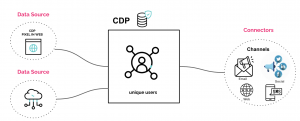
Before getting into the advantages of CDPs in advertising, it is essential to understand what CDP is. CDP is a platform designed to collect, store and organize customer data from various sources, creating integrated and unified profiles. This data consolidation allows companies to gain a holistic view of their customers, laying the foundation for more effective personalization.
 

The Key to Personalization: Core Data and Meaningful Connections

Effective ad personalization relies on the ability to thoroughly understand the target audience. CDPs excel by providing a centralized repository of customer data, including behaviors, preferences, and interaction history. It allows brands to create detailed and accurate profiles, making it easier to create more personalized ads.

The Customer Data Platform (CDP) streamlines First Party Data performance by integrating a single source of truth, enabling instant visualization. This inclusion not only simplifies data management but also improves the ability to analyze and respond in real time to customer preferences. From the moment of integration, a dynamic process is triggered that transforms static data into agile knowledge, facilitating quick and accurate decisions.

Additionally, CDPs make it easy to connect data from various sources, such as Social Media, website interactions, and past transactions. This results in a more complete understanding of the user, which in turn improves brands’ ability to deliver relevant messages at the right time.

The Role of CDPs in Precise Segmentation

CDPs allow for more precise segmentation by classifying users into groups based on specific data. For example, a fashion brand can segment its users based on their style preferences, purchasing behaviors, and geographic location. This makes it possible to create ads that resonate more effectively with each segment, increasing the likelihood of conversion.

Automation and Optimization: 

CDPs not only simplify data collection and organization but also facilitate process automation. Automation allows brands to deliver personalized ads in real time, dynamically responding to changes in user behavior. Additionally, the continuous optimization capabilities of CDPs ensure that personalization strategies evolve based on changing trends and preferences.

In short, Customer Data Platforms are playing an essential role in the evolution of advertising towards a more personalized and user-centric approach. By providing centralized data, precise targeting, and automation capabilities, CDPs are increasing ad relevance, improving customer experience, and ultimately driving the success of advertising campaigns. Personalization driven by CDPs wins brands’ attention and user loyalty in a world saturated with messages.


At Making Science, we have specialized Customer Data Platform teams so that they can personally advise and help clients select the CDP that best suits their needs. We have experience in various platforms, such as Zeotap and Tealium, and are committed to providing solutions that drive the success of your business.

[button color=”accent-color” hover_text_color_override=”#fff” size=”large” url=”www.makingscience.com/contact” text=”Get in touch to activate CDP” color_override=”#ff0067″]

How to Prepare Your Ecommerce Business for the Holiday Rush

The holiday season is not just about festivities and celebrations. For businesses, it’s a period of heightened activity, increased customer demand, and fierce competition. With key shopping events like Black Friday, Cyber Monday, and Christmas sales on the horizon, the success of your season depends on your preparedness.

In this guide, curated by the Making Science team, we blend various critical aspects of business operations to help equip businesses with a comprehensive, well-rounded approach to tackle the peak season rush.

1. Scalability: The Backbone of Your Online Store

We all know time is money. According to Gartner, based on industry surveys, network downtime can cost $5,600 per minute on average. This figure equates to well over $300K per hour.

Your online store’s infrastructure serves as the foundation for your digital presence. An influx of shoppers can place immense stress on your infrastructure, making it crucial to predict traffic patterns and scale your resources accordingly. Regular stress tests will help identify and rectify weak points. This proactive approach ensures your systems can handle the increased load, preventing slow loading times, crashes, or dreaded virtual queues, and keeping your digital storefront open and inviting.

2. Process Monitoring: Make checking out simple!

Don’t let a glitchy shopping cart or an overloaded payment gateway hinder your sales. Monitor the purchasing process every step of the way – from product discovery to payment confirmation for a smooth and efficient shopping experience. With the increase in traffic during peak season, your e-commerce processes, especially payment solutions, should be capable of absorbing traffic spikes so that transactions are processed without a hitch.

3. Digital Security: Protecting Your Business and Customers

Over half (56%) of Black Friday spam emails received between October 26 and November 6, 2022, were scams, according to research from Bitdefender. Furthermore, small businesses in the retail sector are 50% more likely to be targeted by cybercriminals, leading to losses of around $6.9 billion from online scams. 

The primary threats include social engineering scams, phishing attacks, fraudulent websites, unsecured financial transactions, ransomware attacks, and data breaches. Given these risks and the heightened digital activity during peak season, businesses must reinforce their digital channels by auditing their website security to safeguard their systems and customer data.

4. Inventory and Logistics: Meeting Demand Efficiently

Handling the increased demand during peak season requires efficient management of inventory and logistics. A sold-out product or delayed delivery can lead to disappointed customers. Keep a close eye on your stock levels, plan for increased shipping and delivery times, and consider liaising with third-party logistics providers to manage the increased demand.

5. Proactive Marketing Strategy: Engaging Your Customers

Stand out from your competitors with well-planned outreach to significantly increase your brand’s visibility and customer engagement. Use a mix of channels like email, targeted ads, and social media to reach your audience with impactful messages. Maximize your outreach impact with an omnichannel strategy that mixes and matches channels to deliver your message to the right audience at the right time. Most importantly, start planning at least 4 weeks in advance, allowing yourself ample time to refine and perfect your messages.

6. AI Integration: Enhancing Performance and Efficiency

Artificial Intelligence has become a game-changer in the digital space. From creating better SEO descriptions to automating repetitive processes, AI technologies can boost your business performance and efficiency. Consider integrating AI-powered tools into your operations, like Gauss AI, our proprietary technology that allows you to automate processes and improve ad performance, reaching customers more effectively.

7. Customer Experience: Prioritizing Satisfaction

A positive customer experience extends beyond a user-friendly interface and streamlined checkout process. It’s about providing timely and effective support. Incorporating FAQ and Feedback sections on your site can help customers find information quickly and share their experiences. To take it a step further, consider implementing AI-based chatbots ensuring help is just a click away, at any time.

8. Contingency Planning: Preparing for the Unexpected

Despite the best preparations, unexpected issues can occur. Having robust contingency plans helps your business respond quickly and effectively to potential system crashes, payment gateway failures, or unexpected traffic spikes, minimizing disruption and maintaining customer satisfaction.

This guide forms a solid foundation for your business as you gear up for the peak holiday season. Remember, preparation is key to turning these challenges into opportunities for growth. 

The time to start is now! As always, The Making Science team is here to guide you every step of the way. Let’s make this holiday season a resounding success together!

Demystifying Google’s Enhanced Conversions

In an era where digital footprints are becoming increasingly elusive, understanding the nuances of conversion tracking is critical for marketers. Conversion modeling stands at the forefront of this change, providing an innovative way to capture data without infringing on user privacy. Today, we explore the depths of Google’s Enhanced Conversions and the crucial role of conversion modeling.

Understanding Conversion Modeling

Conversion modeling is a method that uses aggregated and anonymized data to predict conversions that aren’t directly observable. Instead of relying solely on the decreasing pool of observable data due to privacy changes, it fills in the gaps, offering a more comprehensive view of campaign performance. Google’s approach to modeling ensures that reported conversions present a complete picture, not just a snapshot.

Introducing Enhanced Conversions

In a world where traditional tracking cookies are crumbling, Google’s Enhanced Conversions emerge as a beacon for accurate conversion measurement. This feature utilizes conversion modeling to ensure that advertisers can gauge the efficacy of their campaigns, even as third-party cookies become obsolete.

The Necessity of Enhanced Conversions

As reliance on third-party cookies fades, the risk of digital media performance measurement becoming less reliable grows. Enhanced Conversions serve as the necessary bridge to a future where privacy concerns and marketing analytics can coexist harmoniously.

How Enhanced Conversions Work

  1. A logged-in Google user clicks on your ad.
  2. They make a conversion on your website.
  3. The conversion tag on your site captures a predefined piece of user data (like an email), hashes it, and securely transmits it to Google.
  4. Google then matches this hashed data against its own, noting a conversion in your account, thereby preserving the integrity of your ad performance data.

You can learn more about how Enhanced Conversions work by clicking here.

The Advantages of Enhanced Conversions

Adopting Enhanced Conversions isn’t just about keeping up with privacy standards—it’s about achieving tangible benefits:

  • 5% Increase in Search Conversions: On average, brands adopting Enhanced Conversions for search campaigns see a 5% uptick in conversions.
  • 17% Rise in YouTube Conversions: Similarly, a notable 17% average increase in conversions is observed for YouTube campaigns.
  • 10%+ Boost for Real Estate: In the real estate sector, one of our clients experienced over a 10% increase in total measured conversions after implementing Enhanced Conversions.

What We’ve Learned from Implementing Enhanced Conversions

  • Stakeholder Alignment: It’s crucial to get marketing, legal, privacy, and IT on the same page early in the process to streamline implementation and address compliance concerns proactively.
  • Start Small & Scale: Beginning with a single site allows for benchmarking results and a more manageable scale-up process. However, if there’s consistency across brands or sub-brands, a more comprehensive rollout may be feasible.
  • Defining Success: It’s important to establish what success looks like upfront, considering the balance between implementation costs and the anticipated lift in conversion tracking.

Unlock the Full Potential of Your Campaigns

Understanding and leveraging foundational data is critical in harnessing the full potential of Enhanced Conversions. The “Foundational Data” section of our AI Essentials Playbook provides you with a deep dive into strategies for creating a strong data strategy, designed for marketers aiming to refine their digital approach in line with Google’s AI Essentials checklist.

Ready to elevate your conversion tracking and embrace the next level of digital marketing maturity?

📘 Download the “Foundational Data” section of our AI Essentials Playbook and begin your journey toward a sophisticated, AI-accelerated marketing strategy today.

Read Now