In conversation with The Drum: Clients want to know about agency AI capabilities. How can you stand out?

Read the full article: www.thedrum.comJTNDc2NyaXB0JTNFJTBBJTJGJTJGJTIwR2V0JTIwYWxsJTIwZWxlbWVudHMlMjB3aXRoJTIwY2xhc3MlMjAlMjJpbm5lciUyMiUwQXZhciUyMGlubmVyRWxlbWVudHMlMjAlM0QlMjBkb2N1bWVudC5xdWVyeVNlbGVjdG9yQWxsJTI4JTI3LmlubmVyJTI3JTI5JTNCJTBBJTBBJTJGJTJGJTIwSXRlcmF0ZSUyMG92ZXIlMjBlYWNoJTIwJTIyLmlubmVyJTIyJTIwZWxlbWVudCUwQWlubmVyRWxlbWVudHMuZm9yRWFjaCUyOGZ1bmN0aW9uJTI4aW5uZXJFbGVtZW50JTI5JTIwJTdCJTBBJTIwJTIwJTIwJTIwJTJGJTJGJTIwR2V0JTIwdGhlJTIwZWxlbWVudHMlMjB5b3UlMjB3YW50JTIwdG8lMjBtb3ZlJTBBJTIwJTIwJTIwJTIwdmFyJTIwaW1hZ2VJY29uJTIwJTNEJTIwaW5uZXJFbGVtZW50LnF1ZXJ5U2VsZWN0b3IlMjglMjcuaW1hZ2UtaWNvbiUyNyUyOSUzQiUwQSUyMCUyMCUyMCUyMHZhciUyMHdyYXBTcGFuJTIwJTNEJTIwaW5uZXJFbGVtZW50LnF1ZXJ5U2VsZWN0b3IlMjglMjcud3JhcCUyNyUyOSUzQiUwQSUwQSUyMCUyMCUyMCUyMCUyRiUyRiUyMFJlbW92ZSUyMHRoZSUyMGVsZW1lbnRzJTIwZnJvbSUyMHRoZWlyJTIwY3VycmVudCUyMHBvc2l0aW9ucyUwQSUyMCUyMCUyMCUyMGlubmVyRWxlbWVudC5yZW1vdmVDaGlsZCUyOGltYWdlSWNvbiUyOSUzQiUwQSUyMCUyMCUyMCUyMGlubmVyRWxlbWVudC5yZW1vdmVDaGlsZCUyOHdyYXBTcGFuJTI5JTNCJTBBJTBBJTIwJTIwJTIwJTIwJTJGJTJGJTIwSW5zZXJ0JTIwdGhlJTIwZWxlbWVudHMlMjBpbiUyMHRoZSUyMGRlc2lyZWQlMjBvcmRlciUwQSUyMCUyMCUyMCUyMGlubmVyRWxlbWVudC5pbnNlcnRCZWZvcmUlMjh3cmFwU3BhbiUyQyUyMGlubmVyRWxlbWVudC5maXJzdENoaWxkJTI5JTNCJTBBJTIwJTIwJTIwJTIwaW5uZXJFbGVtZW50Lmluc2VydEJlZm9yZSUyOGltYWdlSWNvbiUyQyUyMGlubmVyRWxlbWVudC5maXJzdENoaWxkJTI5JTNCJTBBJTBBJTdEJTI5JTNCJTBBdmFyJTIwZmlyc3RJbWFnZUljb24lMjAlM0QlMjBkb2N1bWVudC5xdWVyeVNlbGVjdG9yJTI4JTI3LmltYWdlLWljb24lMjclMjklM0IlMEElMkYlMkYlMjBDaGFuZ2UlMjB0aGUlMjBiYWNrZ3JvdW5kJTIwaW1hZ2UlMjBvZiUyMHRoZSUyMGZpcnN0JTIwJTIyLmltYWdlLWljb24lMjIlMjBlbGVtZW50JTBBJTIwJTIwJTIwJTIwJTIwJTIwJTIwJTIwZmlyc3RJbWFnZUljb24ucmVtb3ZlQXR0cmlidXRlJTI4JTI3c3R5bGUlMjclMjklM0IlMEElMjAlMjAlMjAlMjAlMjAlMjAlMjAlMjBmaXJzdEltYWdlSWNvbi5yZW1vdmVBdHRyaWJ1dGUlMjglMjdkYXRhLWJnJTI3JTI5JTNCJTBBJTIwJTIwJTIwJTIwJTIwJTIwJTIwJTIwZmlyc3RJbWFnZUljb24uc3R5bGUuYmFja2dyb3VuZEltYWdlJTIwJTNEJTIwJTI3dXJsJTI4aHR0cHMlM0ElMkYlMkZ0aGVkcnVtLW1lZGlhLmltZ2l4Lm5ldCUyRnRoZWRydW0tcHJvZCUyRnMzJTJGczNmcy1wdWJsaWMlMkZwaWN0dXJlcyUyRnBpY3R1cmUtMTQ3MTU0LTE2MjE5Mzg1MDguanBnJTI5JTI3JTNCJTBBJTBBJTNDJTJGc2NyaXB0JTNF

How to Prepare Your Ecommerce Business for the Holiday Rush

The holiday season is not just about festivities and celebrations. For businesses, it’s a period of heightened activity, increased customer demand, and fierce competition. With key shopping events like Black Friday, Cyber Monday, and Christmas sales on the horizon, the success of your season depends on your preparedness.

In this guide, curated by the Making Science team, we blend various critical aspects of business operations to help equip businesses with a comprehensive, well-rounded approach to tackle the peak season rush.

1. Scalability: The Backbone of Your Online Store

We all know time is money. According to Gartner, based on industry surveys, network downtime can cost $5,600 per minute on average. This figure equates to well over $300K per hour.

Your online store’s infrastructure serves as the foundation for your digital presence. An influx of shoppers can place immense stress on your infrastructure, making it crucial to predict traffic patterns and scale your resources accordingly. Regular stress tests will help identify and rectify weak points. This proactive approach ensures your systems can handle the increased load, preventing slow loading times, crashes, or dreaded virtual queues, and keeping your digital storefront open and inviting.

2. Process Monitoring: Make checking out simple!

Don’t let a glitchy shopping cart or an overloaded payment gateway hinder your sales. Monitor the purchasing process every step of the way – from product discovery to payment confirmation for a smooth and efficient shopping experience. With the increase in traffic during peak season, your e-commerce processes, especially payment solutions, should be capable of absorbing traffic spikes so that transactions are processed without a hitch.

3. Digital Security: Protecting Your Business and Customers

Over half (56%) of Black Friday spam emails received between October 26 and November 6, 2022, were scams, according to research from Bitdefender. Furthermore, small businesses in the retail sector are 50% more likely to be targeted by cybercriminals, leading to losses of around $6.9 billion from online scams. 

The primary threats include social engineering scams, phishing attacks, fraudulent websites, unsecured financial transactions, ransomware attacks, and data breaches. Given these risks and the heightened digital activity during peak season, businesses must reinforce their digital channels by auditing their website security to safeguard their systems and customer data.

4. Inventory and Logistics: Meeting Demand Efficiently

Handling the increased demand during peak season requires efficient management of inventory and logistics. A sold-out product or delayed delivery can lead to disappointed customers. Keep a close eye on your stock levels, plan for increased shipping and delivery times, and consider liaising with third-party logistics providers to manage the increased demand.

5. Proactive Marketing Strategy: Engaging Your Customers

Stand out from your competitors with well-planned outreach to significantly increase your brand’s visibility and customer engagement. Use a mix of channels like email, targeted ads, and social media to reach your audience with impactful messages. Maximize your outreach impact with an omnichannel strategy that mixes and matches channels to deliver your message to the right audience at the right time. Most importantly, start planning at least 4 weeks in advance, allowing yourself ample time to refine and perfect your messages.

6. AI Integration: Enhancing Performance and Efficiency

Artificial Intelligence has become a game-changer in the digital space. From creating better SEO descriptions to automating repetitive processes, AI technologies can boost your business performance and efficiency. Consider integrating AI-powered tools into your operations, like Gauss AI, our proprietary technology that allows you to automate processes and improve ad performance, reaching customers more effectively.

7. Customer Experience: Prioritizing Satisfaction

A positive customer experience extends beyond a user-friendly interface and streamlined checkout process. It’s about providing timely and effective support. Incorporating FAQ and Feedback sections on your site can help customers find information quickly and share their experiences. To take it a step further, consider implementing AI-based chatbots ensuring help is just a click away, at any time.

8. Contingency Planning: Preparing for the Unexpected

Despite the best preparations, unexpected issues can occur. Having robust contingency plans helps your business respond quickly and effectively to potential system crashes, payment gateway failures, or unexpected traffic spikes, minimizing disruption and maintaining customer satisfaction.

This guide forms a solid foundation for your business as you gear up for the peak holiday season. Remember, preparation is key to turning these challenges into opportunities for growth. 

The time to start is now! As always, The Making Science team is here to guide you every step of the way. Let’s make this holiday season a resounding success together!

Creating a Greener Web: The Importance of Sustainable Websites

By now, you’ve surely heard the term “sustainability.” It’s a concept that should be applied to all human practices – including websites. The Internet has become a vital tool for economic growth and societal development, significantly impacting our daily lives. However, it’s not exactly a clean technology.

The Environmental Impact of the Internet

The Internet has a considerable impact on people’s development and daily life. To achieve sustainable development as outlined by the 2030 Agenda, we must harmonize economic growth, social inclusion, and environmental protection. These elements are interconnected and crucial for the well-being of individuals and societies.

So, what does sustainability have to do with the use of the Internet? A great deal. While the Internet is an indispensable facilitator for economic growth and human progress, it’s not as green as we might hope. With the operation of devices and the dependence on servers (the true heart of the Internet), substantial amounts of energy are used and CO2 is generated.

Here are some startling statistics:

    • The Internet represents approximately 10% of global electricity consumption.
    • If the Internet were a country, it would rank as the sixth largest consumer of electricity on the planet.
    • The Internet produces around 2% of global CO2 emissions annually, equivalent to the aviation industry.
    • An average web page produces 1.76 grams of CO2 for each page visit.
    • Streaming Netflix for one hour a week requires more electricity than the annual production of two new refrigerators.
    • Data centers alone consume approximately 200 terawatt-hours (TWh), that is, more energy than the entire country of Iran.

In addition to these, consider the excessive water consumption in data centers, necessary for their cooling systems and proper maintenance. Most of this water is potable, with non-potable water making up less than 5%. This can cause serious problems for populations and agriculture, especially in the increasingly common scenario of drought.

If this data doesn’t concern you, maybe Google’s penalty will. Google uses metrics called Core Web Vitals to score your website and index it in its search engine more or less favorably. Among these metrics are accessibility, loading speed, and now, sustainability.

How can I build a more sustainable website?

The most basic tips would be to take care of the load time, font and image optimization, js and css rendering, using clean code and simple designs. This it’s just a complement of the good practices that all companies need to apply to reduce their carbon footprint, including the use of clean and renewable energy sources.

The “Sustainable Web Manifesto” proposes certain rules that all digital products and services should follow:

  • Clean. Digital products and services must be powered by clean, renewable energy.
  • Efficient. The products and services provided digitally will use the least amount of energy possible, as well as the minimum material resources.
  • Open. Digital products and services must be accessible, allow the free exchange of information, and allow users to control their data.
  • Honest. The products and services will not deceive or exploit users in their design or content.
  • Regenerative. The products and services will support an economy that takes care of people and the planet.
  • Resilient. The products and services will work at times when people need them most.

The Role of Large Companies: Democratizing Green Websites

Do large companies really take sustainability into account? Undoubtedly, Google’s focus on sustainability is starting to influence designers, developers, and companies worldwide to do things better and apply sustainable practices. Companies like Google, Amazon, Facebook, and Apple still have to set a better example and be responsible for the high social and environmental impact they have. A good example of this is Apple’s recent campaign “2030 Status: Mother Nature“. Some see it as an aspirational, emotional, and hopeful campaign, while others see it as pure greenwashing, especially when considering the company’s blatant planned obsolescence practices and its closed ecosystem that didn’t adopt the USB-C connector until the iPhone 15 (2023). This change was forced by a European Parliament resolution that will require a unified smartphone charger by 2024 to enable reuse and reduce electronic waste.

Conclusion: Towards More Sustainable Websites

Sustainability in web design is more than an emerging trend; it’s a necessity. As the digital world continues to grow, so does its environmental impact. At Making Science, we strive to be part of the solution, not the problem.

Our team of expert back-end and front-end developers, teamed with specialized UI/UX designers, work together to create digital solutions that are not only functional and user-friendly but also sustainable. We leverage our collective expertise to reduce the digital carbon footprint, demonstrating our commitment to making the web greener, one website at a time.

Interested in building a more sustainable web presence? 

Invisible Intruders: Deciphering the World of Advanced Persistent Threats (APTs)

In the realm of cybersecurity, Advanced Persistent Threats (APTs) emerge as a hidden menace challenging digital security. These large-scale, sophisticated attacks, known for their stealth and longevity, can significantly impact organizations, including the loss of confidential data, reputational damage, and operational disruptions.

The primary goal of such attacks is to stealthily steal confidential data in a continuous and persistent manner. The perpetrators behind APTs are highly experienced teams that, backed by substantial funding, are dedicated to exploring and exploiting vulnerabilities over long periods of time, focusing their attacks on high-value organizations.

The Covert Stages of APTs

These dangerous cyber-attacks advance in secrecy through various stages, completely undercover.

  • Identification and Reconnaissance

In this stage, attackers meticulously gather information, exploring every detail. Their goal is to fully understand the infrastructure, protocols, and devices of their target.

  • Infiltration and Foothold

Equipped with the gathered information, attackers gain access to the internal network using customized malware. Sometimes, they create secret entries and backdoors to re-enter the network undetected, solidifying their position within the network.

  • Escalation and Lateral Movement

Once inside, they deepen their incursion, acquiring passwords and privileges. This ability allows them to move unrestricted through the system in search of the information they desire.

  • Exfiltration

Like true cybercriminals, they discreetly store the stolen data in a safe place within the network, patiently waiting until their collection is complete. Finally, they extract the data without leaving a trace, even blocking network personnel while they complete their operation.

The Unmistakable Signs of an APT

To quickly identify these cunning criminals, it’s essential to be alert to obvious signs that you may be a victim of their attacks:

  • Increased logins and user account activity at unusual hours.
  • Increase in database activity such as movements, creation, or transfer of massive amounts of data.
  • Receipt of fraudulent emails to carry out phishing attacks.
  • Existence of backdoors that allow access and control a computer without the user realizing.
  • Compressed data for export in suspicious places.

Protection Against Invisible Threats

However, in the digital realm, APTs are not invincible. Companies must take ongoing measures and actions to protect themselves:

  1. Awareness: It is key to inform all employees of the existence of such threats, their repercussions and share signals that may indicate an unnoticed intrusion.
  2. Up-to-Date Maintenance: Keeping software and devices updated to prevent attackers from exploiting vulnerabilities.
  3. 24/7 Monitoring and Surveillance: Implementing the use of monitoring systems that analyze internal network traffic for threats and alert of suspicious movements or unauthorized accesses. For this, AI/ML present great opportunities by being able to quickly and accurately detect suspicious activities, and generate alerts so that security teams can respond preventively.
  4. Firewalls: Isolating the organization’s network from the outside, effectively controlling what enters and leaves the network.
  5. Password Policies: Using strong passwords and changing them regularly to strengthen security.
  6. Advanced Security Solutions: Organizations can implement advanced security solutions, such as cyber intelligence, behavior analysis, and incident response, to help detect and respond to APT attacks.

Defend Your Cyber Frontline with Making Science 

In a digital world affected by APTs, staying alert and prepared becomes our main line of defense against this hidden threat. The battle continues, and only those who face this darkness with utmost caution can resist this adept tactic of cybercrime.

Making Science is a trusted partner for organizations seeking to protect their data and reputation from APT attacks. With the help of Making Science, organizations can rest assured that they are taking the necessary steps to protect themselves from this increasingly serious threat.

The future of cybersecurity requires a proactive and persistent defense. Partner with Making Science today and strengthen your frontline against the unseen threats of the digital world.

Microservices Architecture: Empowering Software Quality and Efficiency with Testing and CI/CD

Microservices architecture has revolutionized the way we develop and deploy applications. Think of a monolithic application like a massive building where every change requires a massive reconstruction. However, this architectural innovation is not without its challenges, especially when it comes to testing and continuous delivery.

In this article, we will explore how to address these challenges and ensure software quality in a microservices environment through effective testing and a Continuous Integration/Continuous Delivery (CI/CD) process.

Microservices and CI/CD: A Partnership for Efficiency

Microservices architecture is a software design approach that decomposes an application into small independent services known as microservices. Each microservice focuses on a specific function and operates autonomously, allowing greater flexibility and scalability compared to traditional monolithic architectures, particularly in the development and deployment of each microservice. Each microservice has its own code repository, enabling independent integration, delivery, and deployment.

On the other hand, the CI/CD approach involves Continuous Integration with automated tests and integration of new code into the main repository. Continuous Delivery refers to the ability to provide functional software versions quickly and reliably. Continuous Deployment takes automation a step further by implementing new versions into production without manual intervention.

The Pillars of CI/CD: The Path to Success

These fundamental principles are crucial for the successful implementation of CI/CD, aiming to accelerate software development, improve its quality, and enable predictable and secure deployments. Below, we list various advantages and best practices of this approach

  • Frequent checks on the main branch: It’s vital to regularly integrate code into the main branch and avoid excessive use of secondary branches. Merging small changes frequently is recommended to prevent issues.
  • Automated compilation: I processes should automate code compilation and image generation, including web server files, database scripts, and application software.
  • Self-checking of builds: Continuous testing is essential. If a test fails, the build should be considered failed. Pre-build static test suites should be used to ensure code quality and security.
  • Frequent iterations: Small and frequent iterations are recommended over massive changes to facilitate issue correction and conflict resolution.
  • Versatile testing environments: Testing should be carried out in a “cloned” environment that mimics the real production environment. Rigorous test scripts should be used to detect errors. When handling sensitive user data, it’s crucial to include data anonymization tools to obtain replicas as similar as possible to the real production environment.
  • Maximum visibility and single source code repository: All developers should have access to the latest executables and changes in the repository. Repository information should be visible to all, facilitating progress monitoring and issue detection. Furthermore, a centralized repository containing all the elements necessary for compilation, including source code, database structure, libraries, and test scripts, is required.
  • Predictable deployments at any time: Deployments should be routine. CI/CD processes should be rigorous, allowing the team to deploy updates at any time and facilitating change reversions.

It’s important to take advantage of tools provided by platforms like GitHub, Bitbucket, and others to overcome the limitations of traditional code repositories and expedite implementation.

Testing challenges in microservices architecture

Granularity: Detailed testing for optimal results

One of the main challenges in microservices architecture is granularity. Instead of having a single monolithic application, we now have multiple independent microservices that communicate with each other. This means that not only do we need to test each microservice separately, but also ensure that they work effectively when integrated. This is where unit tests, integration tests, and end-to-end tests play a crucial role.

Dependencies between microservices: The invisible network

Microservices often depend on others to function correctly. Updates in one microservice can affect others, complicating testing and continuous delivery. It is essential to implement contract tests and dependency simulations to ensure that changes in one microservice do not break the functionality of others.

Testing strategies in microservices architecture

Unit Testing: Ensuring the robustness of each microservice

Unit tests are essential to ensure that each microservice works correctly at the code level. Exhaustive tests must be performed on each microservice to detect and correct errors at an early stage of development.

Integration Testing: Ensuring harmony among microservices

Integration tests focus on verifying that microservices communicate effectively with each other. They may include contract tests to ensure that interfaces are compatible and data flow tests to ensure that data is transmitted correctly between microservices.

End-to-end Testing: The end-user perspective

End-to-end tests simulate the complete flow of a request through various microservices. These tests are crucial to ensure that the application functions as expected from the end user’s perspective.

By adopting effective testing strategies and automating the CI/CD process, you can ensure that your microservices operate reliably and efficiently. The investment in testing and CI/CD in this type of architecture is worthwhile for achieving high-quality software and successful continuous delivery.

A new balance in software development

In summary, microservices architecture and testing practices, combined with CI/CD, collaborate to deliver scalable and reliable applications in a highly dynamic environment. Striking a balance between development speed and software quality is essential for long-term success in the era of microservices.

This balance is not just a requirement but an opportunity to redefine our perspective on software development. By incorporating these methodologies into our work processes, we are not only preparing for the future but actively shaping it. Let’s harness the power of microservices, CI/CD, and strategic testing to drive innovation and efficiency in our projects.

Making Science is a digital transformation company that helps businesses harness the power of technology to improve their processes and outcomes. The company has extensive experience in developing software with microservices architecture and implementing CI/CD solutions.

The future of software development has arrived and demands a new equilibrium. Contact us to accompany you on this exciting journey!

Salesforce: The Backbone of a Data-Driven Business Revolution

Introduction

In today’s digitally connected era, data serves as the lifeblood of successful businesses. While discussions around the benefits of CRM platforms like Salesforce often focus on marketing and customer engagement, their potential impact on enterprise operations is profound. This blog explores how Salesforce can revolutionize business operations and why it’s an essential tool that every CIO and CTO should consider.

Salesforce Beyond Marketing

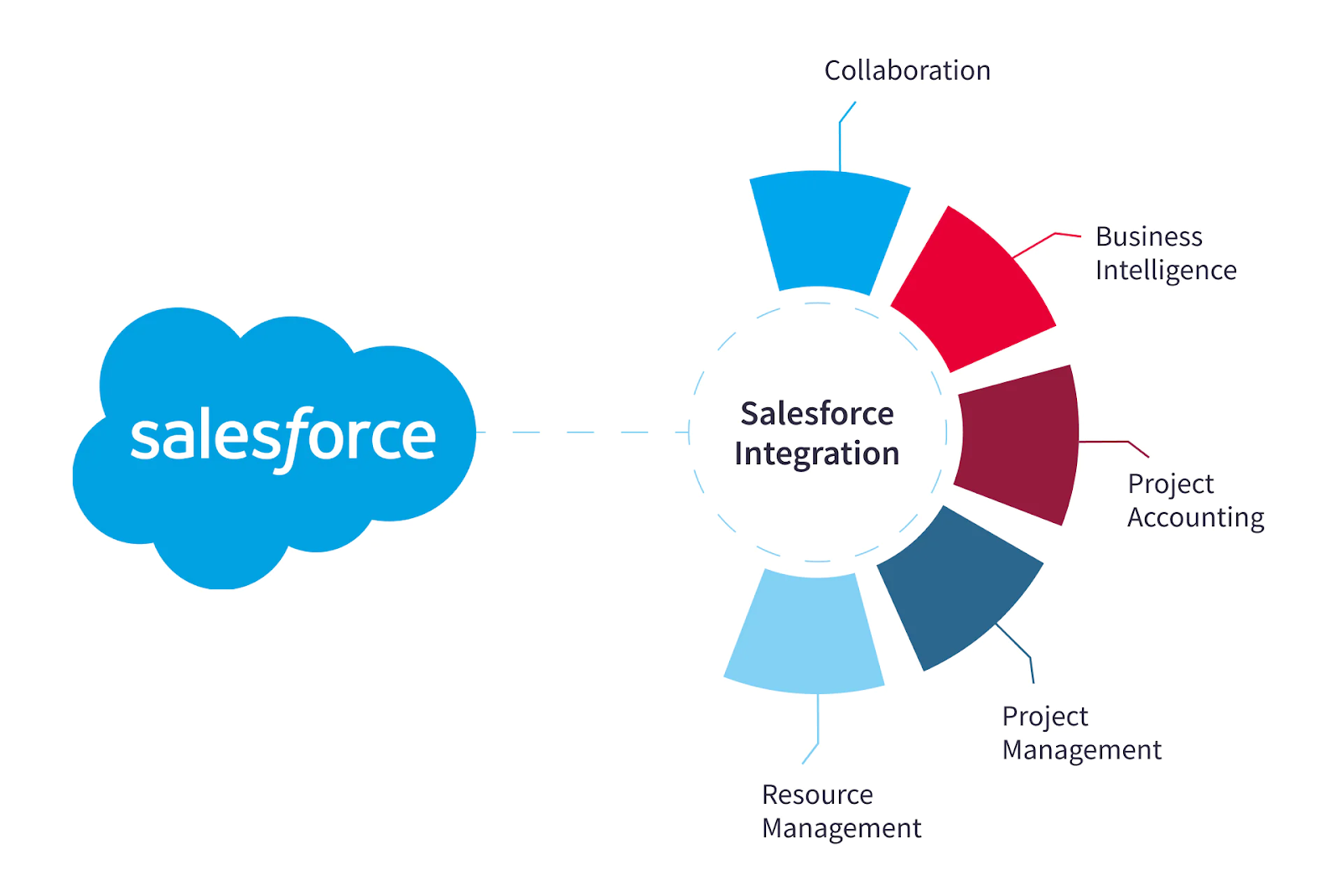
Salesforce is more than a CRM solution. Its capabilities extend well beyond marketing and customer engagement use cases. As a comprehensive business integration solution, Salesforce stands as a robust platform that seamlessly connects the front, middle and back-office operations. It unifies data from various sources, offering a panoramic view of the enterprise ecosystem.

The Role of Salesforce in Business Integration and Its Importance

The integration of disparate data sources and systems is more than a luxury—it’s a significant challenge and a nSo necessity. Modern businesses are tasked with managing an ever-growing array of data, making a centralized hub for data management critical.

Salesforce plays a pivotal role in ensuring that data flows seamlessly between different parts of the organization. It bridges the gap between sales and customer data, operational teams and even financial and HR management, offering a comprehensive integration of front-office, middle-office and back-office. 

Moreover, its exceptional ability to seamlessly integrate with a wide variety of systems and applications opens up a world of opportunities for businesses. By effortlessly connecting with existing software and databases, Salesforce becomes the central hub where data flows cohesively, eliminating data silos and streamlining processes.

Whether it’s integrating with popular marketing tools, ERP systems, or custom-developed applications, Salesforce ensures that data from different sources harmoniously coexists, enabling businesses to make more informed decisions, enhance customer experiences, and improve operational efficiency. This flexibility and adaptability in integration make Salesforce a transformative force for businesses, allowing them to leverage the full spectrum of their technological ecosystem to drive growth and innovation.


“The result? Connectivity that empowers decision-makers with real-time insights, facilitating more informed, strategic choices.”


 Salesforce Integration in Action: Connecting your operations across the whole organization

  • Enhancing Customer Insights and Engagement:

Front-office operations involve the seamless connection of customer-facing functions within an organization. This strategic integration empowers businesses to consolidate customer data from diverse touchpoints, leading to a deeper understanding of customer needs and preferences. The outcome is more meaningful, context-aware engagements, which ultimately cultivate stronger and more lasting customer relationships.

  • Optimizing Operational Synergy:

Bridging the gap between sales and customer data and your operational teams for middle-office operations it’s a strategic move that promotes seamless collaboration among these crucial departments, ensuring that customer demands are met with efficiency. Moreover, it aligns product development with market needs, leading to increased overall efficiency, reduced lead times, and a significant enhancement in teamwork and collaboration across your organization.

  • Elevating Core Efficiency and Risk Management:

Back-office integration delves deep into your core business functions, including finance, HR, and administrative processes. This integration strategy brings automation, streamlining, and compliance which results in heightened operational efficiency, reduced risks, and more effective resource management for cost savings and overall business performance.

The synergy and proper integration between front-office, middle-office, and back-office operations represents the nexus of transformation for modern enterprises. As these converge, they not only streamline operations but empower leaders with invaluable insights for making informed strategic decisions.

Unlocking Industry-Specific Advantages

Industries across the spectrum are harnessing the power of Salesforce to gain a competitive edge and unlock industry-specific advantages. These real-life examples illustrate the transformative impact Salesforce is having on various sectors:

  • Telecommunications and Media Excellence: A major industry player achieved a 30% faster customer service response time by integrating customer data across platforms using Salesforce. They also utilize Salesforce Einstein’s AI capabilities for enhanced customer engagement. [Source]
  • Elevating Manufacturing Standards: A leading firm in the elevator and escalator industry improved first-time fix rates by 25% using Salesforce IoT Cloud. Predictive maintenance connects equipment, customers, and field service, enhancing efficiency. [Source]
  • Financial Services Transformation: In financial services, one provider boosted advisor productivity by 15% through Salesforce’s data integration and AI capabilities. This led to a 10% increase in customer satisfaction. [Source]

Our Impact with Salesforce

At Making Science, we’re not just Salesforce experts — we’re catalysts for change. We guide our clients through the seamless transition to Salesforce, a cutting-edge platform that empowers businesses with efficient streamlining of processes, unprecedented levels of automation and data-driven decision-making capabilities.

We’ve had the privilege of driving change across countless businesses, with our successes falling into several key areas:

  • Salesforce CRM Implementations: Over the years, we’ve implemented Salesforce CRM for multiple multinational companies. These projects have standardized sales operations across all regions, automated routine tasks for increased efficiency and fostered a higher level of collaboration within their teams.
  • Marketing Transformations with Salesforce Marketing Cloud: We’ve successfully transitioned numerous businesses from labor-intensive campaign management to fully automated processes with Salesforce Marketing Cloud. These transformations have enabled our clients to achieve a level of customization previously out of reach, optimizing customer engagement and driving business growth.

Conclusion:  The Future is Data-Driven

In the digital era, data reigns supreme. Salesforce, combined with the expertise of Making Science, empowers businesses to harness the full potential of their data across your organization. 

Ready to revolutionize your enterprise with Salesforce? Contact us for a consultation and discover how integrated Salesforce solutions can take your business to the next level.[nectar_cta btn_style=”see-through” heading_tag=”h6″ button_color=”default” link_type=”regular” alignment=”center” display=”block” link_text=”Contact our team” url=”/contact/” margin_top=”50%”]

Contact

Contact

Data-Driven Digital Growth at the CIO Summit 2023

In the fast-paced world of information technology, IT leaders face unprecedented challenges. Did you know that, on average, a company takes three years to carry out a successful digital transformation? The pressure to be business strategists and digital innovators while managing teams and providing safe, effective, and sustainable tech solutions makes the role of the CIO more complex than ever. In this context, we encounter a fundamental question: how can IT leaders become genuine change agents capable of driving tangible business transformation?

The CIO Summit 2023, an event organized by IDC in Madrid on September 26 and 27, brings together the main IT professionals in Spain to explore the main technological trends and debate the most pressing challenges of the digital era. And Making Science is proud to have been a gold sponsor of this event.

Transforming Businesses Through Data Culture

In the current landscape of digital disruption, organizations face the imperative need to make data-based decisions. This involves aligning business strategy with effective data management, prioritizing both the needs of the business and customers. However, this challenge is not without obstacles: exponential data growth, diversity of sources, complexity of different privacy regulations and security challenges, pros and cons of using hybrid clouds in global environments, and of course, cost, sustainability, and scarcity of specialized talent.

During the roundtable “Breaking Down Barriers: Reorganization around Products and Processes”, our Director General of IT Solutions, Jose Miguel Ruiz, shared how adopting a systematic approach to data management that ensures the quality and consistency of information, backed by changes in processes and people, through technology and training, allows the implementation of a data culture, adapted to the maturity of each organization, which is key to optimizing IT investments and maximizing business opportunities with the creation of new data-based business models.

Francisco Molero Campos (Confluent), Jesús Cabet (Persán), Vítor Rodrigues (Magic Beans), José Miguel Ruiz (Making Science), Valentino Gallo (Gransolar Group) and Raúl Coria (IPM). 

The role of the CIO in this scenario is fundamental in combining strategic vision with the ability to manage technological assets and specialized teams, promote security and facilitate collaboration with other leaders of the organization. However, an interesting fact provided by IDC at the event revealed that, currently, approximately 50% of technology purchases come from other areas.

This data is related to the speed at which companies must innovate and optimize their operations through the use and integration of new technologies like AI, which can revolutionize data management by automating tasks and workflows, improving data quality, and even optimizing analysis and action on data in real time and autonomously. For example, companies can offer personalized experiences to users through algorithms that recommend products, services, or relevant content accurately, thus improving end-user satisfaction and increasing revenue.

In addition, collaboration with trusted tech partners, like Google Cloud, becomes a strategic differentiator to offer cutting-edge technological solutions that drive digital transformation and enhance business efficiency.

At Making Science, we are continuously innovating to address the challenges faced by IT managers and other leaders driving innovation. Our participation in the CIO Summit 2023 is a testament to our commitment to our customers to assist them on their growth journey through digital acceleration.

Embracing the Best of Both Worlds: The Benefits of Hybrid Multi-Cloud Environments

Introduction to Multi-Cloud/Introduction: The Rise of Cloud Technology

In today’s fast-paced digital landscape, cloud technology has firmly established itself as an indispensable tool for companies to develop adaptable, scalable, secure, and efficient technological solutions capable of addressing evolving business needs.

Large companies such as Google, Microsoft, Amazon, IBM and many others have democratized access to cloud services, making previously unattainable computing capabilities accessible to both businesses and individuals. 

However, as cloud technology evolves, so do the strategies for harnessing its power. Different integration approaches and architectures have emerged to fully exploit the cloud’s potential, including connecting on-premise and cloud environments, bridging private and public clouds, and collaborating with multiple cloud service vendors.

We will focus on this last scenario. 

Understanding Multi-Cloud Architecture

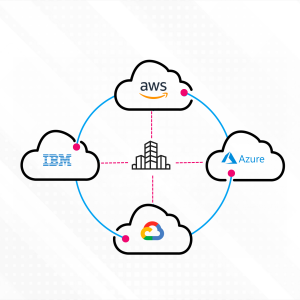
This Hybrid Multi-Cloud architecture refers to a system combining the services of two or more cloud providers working together into a unified ecosystem, leveraging each provider’s unique strengths, region availability and capabilities.

With numerous cloud providers offering various services, pricing models, and geographic availability, Multi-Cloud architecture has emerged as a strategic choice for businesses looking to maximize the potential of the cloud.

Why choose Multi-cloud?

Businesses are rapidly adopting this architectural approach for several reasons:

  • Enhanced Security: Mitigating Risks and Fortifying Infrastructure

This kind of architecture improves the system security in multiple ways. It mitigates risks by allowing workloads distributed across different cloud providers, ensuring that if one encounters issues, others can seamlessly take over. Additionally, it helps tackle “Shadow IT”, the use of unauthorized or unapproved technology solutions, applications, or services within an organization by employees, providing them with different cloud-based secure alternatives. Choosing cloud over on-premise software helps to avoid “Shadow IT”, while security and lack of governance risks can be significantly reduced. This architecture also adds extra resilience and redundancy, hardening overall application robustness.

  • Unmatched Flexibility: Breaking Free from Vendor Lock-ins

Cloud providers often offer similar products, but on certain occasions, some unique products and differences can be critical when choosing one over another. Multi-Cloud allows administrators to select the tools that best align with their specific needs, promoting closer alignment to business requirements.  It also allows you to choose each provider’s most powerful products and combine those to create a more robust solution.

  • Proximity and Compliance: Navigating Data Regulation and Geographical Challenges

High availability and fast response time are paramount in modern systems. Multi-cloud environments ensure multiple endpoints, optimizing response times by directing requests to the closest data center. Moreover, they facilitate compliance with data sovereignty laws and regulations, enabling services in regions where certain cloud providers may be restricted.

The Rise of Multi-Cloud Implementations

There are many other reasons why Multi-Cloud implementations are gaining popularity among companies seeking to improve security and performance while building robust applications or solutions with high availability, hybrid workflows and seamless DevOps integration. This approach recognizes that the cloud landscape is continually evolving. With providers improving their services or pricing models, deciding to rely on a single provider for a significant project is increasingly challenging.

In conclusion, The Future is Multi-Cloud

Julio Cesar’s wisdom, “Divide and conquer”, becomes particularly relevant here. In the short term, the benefits mentioned above make a strong case for Multi-cloud architecture. Although some can also be achieved with a Hybrid Cloud model, combining private and public clouds, there are strong reasons to believe that leveraging multiple clouds will result in more agile, secure and reliable systems.

Embrace the Multi-Cloud Revolution by Making Science and Propel Your Business to New Heights!

Transform your business with the power of multi-cloud, guided by the expertise of Making Science. Our team of certified experts are here to help you achieve real-world advantages by addressing complex challenges, streamlining operations and driving innovation that translates into measurable benefits for your business.

Efficiently maintaining serverless data lakes in Google BigQuery

Google’s BigQuery serverless data warehouse makes life so much easier and so much safer in terms of having all the data in one location however, the house-keeping and data governance are left for you to administer and manage.

At Making Science we work with numerous Google BigQuery customers, some small, some large and some very large corporate groups.  Most of our experience shows that customers are rolling out data governance tools but most of our customers are typically still offering the “SQL knowledgeable/connected” departments direct access to BigQuery. This all in the spirit of self-service analytics moving their business to be more data-driven.

Even with the advances in Google’s data catalog and data governance capabilities, the data administrators are left with challenges keeping data lakes and data warehouses operating efficiently.

The Making Science teams are always looking for ways to make themselves more effective at performing their work with the construction of methodologies and tools.  Making Science has tools specifically for Data Quality projects, Data Discovery and a most recent addition is BigQuery Intelligence.  The tool offers value to the roles presented in the data governance model below:[image_with_animation image_url=”48047″ animation=”Fade In” hover_animation=”none” alignment=”center” border_radius=”none” box_shadow=”none” image_loading=”default” max_width=”100%” max_width_mobile=”default”]The BigQuery Intelligence tool was built to help the data warehouse/lake architects/administrators/custodians manage house-keeping activities regarding datasets, tables and views and optimize these same objects.  Many of our larger and very large customers have 100’s of datasets and 100’s of tables and 100s of views within each dataset making it very challenging to keep on-top of house-keeping activities.

BigQuery provides data lake administrators with a simple visual interface for listing datasets, tables, and views.  The BigQuery explorer panel interface allows you to collapse tables and views under their given dataset simplifying the visualization.[image_with_animation image_url=”48053″ animation=”Fade In” hover_animation=”none” alignment=”center” border_radius=”none” box_shadow=”none” image_loading=”default” max_width=”100%” max_width_mobile=”default”]But the BigQuery Explorer does not offer data lake administrators a simple visual interface to understand usage statistics regarding datasets, tables and views; this is where BigQuery intelligence collects underlying data previously collected by the GCP + BigQuery environment and offers visualizations to understand the usage patterns across the nodes in the data warehouse.

The Data Scientists and Data Engineers at Making Science had a look and found that GCP offers a tremendous amount of data lake usage statistics. But, there was no easy way to retrieve the data and visualize the usage patterns in the data lake. The team chose to use Sankey visualizations, built with Python and D3, to better understand the usage patterns between the nodes (datasets, tables, views and jobs/queries) in the data warehouse. [image_with_animation image_url=”48059″ animation=”Fade In” hover_animation=”none” alignment=”center” border_radius=”none” box_shadow=”none” image_loading=”default” max_width=”100%” max_width_mobile=”default”]As the team worked with some very large data lakes they quickly found it necessary to allow data custodians to apply filters to limit views of the data lake to make the Sankey diagram more readable.  Most typically they would select logical groupings of datasets to give a complete view but without making the visualization undecipherable.  BigQuery Intelligence actually allows filtering both on datasets and tables.[image_with_animation image_url=”48104″ animation=”Fade In” hover_animation=”none” alignment=”center” border_radius=”none” box_shadow=”none” image_loading=”default” max_width=”100%” max_width_mobile=”default”]The team also found that by including the possibility to define color based on criteria; by default, the color criteria is “dataset” so that each dataset is distinguished by a specific color in the Sankey visualization.[image_with_animation image_url=”48073″ animation=”Fade In” hover_animation=”none” alignment=”” border_radius=”none” box_shadow=”none” image_loading=”default” max_width=”100%” max_width_mobile=”default”]The team decided to include a “change color criteria” filter, where we can choose between additional criteria including bytes, jobs, inherited jobs, recency, and inherited recency. With this kind of plot, we can check if there exist inefficient nodes in the data lake.[image_with_animation image_url=”48079″ animation=”Fade In” hover_animation=”none” alignment=”center” border_radius=”none” box_shadow=”none” image_loading=”default” max_width=”100%” max_width_mobile=”default”]

HotSpots

A couple of use cases helped by changing the color criteria is the location of “hot spots”, i.e. those nodes which process too many bytes or have too many jobs, and “cold spots” or those nodes that have not been used in a long time and hence could be removed/deleted from the data lake.  In the following screenshot, we can see that the color indicates the volume of data each node has processed. Red indicates too much, and green indicates a reasonable volume. Grey indicates that we don’t have information about this particular node. It is interesting to see nodes that have a deep level and are very red. This usually means that those nodes could be optimized by creating aggregated/intermediate tables.[image_with_animation image_url=”48085″ animation=”Fade In” hover_animation=”none” alignment=”center” border_radius=”none” box_shadow=”none” image_loading=”default” max_width=”100%” max_width_mobile=”default”]

Unused nodes

If we change the color criteria to “inherited recency”, we can search for nodes that have not received any query/job in a long time. The meaning of “inherited” is that we take the smallest recency among one node and its children, given that if one child node receives a job, in some way, the parent node also receives that job. Here, red indicates very high inherited recency and green indicates very small inherited recency. Grey, indicates that we have no info about the particular node. We could analyze the plot to search for unused nodes (red and grey) and clean the data lake.[image_with_animation image_url=”48091″ animation=”Fade In” hover_animation=”none” alignment=”center” border_radius=”none” box_shadow=”none” image_loading=”default” max_width=”100%” max_width_mobile=”default”]

Metrics

The team included a mouse-over capability to display relevant metrics of a node, as you can see in the following screenshot:[image_with_animation image_url=”48097″ animation=”Fade In” hover_animation=”none” alignment=”center” border_radius=”none” box_shadow=”none” image_loading=”default” max_width=”100%” max_width_mobile=”default”]

The Conclusion

Making Science teams, acting as Data Custodians for some of our customers, have found that conversations with Data Business Owners/Stewards regarding optimizations and housekeeping are greatly facilitated by the use of the BigQuery Intelligence tool.  Sitting down with the Data Steward with data and visualizations in hand enables a transparent, data-driven conversation.

The value to the business from a tool such as BigQuery Intelligence comes in the form of improved performance for systems accessing/consuming the data and ensures a reduced GCP operating costs.

The Making Science team members have feature additions already in the works and we will share some of the use cases and the corresponding benefits as they are available.

Economic Challenges and Outsourcing – Paper

Economic Challenges and Outsourcing

Understanding Current Challenges and the Path Forward

2022-2023 Report

This report explores the biggest challenges CIOs are facing, the role of staff augmentation and outsourcing, and what the future may hold for CIO’s organizations and teams.

[contact-form-7 id=”32344″]JTNDc2NyaXB0JTNFJTBBZG9jdW1lbnQuYWRkRXZlbnRMaXN0ZW5lciUyOCUyMCUyN3dwY2Y3bWFpbHNlbnQlMjclMkMlMjBmdW5jdGlvbiUyOCUyMGV2ZW50JTIwJTI5JTIwJTdCJTBBJTIwJTIwbG9jYXRpb24lMjAlM0QlMjAlMjdodHRwcyUzQSUyRiUyRnd3dy5tYWtpbmdzY2llbmNlLmNvbSUyRndwLWNvbnRlbnQlMkZ1cGxvYWRzJTJGMjAyMiUyRjEyJTJGTVNfU3dlZWZ0X0NJT19TdXJ2ZXlfV2hpdGVwYXBlci5wZGYlMjclM0IlMEElN0QlMkMlMjBmYWxzZSUyMCUyOSUzQiUwQSUzQyUyRnNjcmlwdCUzRQ==