CRO Success Stories: What Works in Travel, Insurance, and Financial Services

Introduction

Every digital team wants to improve conversion rates. But the question many organizations ask is simple:

What actually works?

Across industries such as travel, financial services, and insurance, the fundamentals of Conversion Rate Optimization (CRO) remain the same: understand user behavior, identify friction points in the digital journey, and test improvements that make the experience clearer and easier for users.

Yet the specific opportunities for optimization often vary depending on the sector.

Below are three real-world CRO success stories that demonstrate how clear hypotheses, focused experimentation, and user-centered design can generate measurable business impact.

Travel: Improving the Booking Journey at Bahía Príncipe

Digital travel experiences often present users with multiple accommodation options, which can create friction when comparing hotels or destinations.

Hypothesis

Users were not progressing through the booking journey because hotel options were displayed too low on the destination page. Visitors had to scroll before seeing available hotels, making it harder to compare options quickly.

Action

Working with Bahía Príncipe Hotels & Resorts, the CRO team redesigned the destination page so that hotel options appeared higher in the layout and multiple hotel cards could be viewed simultaneously.

This made it easier for users to explore, compare, and select their preferred hotel.

Impact

The optimized experience generated a +35% increase in progression within the reservation process, bringing significantly more users into the booking funnel.

This case illustrates how improving visibility and reducing effort in product discovery can drive meaningful improvements in travel conversions.

Insurance: Boosting Registrations at Trushield Insurance

Insurance products often involve complex information, which can make it difficult for users to quickly understand their relevance.

Hypothesis

Users were not engaging with insurance products because the messaging felt generic and did not reflect their local context or specific needs.

Action

For Trushield Insurance, the website experience was personalized based on user location, adapting content and messaging to make the offer more relevant to each visitor.

This contextual personalization allowed users to better connect with the product and understand its value.

Impact

The personalized experience resulted in a +266% increase in insurance registrations and subscriptions.

This example demonstrates how relevance and contextual messaging can significantly increase engagement and lead generation.

Financial Services: Increasing Registrations at Federated Insurance

Many financial and insurance products require users to understand abstract risks before taking action.

Hypothesis

Users were not completing registrations because the product page did not clearly communicate the risks that the insurance product was designed to address.

Action

The product page was redesigned to highlight real-life scenarios and potential risks, helping users better understand the importance of the insurance coverage.

By making the value proposition more tangible, the experience became clearer and more persuasive.

Impact

The redesigned experience resulted in a +76% increase in registrations.

This case highlights how clearer storytelling and better value communication can significantly improve conversion rates.

What These CRO Success Stories Have in Common

Although these examples come from different industries, they share several key principles.

Successful CRO initiatives typically involve:

  • identifying a clear friction point in the user journey
  • defining a testable hypothesis
  • implementing targeted improvements
  • measuring the business impact through experimentation

When this process is repeated consistently, even small improvements can generate significant cumulative growth over time.

Conclusion: Small Improvements, Big Results

CRO success rarely comes from a single dramatic redesign.

Instead, it emerges from continuous experimentation and incremental improvements that make digital experiences clearer, faster, and more intuitive for users.

Across travel, insurance, and financial services, the principle remains the same:

When friction disappears, conversions follow.

If you’d like to explore more real-world CRO success stories, visit our website to discover additional case studies and insights from optimization projects across multiple industries.
🎯 Personalization & CRO: Your Strategy for Next-Level Conversion Uplift

Introduction

Imagine walking into a physical store where the staff doesn’t just greet you, but instantly understands your preferences, guides you directly to items that match your style, and even offers you a discount on your favorite brand based on your past purchases. You wouldn’t just be impressed; you’d be significantly more likely to make a purchase and return again. Now, what if your website could replicate this highly tailored, intuitive, and engaging experience for every single visitor, every single time?

This is the profound power unleashed when you strategically combine personalization with your Conversion Rate Optimization (CRO) efforts. This article will meticulously explore what this dynamic duo truly means, why it has become an indispensable element for advancing your digital maturity in a competitive landscape, and provide actionable insights on how to seamlessly implement this integrated strategy to craft an unparalleled user experience. By consciously moving away from a ‘one-to-many’ approach and embracing a ‘one-to-one’ dialogue with your customers, you unlock a new, elevated realm of conversion potential, foster deep customer loyalty, and drive sustainable business growth.

Are you prepared to transcend the limitations of broad-brush marketing and finally engage in meaningful, individualized conversations with your users, transforming casual visitors into committed customers?

Definition

Beyond the First Name: What Personalization Really Means for CRO

True personalization within the context of CRO is far more sophisticated than merely auto-inserting a customer’s first name into an email subject line or a welcome banner. It represents a fundamental paradigm shift: the systematic practice of meticulously crafting uniquely tailored digital experiences for individual users. This tailoring is dynamically informed by a rich tapestry of data, including their real-time behavior on your site, their demographic profile, their geographical location, the device they are using, their previous interactions with your brand across all channels, and even their historical purchase data.

Instead of presenting a static, undifferentiated website to every visitor, personalization empowers you to dynamically alter and adapt various elements of your digital storefront. This includes, but is not limited to, displaying different content blocks, showcasing highly relevant offers, adjusting call-to-actions (CTAs), modifying site navigation, and presenting product recommendations that are inherently more appealing to specific user segments. This isn’t a peripheral add-on or a separate track from your core optimization initiatives; rather, it’s an advanced, integral strategy designed to profoundly enhance every single touchpoint within the user journey, leading to a substantial and measurable uplift in conversion rates.

New Reality

The Synergy: Why Personalization Supercharges Your Conversion Strategy

Traditional CRO methodologies are exceptionally effective at identifying what resonates best with the average user. Through rigorous A/B testing and multivariate testing, we uncover optimal layouts, compelling copy, and effective CTAs that perform well across a broad audience. However, here lies the critical insight: there is no single “average” user. Every visitor arriving on your site brings a unique set of needs, intentions, preferences, and prior experiences. This inherent diversity is precisely where personalization intervenes, serving as the ultimate accelerator for your conversion strategy.

By seamlessly integrating personalization into your existing CRO framework, you elevate your approach from conducting broad A/B tests aimed at a generic audience to executing hyper-targeted, segmented experiments. This powerful synergy initiates a virtuous cycle, creating a self-reinforcing loop of improved performance and customer satisfaction:

  • Deeper Relevance: When users are presented with content, products, and offers that are directly pertinent to their immediate needs, expressed interests, or past behaviors, their attention is immediately captured. This dramatic increase in perceived relevance translates directly into higher engagement metrics, longer session durations, and a significantly reduced bounce rate. Imagine a vegan customer visiting a grocery site seeing plant-based recipes highlighted on the homepage, or a new parent being shown baby product bundles instead of general electronics.
  • Reduced Friction and Enhanced Flow: Personalization anticipates user needs and proactively removes potential obstacles in their path to conversion. This could manifest in numerous ways: showing recently viewed items prominently, pre-filling forms based on past interactions, suggesting the most relevant shipping options, or displaying location-specific payment methods. By streamlining the user journey and creating a seamless, intuitive experience, you effortlessly guide users towards their desired action, minimizing frustration and decision fatigue.
  • Increased Customer Satisfaction and Loyalty: When customers perceive that a brand understands and caters to their individual preferences, they don’t just complete a transaction; they develop a deeper emotional connection and a sense of loyalty. This focus on individual needs fosters a positive brand perception and cultivates advocates who are more likely to return, make repeat purchases, and recommend your brand to others. In an era where customer experience is a key differentiator, this is crucial for long-term success and sustainable growth.

Practical examples

Putting It into Practice: 3 Examples of High-Impact Personalization

So, how does this sophisticated integration of personalization and CRO translate into tangible, real-world applications that deliver a direct and measurable uplift? Here are three powerful yet implementable examples of how you can begin to apply personalization to your website today:

  • Dynamic Homepage Banners and Hero Sections: Your homepage is your digital storefront’s main window. Leverage it dynamically. For a first-time visitor, a compelling welcome discount or a clear value proposition statement might be most effective. For a returning customer who has previously browsed specific product categories (e.g., hiking gear, organic coffee, or professional development courses), showcase new arrivals or special offers within those precise categories. For a customer who just made a purchase, suggest complementary products or invite them to review their recent order. This simple but powerful adaptation ensures the first impression is always relevant and impactful.
  • Tailored Product Recommendations Across the Site: Move beyond generic “Customers who bought this also bought…” suggestions. Implement advanced “Recommended for You” sections that are driven by each user’s unique browsing history, past purchases, items added to their cart, and even their search queries. This is a foundational tactic for intelligently enhancing cross-sells (e.g., suggesting a lens cleaning kit with a camera) and upsells (e.g., offering a premium version of a software product they’ve viewed). Machine learning algorithms can analyze vast datasets to predict precisely what a user is most likely to be interested in next, creating a truly bespoke shopping experience.
  • Geo-Targeted Content and Offers: Your users’ physical location offers a wealth of personalization opportunities. Is a user browsing your site from a city where you have a physical brick-and-mortar store? Immediately display a prominent banner promoting a “Click & Collect” option for local pickup or highlighting in-store promotions specific to that location. If a user is visiting from a region experiencing a cold snap, feature winter coats, heated blankets, or snow shovels prominently on your homepage, rather than swimsuits or gardening tools. This level of location-aware relevance directly drives immediate action by addressing local needs and conveniences.

Conclusion: Be the Bespoke Tailor of E-commerce

In summary, the strategic integration of personalization into your existing Conversion Rate Optimization strategy is not merely an optional enhancement; it is the definitive, non-negotiable step toward achieving true digital maturity and sustained competitive advantage. It fundamentally transforms your website from a generic, static billboard into a dynamic, intuitively intelligent sales assistant that meticulously caters to each user’s unique needs, preferences, and journey stage. This granular focus significantly boosts both your immediate conversion rates and cultivates profound, long-lasting customer satisfaction and loyalty.

Consider the substantial investment many businesses make in expensive Search Engine Advertising (SEA) campaigns, social media ads, and other traffic-driving initiatives. While these campaigns are essential for attracting visitors, they represent only half the battle. If those hard-earned users land on a generic, undifferentiated page that fails to speak directly to their individual needs or interests, a significant portion of your marketing investment is quite literally leaking value. A truly personalized user experience is the crucial mechanism that ensures your valuable traffic converts at its absolute highest possible potential, maximizing your return on investment (ROI).

Trying to treat all your customers identically is akin to a master tailor who only offers “one-size-fits-all” suits. While a lucky few might find a decent fit purely by chance, the overwhelming majority will feel ignored, unaddressed, and ultimately take their business elsewhere, resulting in significant missed opportunities and lost revenue. In today’s hyper-competitive digital landscape, the brands that thrive are those that embrace individual differences, communicate directly, and deliver highly relevant experiences.

So, reflect for a moment: What is one concrete, actionable way you could start personalizing your user journey on your website today? Share your innovative ideas and insights in the comments section below!

Deliver Exceptional Support: How Salesforce Service Voice Enhances Agent Productivity and Customer Satisfaction

In the fast-paced world of customer service, every second counts. Customers expect quick, efficient, and personalized support, while businesses strive to optimize their operations and keep agents productive. This is where Salesforce Service Voice comes in, a game-changer designed to seamlessly integrate voice capabilities directly into the agent’s workspace, leading to significant enhancements in both agent productivity and customer satisfaction.

The Challenge: Balancing Speed with Quality

Traditionally, handling customer calls has often meant agents juggling multiple screens, systems, and applications. This fragmented workflow can lead to delays, errors, and a frustrating experience for both the agent and the customer. Agents spend valuable time searching for information, while customers wait on hold or have to repeat their issues. This inefficiency directly impacts resolution times and, consequently, customer happiness.

How Salesforce Service Voice Transforms the Service Experience

Salesforce Service Voice tackles these challenges head-on by bringing the power of the contact center directly into the Salesforce Service Cloud console. This integration offers several key benefits:

  • Unified Agent Workspace: Agents no longer need to switch between different applications. Voice calls are seamlessly routed and managed within the Service Cloud console, where all customer data, case history, and relevant information are readily available. This single pane of glass reduces clicks and context switching, allowing agents to focus on the conversation.
  • Real-time Customer Insights: As a call comes in, Service Voice intelligently pulls up the customer’s complete profile, including past interactions, purchase history, and even sentiment analysis from previous calls. This instant access to crucial information empowers agents to provide personalized and informed support from the very first “hello.”
  • Automated Call Logging and Wrap-up: After a call, Service Voice can automatically transcribe the conversation and even summarize key points, creating a detailed call log. This drastically reduces the time agents spend on post-call administrative tasks, freeing them up for more customer interactions.
  • AI-Powered Assistance: Leveraging Salesforce’s Einstein AI, Service Voice can offer real-time suggestions and knowledge articles to agents during a call. This intelligent guidance ensures agents have the right answers at their fingertips, leading to faster resolutions and fewer escalations.
  • Enhanced Coaching and Quality Assurance: Call recordings and transcriptions provide valuable data for supervisors to coach agents effectively and ensure consistent service quality.

The Impact: Happier Agents, Happier Customers

The benefits of Salesforce Service Voice are tangible and far-reaching:

  • Increased Agent Productivity: By streamlining workflows, automating tasks, and providing instant access to information, agents can handle more calls, resolve issues faster, and reduce their average handling time. This leads to a more efficient contact center operation.
  • Boosted Customer Satisfaction: Customers receive faster, more personalized, and accurate support. They feel heard and understood, leading to higher satisfaction, increased loyalty, and a stronger brand reputation.
  • Reduced Agent Burnout: A less fragmented and more efficient workflow reduces stress and frustration for agents, contributing to a more positive work environment and lower attrition rates.

The Bottom Line

Salesforce Service Voice is more than just a telephony integration; it’s a strategic tool that redefines how B2C companies deliver customer service. By uniting voice capabilities with comprehensive customer data and AI-powered insights, it empowers agents to be more productive and effective, ultimately leading to exceptional customer experiences and a significant competitive advantage.

Moving beyond UX/UI with the new paradigm of CX/AX design

At Making Science, we’ve always been committed to staying ahead of tech transformation. We’re excited to share that our UX/UI department is evolving into CX/AX Design – a change that represents our vision for the future of digital experiences.

This transition comes at a pivotal moment. After years of remarkable growth and innovation at Making Science, we’ve witnessed firsthand how rapidly the technology landscape is transforming. This evolution in our approach isn’t merely a rebranding – it’s a strategic shift that prepares our clients for the next wave of digital engagement.

Why we’re expanding our focus

For years, User Experience (UX) and User Interface (UI) have been the industry standard terms for describing digital product design. These concepts have served us well, focusing our attention on creating intuitive, beautiful interfaces for human users.

However, as noted UX pioneer Jakob Nielsen recently observed in his article “Hello AI Agents: Goodbye UI Design, RIP Accessibility,” we’re entering an era where direct human interaction with interfaces may no longer be the primary mode of digital engagement.

At Making Science, we’ve anticipated this shift. By expanding our focus to Customer Experience (CX) and Agent Experience (AX), we’re ensuring our work remains relevant and impactful in an increasingly AI-mediated world.

The dual future of design with CX and AX

Customer experience (CX)

CX takes a holistic view that extends beyond interface interactions:

  • The entire customer journey across all touchpoints
  • Emotional responses and satisfaction at each stage
  • Brand perception before, during, and after engagement
  • Seamless integration of online and offline experiences
  • Service design and delivery

While UX focuses on how users interact with specific products, CX considers the entirety of a customer’s relationship with a brand or organization.

Agent experience (AX)

Here’s where we’re truly breaking new ground. Agent Experience (AX) recognizes the emerging reality that AI agents will increasingly mediate between humans and digital services:

  • Designing for AI agents that navigate interfaces on behalf of users
  • Creating structured data and content that both humans and AI can efficiently process
  • Developing interaction patterns optimized for both direct human manipulation and agent-based operations
  • Ensuring our digital products work seamlessly in an agent-first ecosystem

Transforming possibilities for our clients

This evolution significantly expands what we can deliver:

  • Comprehensive ecosystem design: We now address not just how your product works, but how it fits into your customers’ lives and interacts with emerging technologies.
  • Future-proofed digital assets: Your digital presence will be prepared for both traditional human users and the coming wave of AI agent interaction.
  • Strategic advantage: Our approach bridges UX fundamentals with business strategy and technological innovation, positioning your brand ahead of competitors.
  • Excellence across all touchpoints: While expanding our scope, we remain committed to creating beautiful, usable interfaces for direct human interaction.

Our unique AI methodology 

At Making Science, we’ve been developing our proprietary Synthetic Users Methodology to gain unprecedented insights into how both humans and AI agents interact with digital experiences.

This methodology has become our own “search for intelligent life” – uncovering behaviors and patterns that traditional methods simply can’t detect. The insights we’ve gained have been instrumental in our evolution toward CX/AX Design, allowing us to create experiences that not only meet current needs but anticipate future demands.

Honoring fundamentals while embracing the future

This strategic shift doesn’t abandon the principles that have guided exceptional design for decades. Rather, it expands our perspective to address new realities. The fundamentals of human psychology, visual design, and usability remain relevant – but they’re now applied in increasingly sophisticated contexts.

As Nielsen points out, AI agents don’t replace human users – they serve them. Our goal remains creating exceptional experiences that serve human needs, whether directly or through technological mediation.

Partner with Making Science

As we embrace this new approach, we invite forward-thinking organizations to join us in exploring the expanded possibilities of CX/AX Design. The tech landscape continues to evolve at a breathtaking pace, and together, we can create solutions that work brilliantly today while anticipating the needs of tomorrow.

Ready to transform your digital experience?

Our CX/AX Design team is ready to help elevate your digital presence. Whether you’re looking to enhance your customer journey, prepare for an AI-first future, or simply create more engaging digital experiences, we have the expertise and vision to help you succeed.

Enhancing UX/UI Research with Synthetic Users: The Future of Design Testing

Today, user research is a fundamental part of designing digital experiences. It helps us better understand users’ needs, behaviors, and expectations to create more intuitive and functional products. However, traditional research methods, such as interviews and usability testing, are often costly, time-consuming, and difficult to scale. This is where synthetic user research comes into play, an innovation that uses artificial intelligence and autonomous agents to create virtual user profiles and simulate their interactions.

In this article, we explore how synthetic users are changing the way we conduct UX/UI research, their current limitations, and how Making Science is addressing these challenges with its own advanced synthetic user model.

What Are Synthetic Users? 

Synthetic users are profiles generated by AI that simulate the characteristics, needs, and behaviors of real users. These profiles can be created automatically, using data and AI algorithms that mimic the diversity and complexity of a real audience. Tools like Delve AI and Synthetic Users allow anyone to generate detailed personas with information about their background, frustrations, goals, and psychological characteristics. Through these platforms, design teams can quickly create profiles representing a diverse sample of users without the need to recruit real individuals.

Advantages of Research with Synthetic Users

Scalability and Efficiency The main advantage of synthetic users is their ability to simulate multiple profiles in a short period. By eliminating the need to manage and coordinate groups of real users, design teams can quickly obtain relevant data from a wide variety of people. This makes research much more scalable and efficient, especially when fast results are needed.

Cost Reduction Recruiting real users, conducting interviews, and performing usability testing can be costly and logistically challenging. With synthetic users, these costs are significantly reduced, as there is no need to compensate participants or manage the logistical aspects of research sessions.

Simulating Controlled Scenarios With synthetic users, teams can simulate very specific scenarios and observe how virtual users interact with a product or service. This flexibility allows for usability testing with different types of users in controlled contexts, making it easier to identify problems before launching a product to the market.

Limitations of Synthetic Users

While synthetic users offer great advantages, they are not a complete solution. There are some important limitations to consider:

Lack of Real Empathy Although synthetic profiles can be incredibly detailed, they cannot replace genuine interaction with real users. Interviews and usability testing provide an emotional connection that helps designers deeply understand the motivations, friction points, and emotions behind user behavior. Synthetic users, no matter how sophisticated, lack the human complexity necessary to simulate authentic emotional experiences.

Superficially Accurate Simulations Synthetic users can provide valuable feedback, but they often lack the complexity that real users can provide. The insights generated by AI may be overly optimistic or simplistic, making it necessary to complement them with real-world research to obtain a more comprehensive view.

Reliance on Previous Data Synthetic users rely on previous data to create profiles, meaning their accuracy depends on the quality of that data. If this information is limited or outdated, the resulting profiles and insights may not reflect actual user behavior.

How Making Science is Redefining Synthetic Users

Understanding these limitations, at Making Science we have developed our own advanced synthetic user model designed to overcome many of these challenges. Unlike conventional solutions that focus mainly on demographic data, our model integrates multiple layers of information, including:

  • Market behavior
  • Technological context
  • Socioeconomic aspects
  • Behavioral trends
  • Customer journey insights

Additionally, we enrich our model with sectorial and brand insights—incorporating information about the sector, competitive landscape, and brand-specific elements such as product offerings, pricing strategies, and positioning. This approach allows us to simulate more realistic user experiences that account for industry-specific dynamics and brand perception.

But what truly sets our model apart is its ability to incorporate real data from various sources, such as user interviews, focus groups, and client reports. It can even be enriched with call center data, ensuring a deeper and more authentic understanding of user behavior.

Moreover, our model excels in early-stage validation. It can test redesign proposals at the sketch or wireframe stage, providing actionable insights to determine whether the new approach improves the user experience. This capability accelerates decision-making and enhances design outcomes, helping teams iterate with greater confidence.

Use Cases in UX/UI Research

While synthetic users should not fully replace real-user research, they have an important role in the lifecycle of UX/UI research. Some of the most relevant use cases include:

Exploratory Research: Synthetic users are ideal for the early stages of research, where the goal is to explore potential issues and generate hypotheses. By creating synthetic personas based on demographic and behavioral data, designers can gain an initial understanding of their audience before diving into more costly and complex studies.

Concept and Prototype Testing: Before conducting tests with real users, design teams can use synthetic users to evaluate design ideas, prototypes, and features. This allows for quick validation of concepts and adjustments before rolling out prototypes to real users.

Feature Validation: Synthetic users can be used to validate new features or changes in a product. Through simulations, designers can observe how different user segments interact with the product and whether the new features meet their needs.

AI and the Validation of Interface Affordance One of the most exciting advancements that AI already enables is the validation of the affordance of our interfaces. Simply put, affordance refers to an interface’s ability to indicate how an element should be used intuitively. AI can analyze and predict how users will interact with certain interface elements, helping us improve accessibility, clarity, and usability in our designs. Thanks to simulations with synthetic users, we can observe and adjust interactions before implementing changes in a real product, allowing us to optimize the user experience more efficiently.

The Future of Synthetic Users in UX/UI Research

The field of synthetic user research continues to evolve. At Making Science, our advanced synthetic user model not only integrates complex layers of demographic and behavioral data but also enriches profiles with real user feedback from interviews, focus groups, client reports, call center interactions, and sector-specific insights. This unique approach allows for more nuanced and realistic simulations.

Additionally, our model’s ability to test wireframes and sketches sets it apart, enabling early detection of design challenges and quicker iteration cycles.

However, it is essential to remember that research with real users should always be the foundation of any design strategy. Synthetic users are a powerful tool to complement research, but they should not replace a deep analysis of users’ needs, expectations, and emotions.

TL;DR 

Synthetic user research is opening up new opportunities for design and product development teams. While it doesn’t replace real-user work, it provides a scalable and cost-effective alternative to obtain preliminary insights and validate ideas quickly. The key is knowing when and how to use this technology effectively, integrating it into a broader and balanced research approach.

At Making Science, we support our clients in implementing these innovative technologies to improve their user research processes. Our proprietary synthetic user model stands out by integrating both demographic insights and real user data, even from call centers, and enriching the analysis with sector-specific and brand insights. Additionally, we validate redesign concepts at the wireframe stage, optimizing user experiences from the earliest phases. The future of UX/UI research is promising, and we are ready to lead this change.


[button open_new_tab=”true” color=”accent-color” hover_text_color_override=”#fff” size=”medium” url=”https://www.makingscience.com/contact/” text=”Accelerate your Business” color_override=”#f0076f”]

Responsive Design and Accessibility: Mastering User-Centric Web Frontends

The Surprising Reality of Mobile Web Accessibility

One might think that it’s a battle won. Web accessibility has been a resonating theme for over two decades now, emphasizing the importance of ensuring an inclusive online experience for all users. 

65% of web traffic in Europe comes from mobile devices, and Google has clearly indicated its support for mobile-optimized websites by favoring them in its ranking.

Mobile Optimization: Expectation vs. Reality

Nowadays, all advertisers should have a mobile-optimized website that adheres to the basics of accessibility – how could it be otherwise?

However, despite advancements, the reality is quite different. A study conducted by Making Science in 2022 shows that, among other findings, 72% of the websites of the companies from the IBEX 35 (Spain’s principal stock exchange), exhibit mobile accessibility deficiencies.

Similarly, we still encounter clients asking us to audit their website, only to find that the design was not initially intended for mobile.

This is particularly serious because not optimizing the experience for the majority of traffic exposes one to losing conversion points, leads, and sales.

Responsive Design vs. Mobile First.

Moreover, just because a website displays decently on a mobile device doesn’t mean it’s optimized for the best conversion. To explain, the term “responsive” is not equivalent to “Mobile First.”

When designing a website, there are generally 2 or 3 versions for different device types: Desktop, Mobile, and sometimes Tablet. There are fundamentally two ways to work: either start with mobile and progress to larger formats, known as “Mobile First”, or the other way around. This first approach makes the most sense since it caters to the majority of users, leveraging additional space on desktop.

The other approach, unfortunately still too common, goes in the opposite direction, known as “Graceful Degradation.” The designer starts with the largest version and then adapts it to mobile. This is not the right approach as it optimizes work for a minority, requiring adjustments for content and functionality in a confined space.

You might say, “But if we’re talking about ‘Graceful Degradation,’ it can’t be that bad.” Let me give you an example to explain why it’s not the case.

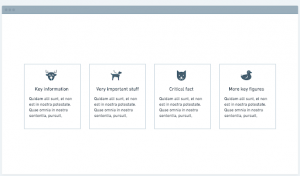
Imagine a product website presenting its main selling points to visitors. On the desktop version, a common way to present them would be using elements called “Cards,” with 3 or 4 cards in a row. This layout is suitable for a large horizontal screen but we can immediately intuit that it doesn’t fit very well into a vertical screen. 

When translated to mobile, these cards often end up either in a horizontal carousel or a simple vertical stack, neither of which is optimal. In the first case, the user will have to interrupt his horizontal scroll to scroll horizontally in order to see the info. (Spoiler: he won’t do so, and will lose an important part of the product pitch.)
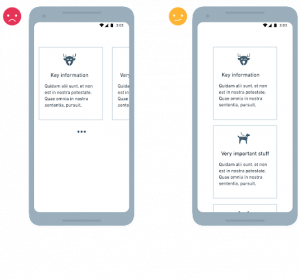
Vertical stacking is a better option, but in terms of design and space optimization, it’s really not that great. 

The Case for Progressive Enhancement

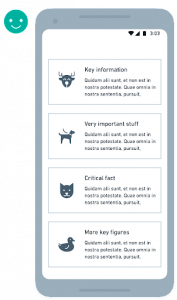
Working in the direction of “Progressive Enhancement,” starting with mobile, forces us to optimize information presentation for mobile constraints, resulting in a better-adapted version.

Here, all information is visible on a single screen, giving the user access to all arguments in a nutshell.

The errors caused by the Desktop First approach can be even more dramatic and lead to significant drops in conversion. For example, forgetting to provide a mobile user with a link to return to the filtered list from a product page because the Desktop version lacks it (desktop users are generally relying on the browser’s back button).

Breaking Free from Old Design Habits

Unfortunately, many agencies and designers still follow a Desktop First approach, either out of habit or comfort.  It’s more rewarding to design a beautiful layout on a large screen than starting with mobile.  Another downside is that since mobile design comes at the end of the creation process, it often gets rushed to meet deadlines.

It’s time for agencies and designers to break free from old habits and prioritize the quality of the user experience across all platforms.

Advertisers must also ensure that teams responsible for designing digital assets opt for a “Progressive Enhancement” approach, starting with mobile. This represents a strategic approach to overcome constraints while ensuring a consistent and optimal user experience.

The journey towards universal web accessibility and an exceptional user experience requires constant evolution of methodologies and a reassessment of established practices. Only those who anticipate these changes and adopt innovative approaches can hope to stay in sync with the growing expectations of users.

AR and VR in the Digital Age: Uphill Battle or Future of Opportunity?

Augmented Reality (AR) and Virtual Reality (VR) have made their mark in the digital landscape, promising to revolutionize our interactions with the world. Yet, despite their potential, these technologies are still striving to attain mainstream acceptance. Does AR/VR signal an uphill battle or do they hold a future of opportunity?

Unique UX/UI Design Principles in AR/VR

AR and VR have found success within niche applications. Google, for instance, has made impressive advancements in AR by enabling users to visualize certain products before purchase, and platforms like YouTube now use AR for innovative features like makeup trials. However, these successes are more exceptions than the norm.

Even with tech giants like Meta and Apple delving into this realm, their offerings haven’t ignited the market as expected. Meta’s AR/VR headset and Apple’s VisionPro are yet to showcase their full potential.

A key factor in the adoption of these technologies is the user experience they provide. The UX/UI design principles for AR/VR go beyond the conventional ones like user-centered design, consistency, and hierarchy. AR/VR environments, due to their three-dimensional nature, necessitate a detailed understanding of depth, proximity, and motion, thus broadening the horizon of UX/UI design principles.

Comfort: A Critical Factor in AR/VR Adoption

Comfort in AR/VR settings is a significant aspect that influences user acceptance. The immersive nature of VR can cause discomfort or even trigger motion sickness in users. To encourage user adoption, designers must explore and implement strategies to mitigate these discomforts, thereby ensuring an engaging and enjoyable experience.

Emerging Technologies: A Ray of Hope?

Despite these challenges, emerging technologies offer a glimmer of hope for AR and VR. Products like XREAL’s connected glasses and Mojo Vision’s connected lenses could potentially revolutionize the game. These devices aim to seamlessly merge the virtual and real worlds, making AR/VR more accessible and practical for everyday use.

 Envisioning the Future with AR/VR

The journey of AR and VR technologies in the digital age has been challenging, primarily due to factors like user comfort and the need for innovative UX/UI design principles. However, with the emergence of new devices and a focus on enhancing user experience, these technologies have the potential to take off in a significant way.

Whether AR and VR will become a mainstay in our everyday lives or remain a promising yet unrealized innovation is a narrative that continues to unfold. What’s clear is that these technologies are shaping our present and have the potential to significantly influence the future of digital transformation.

Integrating AR/VR technologies into digital transformation strategies is not just about keeping pace with the latest tech trends. It’s about envisioning a future where businesses can provide unprecedented value to their customers, enhance business operations, and gain a stronger competitive position in an increasingly digital market. AR and VR are not just technologies of the future—they are shaping the present and have the potential to drive significant value in the digital transformation journey. Businesses that understand this will be well-positioned to thrive in the digital age.

Leading the way in this digital era, Making Science is committed to leveraging new technologies to drive digital transformation. Our team of experts, armed with solid UX/UI design principles, is dedicated to helping businesses harness the full potential of AR/VR technologies, enhance customer experiences, and secure a competitive edge in the digital age. Ready to embark on your digital transformation journey with AR/VR? Partner with Making Science today!

How to Prepare Your Ecommerce Business for the Holiday Rush

The holiday season is not just about festivities and celebrations. For businesses, it’s a period of heightened activity, increased customer demand, and fierce competition. With key shopping events like Black Friday, Cyber Monday, and Christmas sales on the horizon, the success of your season depends on your preparedness.

In this guide, curated by the Making Science team, we blend various critical aspects of business operations to help equip businesses with a comprehensive, well-rounded approach to tackle the peak season rush.

1. Scalability: The Backbone of Your Online Store

We all know time is money. According to Gartner, based on industry surveys, network downtime can cost $5,600 per minute on average. This figure equates to well over $300K per hour.

Your online store’s infrastructure serves as the foundation for your digital presence. An influx of shoppers can place immense stress on your infrastructure, making it crucial to predict traffic patterns and scale your resources accordingly. Regular stress tests will help identify and rectify weak points. This proactive approach ensures your systems can handle the increased load, preventing slow loading times, crashes, or dreaded virtual queues, and keeping your digital storefront open and inviting.

2. Process Monitoring: Make checking out simple!

Don’t let a glitchy shopping cart or an overloaded payment gateway hinder your sales. Monitor the purchasing process every step of the way – from product discovery to payment confirmation for a smooth and efficient shopping experience. With the increase in traffic during peak season, your e-commerce processes, especially payment solutions, should be capable of absorbing traffic spikes so that transactions are processed without a hitch.

3. Digital Security: Protecting Your Business and Customers

Over half (56%) of Black Friday spam emails received between October 26 and November 6, 2022, were scams, according to research from Bitdefender. Furthermore, small businesses in the retail sector are 50% more likely to be targeted by cybercriminals, leading to losses of around $6.9 billion from online scams. 

The primary threats include social engineering scams, phishing attacks, fraudulent websites, unsecured financial transactions, ransomware attacks, and data breaches. Given these risks and the heightened digital activity during peak season, businesses must reinforce their digital channels by auditing their website security to safeguard their systems and customer data.

4. Inventory and Logistics: Meeting Demand Efficiently

Handling the increased demand during peak season requires efficient management of inventory and logistics. A sold-out product or delayed delivery can lead to disappointed customers. Keep a close eye on your stock levels, plan for increased shipping and delivery times, and consider liaising with third-party logistics providers to manage the increased demand.

5. Proactive Marketing Strategy: Engaging Your Customers

Stand out from your competitors with well-planned outreach to significantly increase your brand’s visibility and customer engagement. Use a mix of channels like email, targeted ads, and social media to reach your audience with impactful messages. Maximize your outreach impact with an omnichannel strategy that mixes and matches channels to deliver your message to the right audience at the right time. Most importantly, start planning at least 4 weeks in advance, allowing yourself ample time to refine and perfect your messages.

6. AI Integration: Enhancing Performance and Efficiency

Artificial Intelligence has become a game-changer in the digital space. From creating better SEO descriptions to automating repetitive processes, AI technologies can boost your business performance and efficiency. Consider integrating AI-powered tools into your operations, like Gauss AI, our proprietary technology that allows you to automate processes and improve ad performance, reaching customers more effectively.

7. Customer Experience: Prioritizing Satisfaction

A positive customer experience extends beyond a user-friendly interface and streamlined checkout process. It’s about providing timely and effective support. Incorporating FAQ and Feedback sections on your site can help customers find information quickly and share their experiences. To take it a step further, consider implementing AI-based chatbots ensuring help is just a click away, at any time.

8. Contingency Planning: Preparing for the Unexpected

Despite the best preparations, unexpected issues can occur. Having robust contingency plans helps your business respond quickly and effectively to potential system crashes, payment gateway failures, or unexpected traffic spikes, minimizing disruption and maintaining customer satisfaction.

This guide forms a solid foundation for your business as you gear up for the peak holiday season. Remember, preparation is key to turning these challenges into opportunities for growth. 

The time to start is now! As always, The Making Science team is here to guide you every step of the way. Let’s make this holiday season a resounding success together!

Creating a Greener Web: The Importance of Sustainable Websites

By now, you’ve surely heard the term “sustainability.” It’s a concept that should be applied to all human practices – including websites. The Internet has become a vital tool for economic growth and societal development, significantly impacting our daily lives. However, it’s not exactly a clean technology.

The Environmental Impact of the Internet

The Internet has a considerable impact on people’s development and daily life. To achieve sustainable development as outlined by the 2030 Agenda, we must harmonize economic growth, social inclusion, and environmental protection. These elements are interconnected and crucial for the well-being of individuals and societies.

So, what does sustainability have to do with the use of the Internet? A great deal. While the Internet is an indispensable facilitator for economic growth and human progress, it’s not as green as we might hope. With the operation of devices and the dependence on servers (the true heart of the Internet), substantial amounts of energy are used and CO2 is generated.

Here are some startling statistics:

    • The Internet represents approximately 10% of global electricity consumption.
    • If the Internet were a country, it would rank as the sixth largest consumer of electricity on the planet.
    • The Internet produces around 2% of global CO2 emissions annually, equivalent to the aviation industry.
    • An average web page produces 1.76 grams of CO2 for each page visit.
    • Streaming Netflix for one hour a week requires more electricity than the annual production of two new refrigerators.
    • Data centers alone consume approximately 200 terawatt-hours (TWh), that is, more energy than the entire country of Iran.

In addition to these, consider the excessive water consumption in data centers, necessary for their cooling systems and proper maintenance. Most of this water is potable, with non-potable water making up less than 5%. This can cause serious problems for populations and agriculture, especially in the increasingly common scenario of drought.

If this data doesn’t concern you, maybe Google’s penalty will. Google uses metrics called Core Web Vitals to score your website and index it in its search engine more or less favorably. Among these metrics are accessibility, loading speed, and now, sustainability.

How can I build a more sustainable website?

The most basic tips would be to take care of the load time, font and image optimization, js and css rendering, using clean code and simple designs. This it’s just a complement of the good practices that all companies need to apply to reduce their carbon footprint, including the use of clean and renewable energy sources.

The “Sustainable Web Manifesto” proposes certain rules that all digital products and services should follow:

  • Clean. Digital products and services must be powered by clean, renewable energy.
  • Efficient. The products and services provided digitally will use the least amount of energy possible, as well as the minimum material resources.
  • Open. Digital products and services must be accessible, allow the free exchange of information, and allow users to control their data.
  • Honest. The products and services will not deceive or exploit users in their design or content.
  • Regenerative. The products and services will support an economy that takes care of people and the planet.
  • Resilient. The products and services will work at times when people need them most.

The Role of Large Companies: Democratizing Green Websites

Do large companies really take sustainability into account? Undoubtedly, Google’s focus on sustainability is starting to influence designers, developers, and companies worldwide to do things better and apply sustainable practices. Companies like Google, Amazon, Facebook, and Apple still have to set a better example and be responsible for the high social and environmental impact they have. A good example of this is Apple’s recent campaign “2030 Status: Mother Nature“. Some see it as an aspirational, emotional, and hopeful campaign, while others see it as pure greenwashing, especially when considering the company’s blatant planned obsolescence practices and its closed ecosystem that didn’t adopt the USB-C connector until the iPhone 15 (2023). This change was forced by a European Parliament resolution that will require a unified smartphone charger by 2024 to enable reuse and reduce electronic waste.

Conclusion: Towards More Sustainable Websites

Sustainability in web design is more than an emerging trend; it’s a necessity. As the digital world continues to grow, so does its environmental impact. At Making Science, we strive to be part of the solution, not the problem.

Our team of expert back-end and front-end developers, teamed with specialized UI/UX designers, work together to create digital solutions that are not only functional and user-friendly but also sustainable. We leverage our collective expertise to reduce the digital carbon footprint, demonstrating our commitment to making the web greener, one website at a time.

Interested in building a more sustainable web presence? 

UX/UI tips to improve your website

A learning process begins in our brains every time we visit a new website. Whether it’s navigation, design, or another website element, the brain has to learn how to use the site without forgetting why we visited it in the first place.

The mental effort required during this time is called cognitive load. Remember also that the working memory in which this new information is processed and stored is limited. The brain begins to slow down or even give up on tasks when it receives more information than it can process simultaneously. Although cognitive load is not entirely avoidable, designers must strive to manage and adapt to these limits.

What is cognitive load?

To reduce cognitive load, we must first understand what causes it. Broadly speaking, the causes of cognitive load can be traced back to three main factors:

  • Too many options
  • Too much reflection needed
  • Lack of clarity

Each of these factors requires its own effort and consumes mental resources that do not really help users understand the content.

Miller’s Law

Miller’s Law states that a human being can only retain between 5 and 9 items of knowledge at a time. As a result of this principle, many misunderstandings have arisen, such as the restriction of an interface menu to 7 items. It is better interpreted as an argument that the number of objects that the average human can hold in short-term memory is 7 ± 2.

Hick’s law

Hick’s Law (also known as the Hick-Hyman Law) is a psychological principle that examines the relationship between the number of options and the time it takes to make a decision. Simply put, the more options there are, the longer it takes to make a decision. Therefore, as designers, we must integrate the data and display it in a way that is not overwhelming for the user, seeking clarity.

Our UX/UI Suggestions

These two laws can be summarized in three tips that help reduce the cognitive load:

Groups

To make the information easier to process and memorize, we can divide it into a small number of units or chunks. Fragmentation allows us to compensate for our limited ability to process and store information in short-term memory. An example of how we fragment information can be the way we display spaces in a phone number:

(this is the Making Science US office number,
call us if you need further UX/UI assistance 😉)

We recommend breaking down large amounts of info into smaller pieces so that the user can understand it and get a clearer idea of ​​what is going on. The user’s perspective on what is important and worth remembering may depend on how the information is regrouped.

Categorization

Organizing information into logical groupings is another way to decrease cognitive load. Grouping items divided into various categories can help users focus more effectively. This helps prevent cognitive overload by reducing the amount of material the user is exposed to. In this way, the user can concentrate on the group that interests him and ignore the rest of the elements.

Limit the number of options

As we have already seen in Hick’s law, the difficulty for the user to make decisions is directly proportional to the number of options he encounters. The easiest way to fix this would be to narrow down the options where possible. A user presented with a decision between 3 or 4 elements will (almost) always have a better conversion rate than one with 6 or 7.

When this is not possible, we can adopt the above advice and group or categorize. For example, if a form has too many fields, we can divide it into steps to discourage abandonment.

One last UX/UI consideration

Here we present you with 3 ways to improve the user experience on your website. HOWEVER!! You should remember that these are general recommendations. All people, industries, and websites are a little bit different. Generalities will only get you so far when it comes to creating an incredible onsite experience.

As such, we highly recommend integrating testing and experimentation into your UX/UI plan. We usually recommend giving a user only 3-4 choices at a time – but testing master Netflix throws 30 different choices at a user at once. Why? Because they surely tested it and realized that when items are categorized, it doesn’t matter that there are 30 options on the screen at once.

💡Learn more about testing, experimentation, and Conversion Rate Optimization in a recent blog post here.

Conclusion

By following these principles, you can greatly reduce the user’s cognitive load and ensure that their attention is not wasted on things that aren’t helpful to them. Always remember that the user came to your website with a goal, whether it is to buy a product, understand something, or simply learn more about the content on the web. Help them find what they are looking for!

If you want to get started but aren’t sure how, let us know by clicking the button below.

Get in touch