Data Exploration Reimagined: GenAI Meets Looker

Let’s face it: data is the lifeblood of modern business and extracting valuable insights from complex data sets has become crucial for organizations to maintain a competitive edge. 

But what good is a wealth of data if you can’t easily unlock its secrets? Traditional BI tools often felt like navigating a labyrinth, requiring technical expertise and time-consuming queries.

What if you could simply converse with your data?

Looker’s Explore Assistant, powered by Generative AI’s remarkable capabilities, makes this a reality by enabling conversational analytics and making data exploration more accessible and intuitive than ever before. With GenAI, interacting with data becomes as natural as having a conversation that instantly and accurately answers your business questions in plain language.

From Dashboards to Dialogue: The Evolving Landscape of Business Intelligence

Business intelligence has undergone a dramatic transformation over the years. We’ve progressed from static reports and cumbersome spreadsheets to interactive dashboards that offer a visual representation of information. However, even with these advancements, a certain level of technical proficiency and a deep understanding of data structures, SQL queries, and data manipulation techniques were still required, often posing a new set of challenges for users.

According to a report by MarketsandMarkets, “The global conversational AI market is expected to grow from USD 13.2 billion in 2024 to USD 49.9 billion by 2030, at a CAGR of 24.9%.” This rapid growth underscores the increasing demand for intuitive, conversational analytics tools that can democratize data access and empower users across all levels of an organization.

Source: MarketsandMarkets’ “Conversational AI Market by Component, Type, Application Area, Business Function, Vertical and Region – Global Forecast to 2028” (Estimated release in Q4 2023)

Looker’s Explore Assistant breaks down barriers, ushering in a new era of conversational analytics. Now, anyone in your organization, regardless of their technical background, can effortlessly ask questions and obtain instant answers from their data – no coding required!

The Benefits of Conversational Analytics

Looker’s Explore Assistant offers a multitude of advantages for businesses seeking to become truly data-driven:

  • Increased Accessibility: Empowers users across all departments and skill levels to interact with data and gain valuable insights.
  • Faster Insights: Eliminates the need for complex data manipulation, providing real-time answers to your business questions.
  • Improved Decision-Making: Enables quicker and more informed decisions based on data-driven insights.
  • Enhanced Data Governance: Fosters a data-driven culture by encouraging exploration and understanding of data.
  • Time Savings: Frees up valuable time for analysts and other team members, allowing them to focus on more strategic tasks.

By leveraging the power of conversational analytics and generative AI, businesses across different industries can uncover actionable insights, make data-driven decisions, and drive meaningful results.

Ready to Experience the Future of BI?

Join us for our exclusive event, “GenAI + BI: Accelerating Time-to-Insight with Looker,” taking place on September 19th, 2024, at Google Madrid. Together with Fabrizio Russo, Cloud BI Specialist at Google Cloud, we will delve deeper into the world of conversational analytics with live demos. Plus, you’ll hear from one of our clients, who will share their experience and success story by applying these innovative tools.

Making Science: Your Partner in Data-Driven Transformation

At Making Science, we’re passionate about helping businesses harness the power of Looker and Generative AI to achieve their goals. Our team of experts has a proven track record of successful implementations across a wide range of industries.

We understand that every business is unique, and we work closely with our clients to develop tailored solutions that address their specific needs

The future of business intelligence is conversational, and Looker’s Explore Assistant is leading the way. Partner with Making Science and embark on a journey of data-driven discovery that will transform your business.
Unlocking Business Value with Retrieval-Augmented Generation: The Future of GenAI is Contextual

The promise of Generative Artificial Intelligence (GenAI) seems limitless -from crafting compelling marketing copy to answering complex customer queries, but while large language models (LLMs) are impressive, they often lack the specific, up-to-date knowledge needed to truly deliver on their potential – especially in a business context. This is where a new technology, Retrieval-Augmented Generation, or RAG, steps in. This innovative approach is transforming how AI systems process and deliver information, bridging the gap between impressive language generation and real-world application. 

The Problem with Generic AI

Imagine deploying a chatbot trained on a general LLM to answer customer questions about your products. While it might eloquently describe the general concept of your offerings, it could falter when faced with questions about specific features, latest updates, or stock availability. This is because LLMs are trained on massive datasets that may not include your organization’s unique information or recent updates. 

The result? Inaccurate or irrelevant responses that frustrate users and erode trust in your AI implementation.

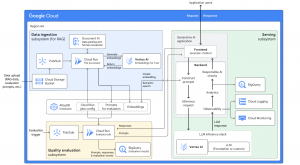
Infrastructure for a RAG-capable generative AI application using Google Cloud services

RAG: Injecting Context and Accuracy into GenAI

RAG is a technique that enhances the capabilities of Generative AI and large language models (LLMs) by combining them with external knowledge sources. Think of it as giving an AI system the ability to fact-check and update its knowledge in real time. Google’s recent Data and AI Trends 2024 report highlights the growing importance of operational data in unlocking the potential of generative AI for enterprise applications, making RAG a crucial technology for businesses looking to leverage GenAI.

How RAG Works: A Simplified View

  1. Knowledge Integration: All relevant data is transformed into a standardized format and stored in a searchable knowledge library.
  2. Vectorization: Advanced algorithms convert this information into numerical representations called vectors embeddings, enabling efficient searching and retrieval.
  3. Query Processing: When a user asks a question, RAG translates the query into a vector and searches the knowledge library for relevant information.
  4. Contextualized Response: The LLM receives both the user’s query and the retrieved contextual information, generating an accurate, specific, and up-to-date response.

Key Benefits of RAG for Your Business

Most importantly, RAG enhances the accuracy and relevance of AI-generated responses by providing users with precise answers grounded in the organization’s specific data, boosting trust and satisfaction. It also enables real-time information access, equipping AI with the latest data to ensure responses are always current and relevant—a crucial capability for dynamic fields like finance or customer service. 

Moreover, RAG can lead to significant cost savings. By indexing relevant information and retrieving only the most pertinent data to answer a question, RAG allows the use of much smaller prompts. This is particularly advantageous when dealing with large datasets, such as an entire website. New models like Gemini-1.5 can handle up to 2 million tokens, but calling such a model for every simple query would be prohibitively expensive. RAG optimizes this process, making it more cost-effective.

By delivering personalized and context-aware interactions through chatbots, virtual assistants, and other GenAI-powered applications, RAG can significantly improve the customer experience. Furthermore, RAG empowers employees with access to comprehensive and contextualized information, facilitating better-informed decisions and streamlining decision-making processes across the organization.

Examples of RAG in Action

The applications for RAG are vast, offering exciting possibilities for businesses across various sectors. Here are a few examples of how RAG is bridging the gap between powerful language generation and real-world problem-solving:

  • Elevated Customer Service with Smarter Chatbots: Imagine chatbots that go beyond generic responses. RAG empowers chatbots to tap into a wealth of knowledge, pulling up specific product details, troubleshooting guides, or even personalized order information. This means faster, more accurate resolutions for customers and reduced strain on human support teams.
  • Data-Driven Insights from Social Listening: Social media is a goldmine of customer sentiment, but sifting through the noise can be overwhelming. RAG can supercharge social listening by not only identifying brand mentions but also analyzing the context and sentiment behind them. This allows businesses to understand customer perceptions, track campaign effectiveness, and identify emerging trends with greater precision.
  • Next-Level Personalization for Loyalty Programs: Generic rewards don’t resonate with today’s discerning customers. RAG can analyze individual customer data, from purchase history to browsing behavior, to tailor loyalty program recommendations and offers. Imagine receiving a discount on a product you’ve recently viewed or being rewarded for consistent engagement with a brand you love. This level of personalization fosters stronger customer relationships and drives loyalty.

Integrating RAG into Existing Systems

While the potential of RAG is immense, integrating it into existing systems requires careful planning and execution. Businesses must consider factors such as data preprocessing, model selection, and parameter tuning to ensure optimal performance. Additionally, organizations should be prepared to address potential challenges, such as data quality issues or the need for specialized hardware to handle large-scale deployments. By working with experienced partners and allocating sufficient resources, businesses can successfully navigate these complexities and unlock the full value of RAG for their specific use cases.

Conclusion: The Future of AI is Contextual

RAG represents a significant leap forward in Generative AI, moving beyond generic language generation towards truly intelligent systems capable of understanding and responding to the nuances of your business. As RAG technology continues to evolve, we can expect to see more sophisticated applications. Future systems might not only provide information but also take actions based on that information, opening up new possibilities for automation and decision-making support.

At Making Science, we understand that the future of Generative AI lies in its ability to process and leverage information within its proper context. While RAG is still an evolving field, its potential to transform business operations is undeniable. As experts in data-driven solutions, Making Science is committed to helping our clients navigate the evolving landscape of Generative AI and unlock the power of technologies like RAG to drive business success.

RampUp 2024 Insights & Reflections by US CEO, Jason Downie

US CEO, Jason Downie attended RampUp 2024 and writes about his key insights and reflections from the event.


“At Rampup 2024, the term “data collaboration” was said MORE times than AI. That is a first! Scott Howe’s keynote focused on the dawn of this new era, ushered in by changes in user expectations for privacy and personalization, changes in regulations, and the deprecation of 3P party cookies.  

A month prior, I heard David Cohen speak at IAB ALM, and he called the upcoming years “The In-Between Years”. The messy middle between what was the standard for the last 30 years (3P cookies and precision marketing) and what will be for the next +30 years (1P data, AI-powered modeling, and collaboration).

A few weeks before IAB ALM, I heard Google’s Steve Yap speak at a US GMP Sales Partner summit. He spoke to the future of Google’s ad and martech being a “cooperative”.

Collaboration.  Cooperation.

Marketers need to figure out what their new “partner ecosystem” will look like and move quickly to build those relationships and the interconnectedness needed to achieve their goals.

In order to fully participate, marketers need:

  • 1PD collected, prepped, de-siloed and organized
  • Data Housed in a place (a cloud, or multiple clouds) where it can be made available for use across multiple partners (in a privacy-safe, secure environment)
  • Clean room tech that unlocks data collaboration across brands, data partners, and retailers in a way that also protects consumer privacy and consent
  • Platform partners that enable interoperable activation of the data where customers live (e.g. through PAIR into Google DV360)
  • A way to pull the results back down to the data warehouse for analysis and measurement

To do all this, marketers will need multiple partners.  Consulting firms, system integrators, cloud providers, clean room tech, data partners, etc..  We are trying to figure out, as an industry, how to do business for the next 30 years.

Marketers are generally not set up to do this.  They sell soft drinks.  Or soap.  Or checking accounts.  Some in-housing (or as we like to say, “right-housing”) is needed to own the data.  Testing and learning can be expensive.  But it needs to be done.  Marketers should be trying lots of different tactics in a short period of time (fail small and fast to win big!) in these in-between years, in order to arrive at more permanent solutions that will work for the new era.

Finding trusted advisors to help make sense of all the partners feels like an important step in this process.  Lots of companies have point solutions, or ad inventory, or data assets, or do media planning, buying, or measurement.  But a lot less are client-centric experts in the data collaboration value chain of the future.  Consulting plus hands-on-keyboard thingdoers to evaluate tech, collect, move, organize and activate 1PD, and enables tech connections and run POCs.  There will be an evolution towards companies becoming “ad tech system integrators for the CMO” or Data AORs as data collection and collaboration become more important.  And marketers will be better off as this evolution continues, so they can tie all this together in bespoke winning strategies.”

Get in touch with our team of experts to help your business navigate through the digital landscape.

[button color=”accent-color” hover_text_color_override=”#fff” size=”large” url=”www.makingscience.com/contact” text=”Get In Touch! ” color_override=”#ff0067″]

Navigating the Transition: Embracing Mitigation and Activation for 3PC Deprecation

As a continuation of “Chrome’s Challenge: Adapting to 3rd Party Cookie Deprecation“, we delve deeper into the intricacies of adapting to a world without third-party cookies, it’s crucial to not only focus on immediate mitigation and activation strategies, but also to consider the broader implications for managing change within your organization and the evolving digital landscape. Here’s how to approach this transition with a holistic perspective:

Managing Change and Stakeholder Engagement:

  • Leveraging Making Science’s 3PC Deprecation Tool: This invaluable tool aids in strategic planning by quantifying the impact of 3PC deprecation on your operations, streamlining the process for gaining the necessary technical and legal approvals for implementing critical updates like Enhanced Conversions. It’s about making informed decisions that align with both current needs and future directions.

The Role of Google’s Privacy Sandbox:

  • Adapting to New Technologies: Google’s Privacy Sandbox introduces a suite of alternatives, including the Topics API and Protected Audiences, aimed at preserving user privacy while maintaining advertising effectiveness. Although reactions have been mixed, staying abreast of these developments is essential for adjusting strategies in real-time.
    • Topics API: Designed to categorize a user’s interests based on their browsing history, facilitating personalized advertising without individual tracking
    • Protected Audiences API: Offers a framework for advertisers to target specific user groups while ensuring stringent privacy protections and compliance with data regulations
  • Monitoring Developments: The influence of the Privacy Sandbox is set to expand, making it imperative to understand how its components can be integrated into your advertising efforts. Begin with the immediate strategies outlined, then pivot to harnessing the full potential of the Privacy Sandbox as it matures.

This approach not only ensures compliance and efficacy in your marketing endeavors post-3PC but also emphasizes the importance of agility and forward-thinking. By embracing both mitigation and activation techniques—and preparing for the shifts in technology and stakeholder expectations—you can continue to provide personalized advertising experiences, sidestepping reliance on third-party data and setting a new standard for privacy-conscious marketing.


[button color=”accent-color” hover_text_color_override=”#fff” size=”large” url=”www.makingscience.com/contact” text=”Get In Touch With Our Experts!” color_override=”#ff0067″]

Leveraging the rise of the digital traveler and User-Generated Content

The travel industry is reviving. Consumers are looking to go abroad to recover time that was lost during the pandemic. When searching for their next destination, customers rely more on content generated by other consumers than content posted by businesses themselves. User-generated content can take many forms, such as reviews, Q&A forums, social media posts, comments, or videos. Social media has transformed from simple online review forums into masses of social posts, sortable by locations and hashtags. A brand’s reputation can be in a consumer’s hands, especially if they are an unhappy customer.  

When was the last time you booked a hotel without looking through the images in the reviews? Have you booked (or would you book) somewhere with no reviews at all?

As well as price, location, and facilities, travel customers are also looking for destinations and hotels that have good reviews. Customer reviews are trusted 12 times more than the marketing communications from the organization. Accommodation marketplaces such as Booking.com and Airbnb provide review sections that help customers determine which accommodation fits their needs. Customers trust that they will not be disappointed when they arrive even without seeing it in person.

What is a digital traveler? 

User behavior has evolved over the past few years. Consumers have increased how much research they conduct before booking anything. A digital traveler is someone who navigates through digital platforms and contact points (Travel related websites, review forums, and social media pages), collecting insights at different stages of the funnel to help them make a decision. Users typically go through different channels before making a purchase, and this is most evident within the travel industry. Impactful ways to drive engagement and sales include:

  • understanding the digital behavior of travel users
  • leveraging top trends that drive sales

With so many options and so much information to compare, choosing the right option can get complicated for travel users and leave them frustrated, complicating the booking process. Alistair Rennie and Jonny Prothero of Google have analyzed how consumers make decisions within this market. This analysis has revealed how much information and how many options are available to today’s travelers. Consumers enter a loop where they are head-spun between exploring and evaluating which option is the best choice.

Travel marketers and brands must leverage buyers’ motivations and biases. In this way, they can prod them beyond the exploration/evaluation loop and into the buying phase.

Insights that lead to personalized marketing comms

User-Generated Content paints a picture of your customers. It can tell you what drove them to your business, and how they felt about the service. These insights help you understand how you can optimize and improve the journeys of prospective customers. Leveraging User Generated Content will elicit engagement from your audience and show them the value of becoming customers. By gaining personal insight into your customers’ experience, you can then personalize your content based on specific user needs.  

When and where should User-generated Content be implemented?

The pandemic temporarily slowed down the travel industry, but travelers now follow post-pandemic guidelines to continue exploring. The industry is evolving so fast, and new technologies make things easier for travelers and travel businesses. Aside from social media, Google searches also play a huge role in travelers’ purchasing decisions. Holiday bookings begin with an online search, so Search Engine Marketing is an important channel for travel businesses.

One way Making Science has optimized this process is through Ad-Machina. Our proprietary SEM technology is designed to generate personalized search results based on user queries. The image below is an ad for Hotel Rio Montego, which includes a rating provided by Tripadvisor (calculated with customer reviews). Alongside the reviews, there are specific key features of the hotel that match the interests and needs of the user.

Most businesses have reviews or case studies on their websites, but this is mainly visible to direct traffic. All your channels and touchpoints are opportunities to engage users, so why place these reviews in only one place? 

User-generated content can be used in:

  • emails
  • paid ads
  • landing pages

All of these can be personalized for users interested in similar locations or facilities. From reposting posts, stories, or TikTok videos, to showcasing snippets of comments and reviews in your email comms, using UGC is a great way to ignite engagement from your travel audience. 

The marketing industry is thriving due to data and machine learning tools. Therefore, we recommend implementing user-generated content alongside cutting-edge, AI technologies (like ad-machina!) to determine what your user is most interested in purchasing. Ultimately, gaining a personal perspective of your customers’ feelings is a strategic way of sprinkling a human touch into your data insights.

What next?

There are so many tools in the market today that enhance digital marketing campaigns. At Making Science, we’ve seen impressive lifts in sales with our proprietary tool, ad-machina. Download the whitepaper here and discover insights on consumer purchasing behavior within the travel industry.

Making Science US’ Travel Predictions for 2022

The last few years have been undoubtedly tough on the travel industry. Review these tips (ensuring safety, prioritizing flexibility, and relevance) to ensure your strategy for the future takes unpredictability into account!

Pent-up demand due to safety concerns

This may seem obvious but we wanted to give it a special mention anyway.

Seasonality is out of whack. But one thing is for sure, there is pent up demand in 2022 that’s all about making up for lost time, seizing the moment and making every day matter. What were high/low/shoulder seasons have now drastically changed, and this situation is still evolving. 

Many destinations are filling up on this high demand and will need to look to other revenue streams/upselling techniques to optimize sales. Yet, it could all come to a grinding halt if travel restrictions get heightened or a new wave of COVID is introduced (looking at you omicron). But generally speaking, more demand means higher rates, greater revenue and hence deeper pockets.

We expect that hospitality brands will stretch budgets to invest in their products and try to differentiate themselves for today’s new demanding traveler, with added bonuses which are accessible by integrated and comprehensive mobile apps. For example: 

  • online vacation planners
  • Itinerary-builders
  • on-property COVID testing facilities, and 
  • smart-room technology – all accessible by integrated and comprehensive mobile apps.

Prioritizing Flexibility

According to booking.com, the travel industry will continue to prioritize flexibility. Travelers rank reassurance that they won’t lose money (38%), the ability to cancel (33%), and ability to reschedule free of charge (34%) as the top three most important priorities. So, websites need to pivot and be geared towards driving bookings and rebooking. 

Though this flexibility does pose a risk for planning purposes, we prefer to bet on sure revenue by guaranteeing a flexible booking (rather than never getting that booking at all!).

Relevance, relevance, relevance

Few things are more important than creating an ultra-personalized, relevant experience for your customers in this highly competitive industry.

But what does ultra-personalization even mean?

The goal is to create a relevant experience (not a creepy one). To give one example, our team at ad-machina can create 1,000s of personalized ads and landing pages in seconds. If a traveler is searching for a kid-friendly hotel that accepts pets, first they will be presented with a Google text Ad with language specific to their search. Once they click on that ad link, they will reach a landing page with information about the kid/pet friendliness of the hotel, alongside imagery related to that search. 

This is how we achieve ultra-personalization (and relevance). You can learn more about it by checking out this video.

How to react?

Take a moment to reflect on how your travel preferences have evolved over the last two years. Surely there are some notable differences. Just remember that if you want to continue to attract travelers to your hotel, cruiseline, or rental car agency you must be flexible, ensure safety, and be relevant.

If you’re not exactly sure how to boost your travel sales in 2022 given all of the unpredictability, get in touch with our team. We’ll be glad to help!

How to prepare your programmatic strategy for the December holiday season

Black Friday and Cyber Monday (and the related discounts and promotional campaigns) are over. 

It’s time to start preparing our programmatic actions for the most important giving season of the year: Christmas. 

Why start so early?

These days, Christmas shopping begins earlier and earlier, especially in the USA. Based on studies by Statista, this shopping season can start as early as September-some shoppers even start earlier! In the USA in 2020, roughly 40% of Christmas buyers completed their shopping before the end of October, while only 15% of regular consumers start in December. 

Our gift to you

? In the spirit of the season, we’re going to gift you the main insights and customer behavior that you will indeed to adapt your digital strategy, beginning with the following practical recommendations:

  • Prioritize the established budget and efforts for the two weeks prior to the beginning of Christmas. This period is fundamental due to the fact that 21% of Christmas shopping happens here.
  • Focus on the message and the look & feel of our activities. A message with a clear call to action, with references to this period, helps us to improve interest and user experience.
  • Competition increases dramatically during the whole month of December. CPM prices increase due to high demand, so we must prepare our budgets accordingly.
  • McKinsey studies confirm that many consumers are seeking holiday inspiration to their shopping decisions on social media. The most influential platforms are Facebook (67%), Youtube (57%) and Instagram (52%). 
  • Possible shortage of supply + delivery delays are forcing many consumers to be more proactive about their online shopping. We must be transparent and provide  shoppers clear information about stock and the possibility of delays.

How do you accomplish it?

Now that we’ve considered the panorama and main insights, we’re prepared to plan our digital marketing strategies. Some actions that we can apply to make sure our programmatic campaigns are remarkable include the following:

  • Make the most of our audience lists, especially those who have interacted with us most recently. Be sure to include Black Friday and Cyber Monday converters, so as to study users’ profiles and purchase behavior through the audience analysis module. Audiences originating from our Adserver, Data Management Platforms or Customer Relationship Management tools let us create custom, effective campaigns.
  • Coherently use third party data: it’s very important to find qualified users, categorized on strict criteria and in accordance with the General Data Protection Regulation (especially if you have international customers).
  • Closing direct agreements with Top Publishers helps us to gain users according to certain online behaviors, and in accordance with our historical users.
  • Recommend formats: We want to attract the customers that are able to understand our philosophy and promotions. The best way is by crafting a journey wherein the user has multiple creative touchpoints within the same advertising action.

Here we have two options:

  • Storytelling for display formats 
  • Video sequences for Youtube 

Here we highlight Native creatives due to their high conversion rates, as they are non-invasive to the user because they adapt to different formats and editorial styles. Moreover, it is and easy way to reach a much wider public, thus improving the brand reputation.

These are only some basic tips. There are practically an infinite number of ways to achieve our goals within the programmatic environment. Display & Video 360, like other DSPs, manage a very large inventory. However, the results of our campaigns depends in great measure on our planning and ability to optimize our resources.  

Top Digital Marketing Priorities For 2021

As we close out 2020, we look back on the ups and downs that we’ve all experienced. So much has changed.

Many teams have shrunk, budgets have been cut, and there have been major shifts in priorities from one business to the next. Some industries have experienced huge growth, while others have lost most of their website traffic.

Consumers have also had to change their behavior in unexpected ways. Customer profiles have shifted, resulting in user journeys through your site changing as well. Businesses are actively rethinking their online priorities and re-strategizing.

As we look back on 2020, many of us were personally affected. We, like you, are eager to reset and are looking forward to the fresh perspective that 2021 will bring us. So how do we take all of these changes, all of these learnings and emotions, to apply them diligently and systematically to 2021?

For us at Making Science, it means following our key methodology: Analyze, Learn, Optimize!

We have gathered data points from many digital marketing polls, interviews with existing clients, and discussions with key UX & User Journey experts. We have reviewed online reports, like “How consumers make purchasing decisions during COVID-19” published by Google, and attended information sessions by Forrester.

The overall conclusion remains the same. The best path to business recovery is that now,  more than ever, we have to be able to dynamically change the online consumers’ needs and support their new behaviors. Analyze, Learn, Optimize!

Analyze

The ongoing disruption to consumer behaviors due to COVID-19 is causing new habits to be formed. We have to respond by exploring and evaluating the messy purchasing journey that now exists. We start by analyzing key data and understanding the details.

The chart below recommends where you should focus most of your marketing budget. As you can see, data/analytics takes the lead.

Gathering insights from data can help improve marketing performance. Just look at these numbers below!

Learn

Experimentation programs using AB Testing, Multivariate or ABC Experimentation and the right tool can quickly help you test and learn. Testing variations will help you better understand your users. One key to generating higher conversion on your site is personalizing to users and giving them what they are looking for in the right moment of their user journey.

Companies must provide a good user experience while serving the customer with the right product or service at the right time.

“Today our users are taking longer to make decisions since they are researching more. They are not finding what they need as quickly as they used to. This is largely due to many websites not personalizing dynamically to what I want,” says David Otero, SVP at Making Science. Customer experience remains a top 2021 priority.

Optimize!

As we move into 2021, Digital Marketing priorities for many will be geared towards understanding the user experiences, profiles and their user journeys. One of our favorite websites, Smartinsights has done a great job of further breaking down these trends for us. We see some of the top innovators in the industry and how they are prioritizing 2021 with user experience.

Today you can sign up for many free or low costs tools and kick off a basic optimization program to help educate you and further serve the best experience to the right user at the right time. Check out tools like Google Optimize, ABTasty, VWO & Convert if you’re looking for an inexpensive solution to get you started. Or, have a look at our guide to choosing the right CRO tool for you. We know that these are financially stressful times, but these tools often give a quick return on investment. Some of the more sophisticated solutions offer advanced personalization and Artificial intelligence as well.

Setting your digital marketing priorities now will help you stay on track for all of 2021. Not sure what your priorities should be? We can help you! Get in touch with our team. Stay tuned for more informative blogs.

Want More Direct Bookings on your Hotel Website? Stop Doing These 4 Things

Increase Hotel Bookings By Avoiding These Mistakes

On average, hotel website conversion rates (bookings per unique monthly visitor) are only two percent. That means that for every 100 people who come to your site to book a room, only two complete their purchase, while the other 98 leave to book a room elsewhere. How do you increase hotel bookings?

The best hotel websites are continuously testing their sites to determine what works, what doesn’t and how to fix it. By doing so, many have seen substantial increases in web visitors and in bookings. Although many factors determine conversion rates, we’ve identified 4 common mistakes that many hotel websites make that can adversely affect conversions and direct booking rates. Avoiding these will sure help increase hotel bookings.

When Looking to Increase Hotel Bookings, Here’s What You Should Avoid:

Mistake 1: Focusing only on price

Price is not the only motivating factor for travelers when they come to your hotel website. Users want to know quickly if you’re offering a package deal or special offer that’s relevant to their needs. They don’t want to spend time looking for the best deals or offers for them.

A CTA button can get your website visitors to take a desired action and book a room, but you also need to motivate them to act. How? By showing them persuasive offers or incentives. Providing an easy-to-find call to action (CTA) above the fold on your homepage that is located near the offer you’re showcasing will motivate them to take action and improve your conversion rates. If the only thing your visitor sees is a “BOOK NOW” CTA without any context or persuasive offer, you aren’t setting yourself apart from the hundreds of other hotel websites that are doing the exact same thing.

Diversify the offerings around your CTAs. Are you running a special for the holidays? Have something unique or time-sensitive to offer? Creating a sense of urgency and scarcity around the offer will incentivize users to act quickly to avoid missing out. This therefore, can help increase hotel bookings.

Mistake 2: Information Overload

See Examples of How We've Increased Direct Bookings, Conversion Rates for Hospitality and Travel Brands 

If users can’t keep up with scrolling photos, music, too many buttons or pop-ups, bizarre navigation or boxes of text flying at them from every corner of the site, they may get frustrated and leave the site.

Unless the information they need to book a hotel room is clean, clear, focused and easily understood, you may be sending your guests to complete their reservation with your competition.

Having only the necessary information clearly displayed and easily found on your homepage improves search engine ratings. This drives more traffic and increases direct bookings. However, providing too much information that overwhelms, distracts, or confuses the user could have a negative impact on conversions and lead them out of your booking funnel.

Mistake 3: Outdated Content

If the typical hotel website only has eight seconds to capture a visitor’s attention, then the textual and visual content on your site must be up-to-date and visually compelling. The ability of your site to tell a story – visually and with copy – is key to increasing engagement and conversions. Content, including images and multimedia, should be targeted to your user personas, whether families, couples, retirees or business elite. The more data you have about your key market, the better you can engage your guests with personalized content. That said, most people don’t read long blocks of text, but instead scan for the most important information, such as rates, availability or promotions.

The design of your site is as important as content. Some marketers would say even more so. With more and more people booking reservations on their mobile devices, it’s also time to take a look at your website to ensure it’s intuitive and mobile-friendly. Are the photos professionally done to highlight the quality of your rooms and services? Do the navigation buttons feel clunky, or are there distracting flashes that keep visitors from making a reservation? Make sure your user experience is mobile friendly to capture those bookings even if the user switches devices. This will help increase hotel booking through mobile devices.

Here’s an example of how we increased conversion rates and direct bookings for a cruise line by improving their user experience on mobile.

Mistake 4: Leaving Out Good Reviews

There’s no getting around the fact that people check ratings and reviews in the booking process. Nearly 70 percent of travelers will scour as many as 20 reviews before booking a hotel online. Another 49 percent won’t book a hotel if there are no reviews to check out. Reviews can generate trust and are one of the most vital aspects of any company’s online presence, most notably in the online travel industry.

There are a couple of things that you can do to boost positive online reviews and fix negative reviews:

  • Provide great service.
  • Don’t overpromise.
  • Ensure that what your guests expect, your guests will get.
  • Manage negative reviews and take action where improvement is needed.
  • Proactively ask or incentivize guests to leave positive reviews.

Like reviews, hotels that connect with potential guests via social media can form lasting relationships. Visitors are more likely to book a hotel that is familiar. A robust social media presence can also showcase your brand, set you apart from your competition and provide you a voice to respond to comments, feedback and reviews in real-time.

Avoiding these four mistakes will sure increase hotel bookings. Make sure to check out our other blogs.

10 Important Questions to Ask Before Hiring a Digital Marketing Agency

Hiring a digital marketing agency is like going on a first date. Will you get along? Is it going to be a good match? Will it lead to a long, fulfilling relationship? Or, will you both leave disappointed and frustrated?

This process of choosing the best digital agency for your unique business needs is a “love affair” of sorts, a professional journey that will take you from “Hello, you seem interesting” to “Oh my, where have you been all my life?” with maybe a few struggles along the way. And the choices you face can overwhelm you. The market is flooded with agencies of all sizes, specializations, and capabilities, where trying to choose the right one can almost feel as overwhelming and trivial as swiping right on a dating site.  Hiring a digital marketing agency

But, by asking the right questions beforehand, you’ll be able to avoid some of the risk that comes with getting your heart broken (or, in other words, hiring a digital marketing agency that isn’t the right fit for your company).

Here are 10 important questions you should ask a digital agency before you hire them, when you’re in the dating phase, so that you boost your chances of enjoying a long, successful committed business relationship:

1. “How will you understand our needs?”

Ask about the process they will undergo to get to know your business in order to pinpoint your needs and align their recommendations and strategies with those needs. This is typically referred to by the agency as their “Discovery” phase, and ideally the agency should do as much research as possible, immersing themselves into your business structure and teams, to learn as much as they can about your pain points, needs, challenges, and goals. Find out beforehand how thorough an agency will be in “discovering” your business, and if they don’t seem to put much emphasis on this phase, that could be a red flag that they’re not a good match for you.

2. “Do you have experience with companies like us?”

Ask the digital marketing agency you are hiring if they have ever worked with a business like yours in the past, whether that means in your industry or specific sector or market, or even a business of your size and structure. While it’s often best to find an agency that is already familiar with and established in your field and understands your industry (why re-invent the wheel?), you also want to make sure that the agency doesn’t have any dust on them. Look for an agency that makes innovation and learning a priority, but also has experience with your unique business vertical.

→ Check out Making Science’s Projects portfolio

3. “How do you plan to do things differently?” 

You want an agency that knows what works and what doesn’t work for your industry and business so they can guide you with authority and experience. But, you also want an agency that doesn’t settle for the status quo but is always looking for new, interesting ways to outshine competitors, keep up with cutting edge trends, and who isn‘t afraid to make a few waves and disrupt the market.

4. “What will you need us to do?”

When you hire a digital marketing agency, you’re hiring a partner, a collaborator, a team who will work with you, not only for you, to achieve real growth for your company. Make sure you have a clear understanding from the outset of the level of involvement you or your team will need to commit to in each phase of the project and the kinds of data, access, or resources you’ll expect to provide the agency so they can work on your behalf.

5. “How will you measure success?” 

Ask every digital agency you’re considering hiring what you can expect in terms of reporting and analytics and which methods they use to communicate reports on progress and results. This is one of the most important questions to ask, because, of course, true data does not lie, and the due diligence every agency must do when reporting must be thorough, accurate, and meaningful for your business. Good reporting and data from your digital agency not only helps to justify your company’s spend on these initiatives, but it also ensures you’re getting the results you need and want in the digital world.

6. “How do you bill for your services?” 

Don’t be shy when it comes to bringing up fees and billing, even early on in the process. Ask the agency exactly how and when they bill their services. For example, are they base themselves on performance, or do they charge a flat fee? How transparent are they about the billing process? All of this should be clear from the get-go.

7. “What is the overall cost of hiring a digital marketing agency?”

After you ask about their billing processes, follow that up with a specific question about overall or projected cost. Ask if there are any variables or contingencies that could affect cost along the way.

8. “Can I see some examples of your previous work?”  

By asking to see examples of their work or relevant case studies, you can get an even better sense of how they work and the kinds of results they’ve gotten in the past for clients like you.

→ Check out Making Science’s Projects portfolio

9. “When have you failed?”

This is a key, yet often overlooked question, to ask an agency you’re thinking about hiring. When you ask to see examples of their work, mention that you’d like to see examples of an unsuccessful project. There is learning in failure, so see what mistakes they’ve made in the past and how they’ve learned from them. With this information, you’ll learn how truly “agile” and adaptive the agency is.

10. “How long before we see results?” 

Make sure you have realistic expectations about deliverables and time until results. You also want the digital marketing agency you are hiring to break down the factors that could affect the results and the timing in which you can expect to see progress. Things like traffic, your product, or seasonality. A good agency will provide you with a reasonable and honest timeline that takes all of these factors into account.

Ready to get started with your first digital marketing agency?

Get in touch