

Salesforce: The Backbone of a Data-Driven Business Revolution

Introduction

In today’s digitally connected era, data serves as the lifeblood of successful businesses. While discussions around the benefits of CRM platforms like Salesforce often focus on marketing and customer engagement, their potential impact on enterprise operations is profound. This blog explores how Salesforce can revolutionize business operations and why it’s an essential tool that every CIO and CTO should consider.

Salesforce Beyond Marketing

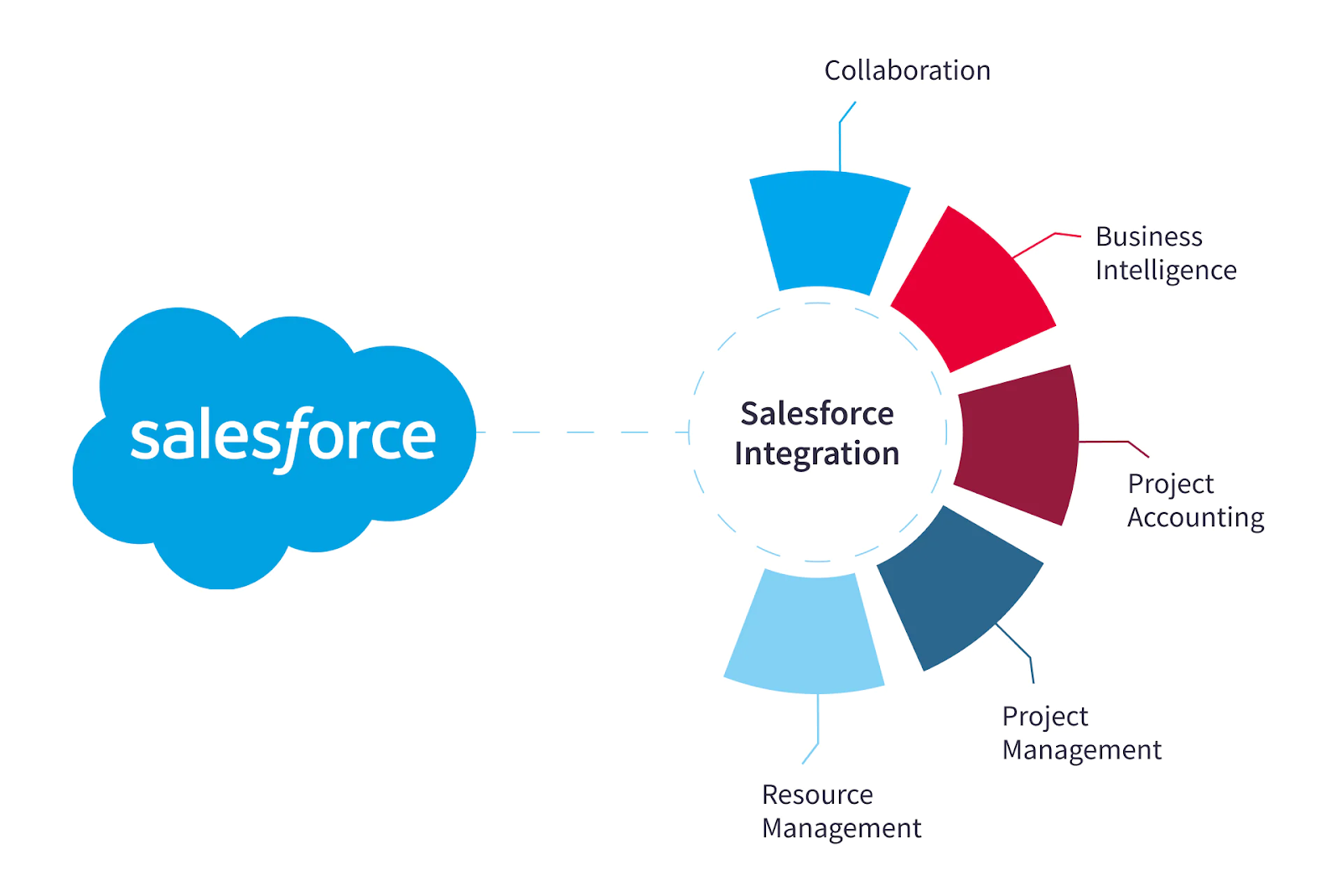
Salesforce is more than a CRM solution. Its capabilities extend well beyond marketing and customer engagement use cases. As a comprehensive business integration solution, Salesforce stands as a robust platform that seamlessly connects the front, middle and back-office operations. It unifies data from various sources, offering a panoramic view of the enterprise ecosystem.

The Role of Salesforce in Business Integration and Its Importance

The integration of disparate data sources and systems is more than a luxury—it’s a significant challenge and a nSo necessity. Modern businesses are tasked with managing an ever-growing array of data, making a centralized hub for data management critical.

Salesforce plays a pivotal role in ensuring that data flows seamlessly between different parts of the organization. It bridges the gap between sales and customer data, operational teams and even financial and HR management, offering a comprehensive integration of front-office, middle-office and back-office. 

Moreover, its exceptional ability to seamlessly integrate with a wide variety of systems and applications opens up a world of opportunities for businesses. By effortlessly connecting with existing software and databases, Salesforce becomes the central hub where data flows cohesively, eliminating data silos and streamlining processes.

Whether it’s integrating with popular marketing tools, ERP systems, or custom-developed applications, Salesforce ensures that data from different sources harmoniously coexists, enabling businesses to make more informed decisions, enhance customer experiences, and improve operational efficiency. This flexibility and adaptability in integration make Salesforce a transformative force for businesses, allowing them to leverage the full spectrum of their technological ecosystem to drive growth and innovation.


“The result? Connectivity that empowers decision-makers with real-time insights, facilitating more informed, strategic choices.”


 Salesforce Integration in Action: Connecting your operations across the whole organization

  • Enhancing Customer Insights and Engagement:

Front-office operations involve the seamless connection of customer-facing functions within an organization. This strategic integration empowers businesses to consolidate customer data from diverse touchpoints, leading to a deeper understanding of customer needs and preferences. The outcome is more meaningful, context-aware engagements, which ultimately cultivate stronger and more lasting customer relationships.

  • Optimizing Operational Synergy:

Bridging the gap between sales and customer data and your operational teams for middle-office operations it’s a strategic move that promotes seamless collaboration among these crucial departments, ensuring that customer demands are met with efficiency. Moreover, it aligns product development with market needs, leading to increased overall efficiency, reduced lead times, and a significant enhancement in teamwork and collaboration across your organization.

  • Elevating Core Efficiency and Risk Management:

Back-office integration delves deep into your core business functions, including finance, HR, and administrative processes. This integration strategy brings automation, streamlining, and compliance which results in heightened operational efficiency, reduced risks, and more effective resource management for cost savings and overall business performance.

The synergy and proper integration between front-office, middle-office, and back-office operations represents the nexus of transformation for modern enterprises. As these converge, they not only streamline operations but empower leaders with invaluable insights for making informed strategic decisions.
Unlocking Industry-Specific Advantages

Industries across the spectrum are harnessing the power of Salesforce to gain a competitive edge and unlock industry-specific advantages. These real-life examples illustrate the transformative impact Salesforce is having on various sectors:

  • Telecommunications and Media Excellence: A major industry player achieved a 30% faster customer service response time by integrating customer data across platforms using Salesforce. They also utilize Salesforce Einstein’s AI capabilities for enhanced customer engagement. [Source]
  • Elevating Manufacturing Standards: A leading firm in the elevator and escalator industry improved first-time fix rates by 25% using Salesforce IoT Cloud. Predictive maintenance connects equipment, customers, and field service, enhancing efficiency. [Source]
  • Financial Services Transformation: In financial services, one provider boosted advisor productivity by 15% through Salesforce’s data integration and AI capabilities. This led to a 10% increase in customer satisfaction. [Source]

Our Impact with Salesforce

At Making Science, we’re not just Salesforce experts — we’re catalysts for change. We guide our clients through the seamless transition to Salesforce, a cutting-edge platform that empowers businesses with efficient streamlining of processes, unprecedented levels of automation and data-driven decision-making capabilities.

We’ve had the privilege of driving change across countless businesses, with our successes falling into several key areas:

  • Salesforce CRM Implementations: Over the years, we’ve implemented Salesforce CRM for multiple multinational companies. These projects have standardized sales operations across all regions, automated routine tasks for increased efficiency and fostered a higher level of collaboration within their teams.
  • Marketing Transformations with Salesforce Marketing Cloud: We’ve successfully transitioned numerous businesses from labor-intensive campaign management to fully automated processes with Salesforce Marketing Cloud. These transformations have enabled our clients to achieve a level of customization previously out of reach, optimizing customer engagement and driving business growth.

Conclusion:  The Future is Data-Driven

In the digital era, data reigns supreme. Salesforce, combined with the expertise of Making Science, empowers businesses to harness the full potential of their data across your organization. 

Ready to revolutionize your enterprise with Salesforce? Contact us for a consultation and discover how integrated Salesforce solutions can take your business to the next level.[nectar_cta btn_style=”see-through” heading_tag=”h6″ button_color=”default” link_type=”regular” alignment=”center” display=”block” link_text=”Contact our team” url=”/contact/” margin_top=”50%”]
Contact

Contact

Data-Driven Digital Growth at the CIO Summit 2023

In the fast-paced world of information technology, IT leaders face unprecedented challenges. Did you know that, on average, a company takes three years to carry out a successful digital transformation? The pressure to be business strategists and digital innovators while managing teams and providing safe, effective, and sustainable tech solutions makes the role of the CIO more complex than ever. In this context, we encounter a fundamental question: how can IT leaders become genuine change agents capable of driving tangible business transformation?

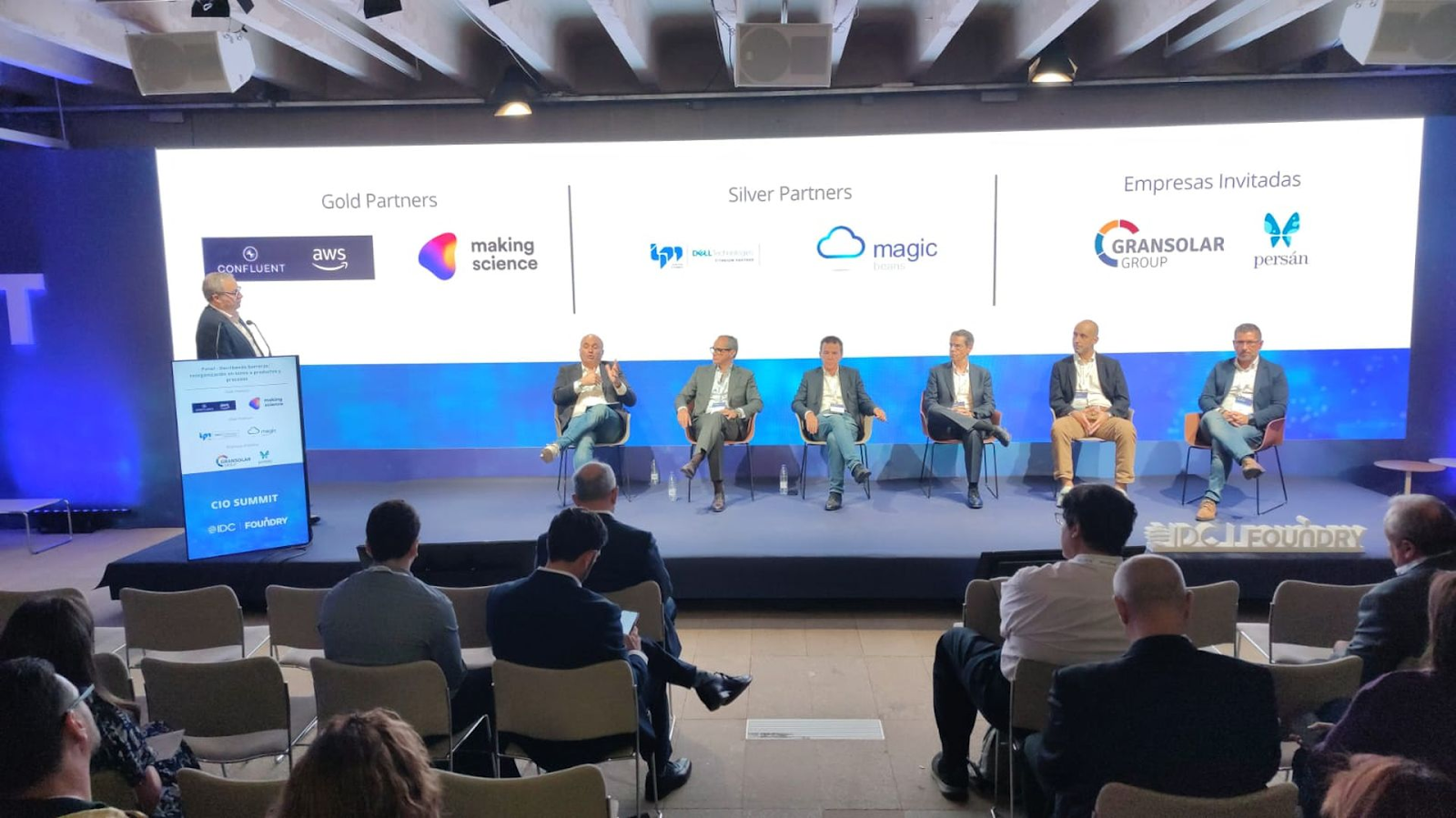
The CIO Summit 2023, an event organized by IDC in Madrid on September 26 and 27, brings together the main IT professionals in Spain to explore the main technological trends and debate the most pressing challenges of the digital era. And Making Science is proud to have been a gold sponsor of this event.

Transforming Businesses Through Data Culture

In the current landscape of digital disruption, organizations face the imperative need to make data-based decisions. This involves aligning business strategy with effective data management, prioritizing both the needs of the business and customers. However, this challenge is not without obstacles: exponential data growth, diversity of sources, complexity of different privacy regulations and security challenges, pros and cons of using hybrid clouds in global environments, and of course, cost, sustainability, and scarcity of specialized talent.

During the roundtable “Breaking Down Barriers: Reorganization around Products and Processes”, our Director General of IT Solutions, Jose Miguel Ruiz, shared how adopting a systematic approach to data management that ensures the quality and consistency of information, backed by changes in processes and people, through technology and training, allows the implementation of a data culture, adapted to the maturity of each organization, which is key to optimizing IT investments and maximizing business opportunities with the creation of new data-based business models.

Francisco Molero Campos (Confluent), Jesús Cabet (Persán), Vítor Rodrigues (Magic Beans), José Miguel Ruiz (Making Science), Valentino Gallo (Gransolar Group) and Raúl Coria (IPM). 

The role of the CIO in this scenario is fundamental in combining strategic vision with the ability to manage technological assets and specialized teams, promote security and facilitate collaboration with other leaders of the organization. However, an interesting fact provided by IDC at the event revealed that, currently, approximately 50% of technology purchases come from other areas.

This data is related to the speed at which companies must innovate and optimize their operations through the use and integration of new technologies like AI, which can revolutionize data management by automating tasks and workflows, improving data quality, and even optimizing analysis and action on data in real time and autonomously. For example, companies can offer personalized experiences to users through algorithms that recommend products, services, or relevant content accurately, thus improving end-user satisfaction and increasing revenue.

In addition, collaboration with trusted tech partners, like Google Cloud, becomes a strategic differentiator to offer cutting-edge technological solutions that drive digital transformation and enhance business efficiency.

At Making Science, we are continuously innovating to address the challenges faced by IT managers and other leaders driving innovation. Our participation in the CIO Summit 2023 is a testament to our commitment to our customers to assist them on their growth journey through digital acceleration.

BigQuery Studio Insights: Navigate, Analyze, and Unleash Your Data’s Full Potential

Many organizations recognize the value of their data, but they’re stumped on how to fully leverage its potential. There’s an overwhelming volume of data, existing systems are complex, and regulatory challenges abound. Plus, the rush to adopt artificial intelligence often leads to fragmented ecosystems that are tough to navigate.

On August 31st, Google launched BigQuery Studio in response to this scenario. This is a game-changing platform that offers a solution to these issues and makes BigQuery Studio insights easily accessible. This innovative platform is designed to bring together analysis, AI capabilities, and data governance in a single unified ecosystem within Google Cloud Platform‘s data analytics suite. Here’s how BigQuery Studio is aimed at addressing the following key issues:

  • Data Overload: As data production increases, analysts often find themselves drowning in a sea of data, making it hard to gain actionable insights.
  • Platform Fragmentation: Companies frequently use different platforms for analytics, AI, and machine learning, complicating the workflow even more.

How BigQuery Studio Helps Businesses and Data Professionals:

One of the key features of BigQuery Studio is that it offers a unified workflow for data specialists. It eliminates the complexity of navigating multiple platforms while enhancing the efficiency and performance of the overall team.

  • Comprehensive Solution: It integrates every step of the data process, from collection to analysis, to generating AI-driven insights. You can edit and execute SQL, Python, and Spark in the same interface. This creates a truly streamlined workflow among data scientists, data engineers, and data analysts through version histories and source control.
  • Data Compliance and Governance: BigQuery Studio features robust governance and security functions. This makes it easier to adhere to changing data privacy laws, like GDPR and CCPA.
  • AI-Enabled Insights: Thanks to integrated AI technology like Duet AI, BigQuery Studio makes data analysis more accessible AND smarter. Start with a basic programming notebook for data preparation and then move on to specialized services like machine learning with Vertex AI.

In addition to all of this, Google has boosted its drive for AI innovation by including its assistant Duet AI directly in BigQuery Studio. This addition leverages natural language processing and generative algorithms, introducing:

  • Coding Assistant: Think of Duet AI as your coding buddy. It’s there to help you craft SQL queries and Python code for precise data queries.
  • Free-form Data Queries: Users can make data queries using natural language and receive answers through contextual chat, making analysis more user-friendly.

Openness and Compatibility: BigQuery Studio in a Multi-Cloud Landscape:

Google has demonstrated its commitment to open-source compatibility and the cloud by making BigQuery Studio a suitable option for businesses operating with multi-cloud or hybrid cloud strategies:

  • Run AlloyDB on any cloud or local setup
  • Support for open-source formats like Apache Hudi and Delta Lake
  • Optimize performance for large data ingestion through Apache Iceberg

BigQuery Studio is not just another tool; it promises to break down silos, simplify workflows, and enable smarter decision-making through AI integration. For e-commerce managers and data analysts looking to keep up in a constantly evolving digital landscape, adopting BigQuery Studio could be a strategic move to consolidate their data analysis and AI efforts, maximizing BigQuery Studio insights.

Ready to dive deeper? Don’t get left behind in the big data activation race. Contact our team to schedule a demo and take the first step toward transforming your business insights.

Get in touch

Google Cloud Next ’23: Unveiling the AI Revolution | Part 2

In our previous blog post, we navigated the announcements from Google Cloud Next ’23, spotlighting Google Cloud AI advancements in infrastructure and the Vertex AI Platform. Today, let’s journey further into the AI domain, examining how artificial intelligence is reshaping Google Workspace, Google Cloud Platform, and cybersecurity. Let’s delve deeper!

Duet AI: Powering Productivity and Collaboration in Workspace and Google Cloud

Duet AI, a dynamic GenAI collaborator introduced at Google I/O in May, is at the heart of Google’s AI revolution. Duet AI seamlessly integrates with a wide range of products and services, promising to enhance productivity, foster collaboration, and uphold the highest standards of security and privacy.

Workspace features have been significantly upgraded, including content creation in Gmail and Google Docs and image generation in Google Slides. As a result of integrating Duet AI with Google Meet, meeting notes and summaries are now available in 18 languages, allowing everyone to be heard, seen, and understood during video calls. Meanwhile, Google Chat takes on the role of a Chatbot, assisting with content-related queries, document summaries, and more, all within a redesigned user interface with enhanced search functionality.

However, Duet AI’s capabilities aren’t confined to Workspace alone. It extends its support across a plethora of Google Cloud products and services:

  • Software Development: Duet AI serves as a coding assistant, expediting development and aiding in code refactoring throughout the software development lifecycle. Thanks to Apigee integration, developers can now build APIs using natural language prompts.
  • Application and Infrastructure Operations: Operators can directly interact with Duet AI within the Google Cloud Console, receiving guidance on infrastructure configurations, deployment best practices, and recommendations for optimizing costs and performance.
  • Data Analytics: BigQuery now boasts enhanced AI features, providing contextual assistance for SQL queries and Python code, code generation, and schema-based recommendations. This empowers data teams to focus on achieving their business objectives.
  • Database Modernization: Duet AI generates code for data management using natural language, covering Cloud Spanner, AlloyDB, Cloud SQL, and Database Migration Service (DMS), streamlining the conversion of database code.
  • Security Operations: In the security realm, Duet AI integrates with a suite of security products, empowering professionals to proactively prevent threats, streamline workflows, and fortify overall organizational protection.

Unifying Data and AI for Limitless Insights

Efficiency and productivity are paramount when unlocking new insights with data at the core of GenAI. Google Cloud is committed to simplifying analytics at scale by expanding its ecosystem of partnerships with various data providers. Key innovations in this domain include:

  • BigQuery Studio: A unified solution for data engineering, analytics, and predictive analysis, seamlessly integrated with Vertex AI foundation models. Implementing AI capabilities into data lakehouses enhances cross-cloud analytics, strengthens governance, and facilitates secure data sharing.
  • AlloyDB AI: Offering a comprehensive set of capabilities for building high-performance GenAI apps, whether on-premises, within the Google Cloud ecosystem, AWS, Azure, or through the versatile Google Distributed Cloud infrastructure.

AI: Your Ultimate Security Guardian

In today’s ever-evolving digital landscape, staying one step ahead of cyber threats is non-negotiable. Google Cloud recognizes this imperative, introducing Mandiant Hunt for Chronicle alongside the groundbreaking Duet AI. This addition provides the latest insights into attacker behavior by seamlessly integrating Mandiant’s frontline expertise with Chronicle Security Operations’ robust data analysis and search capabilities. It’s elite-level support without the burdens of hiring, tooling, or training.

Security is not solely about protection; it’s about equipping yourself with the right tools to respond effectively. Google Cloud’s modern SecOps platform, fortified by GenAI, brings you Chronicle Security Operations and Security Command Center, offering a comprehensive solution to centralize security data, detect threats, and coordinate a unified response.

Join us on this transformative journey as we anticipate even more groundbreaking developments in cloud computing and GenAI. With our strong partnership with Google Cloud, a pioneer in shaping the future of technology, we are thrilled to offer our support across a spectrum of technology expertise, including cloud infrastructure, data analytics, GenAI, Predictive AI, cybersecurity, and much more.

We eagerly await more Google Cloud AI Advancements at Google Cloud Next ’24!

Save the date: April 9-11, 2024 in Las Vegas, NV

Embracing the Best of Both Worlds: The Benefits of Hybrid Multi-Cloud Environments

Introduction to Multi-Cloud/Introduction: The Rise of Cloud Technology

In today’s fast-paced digital landscape, cloud technology has firmly established itself as an indispensable tool for companies to develop adaptable, scalable, secure, and efficient technological solutions capable of addressing evolving business needs.

Large companies such as Google, Microsoft, Amazon, IBM and many others have democratized access to cloud services, making previously unattainable computing capabilities accessible to both businesses and individuals. 

However, as cloud technology evolves, so do the strategies for harnessing its power. Different integration approaches and architectures have emerged to fully exploit the cloud’s potential, including connecting on-premise and cloud environments, bridging private and public clouds, and collaborating with multiple cloud service vendors.

We will focus on this last scenario. 

Understanding Multi-Cloud Architecture

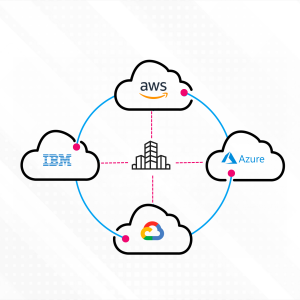
This Hybrid Multi-Cloud architecture refers to a system combining the services of two or more cloud providers working together into a unified ecosystem, leveraging each provider’s unique strengths, region availability and capabilities.

With numerous cloud providers offering various services, pricing models, and geographic availability, Multi-Cloud architecture has emerged as a strategic choice for businesses looking to maximize the potential of the cloud.

Why choose Multi-cloud?

Businesses are rapidly adopting this architectural approach for several reasons:

  • Enhanced Security: Mitigating Risks and Fortifying Infrastructure

This kind of architecture improves the system security in multiple ways. It mitigates risks by allowing workloads distributed across different cloud providers, ensuring that if one encounters issues, others can seamlessly take over. Additionally, it helps tackle “Shadow IT”, the use of unauthorized or unapproved technology solutions, applications, or services within an organization by employees, providing them with different cloud-based secure alternatives. Choosing cloud over on-premise software helps to avoid “Shadow IT”, while security and lack of governance risks can be significantly reduced. This architecture also adds extra resilience and redundancy, hardening overall application robustness.

  • Unmatched Flexibility: Breaking Free from Vendor Lock-ins

Cloud providers often offer similar products, but on certain occasions, some unique products and differences can be critical when choosing one over another. Multi-Cloud allows administrators to select the tools that best align with their specific needs, promoting closer alignment to business requirements.  It also allows you to choose each provider’s most powerful products and combine those to create a more robust solution.

  • Proximity and Compliance: Navigating Data Regulation and Geographical Challenges

High availability and fast response time are paramount in modern systems. Multi-cloud environments ensure multiple endpoints, optimizing response times by directing requests to the closest data center. Moreover, they facilitate compliance with data sovereignty laws and regulations, enabling services in regions where certain cloud providers may be restricted.

The Rise of Multi-Cloud Implementations

There are many other reasons why Multi-Cloud implementations are gaining popularity among companies seeking to improve security and performance while building robust applications or solutions with high availability, hybrid workflows and seamless DevOps integration. This approach recognizes that the cloud landscape is continually evolving. With providers improving their services or pricing models, deciding to rely on a single provider for a significant project is increasingly challenging.

In conclusion, The Future is Multi-Cloud

Julio Cesar’s wisdom, “Divide and conquer”, becomes particularly relevant here. In the short term, the benefits mentioned above make a strong case for Multi-cloud architecture. Although some can also be achieved with a Hybrid Cloud model, combining private and public clouds, there are strong reasons to believe that leveraging multiple clouds will result in more agile, secure and reliable systems.

Embrace the Multi-Cloud Revolution by Making Science and Propel Your Business to New Heights!

Transform your business with the power of multi-cloud, guided by the expertise of Making Science. Our team of certified experts are here to help you achieve real-world advantages by addressing complex challenges, streamlining operations and driving innovation that translates into measurable benefits for your business.