5 Critical Data Protection Mistakes of 2024 and Keys to Avoid Them in 2025

In a world where data is the new gold, its protection has become an absolute priority for companies of all sizes. The year 2024 has taught us important lessons about digital security, with cases that have exposed critical vulnerabilities in personal data management. City councils, hospitals, newspapers, the DGT, and major companies like Telefónica, Deloitte, and Banco Santander have been just some examples of victims affected by exposed sensitive data issues. 2025 will be no different, as cybercriminals, increasingly prepared and innovative, are ready to improve their attack vectors.

Is your organization prepared for the data protection challenges of 2025? Discover the most significant data protection errors of the past year and how to avoid them in your company during this new year.

1. AI Misuse: The Double-Edged Sword

Artificial Intelligence continues to transform everything in its path. The proliferation of models and their integration with various tools have significantly expanded access to information, often without considering how this data is used in model training processes.

For example, lawsuits against OpenAI for privacy violations marked a turning point in how we consider data use in AI model training. The AI tools available in today’s market are endless – models, platforms, extensions, code assistants – all are very useful and make our work more efficient, but users often have no idea what happens with the information they use.

How to protect your company in 2025?

  • Implement privacy impact assessments before adopting any AI tool
  • Implement sandboxing for AI applications (usually possible with paid instances)
  • Develop clear policies on what information can be shared with AI assistants
  • Focus on education about responsible AI use rather than excessive restrictions

2.Unencrypted Communications: An Open Door for Cybercriminals

Unencrypted communications have become one of the main access routes for cybercriminals, who exploit this vulnerability to intercept sensitive data in transit. It’s like sending all letters in transparent envelopes.

Unencrypted communications are particularly dangerous in today’s hybrid business ecosystem, where data constantly travels between offices, homes, and the cloud. When this data travels “in plain text,” any malicious actor with network access can intercept, read, and manipulate the information without leaving a trace. It’s like shouting confidential information in a public square hoping no one else is listening.

The problem is magnified in multi-cloud environments, where data passes through multiple network points before reaching its destination. In 2024, 40% of data breaches occurred precisely because of this vulnerability, with an average cost exceeding 5 million euros per incident. More worryingly, these breaches took an average of 283 days to detect, during which attackers had free access to sensitive information.

Your shield for 2025:

  • Implement end-to-end encryption in all communications
  • Adopt robust key management solutions
  • Establish regular encryption system audit schedules

3. Poor Access Control: The Weakest Link

Imagine a corporate building where all doors are open, with no record of who enters or leaves, and where any employee can access the safe. This is the perfect analogy to describe how many companies managed their digital access in 2024.

The complexity and workload involved in properly managing and monitoring access means many organizations fail in critical aspects: former employees maintain active credentials months after their departure, elevated privileges granted for specific projects remain indefinitely, and when attackers manage to compromise a single access point, they find an almost clear path to move laterally throughout the corporate network.

The 2024 Snowflake case taught us a clear lesson: more than 165 companies suffered security breaches for not activating multi-factor authentication. A basic error with devastating consequences.

Your winning strategy for 2025:

  • Rigorously implement the principle of least privilege
  • Invest in next-generation IAM systems
  • Use mandatory MFA systems
  • Schedule quarterly access permission reviews

4. Insufficient Monitoring: The Price of Neglect

The math is simple: according to IBM, organizations with reduced security teams paid $1.76 million more in breach costs. Investment in cybersecurity continues to be underestimated; it’s a matter of priorities – SMEs don’t consider cybersecurity one of them, and this can lead to data leaks, loss of money, customers, or reputation.

Your action plan for 2025:

  • Implement 24/7 monitoring systems with behavior analysis
  • Adopt AI-powered threat detection tools
  • Partner with specialists for implementing monitoring measures and tracking hybrid multi-cloud environments

5. Insufficient Investment in Training and Systems: The False Economy

Companies that invested in AI and security automation saved $2.2 million in breach costs during 2024. Training and awareness play a fundamental role in this area – if your employees know the risks and problems, they’ll be much more alert in their daily work. At Making Science, around 2,500 phishing cases were detected, which is why we raise awareness among our employees with internal tests updated with the latest attack methodologies, keeping us trained and in shape.

Your smart investment for 2025:

  • Allocate specific budget for cybersecurity training
  • Modernize your infrastructure with advanced security technologies
  • Implement regular security drill programs such as phishing campaigns

Conclusion: Data Protection as a Competitive Advantage

In 2025, data protection won’t just be a legal obligation but a crucial competitive advantage. Companies that learn from past mistakes and implement proactive solutions will not only protect their sensitive information but will also gain the trust of their customers and partners.

Are you ready to turn data protection into your strategic ally? The time to act is now. Investment in data security isn’t an expense; it’s an investment in your company’s future.

Need help implementing these measures in your organization? Contact us for a free assessment of your data security.

The Growing Threat of Cybersecurity Talent Shortage: Lessons Learned from Cloud Maturity Journey Podcast Series

The digital world is under siege. Cyberattacks are becoming more sophisticated and frequent, yet a critical line of defense is worryingly thin: the cybersecurity workforce. The stark reality is that there simply aren’t enough skilled professionals to combat the growing threat, leaving organizations vulnerable.

This alarming talent shortage took center stage in our recent “Cloud Maturity Journey” podcast episode, “Building a Digital Fortress: Security Best Practices and Strategies”. Our expert guests, Miguel Lopez, Cloud & Cybersecurity Director at Making Science, and Washington Gomez, CISO of GETD, provided invaluable insights into this pressing challenge.

The People Problem:

“The main challenge organizations face today lies with people,” Washington emphasized. “And when I say people, I mean talent.” This sentiment highlights the fierce competition for skilled cybersecurity professionals, making it difficult for companies to attract and retain top candidates.

A Complex Threat Landscape:

The rapidly evolving technological landscape, particularly advancements in Artificial Intelligence, has significantly complicated the cybersecurity environment. Cybercriminals are exploiting these tools to develop increasingly sophisticated attacks, making it difficult for organizations to stay ahead.

While technology offers potential solutions, it also exacerbates the talent shortage. Tools like AI and automation can optimize certain cybersecurity tasks, but they require skilled professionals to operate and maintain them. Additionally, the shift towards cloud infrastructure has introduced new vulnerabilities demanding specialized expertise.

Building a Resilient Defense:

To address this challenge, organizations must adopt a comprehensive approach, including:

  • Investing in employee training: A strong security culture begins with informed employees. As Miguel, another podcast guest, emphasized, “Employee training is essential. They need to understand they are targets and be proactive.”
  • Fostering cross-team collaboration: Collaboration between security teams and other departments, such as development and operations, is crucial. This integrated approach can help embed security into the software development lifecycle and enhance overall resilience.
  • Leveraging automation: Automation can improve efficiency and reduce human error. However, it’s essential to maintain a balance between automation and human oversight.
  • Staying updated on emerging threats: Cybersecurity professionals must stay informed about the latest threats and trends. This involves staying updated through industry publications, conferences, and networking.

Looking Ahead:

The cybersecurity industry presents significant challenges and offers exciting opportunities for skilled individuals. The demand for qualified professionals is high, and career prospects are promising. By investing in continuous learning and development, individuals can position themselves for success in this dynamic field.

Ultimately, addressing the cybersecurity talent shortage requires a collaborative effort from governments, industry, and academia. As Washington pointed out, “Cybersecurity isn’t just about technology; it’s a process involving people, processes, and technology.” By working together to develop educational programs, promote cybersecurity as a career, and foster innovation, we can build a more secure digital future.

To gain deeper insights and practical advice, we encourage you to listen to the full episode.This podcast offers a comprehensive overview of the cybersecurity challenges and opportunities, providing organizations with the tools to protect their assets and reputation.

Listen to the full episode of Cloud Maturity Journey to learn more about building a solid cloud foundation for your business.

Taking Control of Cloud Costs: Strategic Approach with FinOps

The cloud revolutionized business operations, offering unparalleled flexibility and scalability. However, this agility often comes with a challenge: managing complex and potentially runaway cloud expenses. Many organizations struggle to effectively control their cloud investments, leading to budget overruns and missed opportunities.

That’s where Cloud FinOps comes in – It’s a comprehensive approach that empowers organizations to maximize the value of their cloud investments. More than just cost-cutting, FinOps is a cultural shift that promotes financial accountability and optimizes cloud resource utilization.

From Cloud Chaos to Cost Clarity: Why FinOps Matters

Cloud FinOps is your all-in-one navigation system, providing:

  • A Clear Map of Your Cloud Costs: FinOps acts as your financial guide, revealing hidden costs and illuminating exactly where your money is going. You’ll gain a comprehensive understanding of your cloud spending patterns, identify cost drivers, and pinpoint areas for optimization.
  • The Tools to Steer Your Course: With FinOps, you’re not just along for the ride. You’re equipped with the insights and tools to optimize your cloud resources in real-time. Make data-driven decisions about your cloud usage, adjust your course as needed, and keep your spending on track – even as your business grows and evolves.
  • The Confidence to Explore New Horizons: When you’re confident in your cloud finances, you’re free to explore new opportunities without hesitation. Scale your operations, experiment with innovative technologies, and chart a course for growth – all without the fear of cost overruns derailing your journey.

The Three Pillars of FinOps Success

FinOps is built on a foundation of three core components, working together to ensure you get the most out of your cloud investments:

1. Operational Framework: This is all about establishing clear processes and practices for managing your cloud environment. It includes:

  • Gaining a deep understanding of your cloud costs
  • Creating budgets and tracking spending
  • Identifying opportunities for savings
  • Utilizing cloud resources efficiently and effectively
  • Building a culture of financial responsibility

2. Collaborative Culture: FinOps is a team effort. It’s about breaking down silos between finance, operations, and development teams, so everyone is working together towards shared goals. This requires:

  • Open communication and regular dialogue around cloud costs
  • Aligning individual and team objectives with your overall Cloud FinOps strategy
  • Empowering everyone to take ownership of cloud costs and contribute to optimization efforts

3. Continuous Improvement: FinOps is not a one-time project; it’s an ongoing journey of optimization. This involves:

  • Regularly reviewing your cloud usage and identifying areas for improvement
  • Experimenting with new technologies and approaches to optimize costs
  • Continuously monitoring your progress and making adjustments as needed

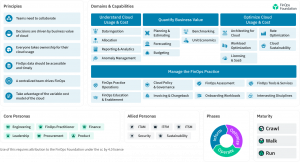
FinOps Framework. Source: FinOps Foundation 

The FinOps Framework, as illustrated above, provides a comprehensive overview of the key components and practices that drive successful Cloud Financial Management.

Beyond Cost Savings: The Real Value of Embracing FinOps

While reducing cloud costs is a significant benefit of FinOps, it’s just the tip of the iceberg. FinOps is about unlocking the true value of your cloud investments, empowering your business to achieve more with less.

This means moving beyond simply cutting costs to streamlining operations. FinOps helps you optimize your cloud operations for maximum efficiency. Imagine automating tasks, eliminating manual processes, and freeing up your team to focus on what truly matters – driving innovation and growth.

FinOps also enables you to respond with agility. In today’s dynamic business environment, agility is key. FinOps gives you the flexibility to scale your cloud resources up or down on demand, ensuring you’re always equipped to meet changing market demands without overspending.

With FinOps, you gain greater visibility and control over your cloud environment. This translates to improved governance, reduced risk, and peace of mind knowing your cloud resources are being used responsibly and securely.

Guiding You Towards Cloud Maturity and Cost Optimization

At Making Science, we understand the complexities of navigating the cloud and empower businesses to harness the full potential of the cloud, with confidence and without breaking the bank.

Our Cloud Maturity Assessment is designed to guide you through the hurdles of complex migrations, technical intricacies, and cost optimization. By identifying optimization opportunities and implementing FinOps best practices, we enable you to extract maximum value from your cloud investments without compromising the performance of your digital assets.

With our expertise, you’ll be able to achieve seamless scalability while maintaining cost-effectiveness, ensuring your cloud environment is agile, efficient, and secure. We’ll work with you to create a tailored roadmap that aligns with your unique business objectives, empowering you to redirect resources towards innovation and growth.

Ready to embark on a journey toward cloud maturity and optimized costs? Contact Making Science and take the first step towards optimizing your cloud environment for success in the digital landscape.

Protecting Customer Privacy: How to Remove PII from Call Center Transcripts

In our previous blog note, we discussed a methodical approach to converting call center audio recordings into text on an industrial scale. This capability is a game changer for companies in many different industries since it allows them to obtain relevant customer data (customer satisfaction, churn reason, etc.) that only a few years ago was inaccessible and used to take a lot of human effort and resources to unlock.

One of the key points to be compliant with current regulations is the importance of removing sensitive information about the users from the datasets used with analytical proposes. This sensitive information is what we call PII (Personal Identifiable Information). If this data is not properly handled or removed from the datasets used to extract users’ insights, it may result in costly lawsuits against businesses. This article will discuss different techniques to remove PII data from audio conversations previously converted to text “dialogs.”

Different techniques to remove PII information

Plenty of tools are available on the market to remove PII information. All these tools perform the same function but with different techniques under the hood, varied results, and varied costs. The core functionality is to take a text input that “contains” sensitive information and return an anonymized text. These tools also allow the user to define which PII attributes should be considered in the scope for anonymization (first names, surnames, phone numbers, emails, IP, etc.). Figure 1 shows a graphical representation of how a PII removal tool should work.

Figure 1: an example of how a PII removal tool works.

Until recently the best practice was to utilize a rules-based system to look for PII attributes, tag/treat those attributes as early as possible in the data ingestion processes that moved data into the Enterprise for processing. All of this is to protect customers’ confidentiality and reduce other types of business risks. 

Before modern machine learning systems, rule-based systems were the standard way to anonymize data. These systems use a set of rules to define if a word belongs to a certain entity type (in this case, these entities can be names, email addresses, phone numbers, etc.) and mask the input text based on these rules. However, this kind of solution implementation has limitations and maintenance costs as new attributes come into the business:

  1. Rigidness: the rule-based systems will catch only the entities’ values that the rules defined by the user comprehend. In other words, they are rigid. Because of that, if a new entity value doesn’t fulfill one of the predefined rules it won’t be caught by the system. For example, if the user tries to catch names by using a rule (a fixed list of names), if an example with a name that isn’t included in the rule’s list, then the system won’t mask that new value as a name.
  2. Contextual limitations: some names can have another meaning (being a noun or an adjective) depending on the context. For example, Rose is cleaning the vase. Depending on the context, a Rose can be a name or a noun (the flower). These kinds of cases take a lot of work to catch for rule-based systems.

As Large Language Models are becoming more widely available and affordable to use, modern AI-based PII systems tackle these problems by taking into account the labels that may accompany the PII attribute and even the context where the PII attribute(s) are embedded. Because of that, their accuracy in finding and mapping these PII entities is much more accurate than the old-fashioned systems.

In this article, we will evaluate two different approaches to finding PII fields: classic entity recognition systems and LLM-based systems. The entity recognition systems look at a word context to define whether that world is a PII field or not. In this case, the tool used was Google DLP (Data Loss Prevention). This tool has an entity recognition model that recognizes up to 150 different types of fields with sensitive information. On the other hand, the LLM-based systems use an LLM and a prompt designed for the PII recognition task and mask the PII values detected in the piece of text given as input. One of the key advantages of this approach is that it allows the user to define custom PII fields to be masked (outside, for example, the 150 default ones available in Google DLP) by simply modifying the prompt used for this task. Customization is the key advantage of this approach.

The benchmark

For this benchmark, we used the pii-masking-200k dataset. This is a public dataset that contains 200,000 pieces of text with PII data labeled. This dataset contains up to 54 different PII categories and the pieces of text are in four different languages (English, French, German, and Italian). It provides a comprehensive source of truth for model comparison since it contains many different PII categories in many languages.

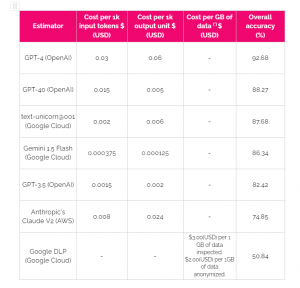
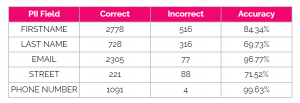
For this particular benchmark, we focused on five PII categories: first name, last name, email address, phone number, and address. This constraint reduced the sample size to 3826 elements. For each estimator and each PII category, we quantified the number of times when that category was correctly and incorrectly found. We considered that a piece of text is incorrectly labeled when the model doesn’t assign the expected label and when the model assigns an incorrect label (i.e.: an estimator masks Mouriño Street as [LAST_NAME] Street).

As we mentioned before, we used Google DLP, Data Loss Prevention, to represent the classical entity recognition models. For the LLM-based approach, we tested many different models using the same prompt. These models are GPT 3.5, GPT 4, GPT 4o (OpenAI), Anthropic Claude v2 (AWS), Gemini 1.5 Flash, and text-unicorn@001 (Google Cloud). Since some improvement can be obtained by customizing the prompt for each model, the idea behind this experiment is to separate the poor-performing LLMs from the high-performers. The obtained results are displayed in Table 1. The detailed results by each category can be found in Table 2 to Table 8 (see the appendix).

Table 1 – benchmark results summary. The cost data was updated on 2024-06-26. OpenAI and AWS models’ costs are expressed per 1K tokens whereas for Google models are per 1K characters

The main takeaways from this benchmark are:

  1. The estimator with the best performance is the GPT-4-based system, and the one with the worst performance is Google DLP.
  2. If we take into account the price, the system with the best price-performance trade-off is the Gemini 1.5 Flash-based system. This is because it costs 10 times less than the GPT-4-based one and it has a performance only 6% lower if we consider the overall accuracy.
  3. For Google DLP, it’s particularly surprising that it is unable to catch any address value. By doing a deep dive into the examples, we found out that it tends to confuse surnames as addresses (i.e.: Johnson Street is anonymized as [SURNAME] Street).
  4. All the systems have a great performance for email address (the model with the worst performance, GPT-3.5, has a 94.13% accuracy for this label) recognition.

Choosing the Right PII Removal Method

In this article, we compared several estimators to find PII attributes in text and to remove them. This is a crucial step in any call center analytics system (and, in general, in any system that works with text data with sensitive information) since it allows the removal of users’ personal information.

We observed an important variability in the performance of the two solution approaches and across the different LLMs.

If we look only at the overall accuracy, the best performer estimator is the GPT-4-based system (OpenAI), and the worst performer is Google DLP (Google Cloud). However, if we include the cost in the equation, the best option by far is the Gemini 1.5 Flash-based system (Google Cloud Platform). This anonymization system has an overall accuracy comparable to the GPT-4-based system but for a fraction of the cost (10 times less).

PII identification, tagging, and treatment performance should not be forgotten about. Cloud and service accounts require that quotas be adjusted according to performance demands for the given use cases and volumetrics being targeted.

For each particular use case, it is important to take into account the specific requirements for it. Because of that, it is important to assess the required accuracy to be compliant with the product requirements, the cost that this accuracy implies, and accepted latency (if the system will be a stream system, then the latency will be an important factor in choosing the best-suited estimator for the use case).

The latest relevant aspect to point out is that there is no perfect model. This idea is crucial for PII remotion use cases because, in some situations, very demanding standards regarding data anonymization must be fulfilled. Because of that, to be fully sure that the system does its trick in the way it should, from Making Science we always recommend keeping the human in the loop. The presence of human validation of the output generated by the LLM-based system will ensure that the solution fulfills the minimum requirements regarding PII entities’ remotion.

Accuracy by label by model appendix

Table 2 – GPT-4 accuracy by PII field

Table 3 – GPT-4o accuracy by PII field

Table 4 – GPT-3.5 accuracy by PII field

Table 5 – Anthropics’s Claude v2 accuracy by PII field

Table 6 – text-unicorn@001 accuracy by PII field

Table 7 – Gemini Flash 1.5 accuracy by PII field

Table 8 – test-unicorn@001 accuracy by PII field

Table 9 – Google DLP accuracy by PII field

Conclusion

This exploration into PII removal from call center transcripts reveals a critical takeaway for businesses: achieving both accuracy and cost-efficiency is possible. While the advanced capabilities of GPT-4 delivered accuracy, the cost factor cannot be ignored. This is where Gemini 1.5 Flash shines, providing top-notch performance at a significantly lower cost, making it a compelling solution for organizations of all sizes.

At Making Science, we understand the importance of balancing powerful AI solutions with robust security measures. We are committed to helping businesses unlock the full potential of their call center data while upholding the highest ethical and security standards. Our team of experts can help you develop and implement a tailored PII removal strategy that leverages the latest technologies, including Gemini 1.5 Flash, while ensuring complete and reliable data anonymization. Contact us to learn how we can tailor a solution to your specific needs.

Unlocking Growth with GenAI: Transforming Marketing, Sales and Customer Service

The recent Making Science and Google Cloud event series delved into the transformative power of Generative AI (GenAI). From text to images, GenAI is revolutionizing how businesses operate and engage with their audiences. However, one area that’s generating immense excitement is conversational AI, particularly its impact on customer service and engagement.

GenAI: A World of Possibilities

GenAI encompasses a range of technologies that enable machines to generate human-quality content. This includes text generation for marketing materials, creating realistic images and videos, and even composing music. The vast applications empower businesses to personalize customer journeys, optimize marketing campaigns, and streamline content creation.

But GenAI’s capabilities extend beyond text and images, venturing into the audio realm. This includes:

  • Speech Synthesis: GenAI can generate realistic and natural-sounding speech from text, enabling lifelike interactions with virtual assistants and chatbots.
  • Voice Conversion: Imagine transforming your voice into different languages or even different voices entirely. GenAI makes it possible, opening doors for personalized audio experiences and accessibility solutions.
  • Audio Editing and Enhancement: GenAI can remove background noise, improve audio quality, and generate sound effects, creating a more immersive and engaging audio experience.

These advancements in GenAI for audio lay the foundation for sophisticated conversational AI applications. By combining natural language processing with high-quality audio generation, businesses can create truly interactive and engaging customer experiences.

The Rise of Conversational AI

Within the GenAI landscape, conversational AI stands out for its ability to revolutionize customer interactions. Powered by natural language processing and machine learning, conversational AI tools like chatbots and virtual assistants can understand and respond to human language in a natural, contextually relevant way. This opens doors to:

  •  24/7 Customer Support:  Say goodbye to limited support hours and long wait times. Conversational AI provides instant responses and assistance, ensuring customers feel heard and valued around the clock.
  •  Personalized Interactions:  Gone are the days of generic responses. Conversational AI tailors interactions based on individual customer preferences and past interactions, creating a truly personalized experience.
  •  Increased Efficiency:  By automating routine tasks and handling a high volume of inquiries, conversational AI frees up human agents to focus on complex issues, boosting overall efficiency and productivity.
  •  Valuable Insights:  Every interaction with conversational AI provides valuable data and insights into customer behavior and preferences. This information can be used to refine marketing strategies further, personalize offerings, and improve the overall customer experience.

Conversational AI in Action: Real Estate and Beyond

The impact of conversational AI is already being felt across various industries. We are helping one of the main leaders of the real estate sector in Spain, an important company in Spain, implement conversational AI to transform property search, virtual tours, and mortgage assistance. Potential buyers can now receive instant answers to their questions, explore properties virtually, and even get pre-qualified for mortgages – all through a seamless conversational interface.

Beyond real estate, the potential applications are endless. Retail giants leverage conversational AI for personalized product recommendations and virtual try-on solutions. Financial institutions use it for account support, loan applications, and fraud detection. The possibilities are limited only by our imagination.

The Future of Customer Engagement

As GenAI continues to evolve, conversational AI will play an increasingly central role in shaping customer experiences. Businesses embracing this technology will be well-positioned to build stronger customer relationships, drive efficiency, and achieve sustainable growth.

Making Science and Google Cloud are committed to helping businesses unlock the power of GenAI and conversational AI. Contact us today to explore how these technologies can transform your customer engagement and take your business to the next level.

Unlocking the Cloud’s Potential: A Continuous Journey to Maturity and Innovation

The cloud has become the backbone of modern business, promising unparalleled agility, scalability, and the power to unlock game-changing innovation. However, harnessing its full potential is more than just migrating your data – it requires a strategic approach, a deep understanding of your cloud environment, and a commitment to continuous improvement. But did you know most companies are only leveraging a fraction of its potential?

At the recent “Unlocking Your Cloud” event, co-organized by Making Science and Google Cloud, we explored the critical steps businesses must take to maximize their cloud investments. Industry leaders explored the key to maximizing your cloud investment: Cloud Maturity.

Navigating the Ever-Evolving Cloud Landscape

The cloud is constantly evolving. Emerging AI, data analytics, and cybersecurity trends are reshaping the business landscape.  Take, for example, how AI is revolutionizing customer service in the retail industry. Businesses need a proactive approach, constantly evaluating their cloud strategy and adapting to the latest advancements.

The Cloud Maturity Assessment: Your Roadmap to Success

Understanding your organization’s current cloud maturity level is crucial for optimization. The Cloud Maturity Assessment framework, developed by Making Science, provides a comprehensive analysis across five key areas:

  • Architecture (Availability & Scalability): Ensure your cloud infrastructure can seamlessly scale to meet growing demands, minimizing downtime and maximizing business agility.
  • Security: Identify and address vulnerabilities before they impact your operations, safeguarding sensitive data and customer trust.
  • SecDevOps: Integrate security best practices throughout development, enabling faster deployments and reducing the risk of costly security breaches.
  • FinOps: Gain control over your cloud spending and identify areas for optimization, ensuring you get the most value from your cloud investment.
  • Continuity & Recovery: Establish robust disaster recovery plans to minimize downtime and ensure your business can weather any storm, keeping you focused on delivering value to your customers.

By identifying strengths and weaknesses, the assessment provides a clear roadmap for improvement, allowing you to prioritize initiatives and unlock the full potential of your cloud investment.

Real-world success: HolaFly’s cloud maturity journey

One of the event’s highlights was hearing directly from Pablo Gómez, CEO of HolaFly, who shared their inspiring journey, highlighting their challenges and the transformative impact of embracing the Cloud Maturity Assessment. By focusing on key areas like architecture optimization, enhanced security protocols, and streamlined DevOps practices, HolaFly achieved significant efficiency gains and accelerated its innovation cycles. Their success story serves as a powerful testament to the tangible benefits of a maturity-focused approach.

Partnering for Cloud Success

The journey to cloud maturity is best navigated with experienced partners by your side. Making Science and Google Cloud offer the technical expertise and business-oriented perspective necessary to align your cloud strategy with your core objectives. Whether you’re just starting to explore the cloud or looking to optimize existing infrastructure, the right partnerships can help you navigate complexities, avoid common pitfalls, and unlock lasting value.

Embracing the Cloud Maturity Journey

Achieving cloud maturity is not a destination, but a continuous journey of improvement and adaptation.  But equipped with the right strategy, tools, and partners, you can confidently navigate even the most challenging aspects of the cloud. By embracing the insights shared at the “Unlocking Your Cloud” event and proactively managing your cloud maturity, businesses can be well-positioned to turn the cloud into a true engine for business growth and success.

Ready to embark on your own cloud maturity journey? Contact Making Science today to learn how we can help.

Unleashing the Power of Kubernetes: How GKE Revolutionizes Container Orchestration

In the fast-paced world of cloud computing, container orchestration has become a crucial aspect of modern application deployment. . Leading this revolution is Kubernetes, an open-source platform that has redefined how we manage and scale containerized applications. Kubernetes itself was heavily inspired by Borg, Google’s internal system for managing containers at massive scale – think services like YouTube and Gmail. Today, we’ll explore how Google Kubernetes Engine (GKE), a managed service built on Kubernetes, takes this technology even further, empowering businesses to achieve unparalleled efficiency and scalability.

Understanding Kubernetes:

Often shortened to “K8s,” Kubernetes is a powerful container orchestration system that automates the deployment, scaling, and management of containerized applications.  It has rapidly become the industry standard.

At its core, Kubernetes works with two types of clusters: the control plane and the data plane. The control plane ensures the smooth functioning of the cluster, while the data plane handles servers, virtual machines, and other resources. The key components of Kubernetes include:

  • Pods: The smallest deployable units in Kubernetes, encapsulating applications or processes.
  • Services: Defining a set of pods and their access policies, providing a static IP address and DNS name.
  • Nodes: Virtual or physical machines in the cluster that run applications and workloads.
  • Master: The main server that orchestrates all activities within the Kubernetes cluster.

Elevating Kubernetes with GKE:

Google Kubernetes Engine (GKE) takes Kubernetes’s power to the next level, offering a fully managed service that simplifies the deployment and management of containerized applications. With GKE, businesses can leverage Kubernetes’ robustness and scalability while benefiting from Google’s expertise and innovative enhancements.

One of GKE’s standout features is its flexibility in cluster types. Whether you need a single-zone, multi-zone, or regional cluster, GKE has you covered. This adaptability ensures that your applications can be deployed in the most optimal configuration for your specific needs.

Unleashing the Power of Auto-Scaling:

GKE’s auto-scaling capabilities are a game-changer for businesses looking to optimize their resource utilization and cost-efficiency. With horizontal pod auto-scaling, GKE automatically adjusts the number of pods based on incoming traffic, ensuring that your applications can handle sudden spikes in demand without manual intervention.

But GKE’s auto-scaling prowess doesn’t stop there. It also offers cluster auto-scaling, where virtual machines scale based on pod capacity, and vertical pod auto-scaling, which intelligently analyzes and adjusts pod resources based on real-time requirements. Additionally, node auto-scaling creates node pools that dynamically adapt to the demands of your workload, ensuring optimal resource allocation at all times.

Security at the Forefront:

In the era of heightened cybersecurity threats, GKE prioritizes the security of your containerized applications. With features like private cluster creation, encryption both at rest and in transit, and robust vulnerability scanning, GKE helps safeguard your applications from potential threats.

GKE’s encryption is managed by the Key Management Provider (KMP), enabling the encryption of secrets that are not possible by default. This added layer of security ensures that your sensitive data remains protected throughout its lifecycle.

Empowering Your Business with GKE

Kubernetes has revolutionized the way we deploy and manage containerized applications, and Google Kubernetes Engine (GKE) takes this technology to new heights. With its powerful features, auto-scaling capabilities, and a strong focus on security, GKE empowers businesses to achieve unparalleled efficiency, scalability, and peace of mind.

At Making Science, we understand the transformative potential of GKE and are committed to helping our clients harness its full power. Our team of experts is ready to guide you through the journey of implementing GKE, ensuring that your applications are deployed with optimal performance, security, and cost-effectiveness.

Don’t miss out on the opportunity to revolutionize your container orchestration strategy. Explore how GKE can help your business achieve its goals and stay ahead in the rapidly evolving world of cloud computing.

Cloud Strategies for Business Growth and Innovation – Lessons learned from Cloud Maturity Journey Podcast Series

Last week marked the release of the inaugural episode of Cloud Maturity Journey, a podcast series delving into key strategies for establishing a robust cloud foundation for your business. In this debut chapter, we were joined by two remarkable professionals, Israel Olalla, Cloud Customer Engineer Manager at Google Cloud and Miguel Lopez, CTO at Making Science, who, alongside moderator Jaime Desviat, Cybersecurity Analyst at Making Science, discussed the various challenges enterprises encounter when embracing cloud technology, as well as current industry trends and how these challenges are being addressed.

Recent technological trends such as AI, online shopping, and cloud storage have spurred the emergence of cloud technologies. The cloud provides storage when needed, and resources when scarce and enables architectures to be scalable and resilient in times of resource scarcity. Despite this, many companies unknowingly rely on cloud services for everyday tasks such as email accounts, storage, and online meetings.

Furthermore, the cloud has democratized access to resources, allowing resource-constrained businesses to swiftly and affordably access what they need. This has significantly empowered small enterprises to conduct tests and trials previously only feasible for larger corporations.

Challenges and the Talent Gap

Present challenges primarily revolve around the scarcity of specialists. While many individuals possess general qualifications, few have detailed technical expertise on each platform. Consequently, businesses face novel technologies they cannot fully leverage due to talent shortages. Another notable challenge lies in migrating long-standing technologies from legacy environments, often resulting in wasted efforts attempting to improve systems that could be more efficiently rebuilt in the cloud.

Cloud Adoption Trends

Current statistics indicate cloud adoption rates in Spain at 30%, compared to 46% across the European Union. While startups predominantly embrace cloud infrastructure due to financial constraints, larger enterprises struggle more with the transition. Sectors such as tourism, e-commerce, hospitality, and particularly airlines are the latest to migrate to the cloud.

Future Trends and the Evolving Landscape

AI and machine learning will continue to shape the cloud landscape, unlocking greater potential as capacities expand. Multi-cloud environments are emerging, allowing companies to cherry-pick components from various platforms based on their needs and performance. Additionally, the gaming industry is transitioning to cloud environments alongside the proliferation of IoT.

Throughout this episode, we’ve explored how the cloud not only resolves storage and resource challenges but also levels the playing field, enabling businesses of all sizes to innovate and compete on equal footing. However, significant challenges remain, including the shortage of skilled specialists and the complexities of transitioning legacy technologies to cloud environments. Nevertheless, these challenges signal a promising future for cloud technologies.

Looking Ahead

Our ‘Cloud Maturity Journey’ continues in the next episode – a deep dive into optimal cloud architectures. Join us as we explore how a robust architecture can be the cornerstone of business success, impacting competitiveness, profitability, and customer experience.

Listen to the full episode of Cloud Maturity Journey to learn more about building a solid cloud foundation for your business.

Insights from Google Cloud Next: Navigating the IT-Marketing Bridge & Harnessing AI and Cloud for Future Growth

The main insight from Google Next was that IT and marketing still have very different functions, and the bridge needs to be navigated. For a typical brand, the organizations are separate and have different skill sets and different priorities. However – in 2024 and going forward, it has never been more critical for the two to find common ground.

AI

As AI continues to evolve (both predictive AI and generative AI), it is important for brands to understand the value of AI to directly influence their KPIs, grow their revenue, and make their operations and marketing spend more efficient.

Cloud-Powered Marketing

The opportunity to differentiate on Cloud-based AdTech for marketing is massive right now.

The spectrum of cloud for marketing maturity is wide. Some brands are using Cloud instances, CDPs, BigQuery, and digital infrastructure to test predictive AI tactics today. Others are not.  Some own their data, and some don’t.

The quote of the week that embodies this thinking is: “If you don’t have a data strategy, you can’t have an AI strategy.” AI needs input. And the input, ideally, will include the best data possible, as your results will be as good as the data you put in. This then embodies the relationship between the brand and the consumer.

There are many ways to design the strategy and infrastructure to make that happen.  Brands need to be intentional about selecting vendors and service partners to help.  And it needs to start now. Start now, because you’re never going to finish!

Partner Ecosystem

The partner ecosystem is evolving. There aren’t many true Cloud for Marketing partners. The big SIs that are great at Cloud don’t do marketing use cases much whereas the big Agencies don’t do IT much. And here’s the thing: these facts won’t change much going forward. Steering a battleship with a toothpick is hard to do, and there isn’t much incentive to try and grow tiny practices within a giant revenue base.

So new partners are springing up that can tie together all the pieces that are needed to do marketing in this new AI era. Connecting cloud, CDP, martech, adtech, measurement, and back again.

Brands will do well to consider investing intentionally in this IT/Marketing gap, for the sake of using AI better and better as it evolves.

Get in touch with our experts to learn more about our Google Cloud services and AI at Making Science!


[button color=”accent-color” hover_text_color_override=”#fff” size=”large” url=”www.makingscience.com/contact” text=”Contact Making Science” color_override=”#ff0067″]

Optimizing Your Cloud Journey: Choosing the Right Database on Google Cloud Platform

In today’s data-driven world, businesses require robust and scalable database solutions to manage their ever-growing data. Google Cloud Platform (GCP) offers a robust suite of database solutions designed to meet various needs, from small projects to large-scale enterprise applications. 

Each database model in Google Cloud  is tailored for specific use cases, balancing cost-effectiveness with powerful features like serverless architectures. This approach, where Google Cloud manages the server infrastructure and scaling, is particularly beneficial for databases by simplifying operations, enhancing scalability, and improving fault tolerance, all without manual server management intervention. 

In this blog post, we will explore the diverse range of databases available within Google Cloud, focusing on their unique capabilities and use cases across different categories: relational, in-memory, document, and key-value databases.

Why is this topic important?

Selecting the right database solution is pivotal for companies striving to thrive in the digital era. Efficient data management not only enhances application performance but also ensures seamless scalability to accommodate growing data volumes. Moreover, robust database solutions contribute to improved data security, compliance adherence, and overall operational efficiency. By understanding the features and benefits of different database models within GCP, businesses can make informed decisions that align with their specific requirements and long-term objectives.

The complexity of managing diverse data sets, ensuring high performance, maintaining scalability, and optimizing costs poses significant challenges for businesses. Traditional database solutions often struggle to keep pace with evolving demands, leading to performance bottlenecks, scalability issues, and inflated operational costs. Moreover, ensuring data security and compliance in an increasingly interconnected digital ecosystem presents additional challenges. GCP’s database solutions address these challenges by offering advanced features, seamless scalability, flexible pricing models, and robust security measures, empowering businesses to overcome obstacles and drive innovation.

Google Cloud Database Solutions: A spectrum of power and flexibility

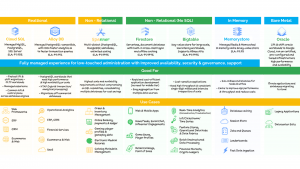
GCP boasts a variety of database models, each catering to specific use cases. Whether you require the versatility of relational databases, the lightning-fast speed of in-memory solutions, or the scalability of NoSQL options, Google Cloud has you covered with four different types of database solutions -Relational, In-Memory, Document, and Key-Value- tailored for enhanced performance, scalability, cost efficiency, simplified management, and robust security. 

From Memorystore’s fast speeds to Cloud Spanner’s global consistency, GCP ensures efficient application functionality and user experience. As data volumes grow, GCP databases seamlessly scale while offering flexible pricing to optimize costs. Fully managed services free development teams from infrastructure management, allowing focus on innovation, while robust security features prioritize data protection.

Relational Databases: Ensuring data integrity and simplifying complex queries for business applications

  1. Bare Metal Solution for Oracle

For users seeking minimal latency and optimal performance, GCP’s Bare Metal Solution is a standout choice. This setup is ideal for Oracle databases, providing direct access to hardware without the abstraction layers typical in virtualized environments. This results in reduced overhead and enhanced efficiency—key for applications demanding high-speed data processing.

  1. Cloud SQL: Fully Managed and Scalable

Cloud SQL caters to those needing a managed relational database with robust features. It supports seamless migrations, integrates flawlessly with other GCP services like GKE and GCE, and ensures data security through encryption both at rest and in transit. Its flexible pricing adapts to various organizational needs, making it a go-to for diverse applications.

  1. AlloyDB: The Popular Powerhouse

AlloyDB stands out in GCP’s portfolio as a highly popular choice, thanks to its advanced features over traditional PostgreSQL. This database supports massive scalability and high performance with its columnar data model and intelligent caching mechanisms. While AlloyDB’s cost might be higher, its capabilities justify the investment for enterprises requiring cutting-edge database technology.

  1. Cloud Spanner: Global Consistency Redefined

Unique among its peers, Cloud Spanner offers a globally distributed design while maintaining strong consistency and a near-perfect uptime SLA of 99.999%. This database is ideal for applications that require reliable, wide-reaching data access without compromising on performance.

In-Memory Database: Enabling real-time experiences and lightning-fast data retrieval for users

For applications requiring ultra-fast data access, Memorystore provides in-memory data storage with response times under a millisecond. Available in both basic and standard tiers, it offers configurations tailored to different reliability and performance needs, including fault recovery and scalable resources.

Document Database: Offering flexibility to store and manage evolving data structures for content-rich applications

Firestore excels in managing document-oriented data with ease. It offers real-time synchronization, offline access, and robust query capabilities, making it perfect for dynamic apps that need to stay updated continuously. Its serverless approach ensures developers can focus on building features without managing the underlying infrastructure.

Key-Value Database: High performance and scalability for frequently accessed data, enhancing responsiveness 

When handling vast amounts of data with low latency, Cloud Bigtable is the solution. It supports extensive scalability and integrates seamlessly with the Hbase API, making it suitable for high-throughput applications such as real-time analytics and ad-tech.

Choosing the Right Database in Google Cloud Platform

The choice of a database in GCP largely depends on specific application needs and budget constraints. While AlloyDB currently stands as a popular choice due to its advanced features and broad adoption within Google’s services, each database model offers unique benefits. Understanding these options will help you select the most appropriate database solution, ensuring your applications run efficiently and cost-effectively.

Making Science: Your Trusted Guide in the GCP Database Landscape

Making Science has a wealth of knowledge and experience in navigating the world of GCP databases. Our team can assist you in assessing your needs, identifying the perfect database solution, and ensuring seamless integration within your GCP environment. Contact Making Science today and unlock the full potential of your data with the power of GCP’s database solutions!