Revolutionise Your Online Sales with ad-machina’s Automated Hyper-Personalisation

Online sale is a crucial component of businesses across all industries. However, with so much competition, standing out and capturing the attention of potential customers can take time and effort. That’s where ad-machina comes in.

Ad-machina is a powerful technology that allows companies to hyper-personalise their search engine marketing (SEM) campaigns. With ad-machina, companies can revolutionise their online sales by achieving 30% more conversions, 100+ personalised ads, and a team of professionals to help them reach their goals.

Multilingual Campaign Personalisation

One of the unique features of ad-machina is its multilingual campaign automation. ad-machina can generate hundreds of thousands of ads instantly, and its algorithms analyse search behaviour to identify top-performing message structures. This enables ad-machina to create personalised ads for each search, all while being multilingual.

Continuous Learning Technology 

In addition, ad-machina is a continuous learning technology. This means that it increases its efficiency over time, detecting and adapting to changes in consumer purchasing behaviour. ad-machina’s continuous learning technology helps it adapt to market changes and ensures its users receive the best possible results.

Landing Page Optimisation

Ad-machina also offers landing page customisation. ad-machina personalises landing pages according to the interests shown in each search, completing the personalisation cycle of their journey, thus multiplying sales conversion ratios. This feature takes ad-machina’s hyper-personalisation to the next level and enables businesses to offer their customers a fully personalised experience from start to finish.

One of the most remarkable aspects of ad-machina is its proven success. ad-machina’s technology has been proven to improve the results of SEM campaigns by up to 30%, regardless of the industry. A highly talented team powers ad-machina’s technology and has completed projects worldwide.

In conclusion, ad-machina is a game-changing technology capable of transforming your online sales. With its automated hyper-personalisation, multilingual campaign automation, and continuous learning technology, ad-machina is the perfect tool for any business that wants to stay ahead of the curve. ad-machina has everything you need to succeed in today’s digital marketplace. 


So why wait? Contact our team of ad-machina experts today and revolutionise your online sales!
From volume to value: Improve your campaigns with Gauss Smart Advertising

Align your advertising investment with your business strategy

The automatic bidding strategies offered by the different advertising platforms have become one of our best allies regarding campaign optimisation. Specifically, those known as Value Based Bidding allow us to align our advertising investment with our business objectives in an automated way.

If you are using Value Based Bidding, configure your pixels to collect the conversions you want to optimise. Then, indicate the objectives you want to achieve through your campaigns (whether it is maximising the value of the conversions or optimising the return on our investment). From there, algorithms learn everything necessary to find and bid for users to achieve your goals.

The main issues with Value-Based Bidding

Conversions, in this case, act as signals that tell the algorithm whether or not users are valuable for our campaign. But, sometimes, you may not have enough conversion volume for VBB to work. And sometimes, web conversions do not fully reflect the reality of our business.

Furthermore, it is estimated that the Google and Meta algorithms only consider signals for the first seven days since the user entered through a paid campaign. For user acquisition data, the most recent signals are the ones that the algorithms give the most importance to. What happens when a lead’s final conversion occurs beyond that 7-day window?

How Gauss Smart Advertising can help you

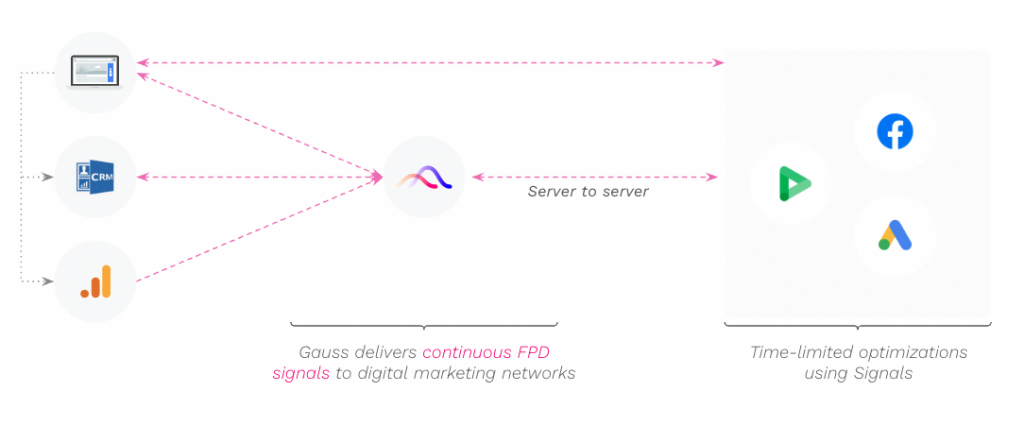
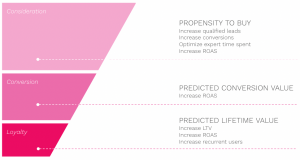
To cover this gap between what the algorithm can see and your business’s fundamental objectives and KPIs, Making Science developed Gauss Smart Advertising. This proprietary technology allows you to anticipate the future value of a user and improve signals throughout the entire sales funnel. With Gauss, we can predict a lead’s propensity to buy, the expected purchase value, and even the long-term value of the lead (customer lifetime value). Then, we translate it into signals that give the algorithm a more realistic vision of your business. Furthermore, what makes the difference is that we not only create predictive models but can activate them in real-time to anticipate and communicate those signals without losing the benefits of the cross-device nor the freshness that Smart Bidding algorithms require. Additionally, we develop agnostic models that can be activated on any of your marketing platforms.

How it works

Advertising platforms have the ability to collect web browsing data for campaign optimisation. Gauss Smart Advertising collects browsing data from other data sources to issue a more accurate assessment of the user that it then sends as a signal to the platforms.

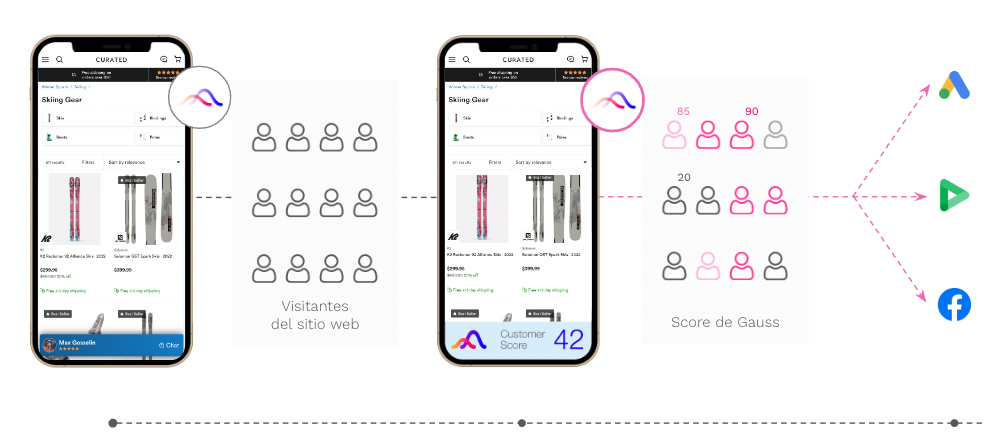
In essence, based on previously trained machine learning models, it predicts and issues a score/value for each of the users that enter the website and communicates it to the platforms in real-time:

A methodology for automation and activation

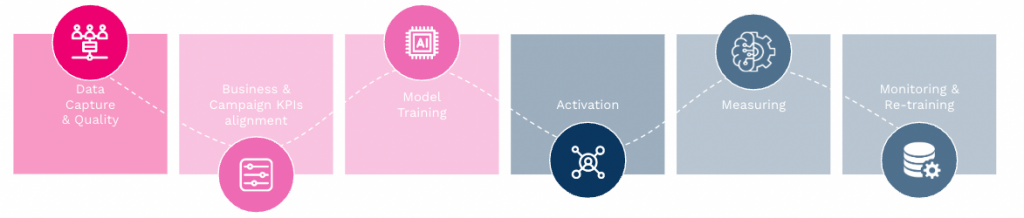
Our solution is optimised to cover all the critical phases of its implementation, from the collection and evaluation of the quality of the data that feeds our models to the activation and monitoring of campaigns and models:

With Gauss Smart Advertising, we have increased our clients’ conversions by 20% and reduced their CPL/CPA by up to 50%.

Gauss Smart Advertising can be used to

  • Communicate to the algorithms that someone has made a purchase when the lead is more than seven days old (for example, longer tail conversions like university enrollments, vehicle purchases in the automobile industry, insurance or mortgage purchases in the banking sector, etc.)
  • Adjust conversion values ​​when refunds and cancellations represent an essential part of the business, and these occur outside the scope of action of the algorithms (for example: in the hotel industry where cancellations tend to take place closer to check-in than to reservation)
  • Amplify and provide a greater volume of signals to the algorithms to improve their performance in industries or advertising channels (for example, display) where few conversions are collected
  • Adjust the signals captured by the algorithms to the KPIs and business objectives (for example, increase customer lifetime value for e-commerce businesses)

Do you want to know more about Gauss Smart Advertising? Write to us! Our team of experts will be happy to help you.


Get in touch


How is AI Changing the Game?

AI-generated content is transforming how marketers produce and share digital content. AI can provide compelling written and visual content that is highly tailored, utilising cutting-edge algorithms and machine learning approaches. Understanding the potential of AI-generated content and knowing how to use it well in your campaigns will help you as a marketer remains on top of trends and get better outcomes.

The potential of AI-generated content to produce highly tailored material for specific clients is one of its main advantages. AI may produce content that is customised to the interests and preferences of particular parts of your audience by examining consumer data and behaviour. This can enhance the entire client experience and aid in boosting engagement and conversion rates.

AI-generated content can also save time and resources, which is a benefit. AI can assist marketers in producing more content in less time without losing quality by automating the content development process. Small firms or marketing teams with minimal resources may find this to be extremely helpful.

Utilising AI-generated content

Writing product descriptions and other sorts of written material is one approach to use it. Without the need for human writing, AI-powered solutions, for instance, can assist you in creating accurate and enticing product descriptions. AI can also be employed to produce visually pleasing photos and videos that can be utilised in social media campaigns and other kinds of digital advertising.

A/B testing and optimisation

Using AI-generated material for A/B testing and optimisation is another approach, and Making Science is leading the way in this field with its innovative GAUSS framework.

The Gauss Framework utilises AI-generated content for A/B testing and optimization. With the ability to quickly determine the most effective parts of your content through evaluating consumer data and behaviour, you can refine your campaigns with the insights provided. This leads to improved productivity and the optimisation of advertising platforms such as Google Ads, DV360, Campaign Manager, and Facebook, among others. 

Set your objectives

Having specific objectives in place, such as:

  • Increasing engagement and conversion rates
  • Enhancing the customer experience
  • Producing more content in less time

Can help you make the most of AI-generated content.

Once you have identified your goals, developing a strategy for how to achieve them is essential. This should include a detailed plan for how you will use AI-generated content in your campaigns, what types of content you will generate, and how you will measure the success of your efforts.

Additionally, working closely with your team and any external partners is important to ensure that your AI-generated content aligns with your overall marketing strategy. This includes collaborating with your design, development, and data teams to ensure that your AI-generated content meets your technical and branding requirements. Also, working with a data science team, if you don’t have one, ensures that the data used to train the AI model is diverse and representative of your target audience.


Finally, it’s essential to continuously monitor and evaluate your AI-generated content efforts to ensure that they meet your goals and positively impact your business. This includes regularly analysing metrics such as engagement rates, conversion rates, and customer feedback to identify areas for improvement and make adjustments as needed. 

Using AI-generated content comes with numerous advantages and opportunities. By carefully selecting the data used to train the AI model, you can ensure that the content produced is diverse and representative of your target audience, minimising the possibility of bias. Furthermore, incorporating AI-generated content into your campaigns opens the door to new possibilities and allows you to enhance human creativity and uniqueness, rather than stifle it.


To ensure the success of using AI, it is key to have a clear strategy and to be aware of potential challenges. Reach out to our team of experts to create a clear strategy with AI and to learn more about GAUSS!

Increase your sales by 20% by activating AI in your digital advertising campaigns

Data collected without a purpose and without proper processing is virtually useless and becomes an expense that quickly escalates. It is not until we give it a sense and enrich it intelligently that we can truly consider it an investment; and discover the often surprising stories it holds.

Considering our data as one of our most critical corporate assets is imperative. Monitoring customer interactions provides a wealth of knowledge to guide our marketing, sales and product development efforts, while monitoring internal processes generates valuable information to optimise operations and improve productivity.

This knowledge value chain is composed of technical and non-technical components. It includes business processes and understanding that a systematic approach allows us to put data-driven predictive models into production through a strategy tailored to each business objective.

Once we have extracted the relevant insights from the predictive models, the next crucial step begins: turning this information into action to generate measurable business impact. 

This requires three key aspects: 

  1. Understanding the business environment we operate, our acquisition, sales and loyalty processes.
  2. In-depth knowledge of the different profiles and purchase drivers of each customer segment to which we direct our advertising campaigns.
  3. The creation of tools that automate or facilitate decision-making.

At Making Science, we have been innovating in this context for years with Gauss Smart Advertising. This machine-learning solution optimises your advertising campaigns on digital platforms (Google Ads, DV360, Campaign Manager and Meta, among others), making the most of First Party Data (from CRMs, call centres or other available data sources) and managing to improve sales ratios by 20%.

Technology geared towards automation and activation


Discover the state of data maturity of UK companies in the latest Making Science research and our recommendations for getting the most out of your data and marketing efforts.

Determining a person’s propensity to buy with AI

Predicting how customers might interact with your brand – whether that is making a repeat purchase, reacting to a discount, or defecting to a competitor – helps marketers to tailor their communications with their audience to increase revenue.

For e-commerce marketers, ‘propensity to buy’ models enable an understanding of how likely a person is to purchase from your company. If you are able to ascertain the likelihood of a person purchasing from you before you deliver the communications, then you are empowered to interact (or not interact) with that person in a very personalised way.

Powered by Artificial Intelligence that can make sense of huge data sets, propensity to buy models can personalise the customer experience of your brand – offering the right product to the right person at the right time. In order to do this, these models require three processes to make its decisions:

  • Data collection
  • Prediction
  • Activation

Data Collection

As with much of digital marketing, a propensity to buy model requires you to bring in a lot of data from the online world: web analytics, advertising campaigns, your CRM, call centers, offline sales, and so on. Here, it is best to include in-depth data on the value of customers – purchase values, frequency of purchases, margin and profitability and predicted lifetime value. 

Prediction

Once you have the right data in place, you need to define the metrics you want to improve so the algorithm understands its objective. You can work towards metrics through the sales funnel, such as lifetime value, or propensity to buy. 

Using AI, you can now create an in-depth view of your customers – understanding who is high value or not, who might become a loyal customer and who might defect. 

Activation

Once the model has been built, you can apply it to a range of marketing activities. You can feed it into your advertising platforms and score users in real-time to upweight or downweight bids based on expected profitability. You can adapt your creative messaging or personalise your landing page based on previous purchases, web behaviours or if they require a discount. 

You can also connect with the call-center presenting different phone numbers or even presenting a phone number only to certain customers based on the profiling. Furthermore, you can connect to your CRM system, so the call center prioritizes what order to call on a real-time basis.

We help our clients understand their customers’ propensity to buy with our Gauss Smart Advertising solution. We have seen solid upticks in advertising and sales performance as costs decrease and conversion rates increase.

Trees and Forests in Machine Learning

Trees and Forests in Machine Learning
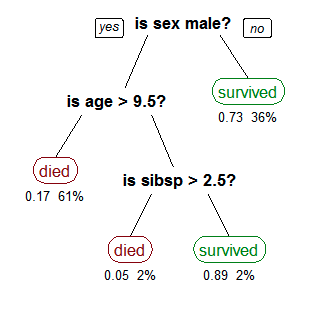
Tree based learning algorithms are among the most popular and most frequently used supervised machine learning methods. They are versatile, can be applied on a large variety of problems, they’re interpretable, and easy to use.  First, let’s see what those phrases in the previous sentence mean. What are tree based learning algorithms? The simplest of these is the decision tree, which exactly is as it sounds, as you can see in the image below. Starting from a root node, the algorithm makes decisions based on some predefined criteria about how to split the data, creating branches until it reaches a conclusion (leaf). Source: By Stephen Milborrow – Own work, CC BY-SA 3.0, https://commons.wikimedia.org /w/index.php?curid=14143467   “A tree showing survival of passengers on the Titanic (“sibsp” is the number of spouses or siblings aboard). The figures under the leaves show the probability of survival and the percentage of observations in the leaf. Summarizing: Your chances of survival were good if you were (i) a female or (ii) a male younger than 9.5 years with less than 2.5 siblings.”   Tree based algorithms are supervised methods, meaning that we need labeled data to train the model, to figure out what decisions to make and in which order. Only after training can we use the model to make predictions on unlabeled data. Tree based algorithms can be used on both classification and regression problems. Classification problems are those where the variable we wish to predict has only a small number of discrete outcomes. For example in the image above, there are two outcomes: the person survived or not. Regression problems predict a continuous variable, for example, how much a customer will spend in an online shop. An important aspect of tree based algorithms is that they are easily interpretable. As you can see in the image, it’s quite simple to understand how the algorithm predicts what it predicts, what are the decisions it makes. In machine learning we often use algorithms that are practically “black boxes”: they seem to work well, give accurate predictions, but we cannot tell how those conclusions were reached.  In business settings “black box” algorithms are often unacceptable no matter how good their scores are – which is understandable. If an algorithm refuses your mortgage application or predicts that you have a high chance to get a certain kind of disease, wouldn’t you want to know why it reached that conclusion? Of course, most problems are more complicated than the one in the above example and a simple decision tree is not sufficient to solve them. But ensemble methods provide enough flexibility to deal with very complex problems. Ensemble methods are constructed of several individually trained models, which are then combined. There are several such algorithms, let’s take a quick look at the most popular ones.  

Random forest

Until a few years ago the Random Forest was considered as one of the most powerful machine learning algorithms. As you can guess from its name, a random forest model contains many decision trees. In order to train these trees, the algorithm samples the data randomly with replacement creating several subsamples and trains one tree on each of the subsamples. Then it combines the prediction of the trees, for example by using majority vote for a classification problem, and averaging the predictions for a regression problem.  

Boosting

Boosting algorithms are newer and even more powerful tools than Random Forest. While Random Forest builds trees in parallel,  boosting algorithms build the trees one after the other, taking into account the weakest points of the previous models, and creating a model that strengthens those points in the next step, converting weak learners into a strong one as a result. The two most popular methods both use gradient boosting. LightGBM  was developed by Microsoft (https://github.com/microsoft/LightGBM), while XGBoost (https://github.com/dmlc/xgboost)  was developed as an open source project. Both algorithms are fast, implement parallel processing, and can be used for a great variety of problems.  

Interpreting ensemble methods

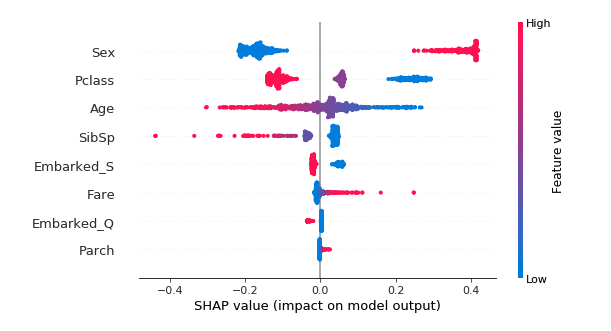
As mentioned above, a huge advantage of tree-based methods is their interpretability, that it’s possible to understand why the algorithm predicts what it predicts.  All the algorithms we discussed in this post  provide tools to examine the importance of each of the input features. There are also several external tools that help to interpret your model, such as xgboostExplainer for the R language (https://github.com/gameofdimension/xgboost_explainer) and LIME (https://github.com/marcotcr/lime) or SHAP (https://github.com/slundberg/shap) for Python. These tools can help you discover deeper connections between the features, and refine your  models; you can even use them to create illustrations that help explain how your model works to non-experts. The image below shows a figure created with SHAP using a model for predicting the survival of passengers of the Titanic (https://meichenlu.com/2018-11-10-SHAP-explainable-machine-learning/). It shows that females, first and second class passengers, and children had the best chance of survival.

Altamira Reduced its Advertising Investment Thanks to Artificial Intelligence

Altamira Reduced its Advertising Investment Thanks to Artificial Intelligence
The manager of financial and real estate assets Altamira Asset Management has become the first client of the Gauss AI platform with integration of social channels (Facebook and Instagram), Search (Google) and programmatic. Thanks to this tool, Altamira has achieved a considerable reduction in the advertising campaign investment: a 25%.  With this movement, Altamira Asset Management seeks to increase sales by optimizing investment in leads through its online advertising campaigns. In this context, the integrated marketing and technology consultant Making Science has accompanied the asset manager in the development of its digital strategy. Making Science helped them to locate their target audience for each of their assets through the use of Big Data. This project, active for two months, consists on the development of a strategy of intelligent audiences, using predictive models based on artificial intelligence through the Gauss AI platform. This tool collects, analyzes and activates data so that companies can obtain an improvement in their campaign results, thus influencing the achievement of their business objectives. Thanks to the analysis carried out by Gauss AI, the company has been able to know the propensity of conversion of a cookie when it is browsing its website, segmenting users between high and low conversion propensity and therefore  optimizing their investment. Likewise, for this particular project, the location of the users with the greatest probability of conversion due to similarity to the behavior of similar users on their website was prioritized, so that the optimization of the investment allows redirecting the remaining budget in the search for new leads. In fact, Altamira constantly seeks the optimization of its investment in this environment. However, the functions of Gauss AI go far beyond the management of intelligent audiences. The integration of its five modules allows the prediction of the lifetime value of each user, which allows to focus the commercial and advertising efforts on the users that have more value. It also uses the data to show the best interaction and user experience and prevents peaks and valleys of user demand, increasing cost efficiency. The new strategy has led to a change in the management of the company’s advertising campaigns. Looking ahead, Altamira Asset Management will prioritize the treatment of these leads over the rest of the leads they generate. In addition, the company intends to advance this project by locating those clients who have come to visit a property, and looking for similar users in the digital environment.

How Verti Germany increased its conversions by 20% using Google Marketing Platform and Gauss AI

How Verti Germany increased its conversions by 20% using Google Marketing Platform and Gauss AI
Verti Germany, the online insurance company, and part of the Mapfre group, had the business challenge of increasing sales and optimising investment. By developing an audience strategy and implementing a predictive model using the Gauss Artificial Intelligence (AI) platform, they increased sales by 20% whilst reducing investment in Display & Video 360 campaigns by 45%.

  The objectives

  • Increase conversions
  • Optimise investment

  Focus

  • Creation of a predictive model
  • Data collection
  • Score probability calculation
  • Audience strategy
  • Campaign creation (Graphic and video)
  • Analysis of results


The results

  • 20% increase in conversions.
  • 45% saving in required investment by 45%.
  • 16%nIncrease in transaction volume
  • 55% reduction of CPA.


The objective

The insurance company wanted to increase sales and optimise investment by identifying those who had a low probability of buying by reducing the number of advertising impacts to these low probability users in the Search Ads 360 (RLSA) and Display / Video campaigns.

Focus

Verti, in collaboration with the Google team and the consulting firm Making Science, developed an audience strategy with the objective of optimising the budget dedicated to prospecting and remarketing. To optimise the audience, they used the Gauss AI tool, applying a predictive model based on machine learning and neural networks that, with the data extracted from Google Marketing Platform, could predict the probability of users buying. To achieve this prediction of behaviour, the Gauss AI platform uses data from the Analytics 360 dump in Big Query, a highly scalable Google enterprise data warehouse designed to improve the productivity of data analysts. The Gauss AI platform works on Compute Engine, and performs the calculations of purchase probabilities of each web visitor and automatically generates audiences and segments with these users. These audiences were used in remarketing campaigns, making users with a lower score negative, while in prospecting campaigns the same was done with “Look-a-Like” users. Subsequently, a campaign was created with graphic and video ads based on intelligent audiences with high purchase probabilities and the results were analysed to fit the model.  

The results

Two months from the start of the action, Verti had realised increased sales by 20% and had reduced investment in Display and Video 360 campaigns (prospecting and remarketing) by 45%. In addition, the volume of transactions of the insurance company had increased by 16% with a 55% reduction in CPA in remarketing campaigns.This development has become a highly scalable product, allowing advertisers to achieve results similar to those of Verti in a few weeks.

Launch of Gauss AI: Our Framework for Artificial Intelligence applied to Marketing & Sales

Launch of Gauss AI: Our Framework for Artificial Intelligence applied to Marketing & Sales
After more than a year of development and testing today Making Science launched Gauss AI to the market. Gauss AI is an Artificial Intelligence framework developed over Google Cloud and Tensorflow that incorporates artificial intelligence models and service logic applied to marketing, sales and loyalty needs. Gauss AI incorporates native integration with standard data sources in ecommerce and digital marketing environments such as Google Analytics 360, Doubleclick and Magento among others. A key aspect of Gauss AI is the support at scale and complete production environment life cycle support of data integration and extraction, to the prediction and activation thereof in different business use cases operating in real-time. Gauss AI incorporates models and solutions that help to activate the data throughout the commercial process, from the scoring of prospects to cross-selling in loyalty. A differential aspect is the incorporation of a data streamer in real time that allows support of predictions in the contact center environments and in real-time sales channels with extremely rapid response is required. A key module to Gauss AI due out in the coming weeks, is the cookie scoring module with dynamic remarketing that allows advertisers to have full control of the cookies stored and impacted in their remarketing campaigns. This module can be activated in advertisers who have GA360 within just fifteen days!