
Conversational search: from keywords to conversations

The search scenery is evolving. We’re witnessing a shift from simple keyword matching to complex interpretations of user intent. Thanks to advances in natural language processing and generative AI such as ChatGPT or AI Mode, search engines are no longer just answering queries. They’re starting to engage in conversations with the users.

This evolution is reshaping how people interact with search engines and, as a result, what SEO means today. Instead of focusing only on keyword placement, we must now understand context, nuance, and user expectations. SEO has become less about visibility and rankings and more about relevance within AI-driven answers.

Generative AI in action: generated content, instant answers & brand visibility

Generative AI is revolutionizing the way companies approach content creation. Brands can now produce SEO-friendly content at scale, brainstorm topics quickly, and streamline their editorial processes. AI tools enable marketers to respond faster to trends and user questions.

On the other side, search engines are leveraging AI to provide instant answers directly within the search results without the need for users to click, altering the value of traditional content placement.

Now, the strategic goal is not just ranking, it’s getting your brand cited as a trustworthy source within those AI-generated responses. Visibility in this new environment requires a deep understanding of how AI interprets and works through information.

Does Google penalize AI-generated content?

One of the most common myths today is that Google penalizes content created with AI. This is not true. What Google penalizes is low-quality, unoriginal, or unhelpful content, regardless of how it was produced.

The foundation remains the E-E-A-T principle: experience, expertise, authoritativeness, and trustworthiness. AI can help scale content, but human review and editing are very important to ensure that the output meets quality standards.

We should think of AI as our first draft assistant, not the final editor.

How keyword research is evolving with AI

Traditional keyword research focused on finding exact-match phrases and long-tail variations, but with AI, we can do better. AI tools now can identify emerging trends, related questions, and semantic clusters that reflect how people actually speak and search.

The new approach changes from asking, “Which keyword should I use?” to “How can I completely cover a user’s intent?” By combining AI-driven insights with real search data, marketers can discover opportunities based on actual conversations rather than isolated keywords.


What do we do in Making Science to appear in conversational search

Appearing in traditional featured snippets is one thing, but getting your content referenced in generative AI answers requires a more refined strategy. Here are some best, tested practices we follow to boost your visibility:

  • Answer clear, specific questions within the first few paragraphs.
  • Use natural, conversational language. Avoid jargon if possible.
  • Implement structured data.
  • Build topical authority by covering topics from multiple angles (topical clusters).
  • Optimize brand-entity associations by consistently linking your brand to specific themes.

The goal is no longer just to “rank #1,” but to be seen as a credible source by AI systems interpreting search queries.


Key takeaways

  • AI is transforming every phase of SEO, from research to content, to the search results themselves.
  • Content is still the king, but it must be genuinely useful, accurate, and crafted for real human intent.
  • Brands that blend AI tools with strategic thinking and human creativity will gain a significant edge in the evolving search landscape.

From Scroll to Impact: Collaborating with Influencers and Creators with Purpose on Every Platform🎯

Every day, thousands of brands appear on our screens. Some stay for a second ⏱️. Others stick in our minds 🤔. Very few become part of the conversation 💬.

The difference is not just how much they invest, but how they collaborate with creators within an ecosystem that is cultural, mobile, emotional, and fragmented.

Influencer marketing, when integrated with vision, can be a strategic lever at all phases of the funnel: from generating awareness in the top-funnel with content that travels naturally, to activating consideration in the mid-funnel through credible profiles ✨, or driving performance through paid media formats and well-defined attribution models 📈.

For it to work, it’s not enough to be everywhere. It’s about knowing how to collaborate with the right profiles, respecting their codes, their community, and their value at each stage of the consumer journey.

Each platform presents a distinct set of opportunities. We don’t intend to cover everything, but rather to offer a strategic vision of how to activate with purpose and direction 🧭.

TikTok: Shared Culture and Amplified Visibility 🎶

TikTok moves fast and operates primarily at the top-funnel, generating discovery and interest through cultural participation.

But for content to connect, it must feel authentic ✅. Here, working with creators implies co-creating ideas that adapt to their language and community, rather than simply transferring a prefabricated message 🗣️.

Furthermore, the use of paid media on TikTok is key to scaling content that works. Promoting organic creator pieces allows for maintaining the influencer’s voice, while amplifying its impact with advanced segmentation and performance objectives.

Brands that understand this don’t just create viral hits. They turn visibility into conversation and brand recall 🧠.

Instagram: Building Affinity with Measurable Impact 📸

Instagram remains a central platform for developing brand consideration and fostering a constant connection with the audience. Reels, Stories, and carousel collaborations allow for a continuous, visual, and emotional narrative.

Organic content is only part of the game. Today, many brands are finding in Creator Ads an effective way to amplify collaborations with creators: content created by influencers, promoted from their profile but with media control from the advertiser. This approach combines the best of two worlds: the credibility of the creator and the targeting and optimization capabilities of paid media 🎯.

On Instagram, influencer marketing can generate both branding and performance, when planned as part of a complete system 🌐.

YouTube: Deep Influence that Informs and Converts💡

YouTube is the ideal platform for working the mid-funnel and the lower-funnel, thanks to its capacity to generate trust and deepen the message 🧐.

Here, creators have space to explain, show, compare, and validate. And that generates a type of connection that goes beyond superficial recommendations.

Additionally, YouTube offers paid media formats that allow for activating creator content as part of performance campaigns 📈.

From personalized video sequences to retargeting based on visualisations, the collaboration doesn’t end when it’s published: it’s amplified when integrated with strategy.

Well-planned, content with creators on YouTube can be both an inspiration tool and a decision-making tool, depending on the format and the moment in the funnel.

Twitch: Creating Moments that Build Loyalty 🎮

Twitch offers a different dimension of audience connection: based on shared time and an active community.

It is a loyalty channel, where brands can connect with highly engaged audiences, in participatory and authentic environments.

Here, the creator is not just a broadcaster: they are an host 🎙️. Brands that understand this collaborate from within, designing activations where the presence feels organic and meaningful.

And although Twitch is essentially organic, its effect can extend by using clips and summaries in cross-channel paid media campaigns, or amplifying key moments in networks like YouTube Shorts or Instagram Reels.

What’s important is not just the live stream. It’s how it converts into useful content beyond the broadcast💡.

X (formerly Twitter): Positioning and Amplifying Narrative 🗣️

X continues to be a relevant space for brands that want to participate in the public discourse and reinforce their positioning.

Here, the value of creators lies in their ability to influence key topics, with a recognized voice and an attentive audience 👀.

Organic content can have great contextual impact, but it can also be activated as part of paid strategies, amplifying threads, collaborations, or messages aligned with cultural moments or specific junctures.

In many cases, influencer marketing on X is boosted when it aligns with causes, values, or relevant positions, especially if the goal is to participate in cultural or social conversations 🌍.

Ready to take the next step in your influencer marketing strategy?🚀

Each platform brings something distinct. Each creator has their way of influencing. But all collaborations must answer the same question:

What does this bring to my brand and business strategy? 🤔💡

At Making Science, we have been helping brands evolve in this terrain for years. We design influencer marketing strategies that integrate content, media, and measurement within the digital ecosystem, always with a business focus.

If your brand is ready to move from content to impact, and from punctual impulse to sustained strategy, let’s talk!📧

Integrating Influencer Marketing into Your Business Strategy: What No One Tells You

There’s a question that marketing teams are asking more and more often—and it’s not “Should we do influencer marketing?” It’s: How can we integrate it better? 🤔

Because it’s no longer about one-off campaigns or scattered creative collaborations throughout the year. Influencer marketing has earned its place—not as an add-on, but as a strategic growth channel that drives results on multiple fronts: attention, affinity, conversion, community, content, and insights. 📈

The difference now isn’t whether you’re doing it. It’s where you place it within your brand and business architecture. 🧠

And that requires a shift in perspective, from viewing influencers as occasional activations to understanding their cross-functional role within the brand ecosystem.

We’ve identified four key principles that are making a difference in the strategies that actually work. They’re not magic formulas, but they do define how leading brands are integrating this channel with clarity and vision. 🚀


When Content Connects, Business Grows

Leading brands don’t see creator content as a tactical boost or a nice-to-have inspirational touch. They integrate it as a core part of their communication, distribution, and audience relationship systems. Because they’ve grasped something essential: content with credibility moves people more than any brand promise can.

When a brand expresses itself through people with cultural authority, it’s not just seen. It’s felt. And what is felt is remembered. Shared. Bought. Defended.

We’re not talking about a trend or a new performance channel. We’re talking about a sharper, more genuine way to connect with people—where attention is no longer bought, but earned. And it’s earned with content that delivers value, reflects values, triggers emotion, and builds conversation. 💬

According to the 2025 Social Media Study by IAB Spain, 48% of users say they check social media before making a purchase, and 44% state that their final decision was influenced by the content they saw there. This percentage rises to 66% among Generation Z. This shows that when content truly connects with the audience, it directly impacts buying behavior. 📱🛍️


A Living Network of Influence—Not Just a Collection of Collaborations

The strongest strategies aren’t measured by the number of posts or the variety of profiles in a spreadsheet. They’re measured by the consistency of the relationship between brand, creator, and audience. 🔁

The value isn’t only in the content that gets published, but in what that content builds over time: narrative, reputation, positioning.

That’s why more brands are thinking in terms of networks of affinity, not “influencer lists.”

They’re not chasing follower counts—they’re seeking alignment. They build long-term relationships with people who share their vision, codes, and style. And that allows them to amplify their message naturally, broadly, and meaningfully across channels. 

The difference between an influencer campaign and an influence strategy is simple: One makes an impact. The other makes an impact and sustains it.

According to CreatorIQ’s 2024 Benchmark Report, brands that foster long-term partnerships with creators see up to 38% higher engagement rates compared to one-off collaborations.


Influencer Marketing Is Not Just Communication—It’s Brand Intelligence

One of the greatest strengths of creator content is that it doesn’t just create impact. It reflects, informs and measures. Every piece of content, every reaction, every comment… is a live source of cultural data. 📡

It tells us how your audience speaks. What moves them. What they share. What they question. What they reject.

That’s why a well-integrated strategy not only drives media or sales KPIs—it also enhances positioning, the funnel, and business insights. The channel works best when it’s not operating in isolation, but when it’s connected to everything else. It’s not just another puzzle piece. It’s the thread that can tie many pieces together—and give them meaning. 


Integration Isn’t Doing More—It’s Making Everything Work Together

Here’s one of the most common mistakes: confusing integration with accumulation. You don’t need more formats, more platforms, more scattered actions. You need your pieces to speak to each other. Influencer marketing should drive business, not just visibility. And your brand should show up where things are happening—not as a spectator, but as a part of the culture. 💡

The value doesn’t lie in “trying new things.” It lies in consolidating learnings, scaling what works, and sharpening what resonates. It’s not about making noise—it’s about having relevant presence. 📍

It’s not about putting your logo in more places, but about placing it in the right contexts, with the right people, in a consistent and coherent way. 


We see this every day. And if you’re reading this, you probably already know that it’s no longer about simply being present… it’s about doing it right.

Because in the end, the difference between just another campaign and a channel that reshapes your brand’s trajectory lies in how you choose to integrate it from now on.


Are you ready to make the leap and take your brand to the next level? 🚀

Maximizing your Advertising Investment: The need for Measurement and the power of a Budget Optimizer like OptiPhi

Today’s media landscape is a maze. Multiple online and offline channels, fragmented audiences, multiplying touchpoints… In this complex environment, the pressure on marketing teams to demonstrate Return on Investment (ROI) and justify every dollar spent is more intense than ever. It’s no longer enough to “be present”; it’s crucial to understand what works, how it works, and, above all, where to invest the next dollar to achieve maximum impact. This is where precise measurement and intelligent budget optimization become fundamental.

Why do we need to measure accurately?

Without proper measurement, media investment decisions are based on intuition, partial data, or vanity metrics that don’t reflect the real impact on the business. The challenges are clear:

  • Fragmentation: Consumers interact with brands through numerous channels and devices. How do you understand the complete journey and the role of each touchpoint?
  • Data silos: Information is often scattered across different platforms and partners, making a unified view of performance difficult.
  • Real impact vs. correlation: Did that campaign really generate sales, or did it simply coincide with a market trend? It’s vital to distinguish causality.
  • Short-term and long-term vision: Some actions generate immediate results, while others build brand over the long term. How do you balance both needs?

The key question: Where do I allocate my budget?

Measuring is the first step, but the real challenge is translating that measurement into concrete actions, especially in budget allocation. The fundamental question every marketing manager must answer is: “Given my budget, how should I distribute it across different channels and campaigns to maximize my objectives (sales, leads, brand awareness, etc.)?”
This is where the need for a Media Budget Allocator comes into play.

Current solutions and their limitations

Currently, companies try to solve this puzzle in different ways, each with its limitations:

  • Partner reports (agencies, publishers):
    • What they provide: Detailed reports on performance within their specific platforms or channels (e.g., social media campaign results, search ad clicks, GRPs on TV).
    • Limitations: Siloed view. Each partner optimizes for their own channel, without offering a global and neutral perspective on how different media interact. They may have inherent biases towards their own solutions. They make it difficult to compare “apples to apples” between very different channels (e.g., TV vs. TikTok).
  • Other technologies (web analytics tools, isolated attribution platforms, MMM, BI): 
    • What they provide: Data on user behavior on the website, long-term insights, attribution models (often focused only on digital or last-click), dashboards with key metrics.
    • Limitations: They may lack a holistic view that robustly integrates offline and online. Digital attribution models alone don’t capture the impact of mass media or external factors (economy, seasonality, competition). MMM models focus on the long term, making short-term decision-making difficult. BI tools show the past but often lack the predictive or integrated optimization capabilities to guide future budget allocation automatically. They require complex integrations and expertise to extract actionable insights for planning.

The comprehensive solution: OptiPhi

This is where an advanced platform like OptiPhi makes a difference. It’s not just another measurement tool but a true strategic optimizer of media investment:

What does OptiPhi provide? EVERYTHING Necessary:

  • Holistic and unified vision: OptiPhi integrates data from all relevant sources: online, offline, sales, external factors (competition, seasonality, macroeconomics). It breaks down silos.
  • Robust measurement (MMM + Attribution): It combines the best of both worlds. It uses Marketing Mix Modeling (MMM) to understand the strategic impact of all channels (including offline and external factors) in the long term, and enriches it with a cookieless attribution model for tactical digital detail at the platform and strategy level on a daily basis. All within a Unified Measurement Framework.
  • Risk-free testing: Conduct experiments to validate the introduction of new platforms or strategies into your models without risk, favoring model calibration and continuous improvement.
  • Deep understanding of ROI: It measures the real impact of each marketing activity on business KPIs, separating the incremental contribution from background noise.
  • Predictive capability: It doesn’t just look at the past. OptiPhi uses advanced models to simulate future scenarios, facilitating decision-making and investment justification. You can ask: “What would happen if I increase my TV investment by 10% and reduce search by 5%?”
  • Budget optimization: This is key. Based on your objectives and constraints, OptiPhi recommends the optimal allocation of the budget across channels and campaigns to maximize return. It tells you exactly where to put each dollar.
  • Speed and agility: It provides insights and recommendations month by month, allowing for faster adaptation to market conditions.
  • Neutrality: As an independent technology platform, it offers an objective view without bias towards any specific channel or partner. Furthermore, the platform can be implemented in the client’s environment, maintaining the privacy of their data.

Conclusion: From intuition to intelligent optimization

In today’s competitive environment, managing the media budget based on partial data or intuition is too high a risk. The need for accurate measurement and, above all, for a tool that translates those insights into optimal budget allocation is critical.
Traditional solutions offer value but often in a fragmented or incomplete way. A true budget optimizer like OptiPhi provides the holistic vision, predictive capability, and optimization recommendations necessary to navigate the complexity of the media landscape and ensure that every dollar invested works as efficiently as possible to achieve your business objectives.
Are you ready to stop guessing and start optimizing your media investment strategically?
Discover more about OptiPhi here

Creativity as the New Target: How ad-machina Makes It Possible

In the era of automated advertising and artificial intelligence, we have more tools than ever to unlock the full potential of our campaigns. A prime example is Meta’s Advantage+ Shopping Campaigns, where AI plays a fundamental role in optimizing results. These campaigns analyze millions of signals to identify users most likely to engage, purchase, or click on an ad, maximizing performance through data-driven insights.

With automation handling campaigns and audience targeting, creativity becomes the primary focus for optimization. Studies show that creativity is a major driver of campaign performance on platforms like Meta, where brands have only milliseconds to capture users’ attention in an increasingly competitive environment. Additionally, the high volume of ad impressions can lead to creative fatigue, significantly impacting campaign results.

This new digital paradigm highlights the importance of audience automation, but above all, positions creativity as a key lever for advertisers. Recognizing this shift, Making Science launched ad-machina for Social, extending its automated creative generation capabilities from Search and Performance Max to Meta. ad-machina leverages AI to enhance Meta campaign management, helping brands maximize their advertising investments.

What can ad-machina offer you?

ad-machina is designed to help advertisers maximize the value of their Meta campaigns through automation and the use of AI. Through the API, the tool allows campaigns to be created, managed and published in record time, giving advertisers a competitive advantage by significantly reducing execution times while ensuring continuous optimization.

What sets ad-machina apart is its ability to connect to the customer’s first-party data. This opens up a range of possibilities to automate campaigns directly aligned with business objectives, using customized rules such as:

  • Automation based on sales data: The advertiser can set up rules so that sale ads automatically include the best-selling or high in-stock products. This not only saves time, but also ensures that ads are always aligned with business needs.
  • Adaptation to seasonality and local behavior: for global brands, ad-machina can adjust creatives based on seasonality and local preferences. This is especially relevant for industries like fashion, where demand greatly varies depending on location, seasonality and the weather. By connecting weather data, advertisers can show different product categories for each geographic location. 
  • Margin optimization: by connecting product margin data, ad-machina can prioritize the promotion of categories, brands or products that offer higher margins, helping to maximize the value of each euro invested in Meta.

The most disruptive aspect of ad-machina is its ability to apply AI to analyze and improve creative. Meta uses creative as a crucial signal in its Advantage+ campaigns, and ad-machina leverages this intelligence to help advertisers discover which elements within their creative drive better campaign performance.

For example, ad-machina can analyze factors such as:

  • Whether the people in the images are smiling.
  • Whether natural light is used in the photos.
  • The visual style of creativity.

These details, often overlooked because they are difficult to analyze, can make all the difference in a campaign’s performance. Once the technology identifies key success factors, it allows AI-enabled creative to be adapted to incorporate these improvements. This ability to generate new creative quickly solves one of the biggest challenges facing Meta advertisers: creative fatigue.

In a dynamic environment like Meta, where ads quickly reach their fatigue point, the ability to refresh creatives frequently is essential to maintain performance. ad-machina simplifies this process, reducing dependence on creative teams to perform constant refreshes, helping Meta’s algorithms find the right audience through signals like CTR (Click-Through Rate). In automated campaigns like Advantage+, where the audience is no longer selected by the advertiser, CTR becomes a crucial signal to guide the algorithms towards users with the highest purchase intent.

This all happens in real time and without human intervention, allowing advertisers to focus on strategy while the tool takes care of the entire execution. 

Making Science: Leader in AI for Creativity

With ad-machina, Making Science positions itself at the forefront of AI-powered creativity. This tool not only enables advertisers to optimize their campaigns on Meta, but also transforms the way they manage their advertising spend, aligning creative with business needs and using AI to maximize performance.

In an era where automation is redefining digital advertising, creativity is the key to success.  ad-machina empowers brands to thrive in this new era, ensuring campaigns remain fresh, engaging, and highly effective.


The Importance of Brand Experience in the Digital Environment

31% of consumers prioritize experience when interacting with brands.*

Do you know the difference between brand experience and digital experience?

Brand experience is about building meaningful connections that matter and contribute to people beyond the product or service being sold, with digital experience being a fundamental pillar that brands must strengthen to connect with their current and future audiences.

Today, digital experience has become an additional value proposition that brands need to map and execute to generate qualified connections, in addition to qualified leads.

‘Must-Haves’ to Create Strategies That Bring Brands to Life

1. Build an Engaging Narrative by Adopting the Language of Digital Natives

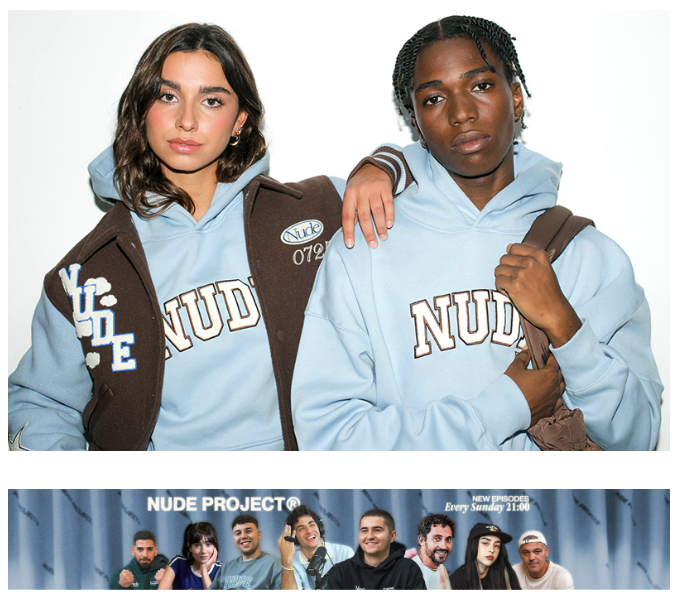
The Nude Project is a brand born for a Generation Z audience that lives on Instagram and TikTok. Bruno Casanovas and Alex Benlloch, its founders, started the company in 2019 and in just four years, it has become a cornerstone of communication. With 719.3K followers on TikTok, a podcast featuring interviews with the business world’s top figures, and a staggering 11M in revenue for 2022, Nude Project is an example of a brand that tells stories, connects with its audience, and sells not just clothing but individuality through fashion and a sense of belonging through community feeling, all communicated through codes common to an entire generation.

What’s needed to develop an engaging narrative?

  • Create a meaningful message
  • Generate entertaining content
  • Be present on the channels that are most relevant to our audience

2. Create Digital Proximity via Easily Consumable Formats

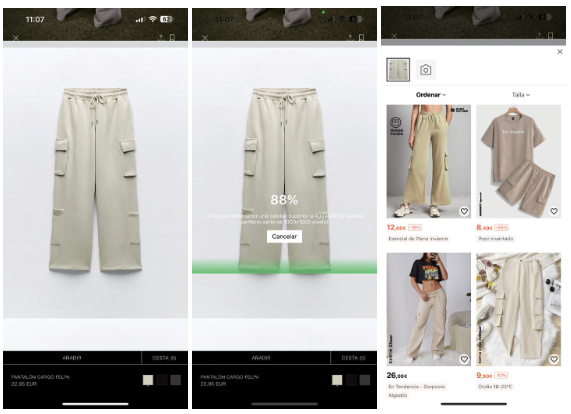
Once again, the well-known brand Zara surprises us with the inclusion of ordinary photos throughout its catalog. Scrolling through their website and app, they offer images of everyday situations so you can get an idea of how the outfit or garment fits into your daily life. This activation, besides being immensely creative, is approachable, something we don’t often see from brands in the market. Such formats demonstrate that the brand pays attention to people’s needs. It’s proof of what the brand is willing to do for its consumer.

What’s needed to develop digital proximity?

  • Understand the consumer and listen actively to their needs
  • Innovate using digital formats by adapting to the style of consumers

3. Unique Personalization by Delivering Customized and Recurrent Content

We can’t overlook the current fashion marketplace sensation, Shein.

Shein is a brand that relies on big data to offer tailored personalization to its customers.

It provides product recommendations, personalized web content, and promotions, as well as app features like garment recognition and suggestions for similar items. Moreover, it can predict trends and anticipate search behavior.

What’s needed to develop unique personalization?

  • Collect consumer data in a privacy-safe way to discover new touchpoints
  • Monitor and anticipate consumer’s purchasing needs

How to Connect with Consumers Digitally

Achieving a great experience is not an easy task. It implies communicating more than just the brand, more than sales, and investing in understanding what would make things easier, more entertaining, or useful for future buyers.

Throughout this article, we have identified three key elements when developing a brand experience strategy:

  • Engaging Narrative: Message + Entertainment + Channels
  • Digital Proximity: Listening + Format
  • Unique Personalization: Data + Monitoring

These keys will guide your brand experience strategy, working on relevance beyond conventional communication in order to create exceptional communication.

Do you want to work on your brand’s digital experience? Our team of Brand & Content and Social Media experts can assist you. Get in touch to tell us about your project.

Get in touch

*According to a study conducted by Twilio in 2023.

TikTok OR: The Art of Using Influencer Marketing to Communicate with Gen Z

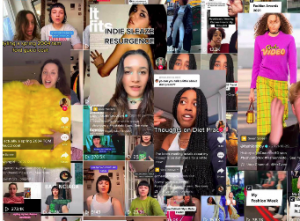
Gen Z encompasses a generation born between 1995 and 2010. This group is defined by being always connected, with high purchasing power, and growing up in the boom of smartphone diffusion. These digital natives are well-known for filtering information, their low attention spans (8 seconds), and their preference for visuals over text.

Their main form of entertainment is social networks, which they also use to fill gaps in human interaction. They consider VIPs and influencers as valid advisors for purchases, as long as the suggestions are provided in an entertaining way. The social network that has best captured this audience is TikTok (though it has also successfully captured the attention of many in the 9-25 age bracket), and users spend an average of 52 minutes a day on the app. 

Brands that operate in trendy markets and wish to communicate to Gen Z must therefore integrate this channel into their digital strategy. The platform allows companies to package 15- to 60-second videos with music, stickers, and filters. The most viewed content is characterized by dynamic montages, stop-motion, and forced perspective shots that make viewing quick and enjoyable.

TikTok: The clear choice for maximizing brand visibility

Influencer Marketing campaigns on TikTok often achieve results that exceed expectations. This happens because the social network is governed by an algorithm that shows users selected clips based on their content preferences. For example, a video dedicated to a make-up product has the potential to be seen not only by the fan base of the TikToker who posted it, but also by many other users interested in the beauty topic who might intercept it in the ‘For You’ section.

Measuring the effectiveness of a TikTok initiative

The success of a TikTok campaign is measured above all by the number of views, which are destined to grow over time, as a clip never runs out of chances to appear in the feeds of new users. To make a comparison: the average engagement of Instagram content is around 3% compared to 29% for TikTok.

Tips & Tricks: How to make the most of this channel

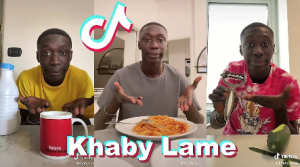
The best way to obtain relevant results is to leave the content creation to creators: TikTokers know the tastes of their generation (because they are part of it) and they know what is potentially viral and how to catch people’s attention. 

Creativity is more important than quality: the average TikTok user is primarily interested in originality and fun. It is essential that the branded content speaks the language of young people and stimulates co-creation, i.e. it invites the user to test their creativity by emulating what they have seen Creators do. A dance, an acted scene, an alternative way of wearing a garment: any cue is good to tickle the imagination of users and start a viral chain.

Their secret weapon is the impeccable knowledge of their target audience. But there is a catch. They do not conduct elaborate market analyses on style trends or buying preferences. They are so good and effective at getting people’s attention because… they themselves are their target audience! All they have to do is create and publish the content that they personally would like to see.

Influencers active in the brand niche are succeeding where brands are failing: getting the attention of the potential customers.

Where to start?

The first logical route you could take is to deepen your knowledge of your customers: their desires, fears, problems, language, style, and ambitions. You would eventually be able to produce content that is perfect for them. But no matter how well you do your homework, you would always be one step behind the influencers. And for a simple reason beyond your control: people trust their peers more than companies.

That’s why investing in an influencer marketing campaign is a great strategy to overcome short attention spans, catch your potential target and get your product and brand in front of a new group of potential customers. By working with influencers, you:

  • don’t have to interrupt the flow of your target’s content with your self-referential advertising.
  • can save thousands of dollars that you would otherwise have to spend on content conception, creation, and promotion.
  • can capture your audience’s interest without the need to worry about their attention span.

Not even sure where to find influencers? Don’t worry – Making Science has got you covered! From conceptual creation through selecting which influencers best suit your brand’s needs, we can find the perfect match.

Get in touch

The Shift to Shoppable Media

Consumers are increasingly turning to digital channels to discover new products. Hootsuite mentioned that 90% of users follow some kind of business account. And, according to the IAB, in 2021 40% of marketers are now using shoppable media to reduce friction, eliminate distractions, and learn more about their customers. 

The rise of shoppable media is a trend that e-commerce marketers cannot ignore as they look to diversify the channels through which they sell their products.

The IAB predicts that directly shoppable media will be the fastest-growing advertising category this year. Social commerce, live streaming, virtual consultations, and other shoppable ad formats are also on the rise. Consumers, attracted by an easy shopping experience, are now increasingly going from the top of the funnel ‘awareness’ stage to the bottom ‘action’ in one simple interaction.

So how can e-commerce marketers capitalize on the growth of shoppable media to increase their sales?

Understanding some of the shoppable media opportunities

Adapting media creatives for ‘shoppability’

Tools that add interactivity to media are more commonly being used in advertising. For example, QR codes are being added to creatives on typically non-interactive mediums (such as TV). This allows audiences to ‘click through’ to websites.

Social commerce

The main social media platforms are adding features to organic and paid posts to allow users to buy the products they see without leaving the app or site. Many e-commerce brands are also turning to influencers to sell directly and rewarding them through affiliate deals.

Shoppable video

Like a new-age TV shopping channel, live streaming is becoming a more popular way for people to discover and buy products online. A ‘professional’ live streamer in China sold nearly $2bn of products ranging from make-up to electronics during this year’s Singles Day (Alibaba’s version of ‘Black Friday’).

What challenges might be involved?

Control of the user journey

When marketers give up ownership of the sale on their channels, there is always a sacrifice to be made. You may be forced to give up access to behavioral and purchase data, for example. It can also be harder to cross-sell during the purchase as you have less control over the variety of products presented to the user. Finally, aligning the user experience across owned, earned, and paid channels is much harder and more time-consuming.

Attribution of ads from non-shoppable media

As discussed earlier, part of the attraction of shoppable media is that the user journey is shorter. Consumers can now move from awareness to action in one interaction. This puts immense pressure on attributing all credit for the conversion on that single exposure – simply because it is very easy to do so. But what if other media influenced that purchase? Attributing conversions fairly can be much harder in this situation because there is less access to user data if the purchase was made on a separate platform.

Syncing sales information across channels 

When you add extra sales channels, it is more difficult to properly synchronize pricing, stock levels, and assets. Put in place omnichannel sales management tools and processes to make sure no mistakes creep through the cracks.

Conclusion

As E-commerce continues to grow, marketers need to ensure they are maximizing reach and distribution by assessing each new development. Shoppable media presents a big opportunity to meet the customer where they are. You can lean on the power of the publisher or platform data to put the right products in front of the right people.

If you need tips on getting started, get in touch by visiting makingscience.com/contact.