DCO for Hotels: A Step-by-Step Guide to Creating Personalized Campaigns

Does Your Hotel Speak the Same Language as Your Guests?

Imagine seeing an ad for a family vacation when all you’re looking for is a romantic getaway. Frustrating, right? Personalization is no longer a ‘nice-to-have’—it’s a critical consumer demand in the digital landscape, and this is where DCO for hotels (Dynamic Creative Optimization) comes into play.

In this article, we’ll walk you through how to simply and effectively phase a DCO strategy within the hospitality environment, leveraging tools like Campaign Manager 360 (CM360) and Google Studio. If you work in hotel marketing and want to boost your campaigns’ relevance (and results), keep reading.


Step 1: Define Your Audience and Identify Key Signals

Before firing up your creative or tech engines, start with the most important element: people.

Ask yourself:

  • Who are my priority users?
  • What digital signals can I use for segmentation?

Some key variables in the hotel sector include:

  • Travel dates
  • Type of accommodation sought
  • Geographic location
  • Originating channel
  • Device type

🧭 A business traveler booking a weeknight stay from a mobile device should not receive the same ad as a family browsing on a tablet on a Sunday afternoon.

Pro Tip: Begin with 3-4 well-defined signals and a controlled set of audiences. Less is often more in the initial phase.


Step 2: Build Modular and Scalable Creatives in Studio

The magic of DCO for hotels lies in the ability to construct ads that automatically adapt to the user. To achieve this, you need to structure your messaging into reusable blocks within Google Studio.

Build a simple data feed featuring:

  • Destination (city, region, or experience type)
  • Room Type (suite, family, standard…)
  • Promotional Benefit (discount, free breakfast, flexible cancellation)
  • Call to Action (Book Now, Learn More, etc.)

🛠️ This modular approach allows you to mix and match elements without having to create hundreds of distinct creative variations.

Bonus Tip: Utilize templates that work across both display and rich media formats, ensuring they maintain visual brand consistency.


Step 3: Activate the Campaign in Campaign Manager 360

With the creatives finalized, it’s time to configure the campaign in CM360. This is where you connect the tailored messages with the defined audiences and establish the delivery rules.

Basic Checklist:

  • Associate each dynamic creative with the appropriate target audience.
  • Apply advanced segmentation (by geography, language, device, frequency, etc.).
  • Use the dynamic preview to verify that every combination in your feed is displaying correctly.

🔍 Pre-flight review is crucial to prevent unexpected issues at launch.


Step 4: Analyze, Adjust, and Evolve

A DCO campaign is not a “set-it-and-forget-it” launch. On the contrary, it is a living system that improves with every data point it collects.

Key metrics to monitor:

  • CTR per creative combination
  • Conversions per message type
  • Website dwell time
  • Cost Per Acquisition (CPA)

Iterate and Optimize:

  • Adjust the creative feed based on real-world performance.
  • Add or remove modules according to seasonality or current offers.
  • A/B test different CTAs and benefits.

📈 What works for romantic getaways today may not be effective for family stays tomorrow.


Conclusion: Personalization That Drives Bookings (and Results)

Phasing your DCO strategy for hotels isn’t complicated if you know where to start. Define your key signals, build a solid modular foundation, connect everything in CM360, and let the data be your guide.

In a competitive market like hospitality, differentiation means speaking to the right user with the perfect message at the precise moment. With the right tools, you can achieve this without an excessive workload.

👉 Ready to start your first hotel DCO pilot? At Making Science, we help you scale personalized campaigns with a data-driven and creative approach. Contact us and discover how to transform your campaigns into memorable brand experiences.

Moving beyond UX/UI with the new paradigm of CX/AX design

At Making Science, we’ve always been committed to staying ahead of tech transformation. We’re excited to share that our UX/UI department is evolving into CX/AX Design – a change that represents our vision for the future of digital experiences.

This transition comes at a pivotal moment. After years of remarkable growth and innovation at Making Science, we’ve witnessed firsthand how rapidly the technology landscape is transforming. This evolution in our approach isn’t merely a rebranding – it’s a strategic shift that prepares our clients for the next wave of digital engagement.

Why we’re expanding our focus

For years, User Experience (UX) and User Interface (UI) have been the industry standard terms for describing digital product design. These concepts have served us well, focusing our attention on creating intuitive, beautiful interfaces for human users.

However, as noted UX pioneer Jakob Nielsen recently observed in his article “Hello AI Agents: Goodbye UI Design, RIP Accessibility,” we’re entering an era where direct human interaction with interfaces may no longer be the primary mode of digital engagement.

At Making Science, we’ve anticipated this shift. By expanding our focus to Customer Experience (CX) and Agent Experience (AX), we’re ensuring our work remains relevant and impactful in an increasingly AI-mediated world.

The dual future of design with CX and AX

Customer experience (CX)

CX takes a holistic view that extends beyond interface interactions:

  • The entire customer journey across all touchpoints
  • Emotional responses and satisfaction at each stage
  • Brand perception before, during, and after engagement
  • Seamless integration of online and offline experiences
  • Service design and delivery

While UX focuses on how users interact with specific products, CX considers the entirety of a customer’s relationship with a brand or organization.

Agent experience (AX)

Here’s where we’re truly breaking new ground. Agent Experience (AX) recognizes the emerging reality that AI agents will increasingly mediate between humans and digital services:

  • Designing for AI agents that navigate interfaces on behalf of users
  • Creating structured data and content that both humans and AI can efficiently process
  • Developing interaction patterns optimized for both direct human manipulation and agent-based operations
  • Ensuring our digital products work seamlessly in an agent-first ecosystem

Transforming possibilities for our clients

This evolution significantly expands what we can deliver:

  • Comprehensive ecosystem design: We now address not just how your product works, but how it fits into your customers’ lives and interacts with emerging technologies.
  • Future-proofed digital assets: Your digital presence will be prepared for both traditional human users and the coming wave of AI agent interaction.
  • Strategic advantage: Our approach bridges UX fundamentals with business strategy and technological innovation, positioning your brand ahead of competitors.
  • Excellence across all touchpoints: While expanding our scope, we remain committed to creating beautiful, usable interfaces for direct human interaction.

Our unique AI methodology 

At Making Science, we’ve been developing our proprietary Synthetic Users Methodology to gain unprecedented insights into how both humans and AI agents interact with digital experiences.

This methodology has become our own “search for intelligent life” – uncovering behaviors and patterns that traditional methods simply can’t detect. The insights we’ve gained have been instrumental in our evolution toward CX/AX Design, allowing us to create experiences that not only meet current needs but anticipate future demands.

Honoring fundamentals while embracing the future

This strategic shift doesn’t abandon the principles that have guided exceptional design for decades. Rather, it expands our perspective to address new realities. The fundamentals of human psychology, visual design, and usability remain relevant – but they’re now applied in increasingly sophisticated contexts.

As Nielsen points out, AI agents don’t replace human users – they serve them. Our goal remains creating exceptional experiences that serve human needs, whether directly or through technological mediation.

Partner with Making Science

As we embrace this new approach, we invite forward-thinking organizations to join us in exploring the expanded possibilities of CX/AX Design. The tech landscape continues to evolve at a breathtaking pace, and together, we can create solutions that work brilliantly today while anticipating the needs of tomorrow.

Ready to transform your digital experience?

Our CX/AX Design team is ready to help elevate your digital presence. Whether you’re looking to enhance your customer journey, prepare for an AI-first future, or simply create more engaging digital experiences, we have the expertise and vision to help you succeed.

Enhancing UX/UI Research with Synthetic Users: The Future of Design Testing

Today, user research is a fundamental part of designing digital experiences. It helps us better understand users’ needs, behaviors, and expectations to create more intuitive and functional products. However, traditional research methods, such as interviews and usability testing, are often costly, time-consuming, and difficult to scale. This is where synthetic user research comes into play, an innovation that uses artificial intelligence and autonomous agents to create virtual user profiles and simulate their interactions.

In this article, we explore how synthetic users are changing the way we conduct UX/UI research, their current limitations, and how Making Science is addressing these challenges with its own advanced synthetic user model.

What Are Synthetic Users? 

Synthetic users are profiles generated by AI that simulate the characteristics, needs, and behaviors of real users. These profiles can be created automatically, using data and AI algorithms that mimic the diversity and complexity of a real audience. Tools like Delve AI and Synthetic Users allow anyone to generate detailed personas with information about their background, frustrations, goals, and psychological characteristics. Through these platforms, design teams can quickly create profiles representing a diverse sample of users without the need to recruit real individuals.

Advantages of Research with Synthetic Users

Scalability and Efficiency The main advantage of synthetic users is their ability to simulate multiple profiles in a short period. By eliminating the need to manage and coordinate groups of real users, design teams can quickly obtain relevant data from a wide variety of people. This makes research much more scalable and efficient, especially when fast results are needed.

Cost Reduction Recruiting real users, conducting interviews, and performing usability testing can be costly and logistically challenging. With synthetic users, these costs are significantly reduced, as there is no need to compensate participants or manage the logistical aspects of research sessions.

Simulating Controlled Scenarios With synthetic users, teams can simulate very specific scenarios and observe how virtual users interact with a product or service. This flexibility allows for usability testing with different types of users in controlled contexts, making it easier to identify problems before launching a product to the market.

Limitations of Synthetic Users

While synthetic users offer great advantages, they are not a complete solution. There are some important limitations to consider:

Lack of Real Empathy Although synthetic profiles can be incredibly detailed, they cannot replace genuine interaction with real users. Interviews and usability testing provide an emotional connection that helps designers deeply understand the motivations, friction points, and emotions behind user behavior. Synthetic users, no matter how sophisticated, lack the human complexity necessary to simulate authentic emotional experiences.

Superficially Accurate Simulations Synthetic users can provide valuable feedback, but they often lack the complexity that real users can provide. The insights generated by AI may be overly optimistic or simplistic, making it necessary to complement them with real-world research to obtain a more comprehensive view.

Reliance on Previous Data Synthetic users rely on previous data to create profiles, meaning their accuracy depends on the quality of that data. If this information is limited or outdated, the resulting profiles and insights may not reflect actual user behavior.

How Making Science is Redefining Synthetic Users

Understanding these limitations, at Making Science we have developed our own advanced synthetic user model designed to overcome many of these challenges. Unlike conventional solutions that focus mainly on demographic data, our model integrates multiple layers of information, including:

  • Market behavior
  • Technological context
  • Socioeconomic aspects
  • Behavioral trends
  • Customer journey insights

Additionally, we enrich our model with sectorial and brand insights—incorporating information about the sector, competitive landscape, and brand-specific elements such as product offerings, pricing strategies, and positioning. This approach allows us to simulate more realistic user experiences that account for industry-specific dynamics and brand perception.

But what truly sets our model apart is its ability to incorporate real data from various sources, such as user interviews, focus groups, and client reports. It can even be enriched with call center data, ensuring a deeper and more authentic understanding of user behavior.

Moreover, our model excels in early-stage validation. It can test redesign proposals at the sketch or wireframe stage, providing actionable insights to determine whether the new approach improves the user experience. This capability accelerates decision-making and enhances design outcomes, helping teams iterate with greater confidence.

Use Cases in UX/UI Research

While synthetic users should not fully replace real-user research, they have an important role in the lifecycle of UX/UI research. Some of the most relevant use cases include:

Exploratory Research: Synthetic users are ideal for the early stages of research, where the goal is to explore potential issues and generate hypotheses. By creating synthetic personas based on demographic and behavioral data, designers can gain an initial understanding of their audience before diving into more costly and complex studies.

Concept and Prototype Testing: Before conducting tests with real users, design teams can use synthetic users to evaluate design ideas, prototypes, and features. This allows for quick validation of concepts and adjustments before rolling out prototypes to real users.

Feature Validation: Synthetic users can be used to validate new features or changes in a product. Through simulations, designers can observe how different user segments interact with the product and whether the new features meet their needs.

AI and the Validation of Interface Affordance One of the most exciting advancements that AI already enables is the validation of the affordance of our interfaces. Simply put, affordance refers to an interface’s ability to indicate how an element should be used intuitively. AI can analyze and predict how users will interact with certain interface elements, helping us improve accessibility, clarity, and usability in our designs. Thanks to simulations with synthetic users, we can observe and adjust interactions before implementing changes in a real product, allowing us to optimize the user experience more efficiently.

The Future of Synthetic Users in UX/UI Research

The field of synthetic user research continues to evolve. At Making Science, our advanced synthetic user model not only integrates complex layers of demographic and behavioral data but also enriches profiles with real user feedback from interviews, focus groups, client reports, call center interactions, and sector-specific insights. This unique approach allows for more nuanced and realistic simulations.

Additionally, our model’s ability to test wireframes and sketches sets it apart, enabling early detection of design challenges and quicker iteration cycles.

However, it is essential to remember that research with real users should always be the foundation of any design strategy. Synthetic users are a powerful tool to complement research, but they should not replace a deep analysis of users’ needs, expectations, and emotions.

TL;DR 

Synthetic user research is opening up new opportunities for design and product development teams. While it doesn’t replace real-user work, it provides a scalable and cost-effective alternative to obtain preliminary insights and validate ideas quickly. The key is knowing when and how to use this technology effectively, integrating it into a broader and balanced research approach.

At Making Science, we support our clients in implementing these innovative technologies to improve their user research processes. Our proprietary synthetic user model stands out by integrating both demographic insights and real user data, even from call centers, and enriching the analysis with sector-specific and brand insights. Additionally, we validate redesign concepts at the wireframe stage, optimizing user experiences from the earliest phases. The future of UX/UI research is promising, and we are ready to lead this change.


[button open_new_tab=”true” color=”accent-color” hover_text_color_override=”#fff” size=”medium” url=”https://www.makingscience.com/contact/” text=”Accelerate your Business” color_override=”#f0076f”]


Creativity as the New Target: How ad-machina Makes It Possible

In the era of automated advertising and artificial intelligence, we have more tools than ever to unlock the full potential of our campaigns. A prime example is Meta’s Advantage+ Shopping Campaigns, where AI plays a fundamental role in optimizing results. These campaigns analyze millions of signals to identify users most likely to engage, purchase, or click on an ad, maximizing performance through data-driven insights.

With automation handling campaigns and audience targeting, creativity becomes the primary focus for optimization. Studies show that creativity is a major driver of campaign performance on platforms like Meta, where brands have only milliseconds to capture users’ attention in an increasingly competitive environment. Additionally, the high volume of ad impressions can lead to creative fatigue, significantly impacting campaign results.

This new digital paradigm highlights the importance of audience automation, but above all, positions creativity as a key lever for advertisers. Recognizing this shift, Making Science launched ad-machina for Social, extending its automated creative generation capabilities from Search and Performance Max to Meta. ad-machina leverages AI to enhance Meta campaign management, helping brands maximize their advertising investments.

What can ad-machina offer you?

ad-machina is designed to help advertisers maximize the value of their Meta campaigns through automation and the use of AI. Through the API, the tool allows campaigns to be created, managed and published in record time, giving advertisers a competitive advantage by significantly reducing execution times while ensuring continuous optimization.

What sets ad-machina apart is its ability to connect to the customer’s first-party data. This opens up a range of possibilities to automate campaigns directly aligned with business objectives, using customized rules such as:

  • Automation based on sales data: The advertiser can set up rules so that sale ads automatically include the best-selling or high in-stock products. This not only saves time, but also ensures that ads are always aligned with business needs.
  • Adaptation to seasonality and local behavior: for global brands, ad-machina can adjust creatives based on seasonality and local preferences. This is especially relevant for industries like fashion, where demand greatly varies depending on location, seasonality and the weather. By connecting weather data, advertisers can show different product categories for each geographic location. 
  • Margin optimization: by connecting product margin data, ad-machina can prioritize the promotion of categories, brands or products that offer higher margins, helping to maximize the value of each euro invested in Meta.

The most disruptive aspect of ad-machina is its ability to apply AI to analyze and improve creative. Meta uses creative as a crucial signal in its Advantage+ campaigns, and ad-machina leverages this intelligence to help advertisers discover which elements within their creative drive better campaign performance.

For example, ad-machina can analyze factors such as:

  • Whether the people in the images are smiling.
  • Whether natural light is used in the photos.
  • The visual style of creativity.

These details, often overlooked because they are difficult to analyze, can make all the difference in a campaign’s performance. Once the technology identifies key success factors, it allows AI-enabled creative to be adapted to incorporate these improvements. This ability to generate new creative quickly solves one of the biggest challenges facing Meta advertisers: creative fatigue.

In a dynamic environment like Meta, where ads quickly reach their fatigue point, the ability to refresh creatives frequently is essential to maintain performance. ad-machina simplifies this process, reducing dependence on creative teams to perform constant refreshes, helping Meta’s algorithms find the right audience through signals like CTR (Click-Through Rate). In automated campaigns like Advantage+, where the audience is no longer selected by the advertiser, CTR becomes a crucial signal to guide the algorithms towards users with the highest purchase intent.

This all happens in real time and without human intervention, allowing advertisers to focus on strategy while the tool takes care of the entire execution. 

Making Science: Leader in AI for Creativity

With ad-machina, Making Science positions itself at the forefront of AI-powered creativity. This tool not only enables advertisers to optimize their campaigns on Meta, but also transforms the way they manage their advertising spend, aligning creative with business needs and using AI to maximize performance.

In an era where automation is redefining digital advertising, creativity is the key to success.  ad-machina empowers brands to thrive in this new era, ensuring campaigns remain fresh, engaging, and highly effective.


The Cookie Crumbles, But DV360 Stands Strong

The digital advertising landscape is currently undergoing a seismic shift. Third-party cookies, long the backbone of targeting and measurement, are declining. The rise of the Privacy Sandbox has many marketers scrambling to find alternative solutions. Online advertisers are testing platforms with Privacy Sandbox APIs, and one stands tall compared to the rest: Google’s Display & Video 360 (DV360). 

Unlike cookie-dependent platforms, DV360 is built with a privacy-first approach. DV360 offers a variety of alternative targeting and measurement solutions that don’t rely on third-party cookies. This makes it a future-proof option for advertisers navigating the evolving privacy regulations. We will go into more detail on DV360’s performance without the use of third-party cookies and how it compares to the market, unlocking the power of conversion modeling in DV360 to maximize your campaigns performance, as well as how to maximize your return on ad spent (ROAS) with DV360 using optimized bidding.

Google Privacy Sandbox: A Testing Ground for DSP’s

This Google article* highlights that Google has been running experiments using Privacy Sandbox APIs for the web on Google Display Ads and DV360. These experiments had three groups: comparing the use of ads with both third-party cookies & Privacy Sandbox APIs, neither third-party cookies nor Sandbox APIs, and one final group with only Sandbox APIs active. These tests provide a true scope of how viable interest-based advertising is without relying on third-party cookies. While the results are still preliminary, they show promise:

DV360 shows an 86% recovery in advertiser spending compared to the market average, which shows a 60% decrease in publisher revenue without third-party cookies.* 

Although these experiments are in the early stages, same as the Sandbox API, we have a baseline answer for how Google’s DV360 will last without third-party cookies. Although just about every advertiser will be taking a hit without third-party cookies, Google has an answer to minimize the damages.

Conversion Modeling Unlocks Hidden Value

In programmatic advertising, traditional attribution models have limitations. They often struggle to capture the full impact of your campaigns, especially for online-to-offline conversions or complex customer journeys. This is where Conversion Modeling with DV360 steps in, unlocking the hidden value in your campaigns.

As explained in a Google support article** Conversion Modeling utilizes machine learning to estimate online conversions that wouldn’t be directly attributable through traditional methods. This could include conversions happening on other devices, offline interactions, or conversions with a significant delay after exposure to your ad.

Here’s how Conversion Modeling in DV360 benefits your campaigns:

  • More Accurate Reporting: By attributing credit for conversions that might have been missed previously, Conversion Modeling provides a more complete picture of your campaign performance. This allows you to make data-driven decisions and optimize campaigns for maximum impact.
  • Improved Bidding Strategies: With a more comprehensive view of conversion data, DV360’s automated bidding strategies can be optimized. This ensures your bids are directed towards impressions most likely to result in a conversion, even if it takes time or happens offline.
  • Greater Campaign Efficiency: By attributing credit more effectively, you can identify campaigns that are driving conversions, even if traditional models wouldn’t show them. This allows you to allocate your budget more efficiently and focus on the most successful channels.

Important Considerations:

Conversion Modeling is a powerful tool, but it’s important to use it strategically. Here are some things to keep in mind:

  • Conversion Modeling is an estimate: While it provides valuable insights, it’s still an estimation. Don’t rely solely on modeled data, but use it in conjunction with your existing attribution models.
  • Data Quality Matters: The accuracy of your Conversion Modeling results depends on the quality of your data. Ensure you have a clean and complete data set for optimal performance.

By leveraging Conversion Modeling in DV360, you can gain a deeper understanding of your advertising impact and unlock hidden value in your campaigns. This allows for more accurate reporting, improved bidding strategies, and ultimately, a more efficient and impactful advertising experience.

Expand Your Reach with Precision Using Optimized Targeting

Reaching the right audience is paramount to a successful advertising campaign. Traditional targeting methods can be limiting, but Optimized Targeting in DV3060 offers a powerful solution. This innovative approach leverages machine learning to go beyond your initial audience selections and identify new, relevant users with a higher conversion potential. 

According to the Google support article*** Optimized Targeting utilizes two key elements:

Audience Signals: These are your initial targeting selections, such as demographics, interests, and custom audiences. These provide a starting point for DV360 to identify similar users.

Real-Time Data: DV360 analyzes vast amounts of real-time data on user behavior, campaign performance, and marketplace trends. This allows it to discover new audience segments that share characteristics with your initial audience and are more likely to convert.

Optimized Targeting offers several key benefits. It expands your reach beyond initial audience selections, finding new potential customers. By focusing on high-conversion users, it boosts campaign effectiveness and optimizes budget allocation. Additionally, it reduces the need for constant audience refinement, saving time and effort while maintaining performance.

Here are some tips to maximize the effectiveness of Optimized Targeting with DV360:

  • Start with Strong Audience Signals: Provide a solid foundation by choosing relevant and well-defined audience segments.
  • Utilize Diverse Data Sources: Integrate data from various sources like Google Analytics and CRM systems to enrich your audience profiles.
  • Set Conversion Goals: Clearly define your campaign goals to guide DV360’s targeting algorithms.
  • Monitor Performance: Regularly monitor campaign performance to assess the effectiveness of your optimized targeting strategy.

By utilizing Optimized Targeting with DV360, you can reach more relevant audiences, increase conversions, and ultimately achieve your marketing goals. Utilize DV360’s intelligent algorithms to do the heavy lifting, while you focus on crafting compelling ad creatives and strategic campaign initiatives.

Google’s DV360 positions itself as a formidable force in the evolving digital advertising landscape. Its emphasis on privacy coupled with robust tools like Conversion Modeling and Optimized Targeting, make it a compelling choice for marketers navigating the cookie-less future. While the industry faces new challenges, DV360’s adaptability and performance in Privacy Sandbox experiments demonstrate its resilience and commitment to delivering results. By harnessing the power of DV360, advertisers can not only weather the storm but thrive in this new era of advertising. As Google Marketing Platform resellers, Making Science can help elevate your display campaigns using the full capabilities that DV360 has to offer. Reach out to us today to discuss what we can do for your marketing efforts.

[button open_new_tab=”true” color=”accent-color” hover_text_color_override=”#fff” size=”large” url=”www.makingscience.com/contact” text=”Contact us” color_override=”#e8218d”]


*https://support.google.com/displayvideo/answer/15192137?sjid=3266901102191875360-NC

**https://support.google.com/displayvideo/answer/11905523?hl=en

***https://support.google.com/displayvideo/answer/12060859?hl=en&sjid=3266901102191875360-NC

Responsive Design and Accessibility: Mastering User-Centric Web Frontends

The Surprising Reality of Mobile Web Accessibility

One might think that it’s a battle won. Web accessibility has been a resonating theme for over two decades now, emphasizing the importance of ensuring an inclusive online experience for all users. 

65% of web traffic in Europe comes from mobile devices, and Google has clearly indicated its support for mobile-optimized websites by favoring them in its ranking.

Mobile Optimization: Expectation vs. Reality

Nowadays, all advertisers should have a mobile-optimized website that adheres to the basics of accessibility – how could it be otherwise?

However, despite advancements, the reality is quite different. A study conducted by Making Science in 2022 shows that, among other findings, 72% of the websites of the companies from the IBEX 35 (Spain’s principal stock exchange), exhibit mobile accessibility deficiencies.

Similarly, we still encounter clients asking us to audit their website, only to find that the design was not initially intended for mobile.

This is particularly serious because not optimizing the experience for the majority of traffic exposes one to losing conversion points, leads, and sales.

Responsive Design vs. Mobile First.

Moreover, just because a website displays decently on a mobile device doesn’t mean it’s optimized for the best conversion. To explain, the term “responsive” is not equivalent to “Mobile First.”

When designing a website, there are generally 2 or 3 versions for different device types: Desktop, Mobile, and sometimes Tablet. There are fundamentally two ways to work: either start with mobile and progress to larger formats, known as “Mobile First”, or the other way around. This first approach makes the most sense since it caters to the majority of users, leveraging additional space on desktop.

The other approach, unfortunately still too common, goes in the opposite direction, known as “Graceful Degradation.” The designer starts with the largest version and then adapts it to mobile. This is not the right approach as it optimizes work for a minority, requiring adjustments for content and functionality in a confined space.

You might say, “But if we’re talking about ‘Graceful Degradation,’ it can’t be that bad.” Let me give you an example to explain why it’s not the case.

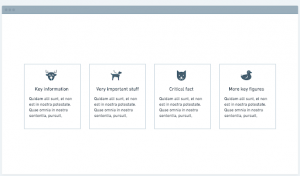
Imagine a product website presenting its main selling points to visitors. On the desktop version, a common way to present them would be using elements called “Cards,” with 3 or 4 cards in a row. This layout is suitable for a large horizontal screen but we can immediately intuit that it doesn’t fit very well into a vertical screen. 

When translated to mobile, these cards often end up either in a horizontal carousel or a simple vertical stack, neither of which is optimal. In the first case, the user will have to interrupt his horizontal scroll to scroll horizontally in order to see the info. (Spoiler: he won’t do so, and will lose an important part of the product pitch.)
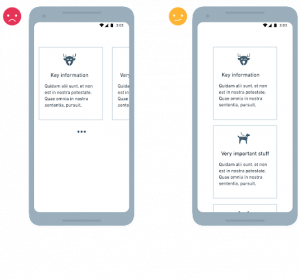
Vertical stacking is a better option, but in terms of design and space optimization, it’s really not that great. 

The Case for Progressive Enhancement

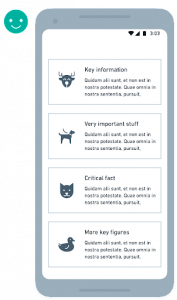
Working in the direction of “Progressive Enhancement,” starting with mobile, forces us to optimize information presentation for mobile constraints, resulting in a better-adapted version.

Here, all information is visible on a single screen, giving the user access to all arguments in a nutshell.

The errors caused by the Desktop First approach can be even more dramatic and lead to significant drops in conversion. For example, forgetting to provide a mobile user with a link to return to the filtered list from a product page because the Desktop version lacks it (desktop users are generally relying on the browser’s back button).

Breaking Free from Old Design Habits

Unfortunately, many agencies and designers still follow a Desktop First approach, either out of habit or comfort.  It’s more rewarding to design a beautiful layout on a large screen than starting with mobile.  Another downside is that since mobile design comes at the end of the creation process, it often gets rushed to meet deadlines.

It’s time for agencies and designers to break free from old habits and prioritize the quality of the user experience across all platforms.

Advertisers must also ensure that teams responsible for designing digital assets opt for a “Progressive Enhancement” approach, starting with mobile. This represents a strategic approach to overcome constraints while ensuring a consistent and optimal user experience.

The journey towards universal web accessibility and an exceptional user experience requires constant evolution of methodologies and a reassessment of established practices. Only those who anticipate these changes and adopt innovative approaches can hope to stay in sync with the growing expectations of users.

Datativity: How is data related to creativity?

Big Data is a term that describes the data, both structured and unstructured, that floods businesses every day. The importance of big data lies not in the quantity that’s gathered, but in what organizations do with it.

The advertising industry is constantly evolving. New platforms, technologies, and innovations become opportunities that are important to consider when you’re working on a new creative. Big data is no exception. Since its appearance, the advertising industry has relied more and more on data to satisfy the needs of its clients. This fusion between creativity and data serves to produce more precise results. Data can be used to enhance creative processes, which allows us to develop excellent marketing strategies. However, to achieve a perfect fusion, there needs to be harmony between data and creativity.

Spotify + Data = The perfect combo

Let’s dive into the success story of Spotify (the great master of data) to better understand how this harmony can be achieved. Everything is better understood with examples, which is why we are going to analyze the success story of Spotify.

Spotify is well known for harnessing the power of data and using it to drive creative campaigns in an original and effective way. In one example, it took advantage of available user data and statistics to create outdoor billboards in which user behaviors were reflected. They mixed data with a touch of humor, with very positive results. 

“Dear person who played “Sorry” 42 times on Valentine’s Day, What did you do? “

Spotify Wrapped

“Wrapped” is another great example of Spotify making the most of its data. Every year they use our data to make us feel special. They create personalized videos in which they show us, in a fun and relaxed way, who our favorite artists have been, plus which songs and genres we listened to the most. This has created an annual trend in which users organically participate by posting their annual summaries on different networks. The best way to build a brand image is through advertising where the user feels unique and part of something. It is not forced and flows naturally with the behaviors and trends of the audience in question. Like Spotify, agencies shouldn’t wait any longer to fuse data with creativity.

Is all data good data?

However, it’s not all “sunshine and rainbows” when it comes to user data collection. These days, society has become wary of massive quantities of data collection, since it has frequently been misused for commercial purposes. Thus, projects like “The Cookie Factory” have been created. This campaign by UNESCO consists of technology that bombards AI with false data in order to mislead and confuse it about our habits and preferences. Once again, creativity makes its way using big data, although in this case, it is to combat it.

In the end, data complements creativity but it cannot replace it. Data is only useful if you know how to use it. Data can help to uncover certain human truths, needs, habits, and behaviors in a more precise way. It can also lead you to territories, connections, or interesting thoughts that you may have overlooked or not even considered.

The possibilities of big data are limitless and open up a whole new universe for creatives and marketers to explore.

Conclusion

Does your company tend to be more data-driven or creative? If you need to swing the pendulum one way or the other, Making Science can help. Visit www.makingscience.com/contact to get in touch with our team today.