

Learn more

Google Backpedals on Third-Party Cookie Deprecation: A Win for the Industry, a Focus on User Choice

Google has significantly shifted its approach to third-party cookies, opting to maintain their use while introducing a new framework that prioritizes user control. After years of delays and industry concerns, this decision marks a departure from the company’s plan to fully deprecate cookies. Read more about the official announcement from Google here: https://privacysandbox.com/news/privacy-sandbox-update/

The rationale behind Google’s decision is clear: they listened to industry concerns about cookie-free futures. By preserving cookies while introducing enhanced privacy controls, Google aims to strike a balance between protecting user data and maintaining a thriving digital advertising ecosystem.

The core of Google’s strategy is to empower users, as they intend to provide users with greater transparency and choice over how their data is used, allowing them to opt in or out of tracking. This approach could level the playing field, as both cookie-based and cookie-less solutions will have the opportunity to compete for user attention.

Even though details about Google’s proposed changes are still emerging, this announcement brings undoubtedly a sense of relief to the industry. Businesses will have more time to adapt and invest in alternative tracking technologies while also addressing privacy concerns.

Our Nick Tiano, Chief Revenue Officer, expressed,

“I think with the steps Google took, they were clearly listening to regulators and the adtech industry. This pivot appears to be warranted and is a major commitment from Google to give users and adtech providers a choice on the matter of 3P cookies. Now the Sandbox and other privacy-forward solutions can compete on merit and user preferences (or opt outs) will dictate performance and ultimately what technologies win out, 3P cookies or alternatives.”

Ultimately, Google’s decision to maintain third-party cookies while emphasizing user control represents a thoughtful compromise. It’s a move that could shape the future of digital advertising for years to come. Read more about Google’s decision here: https://www.thedrum.com/news/2024/01/04/marketers-publishers-brace-impact-1-third-party-chrome-cookies-vanish-today or get in touch with our experts.

[button open_new_tab=”true” color=”accent-color” hover_text_color_override=”#fff” size=”medium” url=”www.makingscience.com/contact” text=”Get In Touch” color_override=”#ff0067″]


Taking Control of Cloud Costs: Strategic Approach with FinOps

The cloud revolutionized business operations, offering unparalleled flexibility and scalability. However, this agility often comes with a challenge: managing complex and potentially runaway cloud expenses. Many organizations struggle to effectively control their cloud investments, leading to budget overruns and missed opportunities.

That’s where Cloud FinOps comes in – It’s a comprehensive approach that empowers organizations to maximize the value of their cloud investments. More than just cost-cutting, FinOps is a cultural shift that promotes financial accountability and optimizes cloud resource utilization.

From Cloud Chaos to Cost Clarity: Why FinOps Matters

Cloud FinOps is your all-in-one navigation system, providing:

  • A Clear Map of Your Cloud Costs: FinOps acts as your financial guide, revealing hidden costs and illuminating exactly where your money is going. You’ll gain a comprehensive understanding of your cloud spending patterns, identify cost drivers, and pinpoint areas for optimization.
  • The Tools to Steer Your Course: With FinOps, you’re not just along for the ride. You’re equipped with the insights and tools to optimize your cloud resources in real-time. Make data-driven decisions about your cloud usage, adjust your course as needed, and keep your spending on track – even as your business grows and evolves.
  • The Confidence to Explore New Horizons: When you’re confident in your cloud finances, you’re free to explore new opportunities without hesitation. Scale your operations, experiment with innovative technologies, and chart a course for growth – all without the fear of cost overruns derailing your journey.

The Three Pillars of FinOps Success

FinOps is built on a foundation of three core components, working together to ensure you get the most out of your cloud investments:

1. Operational Framework: This is all about establishing clear processes and practices for managing your cloud environment. It includes:

  • Gaining a deep understanding of your cloud costs
  • Creating budgets and tracking spending
  • Identifying opportunities for savings
  • Utilizing cloud resources efficiently and effectively
  • Building a culture of financial responsibility

2. Collaborative Culture: FinOps is a team effort. It’s about breaking down silos between finance, operations, and development teams, so everyone is working together towards shared goals. This requires:

  • Open communication and regular dialogue around cloud costs
  • Aligning individual and team objectives with your overall Cloud FinOps strategy
  • Empowering everyone to take ownership of cloud costs and contribute to optimization efforts

3. Continuous Improvement: FinOps is not a one-time project; it’s an ongoing journey of optimization. This involves:

  • Regularly reviewing your cloud usage and identifying areas for improvement
  • Experimenting with new technologies and approaches to optimize costs
  • Continuously monitoring your progress and making adjustments as needed

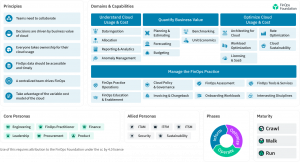
FinOps Framework. Source: FinOps Foundation 

The FinOps Framework, as illustrated above, provides a comprehensive overview of the key components and practices that drive successful Cloud Financial Management.

Beyond Cost Savings: The Real Value of Embracing FinOps

While reducing cloud costs is a significant benefit of FinOps, it’s just the tip of the iceberg. FinOps is about unlocking the true value of your cloud investments, empowering your business to achieve more with less.

This means moving beyond simply cutting costs to streamlining operations. FinOps helps you optimize your cloud operations for maximum efficiency. Imagine automating tasks, eliminating manual processes, and freeing up your team to focus on what truly matters – driving innovation and growth.

FinOps also enables you to respond with agility. In today’s dynamic business environment, agility is key. FinOps gives you the flexibility to scale your cloud resources up or down on demand, ensuring you’re always equipped to meet changing market demands without overspending.

With FinOps, you gain greater visibility and control over your cloud environment. This translates to improved governance, reduced risk, and peace of mind knowing your cloud resources are being used responsibly and securely.

Guiding You Towards Cloud Maturity and Cost Optimization

At Making Science, we understand the complexities of navigating the cloud and empower businesses to harness the full potential of the cloud, with confidence and without breaking the bank.

Our Cloud Maturity Assessment is designed to guide you through the hurdles of complex migrations, technical intricacies, and cost optimization. By identifying optimization opportunities and implementing FinOps best practices, we enable you to extract maximum value from your cloud investments without compromising the performance of your digital assets.

With our expertise, you’ll be able to achieve seamless scalability while maintaining cost-effectiveness, ensuring your cloud environment is agile, efficient, and secure. We’ll work with you to create a tailored roadmap that aligns with your unique business objectives, empowering you to redirect resources towards innovation and growth.

Ready to embark on a journey toward cloud maturity and optimized costs? Contact Making Science and take the first step towards optimizing your cloud environment for success in the digital landscape.

Unlocking Business Value with Retrieval-Augmented Generation: The Future of GenAI is Contextual

The promise of Generative Artificial Intelligence (GenAI) seems limitless -from crafting compelling marketing copy to answering complex customer queries, but while large language models (LLMs) are impressive, they often lack the specific, up-to-date knowledge needed to truly deliver on their potential – especially in a business context. This is where a new technology, Retrieval-Augmented Generation, or RAG, steps in. This innovative approach is transforming how AI systems process and deliver information, bridging the gap between impressive language generation and real-world application. 

The Problem with Generic AI

Imagine deploying a chatbot trained on a general LLM to answer customer questions about your products. While it might eloquently describe the general concept of your offerings, it could falter when faced with questions about specific features, latest updates, or stock availability. This is because LLMs are trained on massive datasets that may not include your organization’s unique information or recent updates. 

The result? Inaccurate or irrelevant responses that frustrate users and erode trust in your AI implementation.

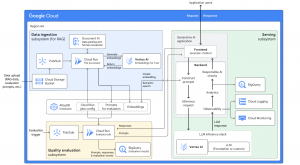
Infrastructure for a RAG-capable generative AI application using Google Cloud services

RAG: Injecting Context and Accuracy into GenAI

RAG is a technique that enhances the capabilities of Generative AI and large language models (LLMs) by combining them with external knowledge sources. Think of it as giving an AI system the ability to fact-check and update its knowledge in real time. Google’s recent Data and AI Trends 2024 report highlights the growing importance of operational data in unlocking the potential of generative AI for enterprise applications, making RAG a crucial technology for businesses looking to leverage GenAI.

How RAG Works: A Simplified View

  1. Knowledge Integration: All relevant data is transformed into a standardized format and stored in a searchable knowledge library.
  2. Vectorization: Advanced algorithms convert this information into numerical representations called vectors embeddings, enabling efficient searching and retrieval.
  3. Query Processing: When a user asks a question, RAG translates the query into a vector and searches the knowledge library for relevant information.
  4. Contextualized Response: The LLM receives both the user’s query and the retrieved contextual information, generating an accurate, specific, and up-to-date response.

Key Benefits of RAG for Your Business

Most importantly, RAG enhances the accuracy and relevance of AI-generated responses by providing users with precise answers grounded in the organization’s specific data, boosting trust and satisfaction. It also enables real-time information access, equipping AI with the latest data to ensure responses are always current and relevant—a crucial capability for dynamic fields like finance or customer service. 

Moreover, RAG can lead to significant cost savings. By indexing relevant information and retrieving only the most pertinent data to answer a question, RAG allows the use of much smaller prompts. This is particularly advantageous when dealing with large datasets, such as an entire website. New models like Gemini-1.5 can handle up to 2 million tokens, but calling such a model for every simple query would be prohibitively expensive. RAG optimizes this process, making it more cost-effective.

By delivering personalized and context-aware interactions through chatbots, virtual assistants, and other GenAI-powered applications, RAG can significantly improve the customer experience. Furthermore, RAG empowers employees with access to comprehensive and contextualized information, facilitating better-informed decisions and streamlining decision-making processes across the organization.

Examples of RAG in Action

The applications for RAG are vast, offering exciting possibilities for businesses across various sectors. Here are a few examples of how RAG is bridging the gap between powerful language generation and real-world problem-solving:

  • Elevated Customer Service with Smarter Chatbots: Imagine chatbots that go beyond generic responses. RAG empowers chatbots to tap into a wealth of knowledge, pulling up specific product details, troubleshooting guides, or even personalized order information. This means faster, more accurate resolutions for customers and reduced strain on human support teams.
  • Data-Driven Insights from Social Listening: Social media is a goldmine of customer sentiment, but sifting through the noise can be overwhelming. RAG can supercharge social listening by not only identifying brand mentions but also analyzing the context and sentiment behind them. This allows businesses to understand customer perceptions, track campaign effectiveness, and identify emerging trends with greater precision.
  • Next-Level Personalization for Loyalty Programs: Generic rewards don’t resonate with today’s discerning customers. RAG can analyze individual customer data, from purchase history to browsing behavior, to tailor loyalty program recommendations and offers. Imagine receiving a discount on a product you’ve recently viewed or being rewarded for consistent engagement with a brand you love. This level of personalization fosters stronger customer relationships and drives loyalty.

Integrating RAG into Existing Systems

While the potential of RAG is immense, integrating it into existing systems requires careful planning and execution. Businesses must consider factors such as data preprocessing, model selection, and parameter tuning to ensure optimal performance. Additionally, organizations should be prepared to address potential challenges, such as data quality issues or the need for specialized hardware to handle large-scale deployments. By working with experienced partners and allocating sufficient resources, businesses can successfully navigate these complexities and unlock the full value of RAG for their specific use cases.

Conclusion: The Future of AI is Contextual

RAG represents a significant leap forward in Generative AI, moving beyond generic language generation towards truly intelligent systems capable of understanding and responding to the nuances of your business. As RAG technology continues to evolve, we can expect to see more sophisticated applications. Future systems might not only provide information but also take actions based on that information, opening up new possibilities for automation and decision-making support.

At Making Science, we understand that the future of Generative AI lies in its ability to process and leverage information within its proper context. While RAG is still an evolving field, its potential to transform business operations is undeniable. As experts in data-driven solutions, Making Science is committed to helping our clients navigate the evolving landscape of Generative AI and unlock the power of technologies like RAG to drive business success.

Transform your content strategy with private AI

Did you know that “46% of senior executives suspect their colleagues are unintentionally sharing confidential data with ChatGPT”?

In a world where privacy and data control are paramount, companies are seeking innovative solutions that allow them to generate high-quality content in a unified and secure manner. 

Enter Trust Generative AI (TGAI), an advanced platform that integrates Generative AI capabilities from Google and OpenAI, enabling content generation at scale within a private environment with human-in-the-loop validation to ensure the company always maintains control over the generated content.

Benefits and limitations of Gen AI

While Gen AI holds promise for transforming content creation, it also comes with its own set of benefits and limitations. On one hand, it enables quick and high volume of content generation and creativity. However, it may struggle with keeping relevance and coherence, especially in sensitive or proprietary content areas. TGAI addresses these limitations by providing a secure and tailored AI solution specifically designed for business needs.

Privacy and Data control

Privacy and data control are at the forefront of concerns when adopting AI solutions. While Gen AI presents immense opportunities for content creation, it also raises challenges regarding data security and privacy. With TGAI, companies can generate content while ensuring that their proprietary data remains secure and under their control.

Versatility in content creation

TGAI offers versatility in content creation, empowering to generate a wide range of content types across various departments in the company. From blog posts to emailing for sales, product descriptions, ad generation, report creation, it provides comprehensive support for all aspects of content creation. Whether you’re looking to engage your audience through compelling blog content or drive conversions with targeted ads, TGAI has you covered.

Unified content generation

Gen AI offers unparalleled capabilities for content creation, but it also presents challenges in maintaining consistency and coherence across various formats and channels. TGAI solves this by offering unified content generation. Regardless of the format or platform, it ensures that content remains cohesive and relevant, streamlining the content creation process for companies by offering the possibility to train the model according to corporate guidelines.

Human-in-the-Loop integration

One of the unique features of TGAI is its integration of Human-in-the-Loop validation. This means that while AI drives the content generation process, human oversight and validation are incorporated at key stages. This ensures that the content meets the highest standards of quality and relevance, combining the efficiency of AI with the expertise of human judgment.

Conclusion

In today’s data-driven world, the ability to generate high-quality content securely and efficiently is essential for business success. With TGAI, companies can harness the power of generative artificial intelligence without compromising privacy or data control, enabling content generation at scale within a private environment, with human-in-the-loop validation to ensure the company always maintains control over the generated content. It’s time to unlock the true potential of your content strategy with Trust Generative AI.

CDP: Beyond Customer Data, a holistic view of the business

Customer Data Platforms (CDPs) have undergone significant evolution in recent years, expanding their scope and capabilities beyond customer data management. Today, companies are looking for more comprehensive solutions that integrate data from various areas to obtain a holistic view of the business and make more strategic decisions. In this context, the concept of Central Data Platform (CDP) emerges, a centralized platform that unifies data from customers, products, finances, operations, and other areas, allowing for comprehensive information management.

The event “Optimizing CDP with Google Cloud”, held on March 5th at Google’s offices in Madrid, addressed this evolution and the keys to making the most of the capabilities of CDPs in the cloud. Here are the 6 most relevant lessons from the event:

1. Focus on activation:

  • Prioritize obtaining immediate value: It is not necessary to start with a large-scale CDP project. It is advisable to start with an MVP that focuses on data activation, that is, on its use to make decisions and execute actions immediately.
  • Efficiency from the start: With just two relevant data sources, it is already possible to obtain results and value from the CDP. Two data sources, one activation.

2.Flexibility and adaptability:

  • Composable CDP: Starting with the focus on activation, the necessary pieces and data should be gradually incorporated without overloading the platform. Each company has unique needs, so the CDP must be flexible and adaptable to these needs.

3.Long-term vision:

  • Digital transformation strategy: The implementation of a CDP is not a one-time project, but a long-term strategy that requires a clear vision and a sustained commitment from the company.
  • Durable technologies and data: Technologies and data types should be selected that can last over time and adapt to market and business changes.

4. Beyond Customer Data:

  • Expanding the scope: A CDP is not limited to customer data, but can integrate financial, product, personnel, marketing and other information relevant to the company.
  • Advanced personalization: The integration of diverse data allows us to move from general targeting to individualized personalization and, finally, to hyper-personalization using technologies such as Generative AI (GenAI).
  • Unique experiences: The CDP can use this data to create personalized experiences for each customer, increasing satisfaction and loyalty.

5. Benefits for the entire company:

  • Interdepartmental collaboration: Although CDP projects are often led by marketing and sales departments, over time and with the accumulation of data, they can be very useful for other teams such as finance, product, customer service, operations, and more.
  • Internal efficiency: The CDP can boost collaboration between different departments and improve the efficiency of internal processes.

6. Evolution towards the Central Data Platform:

  • Integration and comprehensive management: Companies are looking for more comprehensive solutions that integrate data from various areas into a single centralized platform.
  • Strategic decision making: The Central Data Platform allows for comprehensive information management, facilitating strategic decision making and predictive analysis.

At Making Science, we are convinced that the CDPs and Central Data Platforms are key tools for the digital transformation of companies.

If you want to know more about how we can help you implement a CDP or a centralized Central Data Platform in your company, do not hesitate to contact us.

Save the date:

Our next event in Google Cloud’s Madrid offices will take place on the 24th of April. We will soon share more details about the topic, speakers and surprises that we have prepared.

RampUp 2024 Insights & Reflections by US CEO, Jason Downie

US CEO, Jason Downie attended RampUp 2024 and writes about his key insights and reflections from the event.


“At Rampup 2024, the term “data collaboration” was said MORE times than AI. That is a first! Scott Howe’s keynote focused on the dawn of this new era, ushered in by changes in user expectations for privacy and personalization, changes in regulations, and the deprecation of 3P party cookies.  

A month prior, I heard David Cohen speak at IAB ALM, and he called the upcoming years “The In-Between Years”. The messy middle between what was the standard for the last 30 years (3P cookies and precision marketing) and what will be for the next +30 years (1P data, AI-powered modeling, and collaboration).

A few weeks before IAB ALM, I heard Google’s Steve Yap speak at a US GMP Sales Partner summit. He spoke to the future of Google’s ad and martech being a “cooperative”.

Collaboration.  Cooperation.

Marketers need to figure out what their new “partner ecosystem” will look like and move quickly to build those relationships and the interconnectedness needed to achieve their goals.

In order to fully participate, marketers need:

  • 1PD collected, prepped, de-siloed and organized
  • Data Housed in a place (a cloud, or multiple clouds) where it can be made available for use across multiple partners (in a privacy-safe, secure environment)
  • Clean room tech that unlocks data collaboration across brands, data partners, and retailers in a way that also protects consumer privacy and consent
  • Platform partners that enable interoperable activation of the data where customers live (e.g. through PAIR into Google DV360)
  • A way to pull the results back down to the data warehouse for analysis and measurement

To do all this, marketers will need multiple partners.  Consulting firms, system integrators, cloud providers, clean room tech, data partners, etc..  We are trying to figure out, as an industry, how to do business for the next 30 years.

Marketers are generally not set up to do this.  They sell soft drinks.  Or soap.  Or checking accounts.  Some in-housing (or as we like to say, “right-housing”) is needed to own the data.  Testing and learning can be expensive.  But it needs to be done.  Marketers should be trying lots of different tactics in a short period of time (fail small and fast to win big!) in these in-between years, in order to arrive at more permanent solutions that will work for the new era.

Finding trusted advisors to help make sense of all the partners feels like an important step in this process.  Lots of companies have point solutions, or ad inventory, or data assets, or do media planning, buying, or measurement.  But a lot less are client-centric experts in the data collaboration value chain of the future.  Consulting plus hands-on-keyboard thingdoers to evaluate tech, collect, move, organize and activate 1PD, and enables tech connections and run POCs.  There will be an evolution towards companies becoming “ad tech system integrators for the CMO” or Data AORs as data collection and collaboration become more important.  And marketers will be better off as this evolution continues, so they can tie all this together in bespoke winning strategies.”

Get in touch with our team of experts to help your business navigate through the digital landscape.

[button color=”accent-color” hover_text_color_override=”#fff” size=”large” url=”www.makingscience.com/contact” text=”Get In Touch! ” color_override=”#ff0067″]

Navigating the Transition: Embracing Mitigation and Activation for 3PC Deprecation

As a continuation of “Chrome’s Challenge: Adapting to 3rd Party Cookie Deprecation“, we delve deeper into the intricacies of adapting to a world without third-party cookies, it’s crucial to not only focus on immediate mitigation and activation strategies, but also to consider the broader implications for managing change within your organization and the evolving digital landscape. Here’s how to approach this transition with a holistic perspective:

Managing Change and Stakeholder Engagement:

  • Leveraging Making Science’s 3PC Deprecation Tool: This invaluable tool aids in strategic planning by quantifying the impact of 3PC deprecation on your operations, streamlining the process for gaining the necessary technical and legal approvals for implementing critical updates like Enhanced Conversions. It’s about making informed decisions that align with both current needs and future directions.

The Role of Google’s Privacy Sandbox:

  • Adapting to New Technologies: Google’s Privacy Sandbox introduces a suite of alternatives, including the Topics API and Protected Audiences, aimed at preserving user privacy while maintaining advertising effectiveness. Although reactions have been mixed, staying abreast of these developments is essential for adjusting strategies in real-time.
    • Topics API: Designed to categorize a user’s interests based on their browsing history, facilitating personalized advertising without individual tracking
    • Protected Audiences API: Offers a framework for advertisers to target specific user groups while ensuring stringent privacy protections and compliance with data regulations
  • Monitoring Developments: The influence of the Privacy Sandbox is set to expand, making it imperative to understand how its components can be integrated into your advertising efforts. Begin with the immediate strategies outlined, then pivot to harnessing the full potential of the Privacy Sandbox as it matures.

This approach not only ensures compliance and efficacy in your marketing endeavors post-3PC but also emphasizes the importance of agility and forward-thinking. By embracing both mitigation and activation techniques—and preparing for the shifts in technology and stakeholder expectations—you can continue to provide personalized advertising experiences, sidestepping reliance on third-party data and setting a new standard for privacy-conscious marketing.


[button color=”accent-color” hover_text_color_override=”#fff” size=”large” url=”www.makingscience.com/contact” text=”Get In Touch With Our Experts!” color_override=”#ff0067″]

Chrome’s Challenge: Adapting to 3rd Party Cookie Deprecation

Chrome’s 3rd Party Cookie Deprecation (3PCD) is already affecting business and marketing performance. In this post, we’ll uncover how this seismic shift is reshaping today’s strategies and explore ways to adapt and succeed in a post-3PC world. 

What is happening?

Google Chrome has taken a decisive step towards privacy-first browsing, which started with the deprecation of third-party cookies for 1% of its users in January 2024. Google plans to extend this to all users by the latter half of the year. This gradual phase-out marks a significant shift from traditional user tracking methods and aligns with a broader industry move towards enhancing user privacy.

Why it matters

Chrome’s third-party cookie deprecation is more than a tech shift—it’s a revolution in digital advertising, given its 65% global market share. This change impacts advertisers, publishers, and users, especially on desktop where conversion rates are higher. Google and Meta’s reliance on these cookies for detailed user profiles and targeted advertising is facing a transformative challenge.

What will the impact be?

The decline in third-party data quality will make it less complete and accurate, potentially reducing marketing efficiency and ROAS unless advertisers adjust. Making Science’s 3PC Deprecation Impact Tool predicts up to a 30% drop in advertising-attributed online conversions and a possible 9% loss in digital revenue for certain sectors. This highlights the growing importance of first-party data (1PD) over third-party data (3PD), due to cookie deprecation.

What can be done to mitigate the impact?

There are lots of options available to handle this change – in fact, too many. It is important to understand the impact on your business and prioritize the available changes based on ease of implementation and impact. We can bucket the opportunities into mitigation and activation.

Mitigation

We’ve compiled a few key solutions that are aimed at reducing the loss of data volume and quality by implementing tools provided by Google and collecting better data using durable, privacy-compliant solutions.

  • We can’t stress the importance of a consent management platform (CMP) rather than a DIY solution for a consent banner. CMPs integrate with Google’s technical solutions and provide template consent banners that are compliant with the latest regulatory changes in differing markets, which can become hard to manage as more and more countries and states implement their own privacy legislation.
  • GA4 implementation will provide confidence in data, become the data source of truth for the business and stay up-to-date with privacy changes, as Google has shown its commitment to keeping GA4 compliant.
  • Consent Mode V2 for all Google products and Enhanced Conversions will allow for better matching by Google whilst respecting privacy. Consent Mode is now a requirement for using advertising features within Google products, and Enhanced Conversions allow conversions to be tied to impressions and clicks better, improving the understanding of campaign performance.

We deem those as the initial essential requirements for dealing with 3PC deprecation, but there are also other measures, such as: 

  • Implementing server-side measurement that will further improve the robustness of the GA4 implementation and marketing pixels. 
  • Leveraging server-to-server APIs for key conversions to ensure 1-to-1 matching between internal databases and ad/martech. 
  • Greater understanding of users can be achieved by using a Customer Data Architecture (CDA) or a Customer Data Platform (CDP) and cleanroom analysis can help cluster users together for better-aggregated targeting.

What activation strategies can help navigate 3PC deprecation effectively?

In addressing the challenge of third-party cookie (3PC) deprecation, a myriad of strategies are available to adapt and thrive. The key is to assess the impact on your business and prioritize strategies based on their implementation feasibility and potential impact.

Activation

Focusing on activation strategies that leverage first-party data (1PD) is crucial. Here’s a breakdown of key action items:

Building and Enhancing Audiences:

  • GA4 Audiences: Utilize GA4 to create dynamic audiences based on user behavior. These audiences can then be seamlessly integrated into Ads and Google’s adtech stack, improving the precision of your targeting.
  • Customer Match: Automate the process of uploading customer lists into Ads for more accurate targeting, helping to counteract the impact of 3PC deprecation.

Leveraging Google’s Advanced Tools:

  • Smart Bidding: Implement Google’s Smart Bidding to optimize campaigns using AI, which adjusts bids in real-time for conversions or conversion value, making use of contextual signals and machine learning.
  • Consent Mode V2 and Enhanced Conversions: Ensure compliance and improve data accuracy with Consent Mode V2, now a requirement for Google product advertising features. Enhanced Conversions improve the linkage between conversions and ad interactions, offering a deeper understanding of campaign performance.

Enhancing Signal Quality:

Predictive Modeling with Gauss Smart Advertising: Beyond the scope of Google’s tools, Gauss Smart Advertising enhances your digital strategy through predictive modeling. This tool does more than just score users; it significantly enhances the signals sent to Google’s algorithms for unparalleled optimization. Such advanced techniques can sharpen your advertising efforts and lead to more targeted, impactful campaigns that elevate performance thoughtfully and effectively.


[button color=”accent-color” hover_text_color_override=”#fff” size=”large” url=”www.makingscience.com/contact” text=”Get In Touch To Activate Your Data Strategy” color_override=”#ff0067″]

Unleash the Power of Ad Personalization: How CDPs Power Your Ads

What is CDPs, and how does it improve ad personalization?

Personalized advertising has become an intricate journey that aims to establish better connections with business’s target audiences. In this sense, Customer Data Platforms (CDP) have emerged as a powerful tool to transform customer information collection, management, and use. This article explores how CDPs play a critical role in improving ad personalization.

What are Customer Data Platforms (CDP)?

Before getting into the advantages of CDPs in advertising, it is essential to understand what CDP is. CDP is a platform designed to collect, store and organize customer data from various sources, creating integrated and unified profiles. This data consolidation allows companies to gain a holistic view of their customers, laying the foundation for more effective personalization.


The Key to Personalization: Core Data and Meaningful Connections

Effective ad personalization relies on the ability to thoroughly understand the target audience. CDPs excel by providing a centralized repository of customer data, including behaviors, preferences, and interaction history. It allows brands to create detailed and accurate profiles, making it easier to create more personalized ads.

The Customer Data Platform (CDP) streamlines First Party Data performance by integrating a single source of truth, enabling instant visualization. This inclusion not only simplifies data management but also improves the ability to analyze and respond in real time to customer preferences. From the moment of integration, a dynamic process is triggered that transforms static data into agile knowledge, facilitating quick and accurate decisions.

Additionally, CDPs make it easy to connect data from various sources, such as Social Media, website interactions, and past transactions. This results in a more complete understanding of the user, which in turn improves brands’ ability to deliver relevant messages at the right time.

The Role of CDPs in Precise Segmentation

CDPs allow for more precise segmentation by classifying users into groups based on specific data. For example, a fashion brand can segment its users based on their style preferences, purchasing behaviors, and geographic location. This makes it possible to create ads that resonate more effectively with each segment, increasing the likelihood of conversion.

Automation and Optimization: 

CDPs not only simplify data collection and organization but also facilitate process automation. Automation allows brands to deliver personalized ads in real time, dynamically responding to changes in user behavior. Additionally, the continuous optimization capabilities of CDPs ensure that personalization strategies evolve based on changing trends and preferences.

In short, Customer Data Platforms are playing an essential role in the evolution of advertising towards a more personalized and user-centric approach. By providing centralized data, precise targeting, and automation capabilities, CDPs are increasing ad relevance, improving customer experience, and ultimately driving the success of advertising campaigns. Personalization driven by CDPs wins brands’ attention and user loyalty in a world saturated with messages.


At Making Science, we have specialized Customer Data Platform teams so that they can personally advise and help clients select the CDP that best suits their needs. We have experience in various platforms, such as Zeotap and Tealium, and are committed to providing solutions that drive the success of your business.

[button color=”accent-color” hover_text_color_override=”#fff” size=”large” url=”www.makingscience.com/contact” text=”Get in touch to activate CDP” color_override=”#ff0067″]

Accelerate Your Digital Business with Google Marketing Platform (GMP)

In today’s fast-paced digital landscape, having a robust marketing strategy is crucial for the success of any business. One powerful tool that can help you supercharge your digital marketing efforts is Google Marketing Platform (GMP). In this blog post, we’ll take a closer look at GMP and how it can accelerate your digital business.

What is Google Marketing Platform?

Google Marketing Platform is a suite of marketing tools and products offered by Google designed to help businesses manage their digital marketing activities more effectively and efficiently. It combines several popular marketing tools under one unified platform, making it easier for companies to plan, execute, measure, and optimise their online marketing campaigns.

GMP consists of several integrated products, including:

  1. Google Analytics 4: A powerful web analytics tool that provides in-depth insights into website performance, user behaviour, and campaign tracking. It helps businesses understand their audience and measure the impact of their marketing efforts.
  2. Search Ads 360: A comprehensive online advertising platform that allows businesses to create, manage, and optimise online ads across Google’s network, including search, display, video, and app campaigns. It helps businesses reach their target audience and drive relevant website or app traffic.
  3. Campaign Manager 360: Is an ad management and measurement system that offers a centralized tool for managing digital campaigns across the internet’s ecosystem. Campaign Manager 360 includes a robust set of features for ad trafficking, Reporting, and Verification in order to upload creatives, measure performance, and ensure your ads are serving correctly.
  4. Display & Video 360: A comprehensive programmatic advertising platform that allows businesses to plan, execute, and measure display and video campaigns across multiple channels, including production, video, TV, and audio. It helps companies to reach their audience with engaging ads and measure the impact of their campaigns.
  5. Looker Studio: A data visualisation and reporting tool that allows businesses to create custom dashboards and reports using data from multiple sources, including Google Analytics, Google Ads, and other third-party data. It helps companies to gain insights from their data and make data-driven decisions.
  6. Campaign Manager 360: web-based ad management system for advertisers and agencies. It helps you manage your digital campaigns across websites and mobile. This includes robust features for ad serving, targeting, verification, and reporting.

How GMP Can Accelerate Your Digital Business

  1. Comprehensive Data Insights: With Google Marketing Platform, you can gain valuable insights into your website or app performance, user behaviour, and campaign effectiveness through Google Analytics 4. This data can help you make informed decisions about your marketing strategies, optimise your campaigns, and identify new opportunities to drive growth
  2. Integrated Advertising Solutions: GMP provides seamless integration between Google Ads and other tools within the platform, allowing you to create, manage, and optimise your online advertising campaigns more effectively. You can leverage the power of Google Ads to target your audience, drive relevant traffic to your website or app, and achieve your marketing goals.
  3. Custom Reporting and Visualisation: GMP offers Looker Studio, which enables you to create custom dashboards and reports using data from multiple sources. You can visualise your marketing data meaningfully, gain insights, and share reports with stakeholders, making data-driven decision-making more accessible across your organisation.
  4. Programmatic Advertising: Display & Video 360 provides a comprehensive programmatic advertising platform that allows you to plan, execute, and measure display and video campaigns across multiple channels. You can reach your audience with engaging ads and measure the impact of your campaigns, enabling you to optimise your ad spend and achieve better ROI.
  5. Collaboration and Efficiency: GMP provides a unified platform. 

In conclusion, Google Marketing Platform (GMP) is a powerful suite of marketing tools that can help accelerate your digital business. From comprehensive data insights and integrated advertising solutions to website optimisation, custom reporting, programmatic advertising, and improved collaboration, GMP offers robust features that can enhance your digital marketing efforts and drive better business results. 

If you want to take your digital marketing to the next level, consider leveraging the power of Google Marketing Platform to supercharge your efforts and achieve accelerated growth for your business. Today, Making Science has over +100 clients, cases and +300 certified professionals operating in GMP. Get in touch with our GMP experts to start your project!

[button color=”accent-color” hover_text_color_override=”#fff” size=”large” url=”https://www.makingscience.com/contact/” text=”GET IN TOUCH” color_override=”#f0076f”]