
Threads: the new App from Meta and what it means for brands

Threads, a new social media platform in the ever-changing digital landscape, has sparked intriguing discussions regarding its ability to surpass established platforms like Twitter over time. Threads was launched on 5 July 2023 by Meta, and has generated significant interest due to its novel approach, offering users a refreshing departure from traditional platforms. 

Although the initial excitement of Threads is attributed to the novelty of the product, as thought leaders, we should question whether it possesses the transformative power to revolutionise social media. It will only take time for Threads to prove that it can transcend the status quo and transform how we engage and interact online. 
To thrive in this dynamic environment, Threads must navigate the challenges that lie ahead. The platform’s ability to effectively combat the infiltration of bots, manage polarisation, and maintain a healthy and inclusive community will determine its long-term success.

One defining feature of Threads is its emphasis on user empowerment and fostering authentic conversations. By allowing users to control who can mention or reply to their threads, Threads provides a more tailored experience. This approach can reshape social media dynamics by prioritising quality interactions over quantity, leading to deeper connections and fostering genuine conversations.

What does this mean for brands?

As a Meta platform closely related to Instagram, Threads allow brands and marketers to leverage audience interest and behavioural data for more targeted campaigns. Businesses need to explore the potential of threads as a valuable tool to improve targeting options, brand awareness and build an organic follower base. The power of data and personalisation in driving engagement and conversion cannot be underestimated in the rapidly changing social media landscape.

While no ads exist on the platform, Meta already uses Threads for audience interest and behaviour data. The terms and conditions at the time of account registration state that the data can be used on Instagram, whereas we know ads are available. Until ads are available on Threads, brands can aim to use data and personalisation to enrich their targeting options and build organic awareness and Instagram followers.
Due to EU regulations concerning data protection, the app is not available within the EU. Therefore brands and advertisers can monitor and learn how, e.g. the US and the UK are harnessing the platform to create a strategy to strengthen brand positioning. 

Threads are a fascinating addition to the social media ecosystem, prompting brands to reflect on their potential to bring about real long-term change. By examining its unique features, challenges, and broader implications for privacy, trust, and data, we can gain insights into the future of social media. As advertisers, we must stay abreast of these developments, anticipating how Threads and similar platforms can shape how we connect, share ideas and engage in meaningful conversations in the evolving digital age.

As more and more users connect to Threads, we will have the opportunity to obtain more data and share new thoughts. In the meantime, you can read more about Threads directly from Instagram.

Get in touch with our team of experts if your business want advance your social media strategy!
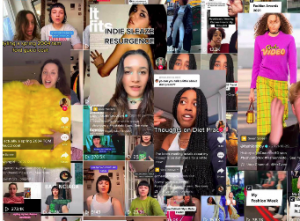
TikTok OR: The Art of Using Influencer Marketing to Communicate with Gen Z

Gen Z encompasses a generation born between 1995 and 2010. This group is defined by being constantly connected, with high purchasing power, and growing up in the boom of smartphone diffusion. These digital natives are well-known for filtering information, their low attention spans (8 seconds), and their preference for visuals over text.

Their main form of entertainment is social networks, which they also use to fill gaps in human interaction. They consider VIPs and influencers as valid advisors for purchases, as long as the suggestions are provided entertainingly. The social network that has best captured this audience is TikTok (though it has also successfully captured the attention of many in the 9-25 age bracket). Users spend an average of 52 minutes daily on the app.

Brands that operate in trendy markets and wish to communicate to Gen Z must therefore integrate this channel into their digital strategy. The platform allows companies to package 15- to 60-second videos with music, stickers, and filters. The most viewed content is characterised by dynamic montages, stop-motion, and forced perspective shots that make viewing quick and enjoyable.

TikTok: The clear choice for maximising brand visibility

Influencer Marketing campaigns on TikTok often achieve results that exceed expectations. This happens because the social network is governed by an algorithm that shows users selected clips based on their content preferences. For example, a video dedicated to a make-up product has the potential to be seen not only by the fan base of the TikToker who posted it but also by many other users interested in the beauty topic who might intercept it in the ‘For You’ section.

Measuring the effectiveness of a TikTok initiative

The number of views measures the success of a TikTok campaign. The views are destined to grow over time, as a clip never runs out of chances to appear in the feeds of new users. To make a comparison: the average engagement of Instagram content is around 3% compared to 29% for TikTok.

Tips & Tricks: How to make the most of this channel

The best way to obtain relevant results is to leave the content creation to creators: TikTokers know the tastes of their generation (because they are part of it), and they know what is potentially viral and how to catch people’s attention.

Creativity is more important than quality: the average TikTok user is primarily interested in originality and fun. It is essential that the branded content speaks the language of young people and stimulates co-creation, i.e. it invites the user to test their creativity by emulating what they have seen Creators do. A dance, an acted scene, an alternative way of wearing a garment: any cue is good to tickle the imagination of users and start a viral chain.

Their secret weapon is the impeccable knowledge of their target audience. But there is a catch. They do not conduct detailed market analyses on style trends or buying preferences. They are so good and effective at getting people’s attention because… they themselves are their target audience! All they have to do is create and publish the content that they would like to see.

Influencers in the brand niche are succeeding where brands are failing: getting the attention of potential customers.

Where to start?

The first logical route you could take is to deepen your knowledge of your customers: their desires, fears, problems, language, style, and ambitions. You would eventually be able to produce content that is perfect for them. But no matter how well you do your homework, you will always be one step behind the influencers. And for a simple reason beyond your control: people trust their peers more than companies.

That’s why investing in an influencer marketing campaign is a great strategy to overcome short attention spans, catch your potential target and get your product and brand in front of a new group of potential customers. By working with influencers, you:

  • Don’t have to interrupt the flow of your target’s content with your self-referential advertising.
  • Can save thousands of dollars that you would otherwise have to spend on content conception, creation, and promotion.
  • Can capture your audience’s interest without the need to worry about their attention span.

Not even sure where to find influencers? Don’t worry – Making Science has got you covered! From conceptual creation through selecting which influencers best suit your brand’s needs, we can find the perfect match.

Get in touch

What news does Facebook and Instagram bring for 2021?

What news does Facebook and Instagram bring for 2021?
The end of this 2020 is approaching. A year in which surely we have all had to modify the vast majority of the plans that we had made due to Covid-19. The same goes for the advertising strategies of advertisers. It is time to adapt to the circumstances and make the most of the tools we have to carry out good marketing and advertising campaigns. But before considering the strategy that we are going to follow in 2021, we must have something very important: the tools we use are constantly changing, and they are adapting to the times and changes so, what was a good recommendation yesterday, can not be today. In this article we will talk about the changes and updates that we can observe specifically on Facebook and Instagram, and that will be noticed at the end of 2020 and the beginning of 2021.  

Goodbye to the 20% rule

The 20% rule is something that regulars of the Business Manager platform has haunted us for years. On many occasions, we wanted to provide information in a creative, and we had to limit it due to this restriction, since the ad could be rejected or have a much lower performance. Currently, Facebook is eliminating this restriction and, although it is recommended to keep the text below 20%, there will be more freedom when developing the creatives with which we are going to impact the audience.  

What’s new in Instagram?

Instagram has received its own facelift in recent months. With the experimental removal of “like” counts on a post, some people are theorizing the total removal of the “like” feature. Although this has yet to be confirmed, it is just another addition to the changing landscape of social media. Instagram has also revealed new tools that advertisers can use. ‘Reels’ is the new way for brands to share minute-long videos that are in a separate feed than normal. It was created to compete with TikTok, a platform that gained popularity at the beginning of the COVID-19 pandemic. ‘Guides’, however, is not a competitive addition to the app, but rather a unique Instagram feature that allows brands to attach extended and exclusive content to their video posts. With these types of updates, Facebook and Instagram make it clear that they are platforms that can not only make flexible changes in their environment with ease, but also keep up to date to adapt very quickly to marketing trends.  

Ad limit per page

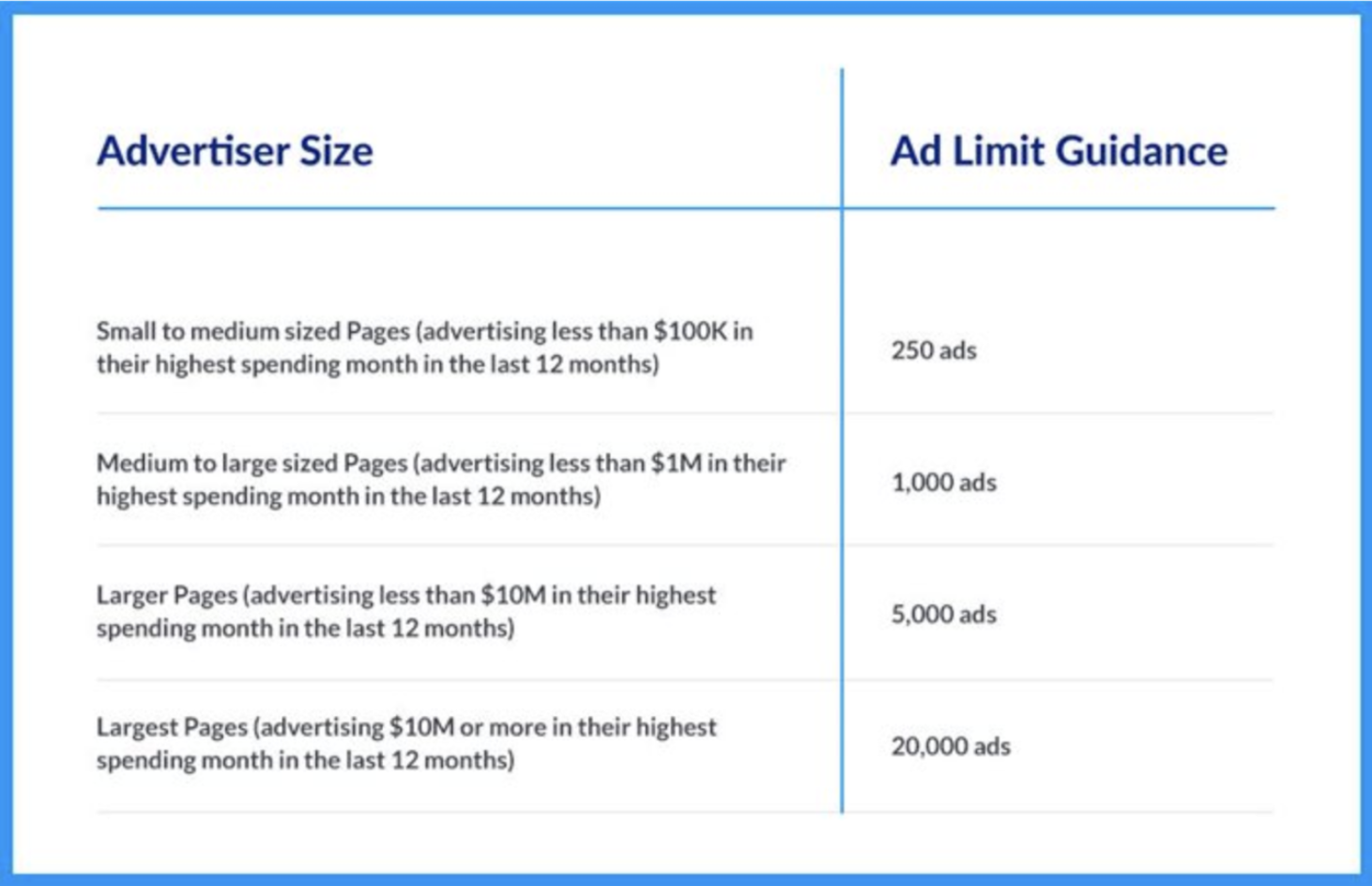
Last year, Facebook announced a new restriction on the number of campaigns that a page can run at the same time. The idea behind this update is that quality should outweigh quantity. There is a common misconception that high ad volume means higher traffic or better performance. However, the goal that Facebook tells us is to create personalized content that has a significant impact on the intended audience. Thanks to Facebook’s predictive model, only people who are genuinely interested in the brand will see your ad for its duration. This limitation will depend on the advertising investment of the account, since it is normal that with higher advertising investments, there is a greater number of active advertising ads.  

Limited access to data with iOS 14

The latest update to iOS 14 was released in September 2020 and allows Facebook and Instagram users to voluntarily choose to participate or not participate in data collection within these applications. This is part of a larger effort being made with the protection of user data. By choosing not to participate in data collection, some of the members of the Facebook and Instagram audiences will no longer be available for targeted or retargeted advertising campaigns based on their actions. Due to this increase in anonymous data, we must find new ways to deliver relevant ads to specific audiences in order to get positive results on ad performance. With this update, it will be particularly important to keep a close eye on your campaigns to quickly make adjustments if necessary.  

Elimination of 28-day conversion interval

Although this update went into effect on October 12, many advertisers are still unaware of it. This metric allows advertisers to measure the conversions that are achieved with the campaigns and can now only be done for 1 and 7 days. This change has an almost immediate consequence: from now on there will be purchases made in that period that goes from the 7th to the 28th from the moment the user clicks on a Facebook ad that will remain unaccounted for, so the number of conversions achieved with these campaigns will go down. Facebook is reacting to the changes that Google will make in relation to third-party cookies, which will be obsolete by 2022.   The bottom line from all of this is that, as marketers, it is important to stay up-to-date and be aware of the latest and greatest tools on offer, as only then we can make the most of the marketing strategies we propose for 2021.