Paywalls and Privacy: Why Meta’s Subscription Model is a Wake-Up Call for Marketers

Navigating Meta’s New “Consent or Pay” Ecosystem in 2026.

For over a decade, the social media contract was simple: you give Meta your data, and they give you a free platform. But as of January this year, that all changes. In response to strict regulatory pressure from the European Union’s Digital Markets Act (DMA) and the UK’s Information Commissioner’s Office (ICO), Meta has officially rolled out its “Consent or Pay” model across Europe and the United Kingdom.

As marketers, this isn’t just a platform update but a seismic shift in how we reach our audiences. If you’ve seen the new pop-up prompts on your own device, you will know that users will now be more aware than ever of how much of their privacy they are trading for ‘free’ access.

1. How the Opt-Out System Works

The system currently differs slightly between the UK and the EU due to different regulatory landscapes.

In the United Kingdom: Following guidance from the ICO, Meta offers a binary choice to ensure consent is “freely given”:

  • Ad-Supported Tier: Users continue for free but must agree to Meta using their information across accounts for personalised ads and tracking via cookies.
  • Ad-Free Subscription: For a monthly fee—starting at £2.99 on web or £3.99 on mobile—users can opt out of all ads and tracking for advertising purposes.

In the European Union (EEA): To satisfy more stringent DMA requirements, Meta introduced a third “middle ground” option in January 2026:

  • Less Personalised Ads: Users can choose a free experience that uses significantly less data. These ads are based on limited context (like age, gender, and current location) rather than deep behavioral tracking.
  • Reduced Pricing: Meta slashed EU subscription prices by 40% in late 2025, dropping web fees from €9.99 to €5.99/month to make the choice feel more “fair” to regulators.

2. How This Affects the Advertising Ecosystem

This new era of choice creates several immediate “ripple effects” for brands and digital agencies.

The “Luxury Privacy” Gap

One of the most significant concerns is audience shrinkage. Data suggests that high-income, tech-savvy, and privacy-conscious users are the most likely to pay for ad-free experiences. For luxury, finance, and premium travel brands, this means a significant portion of their most valuable target audience may become invisible to traditional paid campaigns on Meta.

CPM Inflation

Economics dictates that when supply (ad slots/audience) drops and demand remains high, prices rise. As more users move to ad-free tiers or “less personalised” tiers and therefore fewer available impressions, advertisers may expect a steady climb in CPM.

Measurement “Darkness”

Attribution is becoming increasingly complex. When users opt for less personalisation, the conversion matching between an ad click and a purchase becomes harder to track. This makes retargeting and lower funnel marketing harder than ever. As granular cross-platform tracking fades, advertisers must move away from “last-click” dependency and embrace Marketing Mix Modeling (MMM) to illuminate the true impact of their spend.

3. Strategic Pivots: Success in the 2026 Landscape

To continue to thrive independent of this change, we recommend careful consideration of the following:

  • Lean into the Meta algorithm: allow it to continue to find the most valuable users for your brand amongst the “opted-in” users.
  • Diversifying the Retargeting Mix: Multi-channel agility is no longer a luxury; it is a necessity. If a significant portion of your site traffic has opted in to Meta’s ad-free tier, those users become “invisible” to traditional social retargeting. To prevent your top-of-funnel investment from evaporating, you must establish secondary conversion bridges. Consider Programmatic Display and YouTube retargeting to maintain signal continuity. By diversifying your retargeting channels, you ensure that high-intent prospects who have paid for privacy on one platform don’t drop out of your ecosystem entirely.
  • While Meta is leading the charge into the “Consent or Pay” era, other major platforms like TikTok and Snapchat represent a strategic opportunity to maximise your in-market audience. As of early 2026, these platforms have not yet broadly implemented similar monthly subscription fees to opt out of ads, meaning their “signal continuity” remains more intact for a larger portion of their user base.
  • Organic Content is No Longer Optional: Since paid ads cannot reach all subscribers, your organic presence is essential and could be the only way to stay in their feeds. 
  • The Power of Influencers: Creators and micro-influencers act as a “backdoor” to ad-free users. A subscriber won’t see your Sponsored Post, but they will see a Reel or Story from a creator they follow voluntarily.

The Bottom Line

Meta’s rollout of the “Consent or Pay” model marks a fundamental shift in the digital landscape, turning user privacy into a premium service across the UK and EU. To thrive in this new ecosystem, marketers must remain agile, trust the Meta algorithm, and consider putting some budget behind influencer advertising. As well as this, a varied and vast media mix becomes essential for effective targeting and remarketing – especially for industries like luxury, finance, and travel.

To learn more about how your brand can thrive in this new ad-world, get in touch with our team of experts.

[button color=”accent-color” hover_text_color_override=”#fff” size=”large” url=”www.makingscience.co.uk/contact” text=”Get in touch!” color_override=”#ff0067″]

Why Apple Search Ads Marketers Should Be Excited About New Placement Options

Apple Search Ads (ASA) now offers four placements for advertisers to promote their app. These are Search Tab, Search Results, Today Tab and Product Pages – while browsing. Search Tab and Search Results have both been long-standing options, but Today Tab and Product Pages were introduced earlier this year, since their announcement in July. The expansion gives advertisers more reach and the opportunity to drive installs from users wherever they might be in the App Store. 

What are the placements?


Today Tab

The Today Tab is the front page of the App Store, the first place a user lands when they open the app. Here you can reach users with highly engaging ads and impact them immediately. This placement is excellent for driving awareness as your ad will be one of the first pieces of content users consume when they enter the App Store. However, it’s worth noting that users here are likely to show less intent to download as they’ve not actively sought your app.

Ads on this placement are created from a custom product page set up in App Store Connect, and you’ll need to get approval for advertising before they can be run. 


Product Pages – while browsing

Advertisers can reach users while browsing relevant product pages on this placement. Advertisers can run ads across all relevant app categories or narrow their targeting to specific ones. Intent to download is expected to be higher than the Today Tab since users have expressed assumed interest in your app through engagement with related App Store pages. 

Here, ads are created from your App Store product page. They will display your app name, icon and subtitle.


Search Tab

Search is the primary placement for app discovery on the App Store. After a user has navigated to the Search Tab but before they search, your ad will show at the top of the suggested apps list. Whilst users on the Search Tab show good intent to take immediate download action, it’s important to note that your ad is shown before the search. Hence, advertisers rely on ASA’s machine learning algorithm’s interpretation of relevance to find the best users.

Here, ads are created the same way as Product Pages – while browsing ads from your App Store Product page.


Search Results

Target users with ads after they’ve searched with a relevant query. Advertisers have high control through Exact Match keyword targeting but can also use Search Match campaigns which target ads against queries ASA believes to be suitable from its interpretation of your app, primarily from your App Store page. Users on this placement show the highest intent to download. 

Default ads are created from your app’s product page, but advertisers can create bespoke ads and pages using custom product pages in App Store Connect.


Why should you care?

These new placements should be particularly welcome additions for advertisers using the platform. Whilst the quality of users on ASA is typically high – our data reports CTRs up to 16x higher and CPIs 3x lower than Google App Campaigns throughout October 2022 – the main limitation of the platform is reach, which is comparatively limited versus both Google and Meta’s app advertising platforms. 

In addition, advertisers who utilise ASA’s basic audience targeting options will see their campaigns throttled as their serving is limited to only those users who have opted into personalised advertising. To give some context to this impact, Apple reported that in the first quarter of 2022, 78% of iOS search volume on the App Store came from devices with personalised ads turned off. This is a significant challenge for marketers who wish to (or are required to in the case of specific app verticals like iGaming) target based on age or gender demographics. All of this is to say that the Today Tab and Product Pages placements give advertisers valuable additional reach on the platform. Both deserve consideration in an advertiser’s ASA strategy.

More reach means increased visibility and the ability to hit more users across the platform with potentially more engaging ads. Advertisers should undoubtedly take advantage of these new opportunities in a constant evolution of their strategy and activation. However, there’s no guaranteed success from the adoption of new formats. Each new environment needs further questions to be answered to leverage them most effectively. How do users behave in the placement? How high is their intent to install? How will my ad look? How are ads targeted? What is the competitor auction landscape like? How expensive will the auction be? As with any new feature, advertisers must test each of these placements properly to understand how they can work for their app and advertising goals. 

Does your business need help launching Apple Search Ads? At Making Science we have over 1000 experts who are happy and ready to help your business. Contact our team at info@makingscience.com🚀

World Cup and Black Friday: Navigating High Levels of Expected Competition in Q4

This year Qatar was selected to host the 2022 World Cup. Because of their intense Summer heat, this World Cup will be held from 21st November to 18th December – making it the first time this event has been held outside of May, June or July. The new time of year for this event in the UK brings additional challenges for advertisers: advertising alongside what are already landmark events in the marketing calendar – including Black Friday weekend, Cyber Monday, and the ramp-up to Christmas. 

Black Friday has always been a notorious period in marketing, requiring increased forethought when gathering a media plan. This has, in recent times, expanded out to a whole weekend event for consideration, including Cyber Monday.

For weeks before Black Friday, customers start holding off on new purchases, ready to see what a company will offer them over the weekend. And when it arrives, customers flock to the internet to browse the offers in the market. 

Although Black Friday is exceptionally competitive in eCommerce, its impact can be felt throughout the entire digital advertising landscape. Generally, higher competition with more – and more aggressive – advertisers on all advertising channels over the weekend results in higher advertising costs for everyone. Particularly in today’s digital advertising world, where we’re encouraged to go broad with targeting and rely on algorithmic optimisations to find the best users, overlap in targeting across brands and verticals is especially significant, and an event like Black Friday has impacts on any advertiser hoping to buy ads over that period.

Draw insights from previous years

Last year we saw Black Friday weekend CPMs rise anywhere up to 90%, on the comparative figure for the whole of Q4. For a vast number of verticals, there is no weekend like it, year-round, where we see the same percentage increase in CPMs.

The additional challenge comes as potential users enter the market with higher expectations – on Black Friday, more than ever, consumers sit in the driver’s seat, considering the best of several offers and discounts and converting only through the one with the best offering. A brand that can’t or won’t provide such an incentive will likely see click-through and conversion rates plummet.

The result is that Black Friday is now almost unbound by vertical. With such high demand, it’s an opportunity that seems too good for an advertiser to miss (and probably is), but if not approached with an appropriate strategy could cost you dearly in efficiency metrics like CPA and ROAS – or even brand image – a result of devaluation from over-discounting. 

During the UEFA Euros 2020, we saw CPMs increase, up an average of 3% to 8%. Sport-related companies CPMs raised further, around 17% for the period of 11th June – 11th July, and another 3% on top of this on the day of the final between England and Italy at Wembley.

How to plan for Black Friday and the World Cup?

This year Black Friday weekend falls from 25th through to the 28th of November, coinciding with the World Cup, with four games running per day over this period. The rest of this article discusses how an advertiser can effectively navigate the tricky Q4 period, which this year feels like a minefield of competition-increasing events.

  • Budget planning. Consider phasing to ramp up and down for defined periods of the next few months in response to supply and demand. Fluid budget planning could aid more agile responses – move from monthly to quarterly targets and budgets. Black Friday does require a certain spend commitment should you wish to succeed in remaining competitive – you want to allow yourself the room to compete as much as possible.


  • Your offer. Fore-plan your offerings and discounts and produce creative to match. Even if you can’t afford a particularly competitive bid, we can often frame positively through creative and copy so that it can still be used to motivate action. Play on exclusivity, ‘the power of free’ and ‘scarcity bias’.


  • Broader audiences will go some way to offset rising CPMs (but not all the way); the payback here, however, can be a lower conversion rate – work to find the sweet spot between the two to drive your goals.


  • Consider your goal. Black Friday and Cyber Monday might be revenue-driving periods for you. Still, perhaps the post-Christmas, pre-new year period is better suited to driving awareness in preparation for the following January sales. Dynamic and intelligent adjustment of your goals over the quarter will allow you to maximise the unique opportunity that presents itself. Consider the best KPI for each chosen goal and activity, be that AOV (Average Order Value), ROI (Return on Investment), CPA (Cost per Action) or Cost per Engagement etc.


  • Pre-booking traffic before costs explode. If your goal is awareness, consider pre-booking your Reach & Frequency Traffic well in advance through Meta to secure a known, comfortable CPM in advance – now is the perfect time to do so ready for the remainder of Q4.


  • Consider additional channels. Meta and Google can sometimes become overcrowded marketplaces during these highly competitive periods. This is fine if you have the budget to compete, but could you find the same users in a different, cheaper environment? Channels like Snapchat, Twitter, Reddit, TikTok and Pinterest might be better options. Or perhaps the best choice would be a combination of both – it does depend on your business plan and goals. Although these channels will undoubtedly experience rising costs, they will likely not be similar.


It’s challenging to predict exactly how the marketing landscape will change from November to December, as this is a historical first, but what we can do is prepare our campaigns accordingly. Get in touch with our Making Science experts to learn more about how you can be best prepared for the upcoming season.

[button open_new_tab=”true” color=”accent-color” hover_text_color_override=”#fff” size=”medium” url=”https://www.makingscience.co.uk/contact/” text=”Contact Us” color_override=”#f0076f”]


How does iOS 14 affect my business on Facebook

How does iOS 14 affect my business on Facebook
The rapid evolution and growth of digital ad ecosystems have led platforms to make changes to both consumer and business needs.

What does the new iOS 14 policy imply?

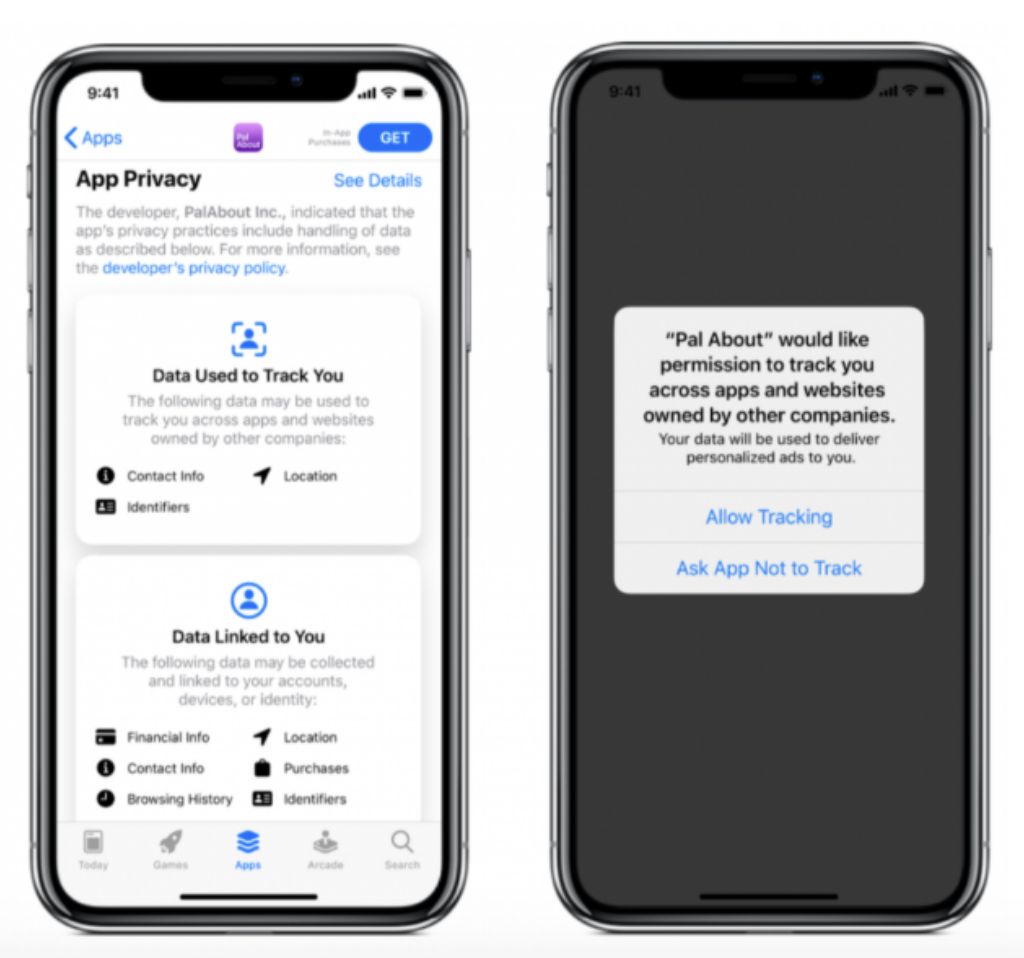
To understand how Facebook advertising will be affected, you need to understand exactly what will change with the iOS 14 update. Nutrition Label The data nutrition label will require all apps to submit how their app collects and uses their users’ data. App owners and developers will need to upload this disclosure clause to Apple’s App Store Connect. Tracking transparency notices All applications using the Apple App Store are required by the new policy to ask users for permission to track their data on third-party applications and websites. The tracking transparency notice will appear to the user and will give them the ability to accept or decline the tracking of their data, as shown below. Tracking via App / Browser APIs Facebook and other platforms will now have to use a new framework that imposes restrictions and could delay the notification of events. Previously instant reporting for app conversion campaigns could now be delayed up to three days with the newly adopted SKAdNetwork API (SKAN API).  

What is Facebook doing to mitigate these changes?

Adherence to the new ad guidelines Previously, the Facebook platform used transparency features for ads, such as a “Why am I seeing this?” Button, an option to hide the ad, and a switch to disable Facebook activity. Users will now be asked to decide whether they agree to their data being collected or not. Continued collection of device identifiers For those users who opt for Apple’s transparency notice, the device identifiers will be collected. Before the upgrade, device IDs were collected from all users. Application-based trading tools Facebook will continue to support app-based business tools for Apple’s limited metering solution, the SKAN API, for mobile apps. Aggregate Event Management (AEM) For advertisers using web-based business tools, Facebook will limit the measurement of some events for iOS 14 users through the new data sharing protocol. This new AEM system will change the way advertisers track conversions.  

Limitations on the platform

Ad creation For starters, the auction bid is now the only purchase option available when creating device ads on iOS14. Therefore, the scope and frequency bids are no longer available. Reports

  • The new iOS 14 update will limit advertisers’ ability to measure campaign performance on Facebook. Previous real-time reports will no longer be supported, and businesses could see a data lag of up to three days. Statistical models can be used to track conversions for iOS 14 users.
  • Delivery and stock breakdowns, including age, gender, region, and location, will not be supported.
  • Attribution windows will be set at the ad set level, rather than the account level, and will be limited to a seven-day click and one-day view window.

Targeting The size of audiences on the app and on the web will decrease as more people choose not to track on iOS 14 devices. This means that audiences may need to be expanded to capture the attention of potential customers.  

Changes and next steps for web advertisers

Facebook Aggregate Event Management (AEM) Facebook will implement Aggregate Event Management (AEM) to meet Apple’s requirement. This will not resolve all the impacts of Apple’s protocol and advertisers will continue to lose functionality with these changes, but it is your best option under the circumstances. AEM limits the transmission of user data while still supporting critical use cases for advertisers. Facebook hasn’t provided many details about AEM yet, but we’ll keep you posted as the information continues to emerge. Limitation of 8 events Your pixel can only track and optimize a maximum of eight conversion events for each domain. Facebook will initially configure the conversion events that it deems most relevant to your business. The rest of the events will be inactive for the optimization of the campaign and the elaboration of reports. You will be able to manage your event priority preferences in the Event Manager. To accommodate this new system, Facebook recommends setting up your eight conversion events to track the prospect at key points on their buying journey. For example, if a customer visits your website, adds items to their cart, but does not make the purchase, you will want a conversion event for both the “Add to cart” and the “Buy” events. Without the “Add to Cart” event, that customer’s data will not be tracked unless they complete a purchase on the first click of the ad. You may need to consider changes to your campaign measurement strategy. It may be necessary to optimize the events in the top funnel (visits to the landing page, clicks on links, etc.). Attribution and conversion windows Due to the limitations of the view-through signal, the default attribution setting for new campaigns after the ad application will be set to seven days of clicks and one day of views. Facebook will no longer be able to support 28-day click conversion windows, 28-day views, and seven-day views. In situations where limited data is available from iOS 14 users, statistical modeling will be used for certain attribution windows. There will be an annotation on the product to communicate when a metric is modeled. Conversion event breakdown Advertisers have already been able to break down conversion actions to better understand consumer behavior. By accepting Apple’s request, Facebook will no longer be able to display breakdowns of reported conversions. This includes breakdowns of deliveries and stocks, such as age, gender, religion, and location. Dynamic Ads For dynamic ads, it’s important to ensure that your catalog only uses one tracking pixel. The pixel will also only be able to report and optimize a maximum of eight conversions. All other conversions will be inactive for optimization and reporting. Changes and next steps for app advertisers Lastly, let’s review the changes and next steps regarding app advertisers. Limited attribution Conversion data shared through app business tools can be restricted, aggregated, and delayed by SKAN’s API. As for attribution windows for app install campaigns, Apple’s SKAN API will determine those windows. This change is expected to occur in mid-to-late January 2021. Initially, Facebook will default to a seven-day click attribution and one-day views setting. The new default attribution settings may lead to a decrease in the number of reported conversions. Limitations in campaign management If you plan to run app install campaigns, you will need to ensure that your app is associated with a single ad account. However, an ad account can host multiple applications. With the new iOS 14 update, you will only be able to run a maximum of nine campaigns at a time. Each of these campaigns must contain no more than five ad sets per campaign and the auction will be the only purchase type available. Once your campaign is published, you will not be able to toggle the iOS 14 campaign switch on or off. You will need to disable or delete your campaign. Demographic reports Demographic breakdowns for conversion events will no longer be available. Reports Real-time reporting will not be supported and data can be delayed for up to three days. For iOS 14 app install campaigns, conversion events will be reported based on when the SKAN API communicates them to Facebook. The results will be aggregated at the campaign level and statistical models can be used to account for the results at the ad set level.  

Recommendations from Making Science

  • Prepare for post-press attribution data to disappear. Download your historical data for both windows (28 and 7 days) and also for 28-day clicks. Compare 28-day click conversions to 7-day click conversions to understand how your reported conversions will be affected if you currently use that 28-day window.
  • If you use automatic rules with a custom attribution, remember to review them just in case and adapt them to the new attribution. Remember that it disappears: 28 days post click, 20 days post view and 7 days post view.
  • Review the campaign structure and current audiences.
  • The events chosen for the measurement can be modified later, but then it is necessary to wait three days to see the data again, so it is better to make sure to choose the ones we really want from the beginning, whenever this is possible.

If you want to be up to date with the news about iOS 14 in relation to Facebook, don’t miss our articles on the Making Science blog. And if you have questions about how this change will affect your campaigns, write to us at info@makingscience.com

How to boost your campaigns in a world without cookies

How to boost your campaigns in a world without cookies
2020 has been the year in which there has been an acceleration in the digitization of all sectors and the population. The confinement experienced in the first part of last year has led to an increase in the traffic of all companies with a presence on the internet and, in addition, audiences have come into play that until now were not so protagonists of the online strategies of our campaigns. A clear example of the latter are people aged 45 to 65 years, since since March 2020 there has been a growth in traffic in this segment: The hyperdigitalization of the population comes at a time of changes in the digital sector. Surely you have heard of a world without cookies. Well, it’s not exactly how you imagined them. Of course, any company that intends to continue growing digitally needs to prepare today if it wants to continue working as they have done so far with their campaigns, getting this type of insights to develop strategies seeking the highest profitability thanks to personalization. Within a year Google will disable third-party cookies in your Chrome browser. In this way, it will join what Apple is already doing today with Safari, Mozilla with Firefox and Microsoft with Internet Explorer, or Facebook. The final countdown begins. Blocking these cookies alters the landscape of digital advertising, which currently relies on third-party cookie data for personalization. But do not spread panic. There are other solutions prepared to avoid these ‘problems’. One of Google’s answers is Ads Data Hub. This product, which respects the GDPR guidelines, is a data lake/warehouse where all third-party data that Google owns is stored at the user level, anonymized and consolidated. This technology enables advertisers to merge data from various Google platforms, such as Campaign Manager (DV360), Google Ads, and YouTube. As the data does not provide any identification at the user level, Google can legally store it and agencies can use it to impact on it. This solution not only allows you to bypass a world without cookies, it also adds very powerful extra solutions thanks to the cloud and BigQuery: · Attribution models with data on + off and more advanced (Markov or Shapley). · Real Time activation of audiences with data on + off in Search Ads 360 and DV360. · Much more advanced analysis by having the raw data of the users. · Matching of users between different media (on campaigns, Google Analytics 4 (app + web), clients, etc.). At Making Science we have a team specialized in this kind of technology. If you want to know more about the different solutions do not hesitate in contact us at info@makingscience.com

GMP in cookieless 2.0

GMP in cookieless 2.0
Earlier this year, Google announced that it will remove Third Party Cookies from its Chrome browser. From Making Science, just a few months ago, we clarified in our blog “The future of cookies” that what Google really wants to carry out is the limitation of these cookies and not their elimination. After a year of technological and regulatory advances in this area, it is important to give a pill on the updates that have been developed in this context. Apple communicates to its community that, with the IOS 14 update, it will be mandatory to indicate to users what type of data they are collecting and in turn request permission to be able to track them. In September, however, he sent a communication delaying the implementation of these new privacy measures. This announcement has caused a stir among companies such as Facebook, which are already starting up to be prepared when this functionality is activated. On the other hand, very much in line with Apple, Google Chrome announced that the implementation deadline could be extended in time, despite setting 2022 as the deadline. Likewise, it highlights a very important point for them, Google will not limit third-party cookies until they ensure that the market can continue to work their ads, targeting, frequency and brand safety in a qualified way. In general, all the solutions proposed in the previous blog have evolved along with the digital environment. Of the solutions that we already knew related to media and campaign activations, Google has included two very significant improvements:

  • As for Google Audiences, Google has incorporated a new functionality that consists of automatically expanding the targeting incorporated in our campaigns, a functionality called Auto Targeting Expansion.
  • Google has enabled the ability to trigger HTML5 creatives with customer match audiences.

Regarding new solutions related to the collection of audiences and measurement:

  • Google has included Campaign Manager within the 360 and with this update they incorporated a functionality called Conversion Modeling into the platform .This new functionality has the ability to analyze attributed and unattributed conversions, taking into account impressions and clicks not measured by different browser restrictions. In summary, based on this analysis, it is able to attribute conversions based on the history of the campaigns.
  • Consent Mode is the most relevant solution regarding the issue we are addressing. The main problem with asking for express consent is that it can lead to the loss of measurement of conversions and paths of those users who reject it. That is why Google has implemented two variables in the configuration that are analytics and personalized advertising. By entering these (ad_storage and analytics_storage) it will be possible to inform our GMP tags, analytics and Google ads about the status of the user’s consent. It is because of that:
  1. If the user has accepted the Consent then the tag will be executed as normal.
  2. If the user rejects it, the tag will be executed collecting basic and aggregated information but eliminating the collection of cookie information to respect the user’s privacy. We do not lose the measurement of conversions but it does not allow us to rework those cookies.

The rest of the solutions that we already have available and that we can implement are the following:

  • Ads Data Hub
  • Server 2 Server
  • Offline conversions
  • Data managers: CDPs, 1st party data prevails
  • Programmatic Deals
  • Non-cookies devices: Smart TV & Mobile

Thanks to the GMP environment and the integration that exists between all its platforms, we are able to implement solutions safeguarding the user’s privacy and without losing the user’s qualification. Among the benefits that the GMP environment offers us in relation to this matter, the following stand out:

  • Constant technological advance: Ads Data Hub, Tag Manager Server 2 Server, Campaign Manager 360
  • Audience Volume and Qualified Segmentations – DV360 Audience module
  • The native integration that exists between platforms makes it easier for us to measure and attribution of conversions: CM 360, SA360, GA360, DV360, ADH, GTMS2S

What news does Facebook and Instagram bring for 2021?

What news does Facebook and Instagram bring for 2021?
The end of this 2020 is approaching. A year in which surely we have all had to modify the vast majority of the plans that we had made due to Covid-19. The same goes for the advertising strategies of advertisers. It is time to adapt to the circumstances and make the most of the tools we have to carry out good marketing and advertising campaigns. But before considering the strategy that we are going to follow in 2021, we must have something very important: the tools we use are constantly changing, and they are adapting to the times and changes so, what was a good recommendation yesterday, can not be today. In this article we will talk about the changes and updates that we can observe specifically on Facebook and Instagram, and that will be noticed at the end of 2020 and the beginning of 2021.  

Goodbye to the 20% rule

The 20% rule is something that regulars of the Business Manager platform has haunted us for years. On many occasions, we wanted to provide information in a creative, and we had to limit it due to this restriction, since the ad could be rejected or have a much lower performance. Currently, Facebook is eliminating this restriction and, although it is recommended to keep the text below 20%, there will be more freedom when developing the creatives with which we are going to impact the audience.  

What’s new in Instagram?

Instagram has received its own facelift in recent months. With the experimental removal of “like” counts on a post, some people are theorizing the total removal of the “like” feature. Although this has yet to be confirmed, it is just another addition to the changing landscape of social media. Instagram has also revealed new tools that advertisers can use. ‘Reels’ is the new way for brands to share minute-long videos that are in a separate feed than normal. It was created to compete with TikTok, a platform that gained popularity at the beginning of the COVID-19 pandemic. ‘Guides’, however, is not a competitive addition to the app, but rather a unique Instagram feature that allows brands to attach extended and exclusive content to their video posts. With these types of updates, Facebook and Instagram make it clear that they are platforms that can not only make flexible changes in their environment with ease, but also keep up to date to adapt very quickly to marketing trends.  

Ad limit per page

Last year, Facebook announced a new restriction on the number of campaigns that a page can run at the same time. The idea behind this update is that quality should outweigh quantity. There is a common misconception that high ad volume means higher traffic or better performance. However, the goal that Facebook tells us is to create personalized content that has a significant impact on the intended audience. Thanks to Facebook’s predictive model, only people who are genuinely interested in the brand will see your ad for its duration. This limitation will depend on the advertising investment of the account, since it is normal that with higher advertising investments, there is a greater number of active advertising ads.  

Limited access to data with iOS 14

The latest update to iOS 14 was released in September 2020 and allows Facebook and Instagram users to voluntarily choose to participate or not participate in data collection within these applications. This is part of a larger effort being made with the protection of user data. By choosing not to participate in data collection, some of the members of the Facebook and Instagram audiences will no longer be available for targeted or retargeted advertising campaigns based on their actions. Due to this increase in anonymous data, we must find new ways to deliver relevant ads to specific audiences in order to get positive results on ad performance. With this update, it will be particularly important to keep a close eye on your campaigns to quickly make adjustments if necessary.  

Elimination of 28-day conversion interval

Although this update went into effect on October 12, many advertisers are still unaware of it. This metric allows advertisers to measure the conversions that are achieved with the campaigns and can now only be done for 1 and 7 days. This change has an almost immediate consequence: from now on there will be purchases made in that period that goes from the 7th to the 28th from the moment the user clicks on a Facebook ad that will remain unaccounted for, so the number of conversions achieved with these campaigns will go down. Facebook is reacting to the changes that Google will make in relation to third-party cookies, which will be obsolete by 2022.   The bottom line from all of this is that, as marketers, it is important to stay up-to-date and be aware of the latest and greatest tools on offer, as only then we can make the most of the marketing strategies we propose for 2021.

Facebook Brand Lift Study: What is the real value that Facebook advertising generates for your brand?

Facebook Brand Lift Study: What is the real value that Facebook advertising generates for your brand?
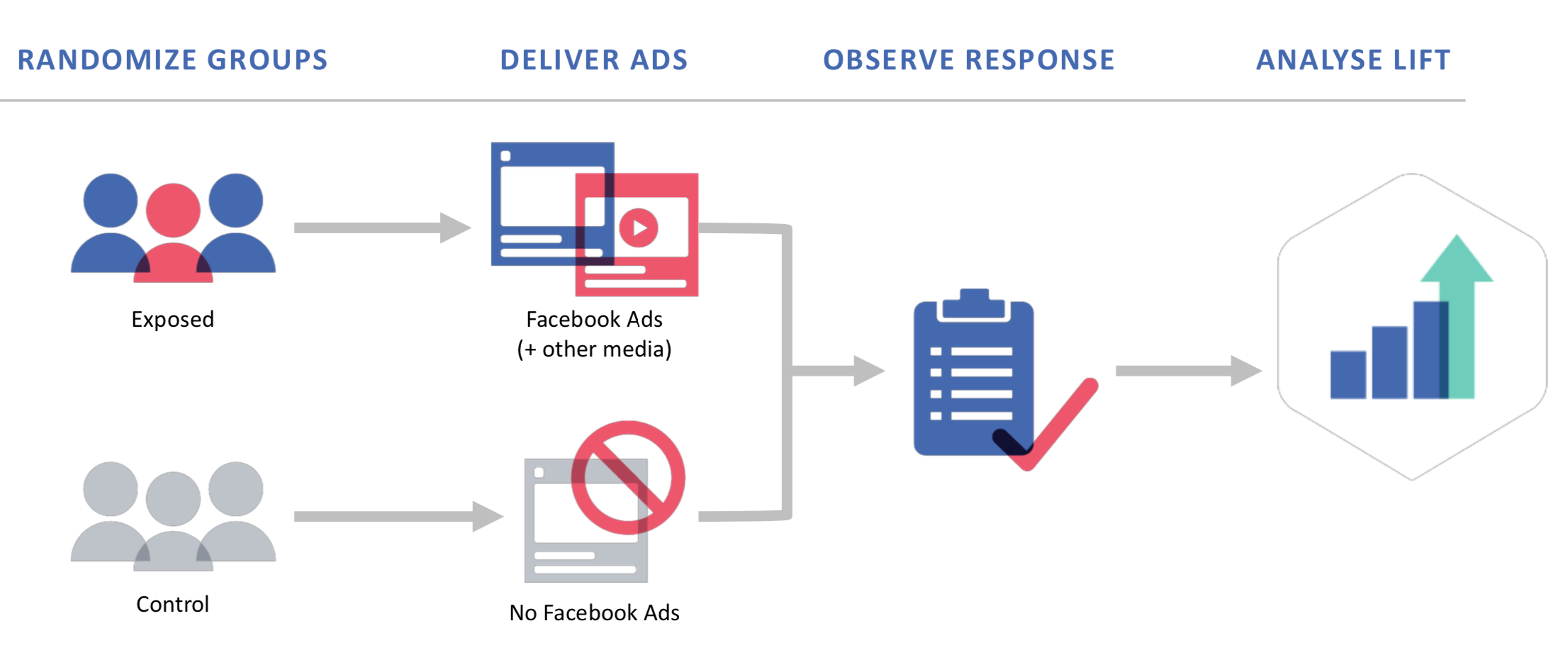
Do you want to know what real value advertising on Facebook generates for your brand? Through the study of improvement of the brand or Facebook’s Brand Lift we will be able to solve this question. But, what exactly is Facebook’s Brand Lift? The study of improvement of the brand or Facebook’s Brand Lift is a study through which we will know the real value that our advertising generates on Facebook in terms of notoriety and recognition of the brand in the market. It is very important that you work this hand in hand with your Facebook partner manager in order to configure it correctly, since the configuration of the study is carried out by the Facebook marketing team. The study can be done through a single advertising campaign or all the active campaigns of the account. They all have to have a common message and graphic so as not to confuse the user and thus contaminate the study. Facebook will launch our advertising dividing the audience into two parts: test group (who will show the ads) and control group (who will not see our ads). Once our audience is divided and the campaign starts serving impressions, Facebook will show both groups survey questions that we will have predefined based on ad recall, brand recognition, and our campaign/brand message association.

Type of questions to choose for the Brand Lift

Brand lift brand studies are prepared with 3 questions that you will have to select and adapt depending on your objective based on a template with different options and topics discussed above: ad memory, brand recognition and association of the message of our campaign/brand. Below we see an example of 3 questions that we could configure in a Brand Lift:

  1. Ad reminder: “Do you remember seeing an ad for [brand / product] online or on a mobile device in the last 2 days?” (This question is required)
  2. Brand awareness: “Have you heard of [brand / product]?”
  3. Reminder message: “What [brand / product] do you associate message X with?”


What are the minimum requirements?

The minimum necessary to carry out the study with the public in Spain (if it is carried out for other markets you will have to fulfill other minimum requirements) are the following:

  • Minimum reach of 2 million people
  • 7 million impressions.
  • 3 weeks duration (4 recommended)

The study itself is free, but to be statistically relevant it needs a minimal budget. The best way to calculate this minimum budget is to use the Campaign Planner.  

What results will I receive with Brand Lift?

Initial results will become available once the surveys have received 250 responses. Once the study is finished, and after ten business days, we will receive a presentation with the complete results. This report will include:

  • The general results, study and details of the campaign
  • A demographic breakdown of the results
  • Benchmarks for campaigns in the client’s industry and region where the study was conducted
  • Tips to optimize it
  • Breakdown of winning responses

In summary, results compared by audiences and knowing if there is an increase with the test group or not. In many cases, the budget that you are already dedicating to your campaigns is enough to carry out the study, so do not stop proposing it due to the investment, since it is very valuable when it comes to knowing the status of the brand in the market and identify new business strategies for the future.

Consent Mode: Google’s new solution to continue measuring conversions while respecting the consent rules

Consent Mode: Google’s new solution to continue measuring conversions while respecting the consent rules
The need to ask the user for express consent before installing cookies on their browser may lead to the loss of conversion measurement for those users who reject this consent. Google, with its new “Consent Mode” functionality, seeks to mitigate this impact. Therefore, it is important that we know how it works. Consent Mode focuses on two types of consent; analytics and advertising personalization. Introducing two new variables, ad_storage and analytics_storage in the configuration, allows you to inform your tags (Google Analytics, GMP and Google Ads) of the status of the user’s consent, adjusting their behavior accordingly. It should be clarified that Consent Mode is not a CMP (Consent Management Platform), but complements the system or solution that is installed to collect the consent of the users. The tags will always be executed, regardless of whether you have the consent of the user or not. The real change comes in the information they collect: If the user has given their consent, the tag will be executed normally, while if they have rejected it, the tag will be executed without collecting or sending cookie information. In this way, it is possible to continue having a basic and aggregated measurement instead of completely losing this information. With the information collected from users who have accepted consent, Google platforms will also be able to model conversions for those users who have not accepted it. Currently, this modeling is not active but it is planned in your roadmap. An additional functionality that can be activated with Consent Mode is the so-called “URL Passthrough”. This option will allow you to send the identifier of the click in the url to be able to continue associating it with a conversion in the absence of cookies. The implementation requires that you are using GTM or gtag, and consists of the inclusion of some lines of code for the configuration. If you want more information on this specific topic, do not hesitate to contact us. On the other hand, to facilitate the process, some CMPs (Consent Management Platforms) such as Cookiebot or OneTrust, among others, already have direct integration developed and facilitate activation. To end this article and summarizing the previous points:

  • Consent Mode arises from the need to comply with the user’s consent without completely losing the measurement. Such a basic and necessary element to allow us to analyze, improve and optimize the activation of advertising.
  • It is currently a beta tool that continues to be developed and will progressively include more features and options, such as the conversion modeling mentioned above.

If you want to know more about Consent Mode, don’t hesitate to contact Making Science and our experts.

How to boost your campaigns thanks to programmatic advertising this Black Friday

How to boost your campaigns thanks to programmatic advertising this Black Friday
With the arrival of November, the final stretch begins for many companies. One of the most important dates for consumption is Christmas, and it is time to give that last push to close the year. The Christmas feeling floods us and we want to buy gifts for our loved ones and why not, also for ourselves. The Christmas shopping season begins long before the arrival of Santa Claus and a date has been imposed on our calendars for a few years now: Black Friday. But, what will Black Friday bring us this year? In principle, everything seems to indicate that purchases will be increasingly online to the detriment of the physical store. Throughout this year we have been able to see how online commerce increased, mainly motivated by restrictions on mobility and fear due to the pandemic. Everything seems to indicate that this trend will continue during the Christmas season. If we focus on the imminent Black Friday, Google has made an X-ray of the current consumer and defines it as a connected, far-sighted and prudent user. Not only are users going to prioritize digital channels when making their purchases this Black Friday, but the search for gifts will also do so in the digital medium. In addition, if we take into account that only 7% of consumers have already decided what they are going to spend their money on during Black Friday, we can conclude that brands must reinforce their digital media strategies, they still have time to convince that indecisive user and the competition this year will be more brutal than ever. Faced with this situation, programmatic advertising is presented as a perfect tool to reach the right audience and stand out from the competition during these dates. Thanks to automation and the purchase of spaces in real time, programmatic purchase allows you to define messages based on the user and the moment they are within the conversion funnel. In order to properly plan our programmatic campaigns in the weeks leading up to Black Friday, it is important to take into account certain aspects in order to successfully achieve our goals.

  • Accurate and relevant segmentations The audience must be the central point of all our strategy. Defining our audiences correctly will allow us to reach a user interested in our offer. Audiences should be large enough to have great impact and reach, but they should be relevant. Thanks to the study and analysis of our users, it will allow us to identify affinities that we can later activate. This will optimize the resources of the campaign and impact the user with content related to their interests, which will make our advertising campaigns more user-friendly and the user will feel more receptive to them.


  • Personalize the message by taking advantage of First Party Data Users will show a more favorable response to personalized messages than to more generic messages. We must take advantage of the potential of all 1st party data and launch specific campaigns for users based on their status and how close they are to converting. For this we can create differentiated messages depending on whether they have only visited the product page of our website, abandoned the shopping cart or stayed in the last step before confirming the sale. In addition, we can activate dynamic creatives that are built from the data collected by the variables of the Floodlights in order to impact the user with personalized creatives about the specific product or service in which they have been interested.


  • Optimize the purchase The Christmas shopping season is one of the times in which brands invest more budget and demand a greater volume of inventory from media, so CPMs tend to be higher than the rest of the year. Adjust your CPM enough to maintain a valuable inventory and a good user experience, but bid more aggressively on those strategies that give you the best results. In addition, it may be interesting to close some PMP with premium supports for those most important campaigns, you can ensure that you have sufficient inventory available to bid on.


  • Don’t forget about creativity Considering the high level of competition during these dates, creativity is more important than ever. The idea is to stand out and differentiate ourselves from the competition. It is essential to design creatives that are eye-catching, with a message focused on our audience and a clear and direct call to action (CTA). We must have different versions depending on where the user is in the conversion funnel. In addition, incorporating notorious formats such as video, audio or skins will allow us to generate storytelling and reinforce our branding campaigns, making a difference compared to the competition.


  • Plan your campaign in advance and anticipate yourself Users begin to investigate their purchases in the previous weeks and many of them already close their purchases a few days before, so it is essential to have our campaign planned well in advance to be able to activate a few weeks before Black Friday , the competition will not wait.

  The entire programmatic strategy during the Black Friday campaign, in addition to helping us increase and achieve our sales goals, will bring us other benefits such as the generation of new traffic to the web, which will allow the user to know our products and services and it will end up being translated into the generation of new leads, subscribers and potential new clients. Last but not least, all of our actions will allow us to feed our audiences with new users to increase and refresh their volume for our retargeting strategies and future campaigns. We cannot forget that after the Christmas campaign, the sales season begins and taking advantage of these audiences will be essential in order to achieve all our objectives.