
Beyond the Hype: Nick Waters´ Perspective on OMR 2025’s Biggest Trends

The Online Marketing Rockstars (OMR) festival in Hamburg is a key event for the digital marketing industry, drawing a vast and diverse crowd. After two days immersed in this dynamic environment, Nick Waters, Global CEO of Northern Europe at Making Science, reflected on the current state and future trajectory of digital marketing.

1. The Sheer Scale of Digital Marketing

OMR’s sheer scale is a spectacle in itself. It gathers everyone from industry giants to niche innovators and highlights the immense size and vitality of the digital marketing arena.

2. Navigating the Complex Vendor Landscape

The OMR exhibition floor can feel like a walk through the intricate LUMA Partners landscape. A plethora of vendors offer seemingly similar solutions: real-time insights for better decision-making, omnichannel attribution, data visualization, privacy solutions, and automated content creation. This raises a critical question for brands: How much real differentiation exists, and how can they identify the solutions that truly deliver unique value?

3. The Indispensable Role of Human Expertise

These observations underscore a crucial point: In an increasingly automated world, expert advisors are more important than ever. At Making Science, we believe that smart humans, with their strategic thinking, creative insight, and nuanced understanding, are the true differentiators in helping brands navigate this complexity and achieve their business goals.

4. The AI Tsunami is Here

Artificial intelligence is no longer a future trend; it’s a present reality, poised to disrupt the entire marketing services ecosystem. An “AI tsunami” is on the horizon, and businesses that are unprepared or underprepared risk being swept aside by its transformative power.

5. The Evolving Definition of Commerce

OMR showcased a strong emphasis on “commerce” related offerings, yet the discussion around “retail media” seemed relatively muted. This prompts questions about whether the concept of “retail media” is being repackaged, redefined, or integrated into a broader commerce narrative.

6. The Untapped Potential of Streaming TV

Streaming TV’s commercial presence in Europe still lags behind its adoption in the US, suggesting a significant growth opportunity. As viewing habits continue to shift, this channel is poised to become an increasingly important component of the marketing mix.

7. Agency Presence and the Question of ROI

The limited presence of traditional agencies at OMR is a notable observation. The high cost of participation likely leads to a critical evaluation of return on investment, forcing agencies to prioritize their event strategies.

8. The Inevitable Amplification of the AI Conversation

Looking ahead, Waters predicts that the focus on AI will only intensify. The “AI noise” will be even louder at upcoming events like Cannes and reach a crescendo at OMR 2026, demanding that the industry move beyond hype to practical application.

Conclusion: Embracing Change and Prioritizing Expertise

OMR 2025 served as a powerful reminder of the dynamic and rapidly evolving nature of digital marketing. As Nick Waters’ reflections highlight, the industry faces both immense opportunities and significant challenges. At Making Science, we believe that success in this environment requires a combination of embracing technological innovation, particularly in AI, and prioritizing human expertise. By staying ahead of the curve and providing our clients with strategic guidance, we empower them to navigate complexity, capitalize on emerging trends, and achieve sustainable growth.
Ebiquity Group CEO departs and joins Making Science as CEO for the UK, Northern & Central Europe

  • Nick Waters will lead strategic growth in the region, strengthening Making Science’s position as a disruptive leader in the European market.

London, November 19th 2024: Making Science, a leading digital acceleration company specialising in data, artificial intelligence, and proprietary ad tech technologies, has announced the appointment of  Nick Waters as CEO for the UK, Northern and Central Europe.  Based in London, with extensive experience in business leadership and the technology market, Waters will be responsible for driving the company’s growth and expansion across Europe.  

Due to take up the role in February 2025, Waters brings over 20 years of experience in international media, digital, and advertising. He joins Making Science from Ebiquity Plc, where he was Group Chief Executive Officer. Before that, he spent 10 years at Dentsu Aegis Network – latterly as Executive Chairman UK & Ireland, and 12 years at Mindshare, rising to regional CEO of Europe,  Middle East, and Africa.

Commenting on Waters’ appointment, José Antonio Martínez Aguilar, Founder and Global CEO of Making Science, said, “We’re thrilled to have Nick on board as a driving force for the UK, Northern and Central European regions at a time of significant growth as an independent agency. His experience will be crucial for strategically advancing the continued development of Making Science in these markets.

”Waters’ appointment comes as the industry is experiencing a dynamic shift, prompting talent from the traditional big six agencies to explore new opportunities at independent agencies, such as Making Science. Offering agility, innovation, and client-centric focus, independent agencies are increasingly recognised as the preferred choice for brands seeking to provide cutting-edge solutions and drive unparalleled performance.

Waters commented, “Making Science is an incredibly exciting digital acceleration company, and this is a tremendous opportunity to join José and his team as the business enters the next phase of its global growth journey. 

As a company built for today’s and tomorrow’s marketing world backed by a brilliant team applying data science and artificial intelligence, Making Science turbo-charges competitive advantage for brands and I look forward to being involved.”

Waters’ appointment follows the announcement of Marcus Cooper as Business Director, UK, Brad Beiter as SVP of Customer Management, and José Luis Pulpón, (ex Google) as Managing Director for Making Science, Spain. These strategic hires play a vital role in Making Science’s global expansion to ensure the delivery of cutting-edge digital transformation solutions for its clients across industries. 


From listening to action: how brands can learn from their users

Spaniards spend an average of nearly two hours a day on social media*. But what exactly are we doing during that time?

For older generations like Gen X and Baby Boomers, social media is primarily a way to stay connected with friends and family. Meanwhile, Gen Z and Millennials are more likely to use these platforms to keep up with current events, engage with content like memes and videos, and create their own posts. While each generation has its own preferences, behaviors, and concerns, they all share one common trend: we are spending more and more time online.

For brands, understanding the audience is critical to ensure that marketing efforts reach the right people. In today’s fast-paced, ever-evolving digital landscape, simply reaching an audience is no longer enough—brands need to make an impact.

How can brands achieve this?

It’s not just about knowing who the audience is, but about understanding how to connect with them: what they enjoy, where they spend time online, what concerns them, and the communication styles they use.

To gain this insight, brands have access to powerful tools that help them analyze everything from a user’s age and profession to their daily habits and activities. Additionally, social listening platforms allow brands to track real-time user interactions and responses across social networks and digital channels.

But how can brands make the most of this information?

The answer lies in engaging with users where they are and tapping into conversations that resonate with their interests. This is a golden opportunity for brands to become more relevant by joining discussions that matter to their audience.

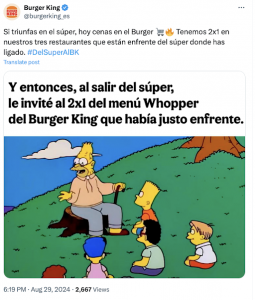
A key strategy is to adapt to the unique communication styles of each platform while maintaining the brand’s voice. For example, memes have become a staple of online culture, and tapping into their viral potential is an effective way to increase brand visibility—though it requires quick action, as trends rise and fall rapidly. Social listening tools can identify trending content, allowing brands to adjust their messaging and boost engagement by fostering a more active and personalized online community.

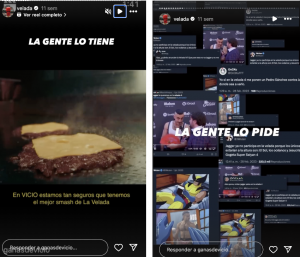
Speed is another essential factor. Reacting quickly to social media trends and events can amplify a brand’s impact. A prime example is “La Velada del Año,” the most-watched digital event on Twitch, which peaked at over 4 million viewers and proved that this platform isn’t just for niche audiences. With nearly half a million social media mentions, many brands, like Vicio, capitalized on the event by listening closely to what their audience wanted, breaking records for new followers and engagement.

In short, social listening not only helps brands understand user needs and preferences but also provides valuable insights for developing marketing strategies. It reveals how competitors are engaging with their audiences, uncovers user perceptions and demands, and highlights opportunities to join relevant conversations.

So, are you making the most of social media to build meaningful relationships with your target audience?

*Source: GWI Spain (16-64 years)

What news does Facebook and Instagram bring for 2021?

What news does Facebook and Instagram bring for 2021?
The end of this 2020 is approaching. A year in which surely we have all had to modify the vast majority of the plans that we had made due to Covid-19. The same goes for the advertising strategies of advertisers. It is time to adapt to the circumstances and make the most of the tools we have to carry out good marketing and advertising campaigns. But before considering the strategy that we are going to follow in 2021, we must have something very important: the tools we use are constantly changing, and they are adapting to the times and changes so, what was a good recommendation yesterday, can not be today. In this article we will talk about the changes and updates that we can observe specifically on Facebook and Instagram, and that will be noticed at the end of 2020 and the beginning of 2021.  

Goodbye to the 20% rule

The 20% rule is something that regulars of the Business Manager platform has haunted us for years. On many occasions, we wanted to provide information in a creative, and we had to limit it due to this restriction, since the ad could be rejected or have a much lower performance. Currently, Facebook is eliminating this restriction and, although it is recommended to keep the text below 20%, there will be more freedom when developing the creatives with which we are going to impact the audience.  

What’s new in Instagram?

Instagram has received its own facelift in recent months. With the experimental removal of “like” counts on a post, some people are theorizing the total removal of the “like” feature. Although this has yet to be confirmed, it is just another addition to the changing landscape of social media. Instagram has also revealed new tools that advertisers can use. ‘Reels’ is the new way for brands to share minute-long videos that are in a separate feed than normal. It was created to compete with TikTok, a platform that gained popularity at the beginning of the COVID-19 pandemic. ‘Guides’, however, is not a competitive addition to the app, but rather a unique Instagram feature that allows brands to attach extended and exclusive content to their video posts. With these types of updates, Facebook and Instagram make it clear that they are platforms that can not only make flexible changes in their environment with ease, but also keep up to date to adapt very quickly to marketing trends.  

Ad limit per page

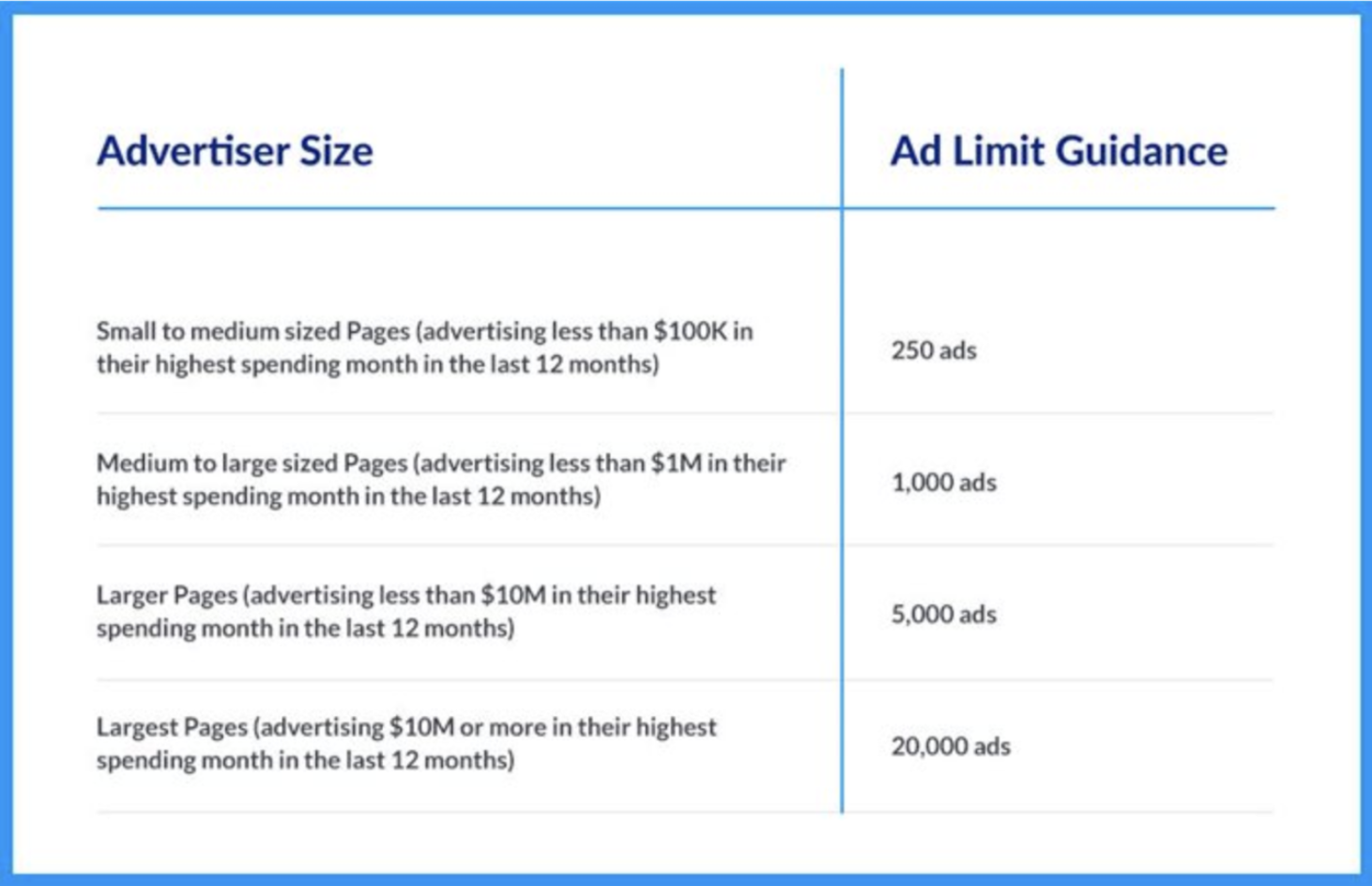
Last year, Facebook announced a new restriction on the number of campaigns that a page can run at the same time. The idea behind this update is that quality should outweigh quantity. There is a common misconception that high ad volume means higher traffic or better performance. However, the goal that Facebook tells us is to create personalized content that has a significant impact on the intended audience. Thanks to Facebook’s predictive model, only people who are genuinely interested in the brand will see your ad for its duration. This limitation will depend on the advertising investment of the account, since it is normal that with higher advertising investments, there is a greater number of active advertising ads.  

Limited access to data with iOS 14

The latest update to iOS 14 was released in September 2020 and allows Facebook and Instagram users to voluntarily choose to participate or not participate in data collection within these applications. This is part of a larger effort being made with the protection of user data. By choosing not to participate in data collection, some of the members of the Facebook and Instagram audiences will no longer be available for targeted or retargeted advertising campaigns based on their actions. Due to this increase in anonymous data, we must find new ways to deliver relevant ads to specific audiences in order to get positive results on ad performance. With this update, it will be particularly important to keep a close eye on your campaigns to quickly make adjustments if necessary.  

Elimination of 28-day conversion interval

Although this update went into effect on October 12, many advertisers are still unaware of it. This metric allows advertisers to measure the conversions that are achieved with the campaigns and can now only be done for 1 and 7 days. This change has an almost immediate consequence: from now on there will be purchases made in that period that goes from the 7th to the 28th from the moment the user clicks on a Facebook ad that will remain unaccounted for, so the number of conversions achieved with these campaigns will go down. Facebook is reacting to the changes that Google will make in relation to third-party cookies, which will be obsolete by 2022.   The bottom line from all of this is that, as marketers, it is important to stay up-to-date and be aware of the latest and greatest tools on offer, as only then we can make the most of the marketing strategies we propose for 2021.

Making Science bets on France and Italy in its international expansion

Making Science bets on France and Italy in its international expansion
Making Science, the integrated marketing and technology consultancy, has announced the opening of offices in France, recently opened in a central area of Paris, and Italy, to be opened in January 2020. The company is seeking to position itself as a leading international consultancy in eCommerce, AdTech and MarTech. As Carlo Baratti, Making Science’s director of international development, says: “Our comprehensive service and our broad expertise will allow us to bring a unique offering to these new markets. We will maintain our business model, as it has demonstrated its strength and potential for growth, and we will adjust it to the demands of each country.” In the words of José Antonio Martínez Aguilar, CEO of Making Science, “Our expansion strategy is focusing initially on France and Italy, but its aim is to expand, over a period of five years, to the 20 most important advertising markets in the world, most notably the USA, China, Japan, the UK and Brazil”. Making Science will export its eCommerce services, including its NILO and Unifeedr platforms, to France and Italy, as well as its MarTech services, such as First Party Data, Gauss AI, Cloud 4 Marketing. Thanks to the internationalisation of its AdTech services, the consultancy will offer, among others, Ad Serving, Search and Tag Management, On-site Analytics and Display Buying services in those markets, over Google Marketing Platform. The consultancy also has various Google certifications, notably including: Google Analytics Services Partner and Google Analytics Sales Partner, as well as Google Optimize Services Partner, Google Optimize Sales Partner and Google Comparison Shopping Site.

Carlo Baratti, New Director of International Development of Making Science

Carlo Baratti, New Director of International Development of Making Science
Madrid, October 28, 2019.- Making Science, a company of integral solutions for the digital business based on data, has appointed Carlo Baratti as the new Director of International Development of Making Science. Carlo has more than 15 years of experience in the area of ​​marketing and sales in  companies with a deep digital focus, such as Criteo, TagCommander, Google, and Algolia. “I am delighted to be part of the Making Science team, a company that is experiencing a great moment of growth and that gives me the opportunity to face great challenges. I believe in its potential and face this new stage with enthusiasm, since I hope it will allow me to be part of the expansion of a brand that is already a benchmark in the Spanish market” said Carlo Baratti, new Director of International Development. Carlo Baratti has a double master’s degree in International Management and Economics, from the University of Economics and Business in Pavia (Italy) and has a Master in Marketing and Sales from the Ecole de Management Strasbourg (IECS). He began his professional career at the Fleet Management Fraikin Company, where he spent more than five years in various marketing positions, finishing his time in this company as Sales Director. In 2010, he entered as Sales Manager of Criteo for the Italian market. After this period, he began to lead the TagCommander team as Country Manager of Italy and Spain, when in 2016 he became part of Google Spain. During his period at Google, he directed the sales of Google Analytics 360 Suite in Iberia and was in charge of managing the commercial development strategy of Doubleclick & Google Analytics in France and Southern Europe. His extensive experience in international markets and his high specialization in sales strategy of technological products linked to digital marketing, adds to the talent already existing in Making Science to boost the company’s development in a highly competitive market.  

Making Science: Integration As a Growth Axis

Making Science is the result of the integration of the digital marketing agency MAKE Digital Marketing, the consultancy The Science of Digital, the creative agency Crepes & Texas and the technology solutions and services company i2TIC, which since its union in 2017 has experienced growth without precedents, marked by a business culture focused on the integration of various disciplines, the employee and innovation. The company is firmly committed to attracting talent, respect and teamwork as a method to create a unique work environment.