Learn more

The Death of the Control: Why Meta’s Andromeda is Killing the Standard A/B Test

Meta’s launch of the Andromeda retrieval algorithm has fundamentally altered the mechanics of the ad auction. For years, as marketers we relied on a “standard” test-and-learn process—changing one variable at a time—to find winners and optimise our ad creative. But in 2026, this slow, methodical approach is often the very thing preventing brands from scaling.

This blog post explores why traditional A/B testing is struggling to keep up with Meta’s new AI-driven reality.

In the world of digital marketing, the “Scientific Method” has long been our North Star. We were taught to isolate variables: one headline, one image, one audience. Change just one thing, and find the one optimal combination.

But as we move through 2026, that one optimal combination is becoming harder to find. With the full rollout of Meta’s Andromeda retrieval algorithm, the very nature of how ads are delivered has changed. We are no longer testing ads in a static environment; we are feeding a high-speed prediction engine that thrives on creative variety, not isolated volume.

What is Andromeda? The 10,000x Shift

Andromeda isn’t just a minor update; it’s a massive upgrade to Meta’s ads retrieval stage. Powered by NVIDIA’s GH200 chips, it is reportedly 100x faster at matching users to ads and can process 10,000x more ad variants in parallel than previous systems.

Previously, retrieval was a bottleneck. Meta had to narrow down millions of potential ads to a few dozen before truly “ranking” them for a user. Now, Andromeda allows the system to consider thousands of creative variations for every single person who opens Instagram or Facebook.

The Testing Paradox: Why Standard A/B Tests Fail

The “standard” test-and-learn process—changing only a headline or a single button color—is now too slow for three critical reasons:

  • The Problem of “Entity IDs”: Andromeda uses advanced computer vision to group similar-looking ads under a single Entity ID. If you test two ads with only minor tweaks, Meta’s AI may view them as the same asset and only give delivery to one, effectively “breaking” your fair test before it begins.
  • The Velocity of Trends: By the time a traditional 14-day A/B test concludes, the cultural trend or “hook” you were testing may have already peaked. Brands that win in 2026 are those that act like newsrooms, producing 50–100 ad variations per month rather than 5–10.
  • Forced Efficiency: When you run separate ad sets for a “fair” test, you fragment your budget and data signals. Andromeda performs best when it has a consolidated pool of budget to find the right person for the right creative in milliseconds.

Lean Into the Algorithm: From Testing to Discovery

Instead of trying to out-engineer the Meta algorithm with manual controls, modern marketers must pivot toward Creative Diversification.

Under the Andromeda framework, your content is your targeting. Each unique creative angle acts as a signal that pulls in a different audience segment.

To maximise results, you should lean on Meta’s automated features like Advantage+ Creative and Flexible Ad Formats. These tools allow Meta to automatically mix and match your headlines, descriptions, and media to find the combination that resonates with each specific individual.

In the Andromeda era, the goal has shifted from finding a single “optimum” ad to maintaining a state of complete creative variation. While we can still use historical performance data to identify winning themes—such as leaning into short, snappy headlines if they consistently drive volume—the key is to deploy those insights and iterate across diverse new concepts rather than simply duplicating a single winner.

The Bottom Line

The goal in 2026 is no longer to find a “winning ad” to scale indefinitely. It is to build a consistent creative pipeline that feeds Andromeda fresh signals every 7–14 days.

If we spend our time obsessing over a/b testing a single variable, we are underutilising an engine built for massive parallel processing. The goal is to stop testing for perfection and start testing for conceptual variety. Trust the algorithm to do the matching; our job is to give it the options it needs to win.

Clickless Advertising: How to Measure What Isn’t Touched (and Why You Should Start Now)

How do you measure the success of a campaign if no one clicks? In the new cookieless era, the answer is not only possible but essential.

Clickless advertising has gone from being a rarity to a priority for brands focused on brand recognition, mass reach, and effectiveness in environments where the click simply doesn’t exist. With the rise of channels like YouTube on Smart TVs, DOOH, digital audio, and CTV, it is time to move beyond models based solely on direct interaction.

In this post, we tell you what clickless advertising is, why it matters in 2025, and how you can measure it effectively with Google Marketing Platform (GMP) to demonstrate real results in campaigns where visual impact is worth more than the click.


What is Clickless Advertising and Why is It Gaining Ground?

Clickless advertising encompasses campaigns where the goal is not for the user to click, but for them to remember, recognize, and interact with the brand later on. This type of impact is generated in environments where direct interaction is not possible (or does not make sense):

  • YouTube on Connected TV
  • Spotify, podcasts, or programmatic audio
  • DOOH (Digital Out Of Home), such as digital billboards or screens in shopping centers
  • CTV (Connected TV)

With the progressive phasing out of third-party cookies and the increase in media consumption without a browser, measuring without clicks is no longer an option—it is a necessity.

According to Nielsen, 65% of offline sales are influenced by advertising without direct interaction.


GMP: Your Ally for Measuring What Cannot Be Clicked

The key is to adopt new measurement tools and methods based on aggregated data, modeling, and first-party data. This is where Google Marketing Platform shines as a comprehensive solution:

🎯 Campaign Manager 360: Measuring Impressions and Viewability CM360 allows you to track impressions, viewability, frequency, and cross-channel reach. It is the central hub for validating that your message has reached the right audience.

🧠 Google Analytics 4: Behavior After Exposure Even without clicks, GA4 helps analyze user behavior after viewing an ad: direct traffic, brand searches, completed forms, etc. Thanks to its advanced attribution models, it compensates for the lack of cookies and protects privacy.

🔗 Integrated Platform: GMP as an Ecosystem The combination of CM360 + GA4 + DV360 + SA360 allows for a holistic view of campaign performance, uniting awareness and performance metrics under one umbrella.


Strategies That Work (Even if No One Clicks)

🧪 Brand Lift and Brand Awareness Use studies like YouTube Brand Lift or post-exposure surveys to measure ad recall, consideration, or purchase intent.

🗺️ Geo-testing and Incrementality Compare exposed and unexposed regions with tools like GeoLift to evaluate the real impact on searches or sales.

👤 First-Party Data and Indirect Signals Analyze direct traffic, brand searches, and completed forms after exposure. Supplement with user panels or surveys.

🔒 Consent Mode v2 and Conversion Modeling Even without cookies, you can estimate conversions with modeling and platforms like Ads Data Hub, ensuring compliance with privacy regulations.


Real-Life Cases That Prove It

  • YouTube on CTV: Campaigns with a +20% brand recall, without clicks or calls to action.
  • Spotify Ads: Direct correlation between full ad listens and peaks in brand searches.
  • DOOH in shopping centers: Increase in store visits (footfall) and geolocated sales following campaigns without digital interaction.


Conclusion: Measuring Without Clicks Is Not Only Possible, It Is Essential

In a cookieless world with increasingly dispersed consumers, clickless advertising represents the natural evolution of digital marketing. It is no longer just about chasing interactions, but about understanding the real impact of the message on the user’s mind and decisions.

GMP gives you the tools to do this with precision, respect for privacy, and an omnichannel approach.

And you, are you ready to measure without relying on the click? If you want to know how to implement this type of measurement in your strategy, let’s talk. Because the future of marketing is not measured in clicks, but in connections.

Beyond the Hype: Nick Waters´ Perspective on OMR 2025’s Biggest Trends

The Online Marketing Rockstars (OMR) festival in Hamburg is a key event for the digital marketing industry, drawing a vast and diverse crowd. After two days immersed in this dynamic environment, Nick Waters, Global CEO of Northern Europe at Making Science, reflected on the current state and future trajectory of digital marketing.

1. The Sheer Scale of Digital Marketing

OMR’s sheer scale is a spectacle in itself. It gathers everyone from industry giants to niche innovators and highlights the immense size and vitality of the digital marketing arena.

2. Navigating the Complex Vendor Landscape

The OMR exhibition floor can feel like a walk through the intricate LUMA Partners landscape. A plethora of vendors offer seemingly similar solutions: real-time insights for better decision-making, omnichannel attribution, data visualization, privacy solutions, and automated content creation. This raises a critical question for brands: How much real differentiation exists, and how can they identify the solutions that truly deliver unique value?

3. The Indispensable Role of Human Expertise

These observations underscore a crucial point: In an increasingly automated world, expert advisors are more important than ever. At Making Science, we believe that smart humans, with their strategic thinking, creative insight, and nuanced understanding, are the true differentiators in helping brands navigate this complexity and achieve their business goals.

4. The AI Tsunami is Here

Artificial intelligence is no longer a future trend; it’s a present reality, poised to disrupt the entire marketing services ecosystem. An “AI tsunami” is on the horizon, and businesses that are unprepared or underprepared risk being swept aside by its transformative power.

5. The Evolving Definition of Commerce

OMR showcased a strong emphasis on “commerce” related offerings, yet the discussion around “retail media” seemed relatively muted. This prompts questions about whether the concept of “retail media” is being repackaged, redefined, or integrated into a broader commerce narrative.

6. The Untapped Potential of Streaming TV

Streaming TV’s commercial presence in Europe still lags behind its adoption in the US, suggesting a significant growth opportunity. As viewing habits continue to shift, this channel is poised to become an increasingly important component of the marketing mix.

7. Agency Presence and the Question of ROI

The limited presence of traditional agencies at OMR is a notable observation. The high cost of participation likely leads to a critical evaluation of return on investment, forcing agencies to prioritize their event strategies.

8. The Inevitable Amplification of the AI Conversation

Looking ahead, Waters predicts that the focus on AI will only intensify. The “AI noise” will be even louder at upcoming events like Cannes and reach a crescendo at OMR 2026, demanding that the industry move beyond hype to practical application.

Conclusion: Embracing Change and Prioritizing Expertise

OMR 2025 served as a powerful reminder of the dynamic and rapidly evolving nature of digital marketing. As Nick Waters’ reflections highlight, the industry faces both immense opportunities and significant challenges. At Making Science, we believe that success in this environment requires a combination of embracing technological innovation, particularly in AI, and prioritizing human expertise. By staying ahead of the curve and providing our clients with strategic guidance, we empower them to navigate complexity, capitalize on emerging trends, and achieve sustainable growth.

From listening to action: how brands can learn from their users

Spaniards spend an average of nearly two hours a day on social media*. But what exactly are we doing during that time?

For older generations like Gen X and Baby Boomers, social media is primarily a way to stay connected with friends and family. Meanwhile, Gen Z and Millennials are more likely to use these platforms to keep up with current events, engage with content like memes and videos, and create their own posts. While each generation has its own preferences, behaviors, and concerns, they all share one common trend: we are spending more and more time online.

For brands, understanding the audience is critical to ensure that marketing efforts reach the right people. In today’s fast-paced, ever-evolving digital landscape, simply reaching an audience is no longer enough—brands need to make an impact.

How can brands achieve this?

It’s not just about knowing who the audience is, but about understanding how to connect with them: what they enjoy, where they spend time online, what concerns them, and the communication styles they use.

To gain this insight, brands have access to powerful tools that help them analyze everything from a user’s age and profession to their daily habits and activities. Additionally, social listening platforms allow brands to track real-time user interactions and responses across social networks and digital channels.

But how can brands make the most of this information?

The answer lies in engaging with users where they are and tapping into conversations that resonate with their interests. This is a golden opportunity for brands to become more relevant by joining discussions that matter to their audience.

A key strategy is to adapt to the unique communication styles of each platform while maintaining the brand’s voice. For example, memes have become a staple of online culture, and tapping into their viral potential is an effective way to increase brand visibility—though it requires quick action, as trends rise and fall rapidly. Social listening tools can identify trending content, allowing brands to adjust their messaging and boost engagement by fostering a more active and personalized online community.

Speed is another essential factor. Reacting quickly to social media trends and events can amplify a brand’s impact. A prime example is “La Velada del Año,” the most-watched digital event on Twitch, which peaked at over 4 million viewers and proved that this platform isn’t just for niche audiences. With nearly half a million social media mentions, many brands, like Vicio, capitalized on the event by listening closely to what their audience wanted, breaking records for new followers and engagement.

In short, social listening not only helps brands understand user needs and preferences but also provides valuable insights for developing marketing strategies. It reveals how competitors are engaging with their audiences, uncovers user perceptions and demands, and highlights opportunities to join relevant conversations.

So, are you making the most of social media to build meaningful relationships with your target audience?

*Source: GWI Spain (16-64 years)

Embracing First-Party Data: The Key to Digital Marketing Success

As we navigate through 2024, marketers face an increasingly complex challenge: effectively optimising first-party data (1PD) amidst the evolving landscape of third-party data (3PD). Once a cornerstone of digital marketing, 3PD is now undergoing a profound transformation. With tightening regulations, growing consumer demand for data privacy, and the deprecation of third-party cookies, the quality of external data is diminishing. This shift marks a critical turning point where 3PD is merely the icing on the cake, and 1PD becomes the essential base.

In this evolving landscape, brands must ask themselves how to secure a significant slice of the 1PD pie. Those who leverage innovative solutions to create more personalised, relevant experiences will drive higher returns on investment and gain a competitive edge.

The Rise of First-Party Data

Our expert report together with Performance Marketing World emphasises the importance of utilising artificial intelligence (AI), generative AI, and automated solutions to unlock the full potential of performance marketing campaigns. Alarmingly, many organisations currently adopt a passive 1PD strategy, opting to wait and see what others do. This approach, however, can be detrimental.

Rodney Perry, Head of Data & Analytics at Making Science UK, warns, “By doing nothing, brands’ marketing strategies are moving backwards, and the effectiveness of campaigns will decline. Embracing and understanding the impacts of 1PD early provides a competitive advantage.”

Implementing a Successful 1PD Strategy

A successful 1PD strategy hinges on implementing automated solutions that deliver personalised experiences to each user. In today’s economic climate, first-party data offers a massive opportunity for leading brands to solidify their market position and for challengers to gain market share. However, optimising and automating marketing campaigns using 1PD often requires expert support.

Partnering with an agency that combines marketing knowledge with innovative technology solutions is crucial. Advertising-first companies play a key role in building brand awareness, understanding customers, and adapting communication across channels. Their expertise in creating effective communication strategies, engaging content, and managing campaigns is invaluable.

The Power of Technology

Technology is the differentiator in the current market. At Making Science, the integration of adtech with advertising expertise allows for the full utilisation of technology, identifying limitations, and developing solutions to overcome them. This enables brands to analyse large volumes of data, generate insights, and create customised solutions that adapt to the changing needs of customers and partners, providing a comprehensive view of the digital ecosystem.

Digital campaign success relies on a smart 1PD strategy, which in turn relies on the collaboration between marketing expertise and advanced technology solutions, particularly AI and generative AI. Combining marketing and technology, Making Science aims to make investments more efficient, maximise the use of data, and gain a competitive advantage in the digital market.

Conclusion

In summary, the shift towards first-party data in 2024 presents both a challenge and an opportunity for marketers. Those who proactively implement automated, AI-driven solutions to optimise their 1PD will be better positioned to deliver personalised experiences, drive ROI, and secure a competitive edge. Embracing this change early is key to future-proofing digital marketing strategies and achieving long-term success.

Download our expert report together with Performance Marketing World to learn more about first-party data and how automated solutions can transform your performance marketing.

[button color=”accent-color” hover_text_color_override=”#fff” size=”large” url=”https://insight.performancemarketingworld.com/how-automated-solutions-can-transform-your-performance-marketing” text=”Download the expert report!” color_override=”#ff0067″]

Third-party cookie deprecation is not the end of third-party data

With the deprecation of third-party cookies, there will be less third-party data available, but first-party data is also getting worse – meaning quality third-party data is more important than ever for the success of data strategies in the future.

Google’s Privacy Sandbox is starting to be tested on 1% of users. Third-party cookies are now destined to disappear, but whether Google can maintain the timelines remains to be seen.

With the deprecation, the importance of first-party data strategies continues to be the most crucial aspect of a measurement strategy. However, the limiting factor has always been effort, meaning the use of vast amounts of third-party data collected by the tech giants was easier to collect than doing it yourself.

Times are changing, third-party cookies are slowly being deprecated across all browsers, and greater privacy and technological restrictions are being enforced, restricting what data can be collected. Furthermore, this final point has a major impact on first-party data – not only is the volume of third-party data greatly reduced, but the quality is also decreasing. To overcome this problem, modelling and aggregated bidding strategies are being used.

This limitation of first-party data is more pronounced on upper funnel activities and sites where logging in and identification are not essential. Third-party data is even more important in these cases as we are looking for contextual data that may have influenced a customer’s purchase decision. For example, knowing the ideal time to sell an umbrella is when it starts to rain. Good first-party data is not needed to optimise bidding in this case, but accurate and timely third-party weather data is.

When it comes to looking for good third-party data sources, it is important to consider what influences the decisions of users in each case – are you a retailer or travel agent influenced by rainy days, or a financial service affected by interest rates and exchange rates? 

There are so many good third-party data sources available that it is worth taking the time to determine which can efficiently and effectively be incorporated into your measurement strategy. To name a few useful third-party data sources:

  • Weather data
  • Location data (e.g. store locations, proximity to services, etc.)
  • Events data (e.g. a concert, a football match, etc.)
  • Search data (e.g. Google Search Console or Google Trends)
  • Financial data (e.g. interest rates)

Incorporating these data sources into a measurement strategy is only the first step. The second is integrating it into data collection and activation. During upper funnel and display activity, solutions such as BrandMax can optimise your custom bidding algorithms to improve CPM.

In 2024, a blended data strategy will remain crucial for businesses. A company that focuses solely on a first-party data strategy is limiting themselves compared to organisations with a diverse approach are able to activate their first-party data effectively as well as find and use relevant third-party data in data-sparse environments.

Lifetime Value (LTV) in GA4: Analysis and Reports

Today, let’s dive into Customer Lifetime Value (LTV), a critical metric for evaluating user behaviour and value. We’ve broached this topic before, but today we’ll focus on utilising LTV in Google Analytics 4 (GA4) to maximise its potential.

LTV serves as both a measure to calculate a customer’s economic value and a strategy for customer management. Harnessing LTV aids us in multiple ways:

  1. Crafting retention and loyalty strategies: LTV tracks the customer journey from the point of conversion to the end of their lifecycle – when they cease being our customers.
  2. Driving active acquisition campaigns: These campaigns leverage predictive measures to forecast purchasing probability, churn rate, or higher average values per user purchase.
  3. Gaining unique user data: It provides a wealth of information, such as user interactions with our brand, their latest interaction or purchase, their last active moment, user ID-based deduplication, predictive metrics that learn from user behaviours, and more.

Continuous tracking and analysis of LTV over time enable us to detect trends and alterations in customer behaviour. This valuable insight allows us to refine strategies and make clear decisions to boost your business’s profitability and overall performance. And all this is made possible with Google Analytics 4.

However, when calculating LTV, we need to consider the following:

  • The calculation of LTV can fluctuate depending on the type of business and the industry sector. For instance, in sectors where recurring purchases are less frequent, like car sales, LTV is calculated over a longer period, perhaps several years.
  • It’s crucial to understand that there’s a limit to LTV because obtaining client data before August 15, 2020, is impossible.

Connection to Google Analytics (GA4)

Accessing Google Analytics (GA4) provides a powerful toolkit for analysing and understanding user behaviour. Along with LTV, GA4 furnishes invaluable insights into the customer journey, conversion events, audience segmentation, and much more, allowing a more comprehensive and detailed view of customer activity.
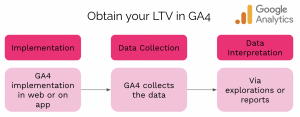
Graphic showing 3 steps to obtain Lifetime Value in GA4, including implementation, data collection, and data interpretation.

To access this rich data, we need a connection to GA4 from our website or app to collect and interpret them via explorations and reports.

Where to find the Lifetime Value reports in GA4
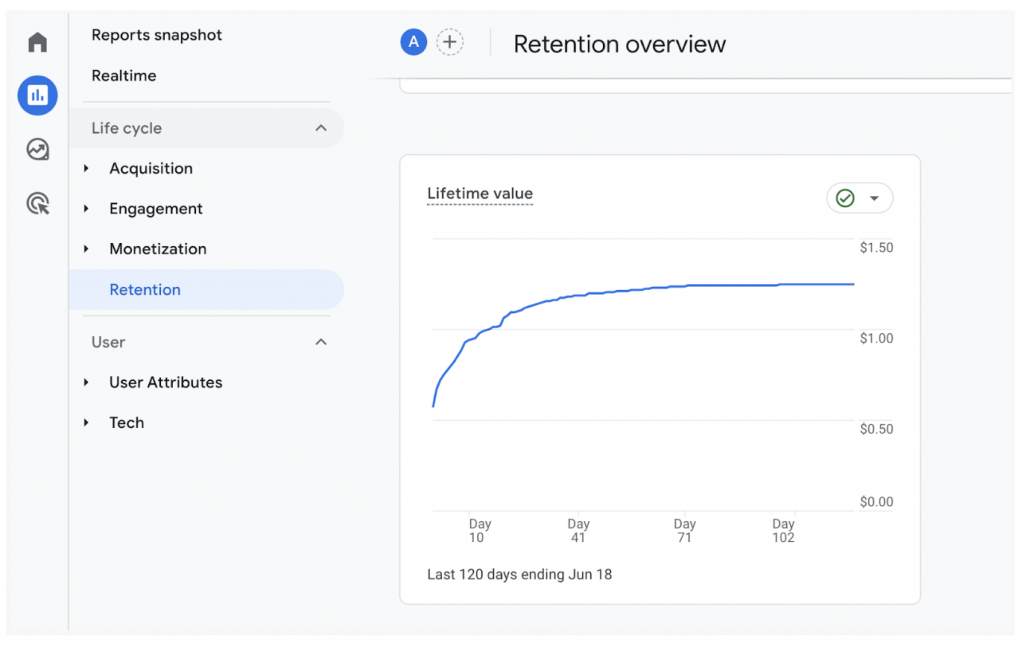
Screenshot showing where to find Lifetime Value reports in GA4, under reports snapshot via retention overview

You can find LTV reports in GA4 in various ways:

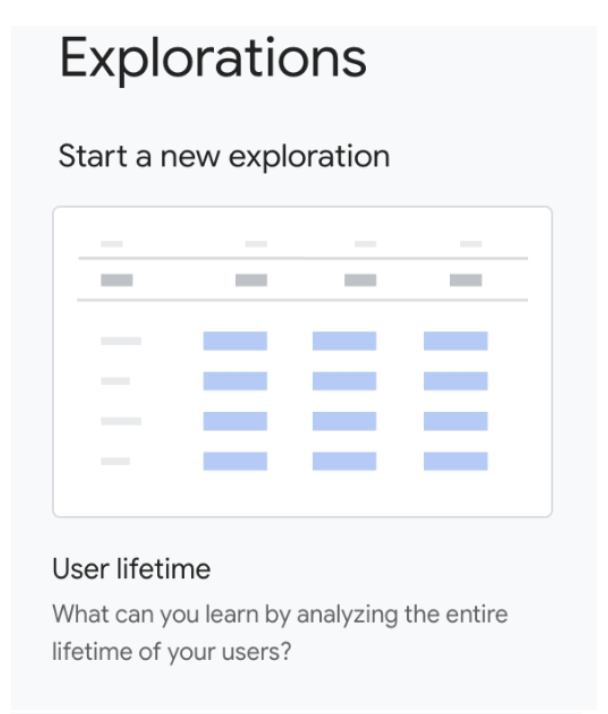
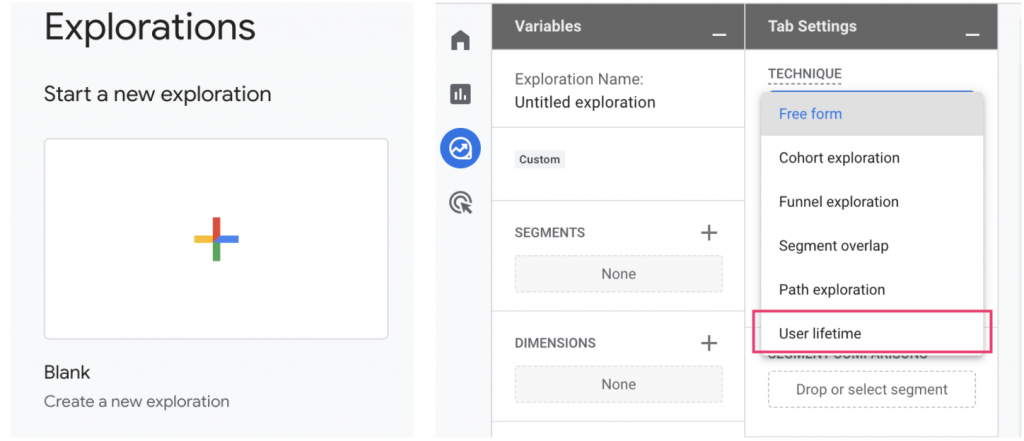
  • Directly starting a new exploration.
  • From a blank report.
  • By selecting Technique → User Lifetime.Image showing that under "start a new exploration", you can select "user lifetime" to see a report of user lifetime value.

Two methods for user identification and reporting

  1. User ID and device: This method employs more accurate data to identify the user and unify all related events in the reports and analysis. Analytics uses a device ID to identify the user if no user ID is collected.
  2. Device ID: It uses the device ID to identify the user via the client_id event of GA cookies for the web and the instance ID for the app.

At Making Science, we strongly recommend using the User ID option for more accurate results.

Are you eager to learn more about Conversion Rate Optimization (CRO), optimising the user journey, or simply analysing which tools are best suited for your business? Our team is ready to help. Don’t hesitate to reach out. 🚀

[button color=”accent-color” hover_text_color_override=”#fff” size=”large” url=”www.makingscience.co.uk/contact” text=”Contact our team of experts” color_override=”#f0076f”]

Or, check out our other Google Marketing Platform solutions.


Preserve your data with GA4! Discover the benefits of the platform.

In the constantly evolving digital landscape, data analysis plays a crucial role in understanding user behavior, optimising business strategies, and providing personalised experiences. Google Analytics 4 (GA4) is a revolutionary analytics platform that gives businesses advanced insights and a comprehensive understanding of their audience.

GA4 represents a paradigm shift in the field of data analysis, offering businesses a range of powerful features. Its unified data model, multi-platform tracking capabilities, machine learning-based insights, simplified analysis, and reporting, as well as powerful audience segmentation, make it a formidable tool for businesses seeking to fully understand their audience and optimise their digital strategies.

Here are some of the benefits of GA4:

Unified data model and event-based approach

GA4 presents a unified data model that goes beyond traditional page view tracking and focuses on events. With this event-focused approach, businesses can collect data from different touchpoints, such as app installations, in-app actions, interactions with the website, and many more. This provides a global view of user engagement. This unified data model eliminates the need for multiple tracking codes, simplifying implementation and enabling businesses to obtain information across different platforms seamlessly.

Enhanced analysis of the user journey

Understanding user behaviour and their journey across multiple devices and platforms has become more complex in today’s interconnected world. GA4 tackles this challenge by offering improved multi-platform tracking capabilities. By unifying data from websites and apps, it enables businesses to track users as they move from one device to another, thus developing a complete understanding of the customer journey. This feature allows businesses to optimise marketing efforts, identify conversion paths, and provide consistent experiences across different touchpoints.

Machine Learning-based insights

GA4 leverages the power of machine learning to provide valuable insights that go beyond basic metrics. GA4 enables businesses to discover hidden patterns, identify audience segments, and predict user behaviour by applying advanced analysis techniques, such as predictive modelling and clustering. This AI-based approach helps businesses make data-driven decisions, personalise marketing campaigns, and optimise their websites or apps to enhance user experience.

Simplified analysis and reporting

GA4 simplifies data analysis and report creation thanks to an intuitive interface and user-friendly reporting tools. The platform offers predefined templates and customised reports allowing businesses to visualise data, monitor key indicators, and track performance. The advanced exploration feature allows for in-depth analysis, enabling businesses to discover the information they need quickly. Plus, GA4’s integration with Google BigQuery facilitates the export of raw data for deeper analysis, meeting the needs of data-savvy organisations.

Powerful audience segmentation

GA4’s audiences offer more targeted segments for marketing campaigns. In the new version, GA4 allows you to create segments based on events and time. You can thus group your users based on interactions and the time elapsed between events rather than based on arbitrary device or platform categories. By focusing on these more powerful metrics, marketers can create precise audiences. They paint a valuable picture of your website users and how they engage with content. This creates endless opportunities to optimise conversions and sales.

Making Science is a Google partner; we rely on their tools as well as the power of the Google Analytics platform. From July 1, 2023, standard properties of Universal Analytics (UA) will stop processing data and will be replaced by Google Analytics 4 (GA4). If you have not already done so, switch to GA4 now, it’s important!

Adopting GA4 drives businesses towards data-driven success in an increasingly competitive digital landscape… Join the GA4 revolution with us today!

Contact us

What advantages does predictive analytics offer to your business?

In predictive analysis, an analyst collects and organises data, selects the most suitable mathematical model, and draws essential conclusions based on the results. In other words, predictive analysis uses mathematical modelling tools for decision-making about unknown facts, characteristics, or events.

Now, you might wonder, what advantages can this type of analytics have for my business? Below, I outline the benefits of predictive analytics to help you confidently embrace it.

Optimise decision-making capabilities

With predictive analysis, companies or organisations can discover patterns in customer purchasing or interaction behaviour, assess which methods promote or hinder the benefits of these patterns, and decide which measures to choose to improve the organisation’s success.

Strengthen risk management

Each sector faces a degree of risk in its daily operations. Proper risk management allows businesses to grow and do so appropriately. Predictive analysis can analyse large volumes of data to anticipate and prevent fraud, identify weak points, and avoid significant financial losses.

Companies that use predictive data analysis can learn from their failures and create a more prosperous future.

Boost customer loyalty

Before customers begin their journey, we must understand their desires and behaviours. Thus, we can offer them a unique alternative. With predictive analytics, you can create customer profiles that anticipate individual needs and address their “whys” by combining existing data.

Analytics has allowed businesses to provide a more personalised and trustworthy customer experience, opening the doors to new customer habits. It’s what’s been called a “predictive analysis customer retention strategy”.

Refine targeting and segmentation.

A good segmentation strategy is essential for retaining existing customers and acquiring new potential customers. Both brands and customers benefit from segmentation, as it improves marketing strategy and audience experiences while increasing brand awareness and customer loyalty. Extensive use of predictive analysis techniques helps target markets based on accurate perceptions and indications about customer interests regarding the company’s offerings. Therefore, you can make data-driven decisions for every element of your organisation using these predictive analysis practices, allowing you to recognise entire markets of which you were previously unaware.

Reduce costs and maximise budget efficiency.

Predictive analysis allows you to save money by optimising your budget.

For example, companies can now make personnel selections based on a predictive algorithm. It also saves money by detecting risks and directing resources effectively to address them.

Predictive analytics also reduces costs through fraud detection and prevention. Historically used by banks and credit card companies, other businesses now benefit from it. Organisations can identify fraud patterns and prevent exploitation using predictive analysis.

Do you want to learn more about predictive analytics and how to properly activate your data? Our experts can help you! Contact us and tell us about your specific case. We look forward to hearing from you! 🚀

[button open_new_tab=”true” color=”accent-color” hover_text_color_override=”#fff” size=”medium” url=”www.makingscience.co.uk/contact” text=”Contact Us” color_override=”#f0076f”]

Three GA4 Data Loss Solutions

On July 1, 2023, Universal Analytics will officially replace Google Analytics 4 (GA4). This transition will bring significant changes to the platform, including a refreshed interface, a new data model, and the incorporation of machine learning capabilities.

GA4’s ability to merge observed and modelled (unobserved) data is crucial due to evolving browser cookie policies and GDPR. These changes increasingly restrict traditional tracking and analysis methods, making GA4 data loss solutions essential.

To adapt, analytics tools must address missing data. With three critical GA4 data loss solutions— data-driven attribution, predictive metrics, and modelled behavioural data— users can effectively compensate for this loss of information.

Data-Driven Attribution

The Data-driven attribution model employs a statistical approach to assess the significance of a channel’s contribution to conversion. For instance, GA4’s top acquisition reports might attribute 5,000 purchases to the SEO channel, but prior touchpoints from channels like Paid Search could have influenced the user’s decision to buy.

Hence, the statistical model analyses user behaviour and conversion paths to determine the appropriate weight for various touchpoints. Instead of attributing the entire conversion to the SEO channel, the model assigns percentages to all contributing channels based on their impact on the user’s transaction.

Predictive Metrics

Currently, this feature is exclusively applicable to e-commerce and revenue metrics, which may include purchase probability, cancellation likelihood, projected income, and the chance of users revisiting the website or app in the near future. GA4 relies on historical user activity for its predictive data, which can be utilised beyond Analytics. By creating audiences and segments to distinguish between potential or improbable buyers, this data can be leveraged in Google Ads for remarketing purposes.

Modelled behavioural data

This feature integrates GA4 with a cookie consent management tool, allowing Google Analytics to gather anonymous data from users without tracking consent. This information is not linked to a cookie or any user identifier.

The behaviour of observed users (those who have opted out of tracking) is utilised for training a machine-learning model, which then estimates the behaviour of users who have chosen not to be tracked.

By harnessing these three innovative GA4 data loss solutions, you can improve your analytics and optimise campaigns to boost your business KPIs significantly. If you need assistance with Analytics and GA4, our expert team is ready to help. Don’t hesitate to contact us!

Get in touch