Learn more

3PC Deprecation: Why you need to take action

Chrome has already begun the 3PC (also known as third-party cookie deprecation), and it’s already impacting your business and marketing performance. In this post, we will discuss how to mitigate the change and prepare for the full phase-out.

What is happening

Following the footsteps of other browsers, Chrome has started deprecating 3PC for 1% of users from the 1st of January 2024. This share will gradually increase until 3PC cookies are deprecated for 100% of users in H2 of 2024. Google is also introducing Privacy Sandbox as an alternative to 3PC to maintain accurate, personalised and useful advertising for users and marketers.

Why it matters

Whilst other browsers have already phased out 3PC, Chrome has the most significant market share worldwide with 65% and will have the biggest impact on advertising. Secondly, this market share is more heavily adopted amongst desktop users who have historically had better conversion rates than mobile users.

Google and Meta have been heavily reliant on 3PCs in the past to help build profiles of users that advertisers can then target. Placing remarketing pixels on your websites has allowed them to see user activity across multiple domains. This makes it easy for advertisers to target users because both Google and Meta had very complete and high quality datasets that allowed for granular marketing activities – this will change.

What will the impact be

The quality of the third-party data (3PD) stored by Google will decline sharply and become incomplete and far less accurate. There will be a shift from user-level data to aggregated data. This will make marketing less efficient and reduce ROAS unless advertisers act to mitigate the change.

Making Science’s 3PC deprecation tool predictor has shown that up to 30% of conversions could be lost. This is due to several factors, including poorer quality traffic and more inefficient targeting. On average, 44% of digital advertising revenue in Europe relies on 3PC, and a recent client case of a global luxury retailer showed that they rely on an average of 30% of revenue in the past month (January 2024) being dependent on 3PC. With Making Science’s tool, we were able to predict a potential loss of up to 9% of digital revenue due to the deprecation. 

With this change, it is Google’s responsibility to provide the tools to advertisers to maintain a strong ROAS, and it is the responsibility of advertisers to implement them. As 3PC deprecation is rolled out, the importance of 3PD vs 1PD is going to shift dramatically towards 1PD – it has always been better, but 3PD has been good enough to get away with having dedicated first-party data strategies.

What can be done to mitigate the impact?

There are lots of options available to handle this change – in fact, too many. It is essential to understand the impact on your business and prioritise the available changes based on ease of implementation and impact. We can bucket the opportunities into mitigation and activation.

Mitigation

These activities are aimed at reducing the loss of data volume and quality by implementing tools provided by Google and collecting better data using durable, privacy-compliant solutions.

  1. It’s important to use a consent management platform (CMP) rather than a DIY solution for a consent banner. CMPs integrate with Google’s technical solutions and provide template consent banners that comply with the latest regulatory changes in differing markets, which can become hard to manage as more and more countries and states implement their own privacy legislation.
  2. A thorough and robust GA4 implementation will provide confidence in data, become the data source of truth for the business and stay up-to-date with privacy changes, as Google has shown its commitment to keeping GA4 compliant.
  3.  Implementing Consent Mode V2 for all Google products and Enhanced Conversions will allow for better matching by Google whilst respecting privacy. Consent Mode is now a requirement for using advertising features within Google products, and Enhanced Conversions allow conversions to be tied to impressions and clicks better, improving the understanding of campaign performance.

These are the essential requirements for dealing with 3PC deprecation, but more measures can be taken if it is justified. Implementing server-side measurement will further improve the robustness of the GA4 implementation and marketing pixels. Using the measurement protocol for key conversions to ensure 1-to-1 matching between internal databases and adtech. A greater understanding of users can be achieved by using a Customer Data Architecture (CDA) or a Customer Data Platform (CDP) and cleanroom analysis can help cluster users together for better aggregated targeting.

Activation

Creating audiences and lists for targeting through 1PD will need to be more prevalent. The first source will create GA4 Audiences that can be passed into Ads and the Google adtech stack based on user behaviour. This should be in action already, but with better data collection, the quality of the audiences that can be created should improve.

Smart Bidding will help to improve campaigns if not already in use. Smart Bidding uses Google’s AI to optimise conversions or conversion value through advanced machine learning and contextual signals. Another increasingly important tool provided by Google is Customer Match. Uploading lists into Ads will enable accurate targeting and reduce the impact of 3PC deprecation. It is an important process to automate as it can otherwise be time-consuming.

Beyond Google’s tools come more advanced methods of improving the signal provided to adtech. Scoring users with predictive modelling tools such as Gauss Smart Advertising will enhance the signals sent into Google’s algorithms, which can start optimising these signals instead.

Setting priorities and winning over stakeholders

Making Science’s 3PC deprecation tool makes planning strategies and quantifying the issue to stakeholders much easier. By analysing the results and different performances of browsers, devices, channels and campaigns – advertisers can assign a monetary value to the impact of 3PC deprecation. This makes getting technical and legal approval for changes such as enhanced conversions into sprints and implemented on-site much easier.

Managing expectations and predicting change is going to be important for marketing teams in 2024 to keep senior stakeholders happy and allow for the marketing strategy to be run without interference.

The Role of Privacy Sandbox

Privacy Sandbox is one of Google’s tools to help replace some functionality once 3PC has been deprecated. Testing and implementing solutions using the Topics API or Protected Audiences will potentially go a long way to mitigating the impact of 3PC deprecation – which is Google’s intention. However, early reports are mixed, and the UK’s Competition and Markets Authority (CMA) raised concerns that Google has answered.

The role of Privacy Sandbox will increase throughout the year, and we need to pay close attention to its capabilities and learn how it will work with advertising campaigns and the impact it will have. But for the short-term, getting these other measures in place is important, and then maximising opportunities from the Privacy Sandbox can become a priority in H2.


[button color=”accent-color” hover_text_color_override=”#fff” size=”large” url=”www.makingscience.co.uk/contact” text=”Contact Us To Get The Most Out Of Your Data!” color_override=”#ff0067″]


Unleash the Power of Ad Personalisation: How CDPs Power Your Ads

What is CDPs, and how does it improve ad personalisation?

Personalised advertising has become an intricate journey that aims to establish better connections with business’s target audiences. In this sense, Customer Data Platforms (CDP) have emerged as a powerful tool to transform customer information collection, management, and use. This article explores how CDPs play a critical role in improving ad personalisation.

What are Customer Data Platforms (CDP)?

Before getting into the advantages of CDPs in advertising, it is essential to understand what CDP is. CDP is a platform designed to collect, store and organise customer data from various sources, creating integrated and unified profiles. This data consolidation allows companies to gain a holistic view of their customers, laying the foundation for more effective personalisation.


The Key to Personalisation: Core Data and Meaningful Connections

Effective ad personalisation relies on the ability to thoroughly understand the target audience. CDPs excel by providing a centralised repository of customer data, including behaviours, preferences, and interaction history. It allows brands to create detailed and accurate profiles, making it easier to create more personalised ads.

The Customer Data Platform (CDP) streamlines First Party Data performance by integrating a single source of truth, enabling instant visualisation. This inclusion not only simplifies data management but also improves the ability to analyse and respond in real time to customer preferences. From the moment of integration, a dynamic process is triggered that transforms static data into agile knowledge, facilitating quick and accurate decisions.

Additionally, CDPs make it easy to connect data from various sources, such as Social Media, website interactions, and past transactions. This results in a more complete understanding of the user, which in turn improves brands’ ability to deliver relevant messages at the right time.

The Role of CDPs in Precise Segmentation

CDPs allow for more precise segmentation by classifying users into groups based on specific data. For example, a fashion brand can segment its users based on their style preferences, purchasing behaviours, and geographic location. This makes it possible to create ads that resonate more effectively with each segment, increasing the likelihood of conversion.

Automation and Optimisation: 

CDPs not only simplify data collection and organisation but also facilitate process automation. Automation allows brands to deliver personalised ads in real time, dynamically responding to changes in user behaviour. Additionally, the continuous optimisation capabilities of CDPs ensure that personalisation strategies evolve based on changing trends and preferences.

In short, Customer Data Platforms are playing an essential role in the evolution of advertising towards a more personalised and user-centric approach. By providing centralised data, precise targeting, and automation capabilities, CDPs are increasing ad relevance, improving customer experience, and ultimately driving the success of advertising campaigns. Personalisation driven by CDPs wins brands’ attention and user loyalty in a world saturated with messages.


At Making Science, we have specialised Customer Data Platform teams so that they can personally advise and help clients select the CDP that best suits their needs. We have experience in various platforms, such as Zeotap and Tealium, and are committed to providing solutions that drive the success of your business.

[button color=”accent-color” hover_text_color_override=”#fff” size=”large” url=”www.makingscience.co.uk/contact” text=”Get in touch to activate CDP” color_override=”#ff0067″]

Third-party cookie deprecation is not the end of third-party data

With the deprecation of third-party cookies, there will be less third-party data available, but first-party data is also getting worse – meaning quality third-party data is more important than ever for the success of data strategies in the future.

Google’s Privacy Sandbox is starting to be tested on 1% of users. Third-party cookies are now destined to disappear, but whether Google can maintain the timelines remains to be seen.

With the deprecation, the importance of first-party data strategies continues to be the most crucial aspect of a measurement strategy. However, the limiting factor has always been effort, meaning the use of vast amounts of third-party data collected by the tech giants was easier to collect than doing it yourself.

Times are changing, third-party cookies are slowly being deprecated across all browsers, and greater privacy and technological restrictions are being enforced, restricting what data can be collected. Furthermore, this final point has a major impact on first-party data – not only is the volume of third-party data greatly reduced, but the quality is also decreasing. To overcome this problem, modelling and aggregated bidding strategies are being used.

This limitation of first-party data is more pronounced on upper funnel activities and sites where logging in and identification are not essential. Third-party data is even more important in these cases as we are looking for contextual data that may have influenced a customer’s purchase decision. For example, knowing the ideal time to sell an umbrella is when it starts to rain. Good first-party data is not needed to optimise bidding in this case, but accurate and timely third-party weather data is.

When it comes to looking for good third-party data sources, it is important to consider what influences the decisions of users in each case – are you a retailer or travel agent influenced by rainy days, or a financial service affected by interest rates and exchange rates? 

There are so many good third-party data sources available that it is worth taking the time to determine which can efficiently and effectively be incorporated into your measurement strategy. To name a few useful third-party data sources:

  • Weather data
  • Location data (e.g. store locations, proximity to services, etc.)
  • Events data (e.g. a concert, a football match, etc.)
  • Search data (e.g. Google Search Console or Google Trends)
  • Financial data (e.g. interest rates)

Incorporating these data sources into a measurement strategy is only the first step. The second is integrating it into data collection and activation. During upper funnel and display activity, solutions such as BrandMax can optimise your custom bidding algorithms to improve CPM.

In 2024, a blended data strategy will remain crucial for businesses. A company that focuses solely on a first-party data strategy is limiting themselves compared to organisations with a diverse approach are able to activate their first-party data effectively as well as find and use relevant third-party data in data-sparse environments.

Navigating the Digital Landscape: Top Trends to Watch in 2024

As we step into 2024, the digital realm continues to evolve at an unprecedented pace, shaping the way we connect, consume information, and make decisions. In this blog post, we will dive into five key digital trends that are set to dominate the landscape in 2024, namely Customer Data Platforms (CDP), Artificial Intelligence (AI) in Advertising, TikTok Search, Connected TV (CTV), and Privacy-Centric Marketing.

Customer Data Platforms (CDP)

In the era of data-driven decision-making, Customer Data Platforms (CDP) are becoming the cornerstone of successful marketing strategies. CDPs enable businesses to consolidate customer data from various touchpoints, creating a unified and comprehensive profile. This holistic view of customer behaviour and preferences allows for more personalised and targeted marketing efforts. In 2024, we anticipate a surge in the adoption of CDPs as businesses recognise the importance of understanding their customers on a deeper level.

AI in Advertising

Artificial Intelligence (AI) has already revolutionised the advertising landscape, and in 2024, it’s set to become even more integral. AI-powered advertising enables businesses to deliver highly targeted and personalised content to their audiences. From predictive analytics to programmatic advertising, AI optimises ad placements, ensuring that brands reach the right audience at the right time. As technology advances, we can expect more sophisticated AI algorithms to enhance ad relevance and engagement.

Search on TikTok

While TikTok has taken the social media world by storm, 2024 will see a significant shift towards search functionality within the platform. With the introduction of advanced search features, users can discover content more efficiently, opening up new opportunities for brands to be discovered. This evolution in TikTok’s search capabilities will make it an even more powerful platform for marketers looking to connect with their target audience through creative and engaging content.

Connected TV (CTV)

Connected TV (CTV) is redefining how consumers access and interact with content. The rise of streaming services and smart TVs has paved the way for personalised, on-demand viewing experiences. In 2024, CTV is poised to become a dominant force in the advertising space. Marketers can leverage CTV to reach audiences on a larger scale, delivering tailored content directly to viewers’ living rooms. The shift towards CTV highlights the importance of adapting advertising strategies to meet consumers where they spend their screen time.

Privacy-Centric Marketing

With growing concerns about data privacy, consumers are increasingly seeking transparency and control over their personal information. Privacy-centric marketing is not just a trend; it’s a fundamental shift in how businesses approach customer data. In 2024, we expect companies to prioritise privacy in their marketing strategies, building trust with consumers by adopting ethical data practices. This shift will influence everything from targeted advertising to data storage and handling as businesses strive to demonstrate their commitment to protecting user privacy.

As we embrace the digital trends of 2024, it’s evident that the landscape is evolving towards more personalised, transparent, and user-centric experiences. From harnessing the power of CDPs to navigating the realms of AI in advertising, TikTok search, CTV, and privacy-centric marketing, businesses that stay ahead of the curve will find themselves well-positioned in the competitive digital landscape. By understanding and adapting to these trends, marketers can create meaningful connections with their audiences while staying at the forefront of innovation.

GA4: A must for Measurement and Data Activation

Many companies have yet to switch from Universal Analytics to GA4, despite the approaching deadline of June 30, 2024, for enterprise accounts to make this transition. However, for companies aiming to maintain accurate measurement while adhering to privacy regulations, prioritising the move to GA4 is crucial.

GA4 is designed to meet the evolving needs of businesses and users in the digital age. It offers a more flexible and future-proof solution than Universal Analytics.

Additionally, GA4 enhances the precision of tracking user behaviour across various devices and platforms. It also provides businesses with actionable insights through a range of features like predictive analytics, customer segmentation, and path analysis, all designed to transform data into practical strategies for businesses.

GA4 stands out as a superior option compared to Universal Analytics, offering greater power, flexibility, and a stronger focus on privacy. It’s the optimal choice for businesses committed to maintaining accurate measurements while complying with privacy regulations.

GA4 offers several features that assist businesses in adhering to privacy regulations, such as:

  1. Consent Mode: This feature enables businesses to gather insights from users who decline cookies, using modeled data to fill the gaps created by regulations and website blockers.
  2. Data Expiration: GA4 automatically sets an expiration for user data, which businesses can define. This is particularly useful for compliance with laws like the California Consumer Privacy Act (CCPA), which mandates the deletion of user data upon request.
  3. IP Elimination: For EU users, GA4 discards IP addresses before logging data through EU domains and servers. It also allows businesses to turn off the collection of Google signals data and detailed location and device data on a regional basis.
  4. Data Deletion: GA4 provides the option for businesses to delete user data at any time, supporting compliance with regulations like the CCPA that require the deletion of user data upon request.

Here are some of the benefits of GA4:

  • Unified data model and event-based approach
    GA4 presents a unified data model that goes beyond traditional page view tracking and focuses on events. This unified data model eliminates the need for multiple tracking codes, simplifying implementation and enabling businesses to obtain information across different platforms seamlessly.
  • Enhanced analysis of the user journey
    Understanding user behaviour and their journey across multiple devices and platforms has become more complex in today’s interconnected world. GA4 tackles this challenge by offering improved multi-platform tracking capabilities. By unifying data from websites and apps, it enables businesses to track users as they move from one device to another, thus developing a complete understanding of the customer journey.
  • Machine Learning-based insights
    GA4 leverages the power of machine learning to provide valuable insights that go beyond basic metrics. GA4 enables businesses to discover hidden patterns, identify audience segments, and predict user behaviour by applying advanced analysis techniques, such as predictive modeling and clustering.
  • Simplified analysis and reporting
    GA4 simplifies data analysis and report creation thanks to an intuitive interface and user-friendly reporting tools. The platform offers predefined templates and customised reports allowing businesses to visualise data, monitor key indicators, and track performance. The advanced exploration feature allows for in-depth analysis, enabling businesses to discover the information they need quickly. Plus, GA4’s integration with Google BigQuery facilitates the export of raw data for deeper analysis, meeting the needs of data-savvy organisations.
  • Powerful audience segmentation
    GA4’s audiences offer more targeted segments for marketing campaigns. In the new version, GA4 allows you to create segments based on events and time. You can thus group your users based on interactions and the time elapsed between events rather than based on arbitrary device or platform categories. By focusing on these more powerful metrics, marketers can create precise audiences.

Adopting GA4 drives businesses towards data-driven success in an increasingly competitive digital landscape… Join the GA4 revolution with us today!

Contact us

Google announces new deadlines for advertisers to adopt Consent Mode

In 2024, the digital marketing landscape is on the cusp of significant change, shaped by a rapidly evolving ecosystem and a raft of new regulations. Key regulations such as the GDPR will continue to play a pivotal role, alongside new frameworks like the DMA, DSA, and Spain’s updated AEPD cookie guidelines, all of which are set to profoundly impact the sector.

Concurrently, technological advancements are reshaping the field. Next year, Chrome’s departure from third-party cookies—a move soon to be mirrored by all major browsers worldwide—marks a major shift. Additionally, Apple is tightening its grip on cookie and mobile identifier usage through initiatives like ITP and ATT, heralding a new era of digital marketing practices.

But, as an advertiser or publisher, what are the issues to take into account to start the year on the right foot in terms of privacy and digital advertising?

Steps you need to take before March, 2024

In the first steps of your privacy journey, start collecting user consent. We recommend using one of Google’s Partner Consent Management Platforms (CMPs), which can help you make sure you’re respecting existing Google EU User Consent Policy.

  • For traffic from the European Economic Area (EEA) [ONLINE DATA], implement Consent Mode by March 6, 2024 to automatically communicate consent signals for online data to Google’s advertising platforms. This will also allow you to preserve online audience functionalities with Google. An important detail: Consent Mode effectively restores about 65% of the ad-click-to-conversion pathways for users who have not given consent.
  • [GLOBAL] Adopt Enhanced Conversions to ensure continued access to accurate and timely conversion data. Enhanced Conversions provides advertisers with a more precise and complete view of the customer journey, and it helps them to measure the impact of their campaigns more effectively.
  • [OFFLINE DATA] Upgrade Google APIs and SDKs by March 6th to pass consent signals for offline data to Google’s advertising platforms and to prevent data degradation. It’s available now for Customer Match, Call Conversions, EC for Leads & Store Sales, and soon will be available for OCI (Offline Conversion Import) and DV360.

Why is adopting Consent Mode and Enhanced Conversions crucial for advertisers and publishers?

Consent Mode: Accurately Measure Conversions While Respecting User Privacy

Consent Mode is a feature that helps advertisers to recover lost conversions due to consent choices from users who do not give consent, thanks to modeled conversions. It also allows you to better optimise advertising campaigns by recovering lost conversions. Additionally, it enables you to modify the behaviour of your Google Tags according to the consent status of your users regarding cookies for Analytics and advertising purposes.

How does it work?

Activating Consent Mode ensures that Google’s measurement tools maintain the consent mode status of a visitor consistently across various pages. If consent is declined, tags that trigger actions will refrain from storing cookies. Instead, they transmit only essential information regarding user activity. The consent status and user activity are conveyed by sending specific cookieless pings or signals to Google’s server.

Benefits of using Consent Mode

There are several benefits to using Consent Mode, including:

  • Enhancing User Privacy: It empowers advertisers to honor user privacy by giving users the choice to manage their data collection and usage.
  • Accurate Conversion Measurement: Advertisers can accurately track conversions, even for non-consenting users, through the use of modeled conversions.
  • Better Reporting and Optimisation: This mode aids advertisers in refining their reporting and optimisation strategies by supplying more precise data.

Enhanced Conversions: Measure Conversions More Accurately and Future-Proof Your Measurement

Enhanced Conversions is a Google feature designed to more precisely track web conversions, including those from ads that are viewed but not directly interacted with. It securely encrypts customer data, such as email and phone numbers, to both protect privacy and enhance bid optimisation. This is achieved by capturing hashed customer data from the conversion page (like email addresses) and matching it with Google’s hashed user data. As a result, Enhanced Conversions allows for effective tracking of conversions, even for users who opt out of third-party cookies.

How it works: (example with a YouTube ad)

  • A Google signed-in user sees your YouTube ad.
  • The user clicks on the ad and visits your website.
  • The conversion tag on your website captures a field you’ve specified (e.g., email address) and hashes it.
  • The hashed data is securely sent to Google.
  • Google matches the hashed data against its hashed user data.
  • If there’s a match, a conversion is reported in your Google Ads account.

Benefits of using Enhanced Conversions

Enhanced Conversions can help you measure conversions more accurately, future-proof your measurement strategy, and improve the accuracy of your incrementality measurement, even when users opt out of third-party cookies.

Enhanced Conversions can help you get a more complete and accurate picture of how your ads are performing, even in a cookieless world.

Conclusion

Enhanced Conversions and Consent Mode are two powerful features that can help advertisers measure conversions more accurately and future-proof their measurement strategy while respecting user privacy. Advertisers operating globally, especially in the EEA+UK, are encouraged to implement Enhanced Conversions and Consent Mode as soon as possible to ensure accurate conversion measurement and respect user privacy.

Making Science is your trusted partner for staying privacy-ready.

We recommend a digital partner who has mastered the art of privacy for many of the world’s most known brands. Making Science teams across the globe can help you in this journey, adapting your company and structure to the new privacy standards and accompany you in this tech transition to become fully compliant with the new privacy regulations.

Salesforce: The Backbone of a Data-Driven Business Revolution

Introduction

In today’s digitally connected era, data serves as the lifeblood of successful businesses. While discussions around the benefits of CRM platforms like Salesforce often focus on marketing and customer engagement, their potential impact on enterprise operations is profound. This blog explores how Salesforce can revolutionise business operations and why it’s an essential tool that every CIO and CTO should consider.

Salesforce Beyond Marketing

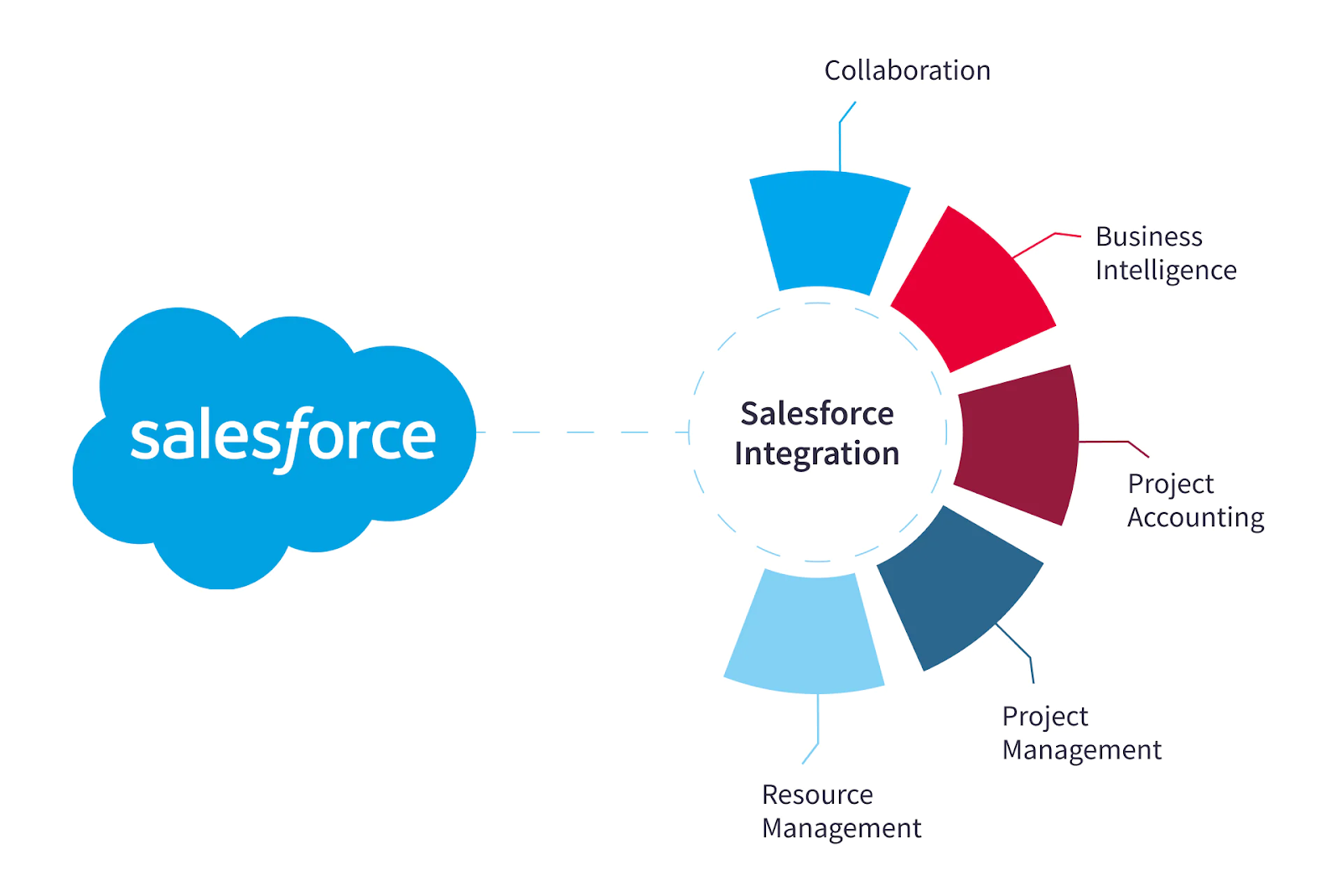
Salesforce is more than a CRM solution. Its capabilities extend well beyond marketing and customer engagement use cases. As a comprehensive business integration solution, Salesforce is a robust platform that seamlessly connects the front, middle and back-office operations. It unifies data from various sources, offering a panoramic view of the enterprise ecosystem.

The Role of Salesforce in Business Integration and Its Importance

Integrating disparate data sources and systems is more than a luxury—it’s a significant challenge and a nSo necessity. Modern businesses are tasked with managing an ever-growing array of data, making a centralised hub for data management critical.

Salesforce plays a pivotal role in ensuring data flows seamlessly between different parts of the organisation. It bridges the gap between sales and customer data, operational teams and even financial and HR management, offering a comprehensive integration of front-office, middle-office and back-office. 

Moreover, its exceptional ability to seamlessly integrate with various systems and applications opens up a world of opportunities for businesses. By effortlessly connecting with existing software and databases, Salesforce becomes the central hub where data flows cohesively, eliminating data silos and streamlining processes.

Whether it’s integrating with popular marketing tools, ERP systems, or custom-developed applications, Salesforce ensures that data from different sources harmoniously coexists, enabling businesses to make more informed decisions, enhance customer experiences, and improve operational efficiency. This flexibility and adaptability in integration make Salesforce a transformative force for businesses, allowing them to leverage the full spectrum of their technological ecosystem to drive growth and innovation.

“The result? Connectivity that empowers decision-makers with real-time insights, facilitating more informed, strategic choices.”

 Salesforce Integration in Action: Connecting your operations across the whole organisation

  • Enhancing Customer Insights and Engagement:

Front-office operations involve the seamless connection of customer-facing functions within an organisation. This strategic integration empowers businesses to consolidate customer data from diverse touchpoints, leading to a deeper understanding of customer needs and preferences. The outcome is more meaningful, context-aware engagements, ultimately cultivating stronger and more lasting customer relationships.

  • Optimising Operational Synergy:

Bridging the gap between sales and customer data and your operational teams for middle-office operations is a strategic move that promotes seamless collaboration among these crucial departments, ensuring that customer demands are met with efficiency. Moreover, it aligns product development with market needs, leading to increased overall efficiency, reduced lead times, and significantly enhanced teamwork and collaboration across your organisation.

  • Elevating Core Efficiency and Risk Management:

Back-office integration delves deep into your core business functions, including finance, HR, and administrative processes. This integration strategy brings automation, streamlining, and compliance, which results in heightened operational efficiency, reduced risks, and more effective resource management for cost savings and overall business performance.

The synergy and proper integration between front-office, middle-office, and back-office operations represent modern enterprises’ transformation nexus. As these converge, they not only streamline operations but empower leaders with invaluable insights for making informed strategic decisions.

Unlocking Industry-Specific Advantages

Industries across the spectrum are harnessing the power of Salesforce to gain a competitive edge and unlock industry-specific advantages. These real-life examples illustrate the transformative impact Salesforce is having on various sectors:

  • Telecommunications and Media Excellence: A significant industry player achieved a 30% faster customer service response time by integrating customer data across platforms using Salesforce. They also utilise Salesforce Einstein’s AI capabilities for enhanced customer engagement. [Source]
  • Elevating Manufacturing Standards: A leading firm in the elevator and escalator industry improved first-time fix rates by 25% using Salesforce IoT Cloud. Predictive maintenance connects equipment, customers, and field service, enhancing efficiency. [Source]
  • Financial Services Transformation: One provider boosted advisor productivity by 15% through Salesforce’s data integration and AI capabilities in financial services. This led to a 10% increase in customer satisfaction. [Source]

Our Impact with Salesforce

At Making Science, we’re not just Salesforce experts — we’re catalysts for change. We guide our clients through the seamless transition to Salesforce, a cutting-edge platform that empowers businesses with efficient streamlining of processes, unprecedented levels of automation and data-driven decision-making capabilities.

We’ve had the privilege of driving change across countless businesses, with our successes falling into several key areas:

  • Salesforce CRM Implementations: Over the years, we’ve implemented Salesforce CRM for multiple multinational companies. These projects have standardised sales operations across all regions, automated routine tasks for increased efficiency and fostered higher team collaboration.
  • Marketing Transformations with Salesforce Marketing Cloud: We’ve successfully transitioned numerous businesses from labour-intensive campaign management to fully automated processes with Salesforce Marketing Cloud. These transformations have enabled our clients to achieve a level of customisation previously out of reach, optimising customer engagement and driving business growth.

Conclusion:  The Future is Data-Driven

In the digital era, data reigns supreme. Salesforce, combined with the expertise of Making Science, empowers businesses to harness the full potential of their data across your organisation. 

Ready to revolutionise your enterprise with Salesforce? Contact us for a consultation and discover how integrated Salesforce solutions can take your business to the next level.

[button color=”accent-color” hover_text_color_override=”#fff” size=”medium” url=”www.makingscience.co.uk” text=”Get in touch” color_override=”#ff0067″]


Server Side and Facebook CAPI: Data Governance and Accuracy of Collected Data

Accurate data is essential for precise marketing strategy decisions. Server Side tracking and the Facebook Conversion API (CAPI) offer many advantages that can significantly enhance your marketing performance. Yet, there are nuances between these two methods

What is Server Side Tracking?

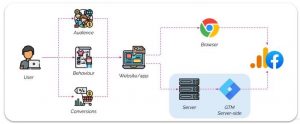
Server Side is a data collection method that sends tracking information from your website’s server to advertising platforms, instead of directly from the user’s browser. This ensures more accurate data collection and sidesteps issues like ad-blockers and browser restrictions.

Benefits of Server Side Tracking

  • Data Accuracy: Up to 30% more accurate data as ad-blockers and ITP/ETP technologies can’t block server-side tracking. When combined with CAPI, you get more comprehensive and reliable data, guiding smarter marketing decisions.
  • Load Time: Improved website load times.
  • Security: Enhanced security via the GTM server within cloud projects.
  • Data Privacy: Strengthened user data protection. Direct data transfer from your server gives you more control over processing and storage.
  • Data Governance: Better data control and management. Data is collected on the Google Cloud platform and distributed from there.
  • Real-Time: Enhanced real-time data activation using the GTM cloud server.
  • Quick Implementation: Utilises the existing dataLayer, eliminating the need for new code.

What is the Facebook Conversion API (CAPI)?

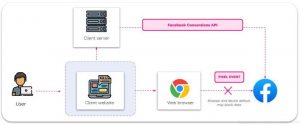
Facebook’s CAPI is a powerful tool that sends conversion events directly from your server to Facebook. It complements the traditional Facebook pixel, capturing data when the pixel can’t, like mobile app purchases or conversions by users with cookies turned off. CAPI ensures more robust data collection, providing a clearer view of your Facebook ad performance.

When Facebook gets a server event, it checks for a corresponding browser event. If the browser event is blocked (e.g. by ad-blockers), the server event is used instead.

CAPI supports various event types and parameters, giving businesses flexibility in tracking many conversion actions and customising the data they send to Facebook.

Benefits of FB CAPI

  • Data Control & Measurement: Greater control over data sharing and enhanced performance measurement throughout the customer journey.
  • Full Path Visibility: CAPI sends more detailed information than the pixel, such as CRM data or lower funnel events, targeting ads to those more likely to take desired actions.
  • Stronger Data Flow: CAPI data is less affected by browser loading errors, connectivity issues, and ad-blockers.

Ready to harness the power of Server Side and Facebook CAPI?

Our expert team can tailor solutions to your needs. Don’t hesitate to get in touch!

[button open_new_tab=”true” color=”accent-color” hover_text_color_override=”#fff” size=”medium” url=”www.makingscience.co.uk/contact” text=”Contact Us” color_override=”#f0076f”]

Three GA4 Data Loss Solutions

On July 1, 2023, Universal Analytics will officially replace Google Analytics 4 (GA4). This transition will bring significant changes to the platform, including a refreshed interface, a new data model, and the incorporation of machine learning capabilities.

GA4’s ability to merge observed and modelled (unobserved) data is crucial due to evolving browser cookie policies and GDPR. These changes increasingly restrict traditional tracking and analysis methods, making GA4 data loss solutions essential.

To adapt, analytics tools must address missing data. With three critical GA4 data loss solutions— data-driven attribution, predictive metrics, and modelled behavioural data— users can effectively compensate for this loss of information.

Data-Driven Attribution

The Data-driven attribution model employs a statistical approach to assess the significance of a channel’s contribution to conversion. For instance, GA4’s top acquisition reports might attribute 5,000 purchases to the SEO channel, but prior touchpoints from channels like Paid Search could have influenced the user’s decision to buy.

Hence, the statistical model analyses user behaviour and conversion paths to determine the appropriate weight for various touchpoints. Instead of attributing the entire conversion to the SEO channel, the model assigns percentages to all contributing channels based on their impact on the user’s transaction.

Predictive Metrics

Currently, this feature is exclusively applicable to e-commerce and revenue metrics, which may include purchase probability, cancellation likelihood, projected income, and the chance of users revisiting the website or app in the near future. GA4 relies on historical user activity for its predictive data, which can be utilised beyond Analytics. By creating audiences and segments to distinguish between potential or improbable buyers, this data can be leveraged in Google Ads for remarketing purposes.

Modelled behavioural data

This feature integrates GA4 with a cookie consent management tool, allowing Google Analytics to gather anonymous data from users without tracking consent. This information is not linked to a cookie or any user identifier.

The behaviour of observed users (those who have opted out of tracking) is utilised for training a machine-learning model, which then estimates the behaviour of users who have chosen not to be tracked.

By harnessing these three innovative GA4 data loss solutions, you can improve your analytics and optimise campaigns to boost your business KPIs significantly. If you need assistance with Analytics and GA4, our expert team is ready to help. Don’t hesitate to contact us!

Get in touch

Customer Data Platform (CDP): how best to manage first-party data

In a context where first-party data has become the primary source of information about its users, it becomes essential for companies to understand how to manage this data to achieve business objectives.

The customer is increasingly omnichannel, and tracking them by obtaining proper measurements for their digital strategies is as important as it is complex. This is confirmed by data from recent Making Science research, in which just under half of UK companies do not integrate data, thus losing the global customer view needed to make informed decisions. 

This is where various solutions for multi-channel data collection, such as the Customer Data Platform (CDP), come into play.

What is a Customer Data Platform (CDP)

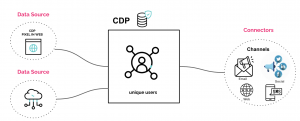
A CDP is a tool that allows all of a company’s proprietary data from multiple sources to be collected in one place. This technology is becoming increasingly important in corporate marketing ecosystems because it allows companies to build a complete, fast and convenient view of their users.

In addition to creating a complete and consolidated pool of customer data, CDPs allow individual profiles to be made and continuously enriched with new information from the different channels used by users. Furthermore, integrating with other systems means CDPs seamlessly fit into a broader data management infrastructure.

Privacy and First-Party Data

The digital environment is constantly and rapidly evolving, but some key trends have shaped the path of companies in recent years. These include: 

  • Regulatory changes: regulations such as GDPR have had a significant impact on how data is collected and used, so much so that, according to research by Making Science, by 2022, less than half of the marketers in Italy will be fully aware of GDPR requirements.
  • Privacy controls: Users increasingly demand greater control and transparency over the collected data used to personalise ads.
  • Updates: increased controls affect the collection of traditional data (e.g. third-party cookies and device identifiers).

The primary and direct consequence in today’s digital ecosystem is obvious:

  • Cookieless and third-party data: with the imminent end of cookies and third-party data, companies have to update their strategies to continue to have data that best inform their marketing activities.

Faced with this scenario, there are several solutions, from the initial collection of data based on the user’s explicit consent with solutions such as Consent Mode and Google Analytics 4 to mitigating any loss of information from our users with data modelling, to using a ServerToServer measurement to collect data as first-party data and own it.

With this concept of first-party data, CDP fits in as a technological solution for data management and its subsequent activation. 

That said, the CDP must be understood as a solution, not a stand-alone tool. 

How a CDP works

Here is an example of how a CDP works in a very simplified way:

Suppose we currently have much information (much more than we analyse and activate), and this information is located in different sources, which are independent and rarely talk to each other. What does this mean for the company? Data in separate silos causes common mistakes, such as duplication of communication, makes it difficult to get a clear picture of our users’ journey, generates problems in sales attribution, and, above all, does not help in deciding how to allocate budget in the marketing mix and optimise investments.

With CDP, we have a shared space for all data, the initial purpose of which is to standardise and unify information to get a single picture of our customers across all the touch points we generate. This will allow us to activate the data based on each customer and effectively respond to their needs based on where they are in their purchasing journey for a particular product.

How to choose a CDP

When thinking about introducing a CDP in your company, one of the first things to ask yourself is what problem(s) you want to solve.

Subsequently, the type of CDP also depends on the level of digitisation a company is at.

For technology-intensive companies, it may be helpful to create a customised CDP from their tool stack or with the help of a partner. Less technologically advanced companies may prefer to turn to the market for existing solutions.

In each of these cases, we suggest four factors to take into account in making this decision strategically:

  • Operationality: when will the CDP be operational? For market solutions, the operation timing will depend on the options for connection to the tools of one’s digital ecosystem. For an ad hoc connection, one must first check the existing connection options and the effort required to create them. This brings us to the second point.
  • Connections: which option will connect best with the current tools in use? This should be easier if you are already working with a market solution for other devices. Otherwise, you will have to consider the effort of generating such connections from scratch.
  • Scalability: which will give more flexibility to adapt to changes in the future? Market solutions will depend on the evolution of their adaptations. An ad hoc system should facilitate this.
  • Cost: which is the most cost-effective solution? At this point, it is essential to consider the initial monetary cost and the cost of evolving the CDP with its objectives and tools in use.

These are just a few hints at what a CDP entails as a solution in today’s digital landscape. It is not an easy decision, which is why it is important to use solutions that align with the market and one’s own specific needs.

From data collection to activation

The next step is to adopt technology that can extract and combine all marketing data with helping create insights that drive strategic choices. Employing the right technologies and processes is another crucial factor in exploiting the full potential of first-party data.

Discover the state of data maturity of UK companies in the latest Making Science research and our recommendations for getting the most out of your data and marketing efforts.