Paywalls and Privacy: Why Meta’s Subscription Model is a Wake-Up Call for Marketers

Navigating Meta’s New “Consent or Pay” Ecosystem in 2026.

For over a decade, the social media contract was simple: you give Meta your data, and they give you a free platform. But as of January this year, that all changes. In response to strict regulatory pressure from the European Union’s Digital Markets Act (DMA) and the UK’s Information Commissioner’s Office (ICO), Meta has officially rolled out its “Consent or Pay” model across Europe and the United Kingdom.

As marketers, this isn’t just a platform update but a seismic shift in how we reach our audiences. If you’ve seen the new pop-up prompts on your own device, you will know that users will now be more aware than ever of how much of their privacy they are trading for ‘free’ access.

1. How the Opt-Out System Works

The system currently differs slightly between the UK and the EU due to different regulatory landscapes.

In the United Kingdom: Following guidance from the ICO, Meta offers a binary choice to ensure consent is “freely given”:

  • Ad-Supported Tier: Users continue for free but must agree to Meta using their information across accounts for personalised ads and tracking via cookies.
  • Ad-Free Subscription: For a monthly fee—starting at £2.99 on web or £3.99 on mobile—users can opt out of all ads and tracking for advertising purposes.

In the European Union (EEA): To satisfy more stringent DMA requirements, Meta introduced a third “middle ground” option in January 2026:

  • Less Personalised Ads: Users can choose a free experience that uses significantly less data. These ads are based on limited context (like age, gender, and current location) rather than deep behavioral tracking.
  • Reduced Pricing: Meta slashed EU subscription prices by 40% in late 2025, dropping web fees from €9.99 to €5.99/month to make the choice feel more “fair” to regulators.

2. How This Affects the Advertising Ecosystem

This new era of choice creates several immediate “ripple effects” for brands and digital agencies.

The “Luxury Privacy” Gap

One of the most significant concerns is audience shrinkage. Data suggests that high-income, tech-savvy, and privacy-conscious users are the most likely to pay for ad-free experiences. For luxury, finance, and premium travel brands, this means a significant portion of their most valuable target audience may become invisible to traditional paid campaigns on Meta.

CPM Inflation

Economics dictates that when supply (ad slots/audience) drops and demand remains high, prices rise. As more users move to ad-free tiers or “less personalised” tiers and therefore fewer available impressions, advertisers may expect a steady climb in CPM.

Measurement “Darkness”

Attribution is becoming increasingly complex. When users opt for less personalisation, the conversion matching between an ad click and a purchase becomes harder to track. This makes retargeting and lower funnel marketing harder than ever. As granular cross-platform tracking fades, advertisers must move away from “last-click” dependency and embrace Marketing Mix Modeling (MMM) to illuminate the true impact of their spend.

3. Strategic Pivots: Success in the 2026 Landscape

To continue to thrive independent of this change, we recommend careful consideration of the following:

  • Lean into the Meta algorithm: allow it to continue to find the most valuable users for your brand amongst the “opted-in” users.
  • Diversifying the Retargeting Mix: Multi-channel agility is no longer a luxury; it is a necessity. If a significant portion of your site traffic has opted in to Meta’s ad-free tier, those users become “invisible” to traditional social retargeting. To prevent your top-of-funnel investment from evaporating, you must establish secondary conversion bridges. Consider Programmatic Display and YouTube retargeting to maintain signal continuity. By diversifying your retargeting channels, you ensure that high-intent prospects who have paid for privacy on one platform don’t drop out of your ecosystem entirely.
  • While Meta is leading the charge into the “Consent or Pay” era, other major platforms like TikTok and Snapchat represent a strategic opportunity to maximise your in-market audience. As of early 2026, these platforms have not yet broadly implemented similar monthly subscription fees to opt out of ads, meaning their “signal continuity” remains more intact for a larger portion of their user base.
  • Organic Content is No Longer Optional: Since paid ads cannot reach all subscribers, your organic presence is essential and could be the only way to stay in their feeds. 
  • The Power of Influencers: Creators and micro-influencers act as a “backdoor” to ad-free users. A subscriber won’t see your Sponsored Post, but they will see a Reel or Story from a creator they follow voluntarily.

The Bottom Line

Meta’s rollout of the “Consent or Pay” model marks a fundamental shift in the digital landscape, turning user privacy into a premium service across the UK and EU. To thrive in this new ecosystem, marketers must remain agile, trust the Meta algorithm, and consider putting some budget behind influencer advertising. As well as this, a varied and vast media mix becomes essential for effective targeting and remarketing – especially for industries like luxury, finance, and travel.

To learn more about how your brand can thrive in this new ad-world, get in touch with our team of experts.

[button color=”accent-color” hover_text_color_override=”#fff” size=”large” url=”www.makingscience.co.uk/contact” text=”Get in touch!” color_override=”#ff0067″]

Beyond the Hype: Nick Waters´ Perspective on OMR 2025’s Biggest Trends

The Online Marketing Rockstars (OMR) festival in Hamburg is a key event for the digital marketing industry, drawing a vast and diverse crowd. After two days immersed in this dynamic environment, Nick Waters, Global CEO of Northern Europe at Making Science, reflected on the current state and future trajectory of digital marketing.

1. The Sheer Scale of Digital Marketing

OMR’s sheer scale is a spectacle in itself. It gathers everyone from industry giants to niche innovators and highlights the immense size and vitality of the digital marketing arena.

2. Navigating the Complex Vendor Landscape

The OMR exhibition floor can feel like a walk through the intricate LUMA Partners landscape. A plethora of vendors offer seemingly similar solutions: real-time insights for better decision-making, omnichannel attribution, data visualization, privacy solutions, and automated content creation. This raises a critical question for brands: How much real differentiation exists, and how can they identify the solutions that truly deliver unique value?

3. The Indispensable Role of Human Expertise

These observations underscore a crucial point: In an increasingly automated world, expert advisors are more important than ever. At Making Science, we believe that smart humans, with their strategic thinking, creative insight, and nuanced understanding, are the true differentiators in helping brands navigate this complexity and achieve their business goals.

4. The AI Tsunami is Here

Artificial intelligence is no longer a future trend; it’s a present reality, poised to disrupt the entire marketing services ecosystem. An “AI tsunami” is on the horizon, and businesses that are unprepared or underprepared risk being swept aside by its transformative power.

5. The Evolving Definition of Commerce

OMR showcased a strong emphasis on “commerce” related offerings, yet the discussion around “retail media” seemed relatively muted. This prompts questions about whether the concept of “retail media” is being repackaged, redefined, or integrated into a broader commerce narrative.

6. The Untapped Potential of Streaming TV

Streaming TV’s commercial presence in Europe still lags behind its adoption in the US, suggesting a significant growth opportunity. As viewing habits continue to shift, this channel is poised to become an increasingly important component of the marketing mix.

7. Agency Presence and the Question of ROI

The limited presence of traditional agencies at OMR is a notable observation. The high cost of participation likely leads to a critical evaluation of return on investment, forcing agencies to prioritize their event strategies.

8. The Inevitable Amplification of the AI Conversation

Looking ahead, Waters predicts that the focus on AI will only intensify. The “AI noise” will be even louder at upcoming events like Cannes and reach a crescendo at OMR 2026, demanding that the industry move beyond hype to practical application.

Conclusion: Embracing Change and Prioritizing Expertise

OMR 2025 served as a powerful reminder of the dynamic and rapidly evolving nature of digital marketing. As Nick Waters’ reflections highlight, the industry faces both immense opportunities and significant challenges. At Making Science, we believe that success in this environment requires a combination of embracing technological innovation, particularly in AI, and prioritizing human expertise. By staying ahead of the curve and providing our clients with strategic guidance, we empower them to navigate complexity, capitalize on emerging trends, and achieve sustainable growth.

Enterprise AI Agents: Transforming Business with Intelligence and Autonomy

As Artificial Intelligence continues to reshape business landscapes, Making Science and Google Cloud recently brought together industry leaders at Google’s Madrid headquarters to explore the transformative power of Enterprise AI Agents. This event highlighted how companies are moving beyond basic automation to adopt intelligent, autonomous systems that redefine customer engagement and operational efficiency.

The Strategic Evolution of Enterprise AI: From Tools to Autonomous Entities

The evolution of AI in enterprise settings has been remarkably rapid. Businesses have progressed from experimental AI in 2023 to real-world implementations in 2024. Now, in 2025, the emergence of AI agents is driving the next stage of transformation. These intelligent systems are no longer just tools but autonomous decision-makers capable of optimising operations, automating complex workflows, and accelerating business growth.

Key Themes & Insights:

From White Box to Black Box AI: Embracing Agility over Algorithmic Detail

Enterprises are moving away from the need to understand every algorithmic detail (white box AI) toward testing AI-driven outcomes (black box AI). As Large Language Models (LLMs) become more advanced, the focus is shifting to “trusting” the LLM while applying the required prompting, grounding and testing; leveraging AI’s agility, rather than dissecting every aspect of each neural network supporting each LLM in an AI Agent.. This approach allows businesses to prioritise adaptability, performance, and user experience over algorithmic transparency.

Understanding the Difference between AI Assistants and AI Agents

AI Assistants support customer interactions and internal processes but still require human supervision. AI Agents function independently, making decisions and taking actions without direct human input. However, effective governance is essential to ensure reliability and trust in fully autonomous systems.

AI Adoption: Bridging Innovation and Practical Implementation

Despite the rapid advancements in generative AI, widespread adoption in business remains in its early stages. Organisations seeking to maximise AI’s potential must focus on:

  • Seamless integration with business processes and APIs
  • High-quality, structured data to improve AI-driven insights
  • Interconnected platforms to enhance automation and decision-making

A case study presented at the event illustrated how Conversational AI and Retrieval-Augmented Generation (RAG) are transforming real estate searches. With over 30,000 successful AI-driven interactions with improved conversion rates, this solution has significantly improved customer engagement while reducing operational costs. AI-powered chatbots in real estate now maintain conversation context, understand user needs, and provide personalised recommendations. One of the key propositions of the AI Agent was the continuous incorporation of new real estate inventory and the enrichment of the data applying points of interest such as schools, hospitals, metro stops, police stations, airports, etc from Google Maps.

Expanding AI Applications Across Industries
  • Predictive Analytics – AI detects fraud and prevents network abuse by analysing suspicious activity patterns.
  • Legacy System Migration – Generative AI evaluates risks, costs, and timelines for transitioning outdated IT systems.
  • Data Integration – AI enhances cross-platform data consistency, improving analytics and business intelligence.
Security and Compliance in AI: Ensuring Responsible Deployment


As AI adoption scales, data security, privacy, and compliance remain critical priorities. Discussions at the event underscored the importance of:

  • Regulatory alignment to meet evolving data privacy laws
  • Ethical AI governance to ensure responsible decision-making
  • Robust security frameworks to prevent misuse and protect sensitive information

A well-structured approach to AI governance will be essential to maintain trust and unlock AI’s full potential.

Google Cloud’s Innovations for Enterprise AI Agents


Google Cloud continues to lead enterprise AI innovation, equipping businesses with powerful tools to integrate AI Agents effectively into their operations.

Customer Engagement Suite (CES): Gemini 2.0 and the Future of Multimodal AI

One of the key announcements at the event was the introduction of Customer Engagement Suite’s (CES) integration of Gemini 2.0, a multimodal AI solution integrated into the. This advancement enables businesses to facilitate seamless interactions across voice, text, and visual inputs, ensuring a fluid and personalised customer experience.

For example, a customer support system powered by Gemini 2.0 can interpret a mix of text-based queries, voice commands, and image uploads, all while maintaining contextual understanding. This level of interaction enhances customer satisfaction and streamlines service efficiency.

The adoption of multimodal AI represents a major leap forward in enterprise AI, providing organisations with an intuitive and adaptable engagement platform.

Revolutionising Workplace Efficiency with AgentSpace

The introduction of Google’s AgentSpace platform addresses a critical challenge in modern enterprises: the fragmentation of information and tools. By integrating advanced search capabilities with AI-powered assistance, AgentSpace transforms how employees interact with enterprise systems. This integration reduces the time spent switching between applications while enhancing decision-making through improved access to organisational knowledge. 

Employees are no longer bound by siloed data or the need to navigate multiple interfaces. AgentSpace intelligently connects relevant information, allowing for faster, more informed decisions and a more productive work environment.

NotebookLM: Advancing Enterprise Intelligence

A significant advancement in enterprise tools, NotebookLM Enterprise demonstrates the power of AI in research and information synthesis. The platform’s ability to process diverse content types – from documents to video content – while maintaining context and generating actionable insights represents a new paradigm in enterprise information management. Imagine being able to analyse a complex research paper, a lengthy video presentation, and a series of internal reports, all within a single interface. 

NotebookLM not only processes these diverse formats but also identifies key themes, synthesises information, and generates actionable insights, effectively turning raw data into strategic knowledge. This tool empowers professionals across various sectors to accelerate research, enhance analysis, and ultimately, make more informed decisions.

Looking Ahead: The Future of Enterprise AI

Enterprise AI is advancing at an unprecedented pace. The integration of intelligent AI agents marks not just an evolution in technology but a fundamental shift in how businesses operate, engage with customers, and drive innovation.

As a strategic Google Cloud partner, Making Science continues to play a pivotal role in guiding organisations through AI adoption, implementation, and optimisation. For businesses looking to leverage AI-driven transformation, our team of experts is ready to support their journey toward greater efficiency, agility, and intelligence.

The future of enterprise AI is here, and organisations that embrace it today will define the market leaders of tomorrow.

[button color=”accent-color” hover_text_color_override=”#fff” size=”large” url=”https://www.makingscience.co.uk/contact/” text=”Contact us!” color_override=”#ff0067″]

Enhancing CX/UX Research with Synthetic Users: The Future of Design Testing

Today, user research is a fundamental part of designing digital experiences. It helps us better understand users’ needs, behaviors, and expectations to create more intuitive and functional products. However, traditional research methods, such as interviews and usability testing, are often costly, time-consuming, and difficult to scale. This is where synthetic user research comes into play, an innovation that uses artificial intelligence and autonomous agents to create virtual user profiles and simulate their interactions.

In this article, we explore how synthetic users are changing the way we conduct CX/UX research, their current limitations, and how Making Science is addressing these challenges with its own advanced synthetic user model.

What Are Synthetic Users? 

Synthetic users are profiles generated by AI that simulate the characteristics, needs, and behaviors of real users. These profiles can be created automatically, using data and AI algorithms that mimic the diversity and complexity of a real audience. Tools like Delve AI and Synthetic Users allow anyone to generate detailed personas with information about their background, frustrations, goals, and psychological characteristics. Through these platforms, design teams can quickly create profiles representing a diverse sample of users without the need to recruit real individuals.

Advantages of Research with Synthetic Users

Scalability and Efficiency The main advantage of synthetic users is their ability to simulate multiple profiles in a short period. By eliminating the need to manage and coordinate groups of real users, design teams can quickly obtain relevant data from a wide variety of people. This makes research much more scalable and efficient, especially when fast results are needed.

Cost Reduction Recruiting real users, conducting interviews, and performing usability testing can be costly and logistically challenging. With synthetic users, these costs are significantly reduced, as there is no need to compensate participants or manage the logistical aspects of research sessions.

Simulating Controlled Scenarios With synthetic users, teams can simulate very specific scenarios and observe how virtual users interact with a product or service. This flexibility allows for usability testing with different types of users in controlled contexts, making it easier to identify problems before launching a product to the market.

Limitations of Synthetic Users

While synthetic users offer great advantages, they are not a complete solution. There are some important limitations to consider:

Lack of Real Empathy Although synthetic profiles can be incredibly detailed, they cannot replace genuine interaction with real users. Interviews and usability testing provide an emotional connection that helps designers deeply understand the motivations, friction points, and emotions behind user behavior. Synthetic users, no matter how sophisticated, lack the human complexity necessary to simulate authentic emotional experiences.

Superficially Accurate Simulations Synthetic users can provide valuable feedback, but they often lack the complexity that real users can provide. The insights generated by AI may be overly optimistic or simplistic, making it necessary to complement them with real-world research to obtain a more comprehensive view.

Reliance on Previous Data Synthetic users rely on previous data to create profiles, meaning their accuracy depends on the quality of that data. If this information is limited or outdated, the resulting profiles and insights may not reflect actual user behavior.

How Making Science is Redefining Synthetic Users

Understanding these limitations, at Making Science we have developed our own advanced synthetic user model designed to overcome many of these challenges. Unlike conventional solutions that focus mainly on demographic data, our model integrates multiple layers of information, including:

  • Market behavior
  • Technological context
  • Socioeconomic aspects
  • Behavioral trends
  • Customer journey insights

Additionally, we enrich our model with sectorial and brand insights—incorporating information about the sector, competitive landscape, and brand-specific elements such as product offerings, pricing strategies, and positioning. This approach allows us to simulate more realistic user experiences that account for industry-specific dynamics and brand perception.

But what truly sets our model apart is its ability to incorporate real data from various sources, such as user interviews, focus groups, and client reports. It can even be enriched with call center data, ensuring a deeper and more authentic understanding of user behavior.

Moreover, our model excels in early-stage validation. It can test redesign proposals at the sketch or wireframe stage, providing actionable insights to determine whether the new approach improves the user experience. This capability accelerates decision-making and enhances design outcomes, helping teams iterate with greater confidence.

Use Cases in CX/UX Research

While synthetic users should not fully replace real-user research, they have an important role in the lifecycle of CX/UX research. Some of the most relevant use cases include:

Exploratory Research: Synthetic users are ideal for the early stages of research, where the goal is to explore potential issues and generate hypotheses. By creating synthetic personas based on demographic and behavioral data, designers can gain an initial understanding of their audience before diving into more costly and complex studies.

Concept and Prototype Testing: Before conducting tests with real users, design teams can use synthetic users to evaluate design ideas, prototypes, and features. This allows for quick validation of concepts and adjustments before rolling out prototypes to real users.

Feature Validation: Synthetic users can be used to validate new features or changes in a product. Through simulations, designers can observe how different user segments interact with the product and whether the new features meet their needs.

AI and the Validation of Interface Affordance One of the most exciting advancements that AI already enables is the validation of the affordance of our interfaces. Simply put, affordance refers to an interface’s ability to indicate how an element should be used intuitively. AI can analyse and predict how users will interact with certain interface elements, helping us improve accessibility, clarity, and usability in our designs. Thanks to simulations with synthetic users, we can observe and adjust interactions before implementing changes in a real product, allowing us to optimise the user experience more efficiently.

The Future of Synthetic Users in CX/UX Research

The field of synthetic user research continues to evolve. At Making Science, our advanced synthetic user model not only integrates complex layers of demographic and behavioral data but also enriches profiles with real user feedback from interviews, focus groups, client reports, call center interactions, and sector-specific insights. This unique approach allows for more nuanced and realistic simulations.

Additionally, our model’s ability to test wireframes and sketches sets it apart, enabling early detection of design challenges and quicker iteration cycles.

However, it is essential to remember that research with real users should always be the foundation of any design strategy. Synthetic users are a powerful tool to complement research, but they should not replace a deep analysis of users’ needs, expectations, and emotions.

TL;DR 

Synthetic user research is opening up new opportunities for design and product development teams. While it doesn’t replace real-user work, it provides a scalable and cost-effective alternative to obtain preliminary insights and validate ideas quickly. The key is knowing when and how to use this technology effectively, integrating it into a broader and balanced research approach.

At Making Science, we support our clients in implementing these innovative technologies to improve their user research processes. Our proprietary synthetic user model stands out by integrating both demographic insights and real user data, even from call centers, and enriching the analysis with sector-specific and brand insights. Additionally, we validate redesign concepts at the wireframe stage, optimsing user experiences from the earliest phases. The future of CX/UX research is promising, and we are ready to lead this change.

[button color=”accent-color” hover_text_color_override=”#fff” size=”large” url=”https://www.makingscience.co.uk/contact/” text=”Contact us!” color_override=”#ff0067″]

Making Data | Privacy Sandbox, the future of digital marketing without cookies and new opportunities for companies

MAKING DATA, insights into the world of data in collaboration with dataMesh

In the digital marketing landscape, the topic of privacy and the use of third-party data continues to be one of the most debated and relevant issues. As privacy regulations evolve and third-party cookies are phased out, the industry is facing a crucial transition. Although the promise of innovative solutions is real, recent responses from the UK Competition and Markets Authority (CMA) to Google’s plans for the Privacy Sandbox could slow the adoption of these new technologies.

In this article, we will explore how the move towards a cookie-free world impacts digital marketing, analysing the CMA’s response, the challenges companies will face and the opportunities that may emerge for those who can adapt.

What is Google’s Privacy Sandbox?

The Privacy Sandbox is a Google initiative designed to reduce dependence on third-party cookies by offering solutions that protect user privacy without compromising the effectiveness of advertising campaigns. The goal of this project is to create a more secure and transparent environment for users, while allowing advertisers to continue measuring the effectiveness of their campaigns and targeting audiences efficiently, but with greater respect for privacy.

Although the Privacy Sandbox is an important move to address growing privacy concerns, its implementation is sparking heated debates within the advertising industry, with significant implications for the future of digital marketing.

The CMA’s response: hindrance or protection of competition?

One of the main criticisms raised by the UK’s Competition and Markets Authority (CMA) concerns the potential competitive advantage Google could gain from exclusive access to its first-party data. The CMA fears that this advantage could harm competition in the digital advertising sector, hampering innovation and slowing down the adoption of more privacy-equitable solutions.

This position of the CMA has raised questions about how Google will implement the Privacy Sandbox, with the risk that the centralisation of data may limit other companies’ access to equal advertising tools and solutions. Future market dynamics may, therefore, depend on how these issues are resolved, which could affect how quickly the industry adapts to a cookie-free world.

How to prepare for a cookie-free future? Challenges for companies

With more than 30% of the market having already abandoned the use of third-party cookies, the shift towards cookie-less digital advertising is well underway. This scenario poses major challenges for digital marketing companies. The main questions that companies need to answer include:

  • Measuring campaign effectiveness: how to measure return on investment (ROI) without relying on third-party cookies?
  • Audience targeting: how to reach the right users without detailed and customised information on individual users.
  • Privacy and trust: how to build and maintain a solid relationship with consumers in a context where privacy is the top priority?

Meeting these challenges will require a renewed focus on data quality and the adoption of advanced technological solutions.

The opportunities of privacy and cookie-free digital marketing

Despite the difficulties, the shift towards a cookie-free world also offers many opportunities for companies that can adapt by adopting innovative solutions. There is room for improvement in customer experience and customer trust building, focusing on using first-party data to create personalised and targeted experiences. This approach allows building authentic relationships with consumers, offering more intimate and engaging experiences. In addition, techniques such as machine learning, predictive analytics and incremental attribution enable effective targeting of audiences without relying on detailed identifiers. Companies that adopt these technologies will be able to emerge as leaders, offering safe and relevant experiences for consumers.

How to cope with the transition: data, technologies and partnerships

To address the transition to a cookie-free world, companies need to focus on three key areas. First, it is crucial to invest in data quality, building a robust and accurate first-party database, which is essential for targeting and personalisation. Furthermore, the adoption of new technologies, such as machine learning, predictive analytics and incremental attribution, is crucial for optimising advertising campaigns. Finally, it is important to work with experienced partners, such as digital marketing agencies that know how to manage data and develop customised strategies. These partners will be decisive in helping companies remain competitive and innovative in the cookie-free future.

The future of digital marketing is cookie-free, but full of opportunities

The transition to a cookie-free future represents a challenge, but also a significant opportunity for companies that want to innovate, improve their offerings and strengthen their relationship with their customers. The adoption of Google’s Privacy Sandbox and other similar technologies will be key to addressing the growing focus on privacy and building more ethical and effective advertising campaigns.

Do you need customised advice on how to deal with this transition? Contact us to find out how we can help you seize the new opportunities in digital marketing.

[button color=”accent-color” hover_text_color_override=”#fff” size=”large” url=”https://www.makingscience.co.uk/contact/” text=”Contact us!” color_override=”#ff0067″]

Shopify Checkout Extensibility

Installing GTM on Shopify’s Checkout Extensibility


What’s happening?

Shopify has changed how its checkout manages third-party scripts. Historically Shopify ecommerce sites have used Checkout.liquid and added scripts to the code for measurement. However, Shopify is moving towards a new feature called Checkout Extensibility. To quote Shopify:

“In February 2023 we announced that checkout.liquid is deprecated, and that we’re moving to Checkout Extensibility, a new foundation for checkout that is more secure, performant, upgrade-safe, and customized using apps. Relying on obsolete checkout.liquid code past the deadlines below poses risks that may impact your business.”

Important Dates

August 13, 2024: Deadline to upgrade your Information, Shipping, and Payment pages. Automatic upgrades begin on January 6, 2025, and all checkout.liquid customizations for these pages will be lost.

August 28, 2025: Deadline to upgrade Thank you and Order status pages, including your apps using script tags and additional scripts.

Custom Pixels

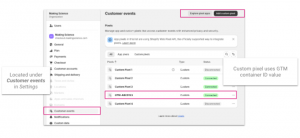
Checkout Extensibility forces Google Tag Manager (GTM) to be implemented in a custom pixel. These can be created in the Settings section of your Shopify Plus account.

Adding Google Tag Manager

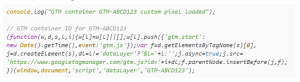
Firstly, copy the container snippet from GTM. Then to add the GTM container script to Shopify, select the ‘Add custom pixel’ button and past the code into the pixel.

Starting a custom pixel with console.log message will enable you to confirm the script is being loaded.

With that the foundation of GTM on Shopify is complete. We still need to cover a few topics to complete the setup.

  • Add Consent Mode
  • Enable debugging
  • Subscribe to events

Configure Consent Mode for GTM on Shopify’s Checkout Extensibility

One of the bigger challenges for Checkout Extensibility is configuring Consent Mode in GTM. For Consent Mode to work the values need to be sent within the custom pixel. Setting default values is easy enough, Consent Mode default values can be passed above the GTM container snippet. This is simple to do but implies the User’s consent is denied. Shopify’s official document sets granted as default – this is bad practice. The better approach is to set denied and then check for the user’s current consent state. To do this we need to accomplish two things:

  1. Set consent as denied
  2. Retrieve the user’s consent
  3. Set the Consent Mode consent update functionality

Set Default Consent Mode Status

Set the default Consent Mode status, this is placed above the GTM script. Adjust the settings to suit your operating requirements.

Retrieve User’s Consent Status

The user’s consent status can be retrieved from a cookie, it must be in a cookie. Shopify’s sandbox environment means that Consent Management Platforms (CMPs) using localStorage cannot be read. Secondly the cookie value must be sent to the domain, rather than each subdomain. The consent cookie should be set to .example.com rather than www.example.com.

With this in place the consent can be retrieved from within the custom pixel.

Update Consent Mode Status

Having retrieved the consent values from the cookie, the final step of the consent process can be completed and the Consent Mode gtag update values can be set.

With the GTM script already in place, it is now possible to check that Consent Mode is working correctly by reviewing the console.log and checking the gcs parameter value in the GA4 network requests.

Configure an E-Commerce Datalayer for Shopify’s Checkout Extensibility

Part three of our Checkout Extensibility masterclass is to add the ecommerce object and dataLayer to our custom pixel GTM script.

How Shopify provides data

Shopify has an Analytics API that has a number of events that can be subscribed to. When first using the API, subscribing to all events is useful to see what fires and when during the checkout process. It is good to make a note of this for your internal analytics documentation.

Each Shopify event has a data object containing data about the event, the page, etc. It is good to review these to see how Shopify builds its data structure and the values that are being passed for products, etc. Adding a variable called shopify.data and logging it to the console.

The output of which will be in the console when each event fires.

Calling Events

Events can be set up in two ways. There is “the way” but having experienced problems with the purchase event in the past, there is also an alternative. The preferred approach is to request only the event you require.

The alternative is to request all events and then use an if function to work with the event you need.

Configuring Page Views

The checkout is a single-page application (SPA) – it doesn’t send page views itself and needs either History Change enabled or a page_view event to be sent to the dataLayer. Fortunately there is a page_viewed event that can be subscribed to via the API that also contains all the details needed to create your own page_view event.

This unfortunately leads to a mess as page_views during the checkout don’t necessarily match the displayed URL and are not useful for humans.

Creating your own page views

A useful approach to get a full picture of the checkout funnel and user journey is to write your own and send them with the checkout events. For example:

SHOPIFY EVENT GA4 EVENT PAGE PATH
checkout_started begin_checkout /checkout/begin
checkout_shipping_info_submitted add_shipping_info /checkout/shipping
payment_info_submitted add_payment_info /checkout/payment
checkout_completed purchase /checkout/thank-you

These can then be sent as part of each ecommerce event. The output will be 2 dataLayer pushes per ecommerce event – 1 sending the page view, 1 sending ecommerce data.

This will result in nice clean page_views appearing in your analytics account and be easy to understand for all users.

Locating Product Data

The first challenge when creating an ecommerce dataLayer in Checkout Extensibility is understanding the products object. This varies depending on the event that has been fired.They are split by:

  • collection_viewed
  • cart_viewed
  • Checkout events (checkout_started, purchase, etc.)

There is an element of sifting through the data to find the value you require but it is important to get a consistent ID for each step that can try each item together across the checkout process.

Shopify Event Item data location Notes
collection_viewed collection.productVariants
cart_viewed cart.lines Item data is split across different sections. cart.lines.merchandise.product contains product ID and name. Price is found under cart.lines.cost.totalAmount.amount
Checkout events checkout.lineItems Item data is stored under the variant. checkout.lineItems.variant.product. Price data is found item.variant.price.amount

Building a Products Array

The most efficient way to pull in products is to create a function that will map the products data to your liking. This is done outside of the analytics subscribe events and will then be called from each event. A function is needed for each source data type:

  • collection_viewed => createCollectionItemsArr
  • cart_viewed => createCartItemsArr
  • Checkout events => createCheckoutItemsArr

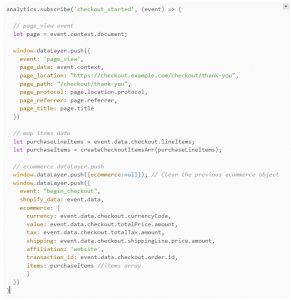
The function is just mapping existing data. Using a GA4 ecommerce dataLayer as the template, a checkout items function will look like:

The values for each variable will need updating for each function but the format will stay the same.

Using the Items Array Function in your Event

The final part is to call the items array as part of your function and map the remaining ecommerce attributes that are not item specific, e.g. currency, order_id, etc.

This will produce an analytics subscribe event that looks like:

Review the console logs, network requests and analytics data to confirm everything is being collected correctly.

Summary

Getting the Shopify Checkout Extensibility GTM pixel set up correctly can be a challenge. The key is to enable logging to make troubleshooting easier and remember the order of code snippets:

  • Consent Mode default values
  • Cookie consent values
  • Consent Mode update values
  • GTM container snippet
  • Items array functions
  • Analytics.subscribe events

Happy tagging!


Google Backpedals on Third-Party Cookie Deprecation: A Win for the Industry, a Focus on User Choice

Google has significantly shifted its approach to third-party cookies, opting to maintain their use while introducing a new framework prioritising user control. After years of delays and industry concerns, this decision marks a departure from the company’s plan to fully deprecate cookies. Read more about the official announcement from Google here: https://privacysandbox.com/news/privacy-sandbox-update/

The rationale behind Google’s decision is clear: they listened to industry concerns about cookie-free futures. By preserving cookies while introducing enhanced privacy controls, Google aims to strike a balance between protecting user data and maintaining a thriving digital advertising ecosystem.

The core of Google’s strategy is to empower users, as they intend to provide users with greater transparency and choice over how their data is used, allowing them to opt in or out of tracking. This approach could level the playing field, as both cookie-based and cookie-less solutions will have the opportunity to compete for user attention.

Even though details about Google’s proposed changes are still emerging, this announcement undoubtedly relieves the industry. Businesses will have more time to adapt and invest in alternative tracking technologies while also addressing privacy concerns.

Our US Nick Tiano, Chief Revenue Officer, expressed,

“I think with the steps Google took, they were clearly listening to regulators and the adtech industry. This pivot appears to be warranted and is a major commitment from Google to give users and adtech providers a choice on the matter of 3P cookies. Now the Sandbox and other privacy-forward solutions can compete on merit and user preferences (or opt outs) will dictate performance and ultimately what technologies win out, 3P cookies or alternatives.”

Ultimately, Google’s decision to maintain third-party cookies while emphasising user control represents a thoughtful compromise. It’s a move that could shape the future of digital advertising for years to come. Read more about Google’s decision here: https://www.thedrum.com/news/2024/01/04/marketers-publishers-brace-impact-1-third-party-chrome-cookies-vanish-today or get in touch with our experts.


[button color=”accent-color” hover_text_color_override=”#fff” size=”large” url=”www.makingscience.co.uk/contact” text=”Get in touch!” color_override=”#ff0067″]
Why Privacy Matters: The Advantages of Leveraging First-Party Data

In today’s digital age, privacy has become a cornerstone of consumer trust and brand integrity. As an agency, we understand that safeguarding user privacy is not just a regulatory obligation but a strategic advantage. This blog post explores why privacy matters and how leveraging first-party data can elevate your marketing strategies while fostering a trustworthy relationship with your audience.

The Importance of Privacy

Consumer Trust and Loyalty: Privacy is a significant concern for consumers. According to various studies, a majority of consumers are more likely to trust and stay loyal to brands that protect their personal information. When users feel confident that their data is secure, they are more willing to engage with your brand, share their preferences, and provide valuable insights to drive more personalised and effective marketing campaigns.

Regulatory Compliance: Privacy laws such as the GDPR in Europe and CCPA in California mandate stringent data protection measures. Non-compliance can result in hefty fines and damage to your brand’s reputation. By prioritising privacy, you not only avoid legal repercussions but also demonstrate your commitment to ethical business practices, which can be a competitive differentiator.

Brand Reputation: In the era of social media, news about data breaches or misuse of personal information spreads quickly. Such incidents can severely damage a brand’s reputation. By ensuring robust privacy measures, you can prevent potential breaches and maintain a positive public image.

Leveraging First-Party Data

First-party data refers to the information you collect directly from your audience through your own channels, such as your website, mobile app, social media, and email campaigns. Here are the advantages of leveraging first-party data:

Accuracy and Relevance: First-party data is collected directly from your audience, making it highly accurate and relevant. Unlike third-party data, which can be outdated or incorrect, first-party data provides real-time insights into your audience’s behaviours, preferences, and needs. This accuracy allows for more precise targeting and personalisation, leading to higher engagement and conversion rates.

Control and Ownership: When you collect first-party data, you have complete control over how it is gathered, stored, and used. This control ensures that you can maintain high data quality standards and comply with privacy regulations. It also eliminates dependency on third-party data providers, reducing the risk of data breaches and privacy violations.

Cost Efficiency: Relying on third-party data can be expensive. By focusing on first-party data, you can reduce data acquisition costs and invest more in strategies that enhance data collection from your own audience. This cost efficiency can significantly improve your marketing ROI.

Enhanced Customer Experience: First-party data allows you to create a seamless and personalised customer experience. By understanding your audience’s journey across different touchpoints, you can tailor your messaging, offers, and content to meet their specific needs. This personalisation not only enhances the customer experience but also increases satisfaction and loyalty.

In conclusion, privacy matters more than ever in today’s digital landscape. By prioritising privacy and leveraging first-party data, you can build a foundation of trust with your audience, ensure regulatory compliance, and enhance your marketing effectiveness. As an agency, we are committed to helping you navigate the complexities of data privacy and harness the power of first-party data to achieve your business goals. Let’s work together to create a privacy-first strategy that drives sustainable growth and lasting customer relationships.


[button color=”accent-color” hover_text_color_override=”#fff” size=”large” url=”https://www.makingscience.co.uk/contact/” text=”Contact us!” color_override=”#ff0067″]

Embracing First-Party Data: The Key to Digital Marketing Success

As we navigate through 2024, marketers face an increasingly complex challenge: effectively optimising first-party data (1PD) amidst the evolving landscape of third-party data (3PD). Once a cornerstone of digital marketing, 3PD is now undergoing a profound transformation. With tightening regulations, growing consumer demand for data privacy, and the deprecation of third-party cookies, the quality of external data is diminishing. This shift marks a critical turning point where 3PD is merely the icing on the cake, and 1PD becomes the essential base.

In this evolving landscape, brands must ask themselves how to secure a significant slice of the 1PD pie. Those who leverage innovative solutions to create more personalised, relevant experiences will drive higher returns on investment and gain a competitive edge.

The Rise of First-Party Data

Our expert report together with Performance Marketing World emphasises the importance of utilising artificial intelligence (AI), generative AI, and automated solutions to unlock the full potential of performance marketing campaigns. Alarmingly, many organisations currently adopt a passive 1PD strategy, opting to wait and see what others do. This approach, however, can be detrimental.

Rodney Perry, Head of Data & Analytics at Making Science UK, warns, “By doing nothing, brands’ marketing strategies are moving backwards, and the effectiveness of campaigns will decline. Embracing and understanding the impacts of 1PD early provides a competitive advantage.”

Implementing a Successful 1PD Strategy

A successful 1PD strategy hinges on implementing automated solutions that deliver personalised experiences to each user. In today’s economic climate, first-party data offers a massive opportunity for leading brands to solidify their market position and for challengers to gain market share. However, optimising and automating marketing campaigns using 1PD often requires expert support.

Partnering with an agency that combines marketing knowledge with innovative technology solutions is crucial. Advertising-first companies play a key role in building brand awareness, understanding customers, and adapting communication across channels. Their expertise in creating effective communication strategies, engaging content, and managing campaigns is invaluable.

The Power of Technology

Technology is the differentiator in the current market. At Making Science, the integration of adtech with advertising expertise allows for the full utilisation of technology, identifying limitations, and developing solutions to overcome them. This enables brands to analyse large volumes of data, generate insights, and create customised solutions that adapt to the changing needs of customers and partners, providing a comprehensive view of the digital ecosystem.

Digital campaign success relies on a smart 1PD strategy, which in turn relies on the collaboration between marketing expertise and advanced technology solutions, particularly AI and generative AI. Combining marketing and technology, Making Science aims to make investments more efficient, maximise the use of data, and gain a competitive advantage in the digital market.

Conclusion

In summary, the shift towards first-party data in 2024 presents both a challenge and an opportunity for marketers. Those who proactively implement automated, AI-driven solutions to optimise their 1PD will be better positioned to deliver personalised experiences, drive ROI, and secure a competitive edge. Embracing this change early is key to future-proofing digital marketing strategies and achieving long-term success.

Download our expert report together with Performance Marketing World to learn more about first-party data and how automated solutions can transform your performance marketing.

[button color=”accent-color” hover_text_color_override=”#fff” size=”large” url=”https://insight.performancemarketingworld.com/how-automated-solutions-can-transform-your-performance-marketing” text=”Download the expert report!” color_override=”#ff0067″]

Transform your content strategy with private AI

Did you know that “46% of senior executives suspect their colleagues are unintentionally sharing confidential data with ChatGPT”?

In a world where privacy and data control are paramount, companies are seeking innovative solutions that allow them to generate high-quality content in a unified and secure manner. 

Enter Trust Generative AI (TGAI), an advanced platform that integrates Generative AI capabilities from Google and OpenAI, enabling content generation at scale within a private environment with human-in-the-loop validation to ensure the company always maintains control over the generated content.

Benefits and limitations of Gen AI

While Gen AI holds promise for transforming content creation, it also comes with its own set of benefits and limitations. On one hand, it enables quick and high volume of content generation and creativity. However, it may struggle with keeping relevance and coherence, especially in sensitive or proprietary content areas. TGAI addresses these limitations by providing a secure and tailored AI solution specifically designed for business needs.

Privacy and Data control

Privacy and data control are at the forefront of concerns when adopting AI solutions. While Gen AI presents immense opportunities for content creation, it also raises challenges regarding data security and privacy. With TGAI, companies can generate content while ensuring that their proprietary data remains secure and under their control.

Versatility in content creation

TGAI offers versatility in content creation, empowering to generate a wide range of content types across various departments in the company. From blog posts to emailing for sales, product descriptions, ad generation, report creation, it provides comprehensive support for all aspects of content creation. Whether you’re looking to engage your audience through compelling blog content or drive conversions with targeted ads, TGAI has you covered.

Unified content generation

Gen AI offers unparalleled capabilities for content creation, but it also presents challenges in maintaining consistency and coherence across various formats and channels. TGAI solves this by offering unified content generation. Regardless of the format or platform, it ensures that content remains cohesive and relevant, streamlining the content creation process for companies by offering the possibility to train the model according to corporate guidelines.

Human-in-the-Loop integration

One of the unique features of TGAI is its integration of Human-in-the-Loop validation. This means that while AI drives the content generation process, human oversight and validation are incorporated at key stages. This ensures that the content meets the highest standards of quality and relevance, combining the efficiency of AI with the expertise of human judgment.

Conclusion

In today’s data-driven world, the ability to generate high-quality content securely and efficiently is essential for business success. With TGAI, companies can harness the power of generative artificial intelligence without compromising privacy or data control, enabling content generation at scale within a private environment, with human-in-the-loop validation to ensure the company always maintains control over the generated content. It’s time to unlock the true potential of your content strategy with Trust Generative AI.