
Making Science Achieves Google Cloud DevOps Services Specialization in EMEA

  • This is the consultant’s sixth specialization, solidifying its leadership and unique partnership with Google Cloud.
  • This recognition validates Making Science’s ability to optimize the development, deployment, and management of cloud applications for clients in sectors such as Retail, Telecoms, and E-commerce.

London, 17 February 2025 — Making Science, a technology consultancy specializing in business digital acceleration, has achieved the Google Cloud DevOps Services Specialization in the EMEA region. This recognition strengthens the strategic alliance between the two companies and positions Making Science as a leading partner in optimizing the development, deployment, and management of cloud applications for projects ranging from software optimization to advanced AI-based solutions.

The certification recognizes Making Science’s ability to improve the speed, quality, and resilience of software development on Google Cloud, enabling businesses to modernize their processes with advanced tools that facilitate the automation and operation of applications more efficiently. Implementing DevOps strategies helps reduce deployment times, improves application reliability, operational efficiency, and security, and enables organizations to respond more agilely to market demands while ensuring business continuity and reducing the time-to-market for new services.

In business environments where stability and response time are critical, the implementation of DevOps methodologies on Google Cloud has made it possible to maintain uptime exceeding 99.99%, minimize unforeseen downtime, and improve responsiveness during periods of increased traffic.

Businesses that implement DevOps solutions on Google Cloud with Making Science can accelerate software development by automating key tasks such as continuous integration and continuous delivery (CI/CD). At the same time, they gain agility and reduce the time to market for new products and services, ensuring the stability and optimal performance of applications. In addition, adopting advanced monitoring practices makes it possible to detect and correct incidents in real time, preventing interruptions and improving the user experience.

Its extensive experience in digital transformation projects with companies from all sectors enables Making Science to develop customized and scalable solutions. From cloud migration or application modernization to the implementation of infrastructures and the management of multi-cloud environments.

“This sixth Google Cloud specialization confirms our commitment to technological excellence and strengthens our relationship with a key strategic partner. In an environment where operational efficiency and speed of development are essential, having this certification allows us to offer our clients cutting-edge solutions that drive their digital transformation,” emphasizes Álvaro Verdeja, COO – Cloud, AI, Cybersecurity & Software at Making Science.

“The Google Cloud DevOps specialization strengthens our value proposition for clients in industries such as Retail, Telecommunications, or E-commerce. We have a highly trained team with experience in implementing advanced solutions, designed to improve the scalability, efficiency, and security of our clients’ technological infrastructures,” explains Rubén López, VP of Cloud Services and Cybersecurity at Making Science.

Making Science has an ecosystem of advanced Google Cloud tools, including Cloud Build, SecOps, Cloud Deploy, Cloud Logging, Artifact Registry, Gemini, and Cloud Monitoring. It also has expert professionals who implement advanced solutions to facilitate the automation of the software lifecycle, from development to production.
 

Enhancing Terraform Security: The Crucial Role of TFSec

As cloud infrastructure and automation continue to evolve, Terraform has emerged as a powerful tool for provisioning and managing resources. With more organisations relying on Terraform to deploy and manage their Infrastructure as Code (IaC), it’s become essential to ensure the security of these configurations. TFSec, a specialised static analysis tool for Terraform configurations, plays a pivotal role in fortifying the security posture of cloud environments.

This article delves into the significance of incorporating TFSec into the Terraform workflow and how it contributes to a robust and secure infrastructure.

Proactive Security Measures

TFSec isn’t just a security tool—it’s a proactive security partner. It aids in identifying and addressing security vulnerabilities in Terraform configurations before deployment. By analysing the code statically, before uploading it to the repository, TFSec can pinpoint potential misconfigurations, insecure settings, and adherence to best practices.

This proactive approach enables development and operations teams to mitigate security risks at an early stage, preventing the deployment of vulnerable infrastructures that could lead to serious consequences such as data breaches, service disruptions, or compliance violations.

Compliance and Governance

In regulated industries, compliance standards are non-negotiable. TFSec is a valuable ally in this regard, offering checks and validations against industry-specific compliance standards and best practices. Whether it’s PCI DSS, HIPAA, or CIS benchmarks, TFSec ensures that Terraform configurations align with the prescribed security guidelines.

Maintaining a secure and compliant infrastructure helps organisations avoid regulatory fines and reputational damage, and TFSec is instrumental in this process.

Customisable Security Policies

One of the standout features of TFSec is its flexibility. Organisations can tailor TFSec to enforce specific security standards and policies that align with their unique requirements. This ensures that the tool becomes an integral part of the organisation’s security and compliance strategy, adapting to the dynamic nature of its infrastructure and evolving security landscape.

Collaboration and DevSecOps Integration
TFSec fosters collaboration between development, operations, and security teams by integrating seamlessly into the DevSecOps pipeline. By incorporating TFSec into the CI/CD process, security checks become an automated and integral part of the development lifecycle.

This not only accelerates the identification and remediation of security issues but also promotes a culture of shared responsibility where security is embedded throughout the development process rather than treated as an afterthought.

Continuous Improvement

TFSec contributes to the ongoing improvement of Terraform configurations by providing actionable insights into security vulnerabilities. The tool not only identifies issues but also offers guidance on remediation, empowering teams to enhance their understanding of security best practices. This continuous feedback loop fosters a culture of learning and improvement, ensuring that security remains a priority as infrastructure evolves over time.

Conclusion

In conclusion, TFSec stands as a crucial component in the arsenal of tools dedicated to ensuring the security of Terraform configurations. Its proactive approach, compliance enforcement, customisable policies, seamless integration into DevSecOps workflows, and contribution to continuous improvement make it an indispensable asset for organisations navigating the complexities of cloud infrastructure security.

As the reliance on Terraform continues to grow, the adoption of TFSec becomes not just a choice but a strategic imperative for organisations committed to building and maintaining secure and resilient cloud environments. At Making Science, we’re committed to helping our clients navigate these complexities and ensure robust security in their cloud infrastructures. Interested to learn more about how Making Science can help enhance your Terraform security with TFSec?


[button color=”accent-color” hover_text_color_override=”#fff” size=”large” url=”www.makingscience.co.uk/contact” text=”Contact us” color_override=”#ff0067″]

Taking the Customer Personalisation Experience to the Next Level with Customer Data Platform

The constant evolution of the digital ecosystem is causing organisations to have increasingly more points of contact with users and greater access to more data. It is for this reason that one of the main challenges for companies is to have the sufficient capability to collect this increasing volume, frequency, and type of data in an organised and efficient manner, breaking down information silos and being able to leverage them from the cloud (an environment where data remains under the company’s governance and in a secure environment) appropriately, and then activating them to offer a better user experience and maximise their business value for the companies.

How can we achieve this? 

While different technologies are available in the market, at Making Science, each company needs a customised solution explicitly created and tailored to its business needs and organisation. Therefore, we are currently addressing this challenge with our clients in a precise way: by developing Composable Customer Data Platforms (CCDPs) and Customer Data Architecture (CDAs) on the Google Cloud.

  • Customer Data Architectures (CDAs) aggregate information from different domains of a company, making it accessible and facilitating subsequent activation. It is also a long-term solution that allows it to build future business use cases, enabling organisations to own their data.
  • On the other hand, Composable Customer Data Platforms (CCDPs) are market tools designed to activate use cases in a ‘simple’ way, without dependencies on technology teams.

So, which one should you choose? Composable CDP or CDA? 

Composable CDPs are changing the game, as until recently, customer data was managed using other tools like CRM DMPs, among others. CDP is an ‘open platform’ that allows us to achieve specific objectives for each business by combining different data sources and breaking down existing information silos.

With all this, we must consider that the key to fully harnessing a CDP is defining a data architecture (CDA) that enables real-time data activation.

Its main advantages, such as profile matching and advanced segmentation, activation of predictive models and Generative AI solutions, improving customer understanding, unifying and optimising multichannel marketing resources, and eliminating data silos, make this solution the key to the success of any 360-degree marketing strategy.

How do we measure the success of a Composable CDP/CDA? 

Every investment should have a ROI, a return for the business, and in the case of CDP/CDAs, there are three aspects to consider and measure: sales, speed, and cost savings.

Undoubtedly, incredible challenges are arising in data, cloud, and AI for companies, which will change how they make decisions, conduct marketing, and manage their organisations. Is your company ready to extract the maximum value from its data?

Do you want to learn more about Customer Data Platforms for your business? At Making Science, we have a specialised team of experts who can help you define your CDP/CDA strategy for your specific case. Contact us!

Google Next ’23: Unveiling the AI Revolution | Part 1

Google Next ’23, the annual event that brings together tech enthusiasts, industry leaders, and innovators, was a remarkable showcase of Google’s commitment to revolutionising technology across Google Cloud’s extensive portfolio spanning Infrastructure, Data and AI, Workspace Collaboration, and Cybersecurity solutions.

Given our longstanding relationship as a Google Cloud Premier Partner, the Making Science team attended the event to get a first glance at the main innovations and gain insights that will shape the future of our work and value to our customers. 

At the heart of the event, one theme was the main character approaching the future of technology: Artificial Intelligence. The event unfolded as a dynamic showcase of AI’s transformative power across industries and its pivotal role in shaping the future of technology. 

In this Blog Post, we dive into the different dimensions of AI that took centre stage at Google Next ’23.

AI-Optimised Infrastructure

Google Cloud is committed to providing cutting-edge AI-optimised infrastructure that empowers businesses to train and deploy AI models efficiently. This infrastructure is available across Google’s global cloud regions, on customer premises through Google Distributed Cloud, and at the edge. Notably, over 70% of “gen AI unicorns” are Google Cloud customers, emphasising the platform’s dominance in this transformative field. Key infrastructure advancements announced at the event include:

  • Cloud TPU v5e: This state-of-the-art AI accelerator platform is cost-efficient, versatile, and scalable. It enables customers to perform large-scale AI training and inference on a single platform, offering significant improvements in training and inference performance per dollar compared to its predecessor.
  • A3 VMs with NVIDIA H100 GPU: Powered by NVIDIA’s H100 GPU, these virtual machines offer superior performance, high-speed networking, and advancements to support demanding gen AI and large language model (LLM) applications.
  • GKE Enterprise: Enabling multi-cluster horizontal scaling, GKE Enterprise enhances productivity while reducing software deployment times, catering to mission-critical AI and ML workloads.
  • Cross-Cloud Network: This global networking platform simplifies application connectivity and security across multiple cloud environments, offering reduced network latency and improved accessibility to Google services.
  • Google Distributed Cloud: Designed for organisations running workloads at the edge or in their data centres. Google Distributed Cloud is being enhanced to bring AI capabilities to the edge.

Vertex AI: Building, Deploying, and Scaling ML Models

Vertex AI is Google Cloud’s comprehensive AI platform, empowering customers to build, deploy, and scale machine learning (ML) models effectively. The platform’s usage has grown substantially, with the number of gen AI customer projects surging over 150 times quickly. Main updates on this platform include:

  • Vertex AI Search and Conversation: These tools enable organisations to quickly create Search and Chat applications using their data, with minimal coding and robust enterprise-grade management and security features.
  • New Models and Tooling: Updates to PaLM 2 for processing large documents efficiently, extended support for new languages available in Codey, and increased capabilities for Imagen regarding visual appeal and new tuning methods to create images aligned to specific requirements with a few references.
  • Vertex AI Extensions: Developers can now access, build, and manage extensions that provide real-time information and actions, enabling gen AI applications to interact with enterprise systems and third-party platforms.
  • Digital Watermarking: Leveraging Google DeepMind SynthID technology, digital watermarking is now available for AI-generated images, offering scalability and security in image generation.
  • Colab Enterprise: A service for Data Scientists to accelerate AI workflows, access the whole Vertex AI platform, integrate with BigQuery and benefit from code completion and advanced generation features.

If you’re a cloud or data expert, we encourage you to learn more about these new features and capabilities so you can start using them to build and deploy innovative solutions. 

These are just a few of the many announcements made at Google Cloud Next 2023. Stay in touch for an upcoming post on how AI is shaping Cloud, Data and Security.

Contact us

Customer Data Platform (CDP): how best to manage first-party data

In a context where first-party data has become the primary source of information about its users, it becomes essential for companies to understand how to manage this data to achieve business objectives.

The customer is increasingly omnichannel, and tracking them by obtaining proper measurements for their digital strategies is as important as it is complex. This is confirmed by data from recent Making Science research, in which just under half of UK companies do not integrate data, thus losing the global customer view needed to make informed decisions. 

This is where various solutions for multi-channel data collection, such as the Customer Data Platform (CDP), come into play.

What is a Customer Data Platform (CDP)

A CDP is a tool that allows all of a company’s proprietary data from multiple sources to be collected in one place. This technology is becoming increasingly important in corporate marketing ecosystems because it allows companies to build a complete, fast and convenient view of their users.

In addition to creating a complete and consolidated pool of customer data, CDPs allow individual profiles to be made and continuously enriched with new information from the different channels used by users. Furthermore, integrating with other systems means CDPs seamlessly fit into a broader data management infrastructure.

Privacy and First-Party Data

The digital environment is constantly and rapidly evolving, but some key trends have shaped the path of companies in recent years. These include: 

  • Regulatory changes: regulations such as GDPR have had a significant impact on how data is collected and used, so much so that, according to research by Making Science, by 2022, less than half of the marketers in Italy will be fully aware of GDPR requirements.
  • Privacy controls: Users increasingly demand greater control and transparency over the collected data used to personalise ads.
  • Updates: increased controls affect the collection of traditional data (e.g. third-party cookies and device identifiers).

The primary and direct consequence in today’s digital ecosystem is obvious:

  • Cookieless and third-party data: with the imminent end of cookies and third-party data, companies have to update their strategies to continue to have data that best inform their marketing activities.

Faced with this scenario, there are several solutions, from the initial collection of data based on the user’s explicit consent with solutions such as Consent Mode and Google Analytics 4 to mitigating any loss of information from our users with data modelling, to using a ServerToServer measurement to collect data as first-party data and own it.

With this concept of first-party data, CDP fits in as a technological solution for data management and its subsequent activation. 

That said, the CDP must be understood as a solution, not a stand-alone tool. 

How a CDP works

Here is an example of how a CDP works in a very simplified way:

Suppose we currently have much information (much more than we analyse and activate), and this information is located in different sources, which are independent and rarely talk to each other. What does this mean for the company? Data in separate silos causes common mistakes, such as duplication of communication, makes it difficult to get a clear picture of our users’ journey, generates problems in sales attribution, and, above all, does not help in deciding how to allocate budget in the marketing mix and optimise investments.

With CDP, we have a shared space for all data, the initial purpose of which is to standardise and unify information to get a single picture of our customers across all the touch points we generate. This will allow us to activate the data based on each customer and effectively respond to their needs based on where they are in their purchasing journey for a particular product.

How to choose a CDP

When thinking about introducing a CDP in your company, one of the first things to ask yourself is what problem(s) you want to solve.

Subsequently, the type of CDP also depends on the level of digitisation a company is at.

For technology-intensive companies, it may be helpful to create a customised CDP from their tool stack or with the help of a partner. Less technologically advanced companies may prefer to turn to the market for existing solutions.

In each of these cases, we suggest four factors to take into account in making this decision strategically:

  • Operationality: when will the CDP be operational? For market solutions, the operation timing will depend on the options for connection to the tools of one’s digital ecosystem. For an ad hoc connection, one must first check the existing connection options and the effort required to create them. This brings us to the second point.
  • Connections: which option will connect best with the current tools in use? This should be easier if you are already working with a market solution for other devices. Otherwise, you will have to consider the effort of generating such connections from scratch.
  • Scalability: which will give more flexibility to adapt to changes in the future? Market solutions will depend on the evolution of their adaptations. An ad hoc system should facilitate this.
  • Cost: which is the most cost-effective solution? At this point, it is essential to consider the initial monetary cost and the cost of evolving the CDP with its objectives and tools in use.

These are just a few hints at what a CDP entails as a solution in today’s digital landscape. It is not an easy decision, which is why it is important to use solutions that align with the market and one’s own specific needs.

From data collection to activation

The next step is to adopt technology that can extract and combine all marketing data with helping create insights that drive strategic choices. Employing the right technologies and processes is another crucial factor in exploiting the full potential of first-party data.

Discover the state of data maturity of UK companies in the latest Making Science research and our recommendations for getting the most out of your data and marketing efforts.

What is a CDN and why do your digital assets need to have it?

What is a CDN and why do your digital assets need to have it?
According to Wikipedia: “Content Delivery Network (CDN) is an overlay network of computers containing copies of data, placed at various points on a network in order to maximize bandwidth for the access to customer data over the network. A client accesses a copy of the information close to the client, as opposed to all clients accessing the same central server, in order to avoid funnels near that server. ” But, what is exactly a CDN? In this article we will try to explain what a CDN is in a simple way and why you should have one.  

What is a CDN?

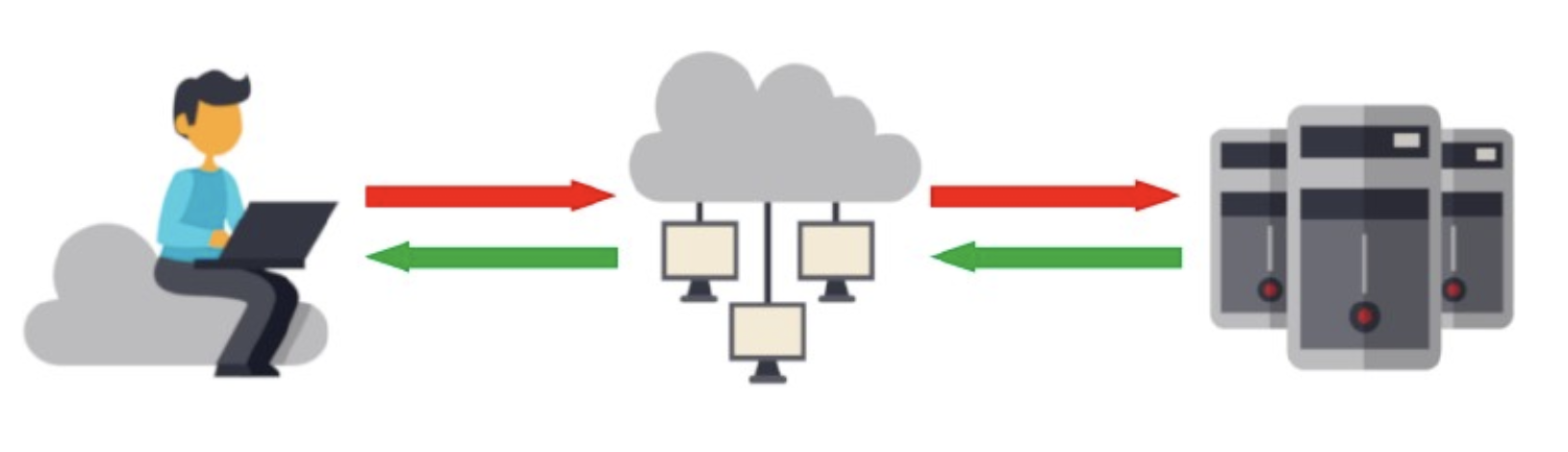
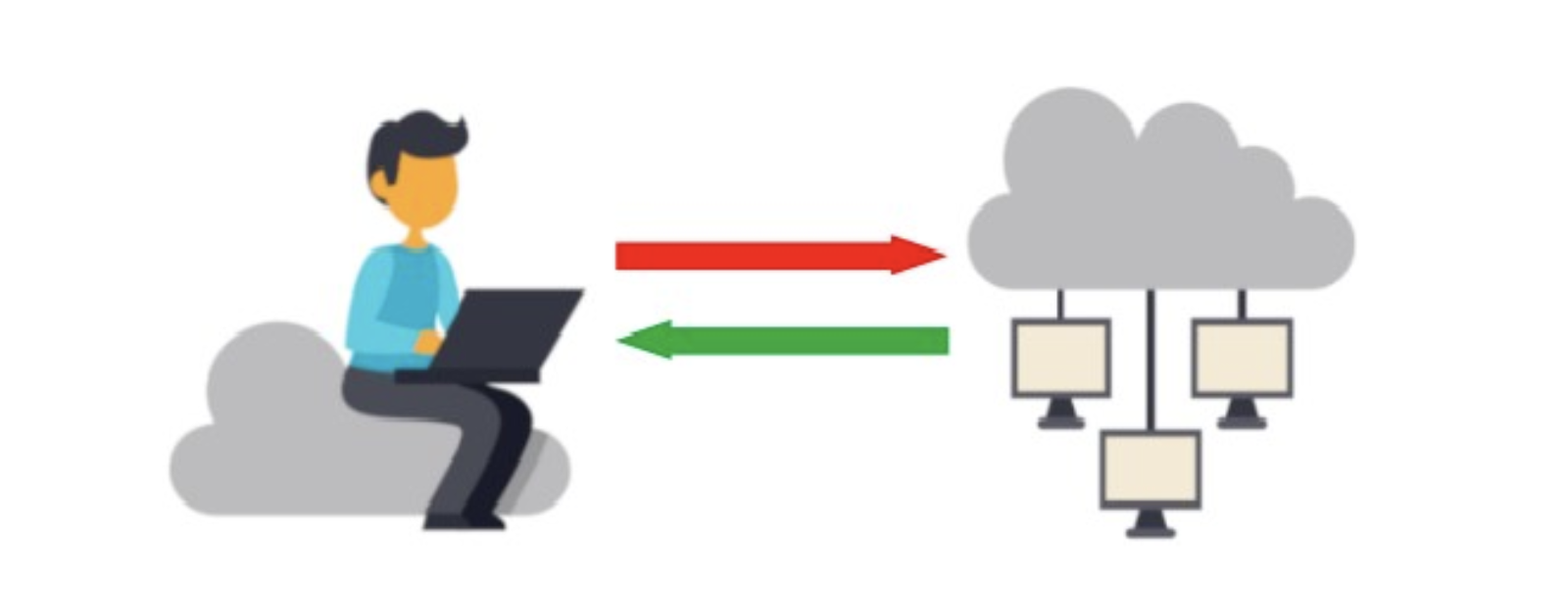
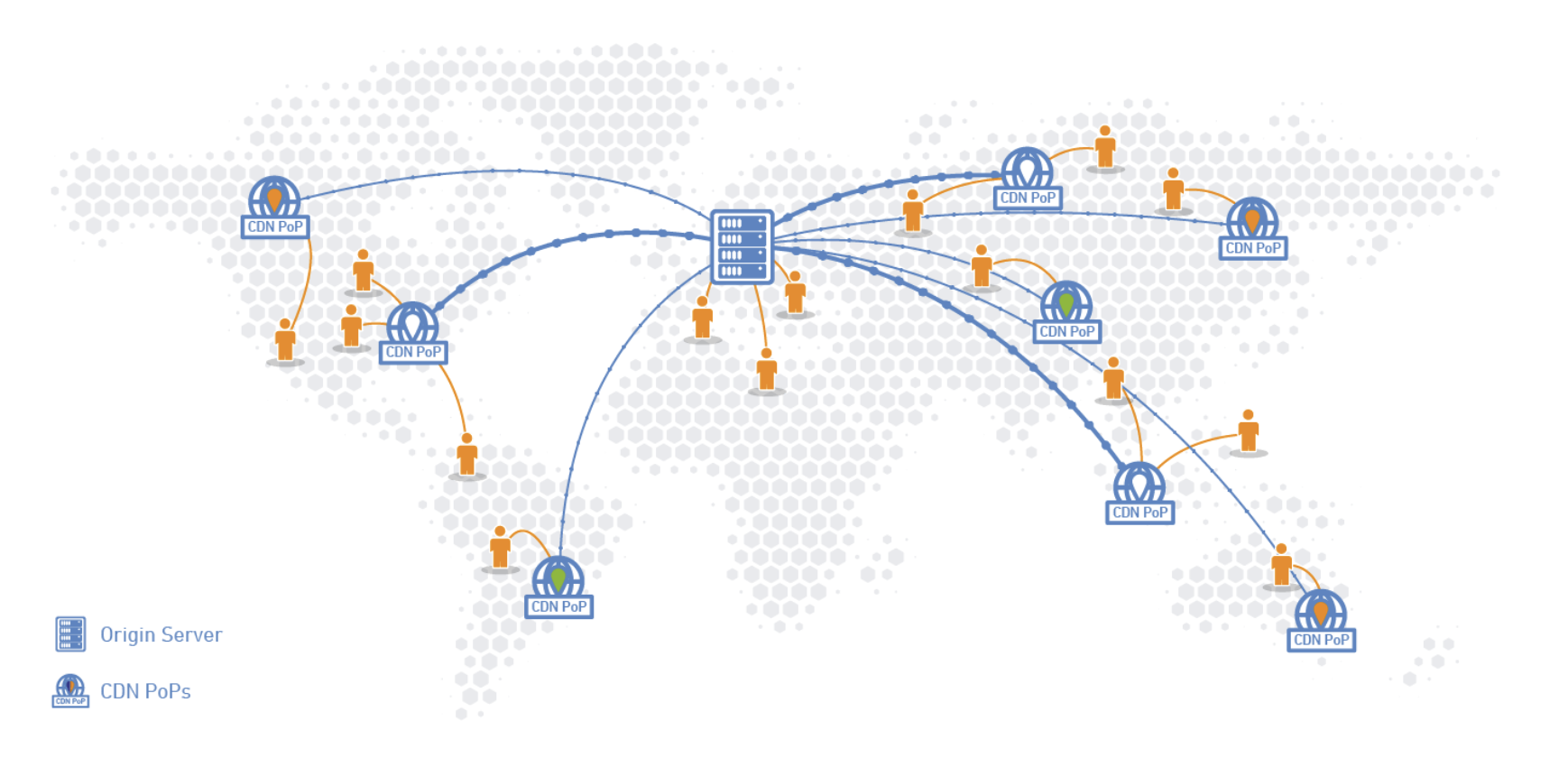
Suppose we are a newspaper/blog and our servers are in a CPD (place where our servers are physically) in Madrid. From now on, we will call our platform “origin”. When we refer to “our origin”, we are talking about our servers that contain the web, and the language of our site is Spanish. Our supposed newspaper/blog will be consulted by users outside of Madrid, outside of Spain and outside of Europe. Being a site in Spanish, much of the traffic we receive will be from Latin America (for an obvious reason, the language). We have our supposed site in mind and now we are going to see what happens with the traffic that comes from the different users. User1, located in the north of Spain begins to browse our site. Enter the front page and start generating traffic, which will go from his location to Madrid (images, videos, etc ..). The request will reach our servers in Madrid, which will generate the content. Once the object is generated, it will be sent to user1 to his location. This time invested in generating the resource requested by the user1 implies many more things: bandwidth, CPU, RAM, etc… So the response time will increase the more requests it must process at the same time. Now, with a single user requesting an object, it is insignificant, but imagine thousands of users requesting the same resource at the same time: we would start to take longer and longer to deliver the content to the user, slowing down the server more and more and being able to arrive, in the worst case, even to throw it away. What can we do to avoid these problems? The CDN has the answer. What we will do is put the CDN between the user and the origin (we remember that the origin will be our infrastructure/servers in which our website is located), in such a way that all the traffic generated by the user will first go to the CDN, the CDN will receive it and it will be the one who sends it to the origin. The CDN has many advantages that we will see, but the main one is web acceleration, and this is achieved thanks to the fact that it keeps (caching) the objects and resources that it is serving. The time that the objects will be stored in the CDN will be set by the HTTP header “Cache-Control”, but we are not going to delve into this topic since it is not the purpose of this post. Going back to our previous example. Our user1 located in the north of Spain starts browsing and asks for the front page of the site. That request will reach the CDN first, which will not have the requested object since no one has asked it before. Not having it, the CDN makes the request to the origin, which will return the object. This object is received by the CDN and saves a copy (cache) to later deliver it to user1. Now we imagine that a moment later, User2 arrives and again asks for the cover (same as User1). Again, the request will go to the CDN, with the difference that now it does have the resource that User2 is requesting. So it will be delivered directly without having to go to the origin. We can now see how a CDN works and some of its main advantages. Now let’s suppose now a User3 who lives in Mexico and also navigates to the front page of our site. Without CDN, that request must make a transoceanic jump, reach our servers in Madrid, and back to Mexico. All this for each request and navigation that is made. Now we are going to imagine thousands of requests from users in Latin America: all the delay that occurs only because of the distance (and the corresponding user experience and how it is affected by the slowness). Although our site is super-mega-ultra-optimized, the physical factor of distance can never be avoided. To give it a solution, we will put the CDN again, since it has a multitude of PoP’s (points of presence) distributed throughout the world, which will be used according to the proximity of the user. This service is called geo-positioning and in our case it is by IP. Depending on our IP, the CDN will know where the request comes from and will send us to the nearest node (CDN server), drastically increasing the speed of content delivery. Image taken from “Speed ​​Index: Optimization and Measurement Guideline” by Holistic SEO. Although it is true that the first request made for an object will not be cached and must reach our origin, once the object is cached, in the successive requests made of it, deliveries will be made from the CDN node closer, and not from the origin. A possible solution for not having what is vulgarly called the «cold cache» is to force requests to your site from different places in order to “heat up” the cache; something similar to “auto-crawling” (a tool that enters and analyzes all the URLs of a site).  
Conclusion

We can say that a CDN is a layer with a distributed system of nodes that are located between the user and the origin to offer the following advantages:

  • Improvement in the user experience: by having the content cached in the CDN, navigation is much more fluid, since we gain that processing latency and content generation.
  • Content delivery speed: thanks to IP geo-positioning, we will always go to our closest PoP, drastically reducing response times.
  • Availability: having the site and its headers well configured, we will have the cache optimized. In this way, we will have a layer on top of our servers that will act as a shield against a fall in our origin, since the content would be served from the CDN and the user will not notice any problem during navigation.
  • Security: CDNs have quite strong equipment and technologies that analyze traffic, request patterns and, when faced with certain strange behaviors, can block requests. Another good practice is to close access to origin only to the IPs of the CND, in such a way that we cannot receive requests from anywhere other than the nodes of the CDN.
  • Positioning: by improving the speed of content delivery, a better SEO positioning is favored.

I hope this article made it clear what a CDN is and why you should have one. It’s a very big and complex topic, so stay tuned to our blog, as we will continue to upload content related to CDNs and much more. And of course, if you are interested in what a CDN can contribute to your business, do not hesitate to write to us at info@makingscience.com