

Leveraging the rise of the digital traveller and User-Generated Content

The travel industry is beginning to pick up momentum again, and consumers are taking any opportunity to go abroad in hopes of recovering what was temporarily lost during the pandemic. When searching for their next location, Customers view content generated by other users as more reliable. User-generated content can take many forms, such as; reviews, Q&A forums, social media posts, comments or videos but Social media has been the powerful tool that elevated online review forums into becoming masses of social posts under locations and hashtags. A brand’s reputation can literally be in a consumer’s hand, especially if they are an unhappy customer.  

When was the last time you booked a hotel without looking through the images in the reviews or even booked somewhere with no reviews at all?

As well as price, location and facilities, travel customers are also looking for destinations and hotels that have good reviews. Customer reviews are trusted 12 times more than the marketing communications from the organisation. Accommodation marketplaces such as Booking.com and Airbnb provide a review section that helps customers determine which accommodation seems to fit their needs without seeing it in person, providing them with a sense of relief that they will not be disappointed when they arrive.

What is a digital traveller? 

User behaviour has evolved over the past few years. Consumers have increased how much research they conduct before booking anything. A digital traveller is someone who navigates through digital platforms and contact points (Travel related websites, review forums and social media pages), collecting insights at different stages of the funnel to help them make a decision. Users typically go through different channels before making a purchase, and this is most evident within the travel industry. Understanding the digital behaviour of travel users and leveraging the trends that contribute to sales is an impactful way of driving engagement and racking up sales.

With so many options and so much information to compare, choosing the right option can get complicated for travel users and leave them frustrated, complicating the booking process. Alistair Rennie and Jonny Prothero of Google have analysed how consumers make decisions within this market. This analysis has revealed how much information and how many options are available to today’s travellers. Consumers enter a loop where they are head-spun between exploring and evaluating which option is the best choice.

Travel marketers and brands should leverage the motivations and biases that buyers rely on and suck them out of the exploration and evaluation loop and into the buying phase.

Insights that lead to personalised marketing comms

User-Generated Content paints a picture of your customers, what drove them to your business and how they felt about the service. These insights are guidelines on how you can optimise and improve the journeys of prospective customers. Whether they arrive directly onto your website or swiped onto one of your social channels, leveraging User Generated Content will irrupt engagement from your audience and ignite a journey that leads them to become customers. By gaining personal insight into your customers’ experience, you can then personalise your Content to showcase your services best qualities that fit the users’ needs.  

When and where should User-generated Content be implemented?

The pandemic may have temporarily slowed down the travel industry, but travellers now follow post-pandemic guidelines to continue exploring. With the industry evolving so fast, new technologies are emerging to facilitate processes for both the traveller and businesses in the travel industry. Aside from social media, another party that plays a big role in travellers purchasing decisions is Google searches. As this is the birthplace of many holiday bookings, Search Engine Marketing is an important channel for travel businesses. Ad-machina is SEM technology designed to optimise your campaign to generate personalised search results. The image below is an ad for Hotel Rio Montego, which includes a rating provided by Tripadvisor, which is calculated with customer reviews. Alongside the reviews, there are specific key features of the hotel that match the interests and needs of the user.

Most businesses have reviews or case studies on their websites, but this is mainly visible to direct traffic. All your channels and touchpoints are opportunities to engage users, so why solely place these reviews in one place? 

User-generated content can be used in emails, paid ads and even landing pages personalised for users interested in similar locations or facilities. The variation of UGC available increases the different ways of marketing UGC. From reposting posts, stories or TikToks, to showcasing snippets of comments and reviews in your email comms, re-using UGC is a great way to ignite some engagement from your travel audience. 

Our marketing realm is thriving off data and machine learning tools, and therefore user-generated Content should be implemented alongside upcoming technologies that use A. I to determine what would your user be most interested in purchasing. Ultimately, gaining a personal perspective of your customers’ feelings is a strategic way of sprinkling a human touch into your data insights.

Download our whitepaper here and discover insights on consumer purchasing behaviour within the travel industry; also, learn more about ad-machina, our revolutionary SEM technology. 
The shift to shoppable media

Consumers are increasingly turning to digital channels to discover new products. A recent survey in 2021 found that almost a quarter of UK shoppers start their product discovery journey on social media, with a higher percentage of 18-24 year olds (43%) and 25-34 year olds (47%) doing so.

More importantly, the same survey found 33% of UK consumers are even purchasing through social media. Clearly, the rise of shoppable media is a trend that E-commerce marketers cannot ignore as they look to diversify their channels through which they sell their products.

The IAB predicts that directly shoppable media will be the fastest-growing advertising category this year, with social commerce, live streaming, virtual consultations and other shoppable ad formats being on the rise. Consumers, attracted by an easy shopping experience, are now increasingly going from the top of funnel ‘awareness’ stage to the bottom ‘action’ in one simple interaction.

So how can E-commerce marketers capitalise on the growth of shoppable media to increase their sales?


Understanding some of the shoppable media opportunities

Adapting media creative for ‘shoppability’

Tools that add interactivity to media are more commonly being used in advertising. For example, QR codes, partly thanks to their helpfulness since the pandemic, are being added to creative on typically non-interactive mediums (such as TV) to allow audiences to ‘click through’ to sites.

Social commerce

The main social media platforms are adding features to organic and paid posts to allow users to buy products shown without leaving the app or site. Many E-commerce brands are also turning to influencers to sell directly and rewarding them through affiliate deals.

Shoppable video

Like a new age TV shopping channel, live streaming is becoming a more popular way of people discovering and buying products online. In fact, a ‘professional’ live streamer in China sold nearly $2bn of products ranging from make-up to electronics during this years’ Singles Day (Alibaba’s version of ‘Black Friday’).


What challenges might be involved?

Control of the user journey

Where marketers give up ownership of the sale on their owned channels, there is always a sacrifice to be made. You may be forced to give up access to behavioural and purchase data, for example. It can also be harder to cross-sell during the purchase as you have less control over presenting a variety of products to the user. Finally, aligning the user experience across owned, earned and paid channels is much harder and more time-consuming.

Attribution of ads from non-shoppable media

As discussed earlier, part of the attraction of shoppable media is in the shrinking of the user journey; from awareness to action in one interaction. This puts immense pressure on attributing all credit for the conversion on that single exposure – simply because it is very easy to do so. But what if other media influenced that purchase? Attributing conversions fairly can be much harder in this situation because there is less access to user data if the purchase was made on a separate platform.

Syncing sales information across channels 

With every extra sales channel E-commerce marketers use, ensuring that pricing, stock levels and assets are synchronised properly gets more challenging. Put in place omnichannel sales management tools and processes to make sure no mistakes creep through the cracks.


As E-commerce continues to grow, marketers need to ensure they are maximising reach and distribution by assessing each new development. Shoppable media presents a big opportunity to meet the customer where they are, leaning on the power of publisher or platform data to put the right products in front of the right people.

Benefits of Smartly.io & how it can help your brand combat Ad fatigue

Creative Automation has changed the advertising landscape and has provided marketers with the ability to have their ads designed and automatically optimised to drive results at scale. Unifying creativity, media, and data, Smartly.io empowers brands to drive better performance across paid social advertising and help tackle ad fatigue. The platform helps marketers drive performance by creating automated adverts across different social media platforms. Requiring minimal human input, Smartly.io automatically creates a relevant ad depending on your target audience.


The silent performance killer – Ad fatigue

Many brands struggle because they have over-saturated their audience with their ads. Ad fatigue is when an audience has seen a brand’s ad so often that they stop reacting and completing the desired CTA. Brands must continuously optimize their ads to ensure they show the best ad to the right audience at the right time. Low click-through rates, less engagement, and fewer impressions are all telltale signs that you are dealing with ad fatigue. Manually designing and testing multiple creative ads can be time-consuming and a financial burden for marketers, even more so if their audience becomes uninterested.

Smartly.io removes the burden of designing and optimising your ads manually to maximise results by providing the tools, dynamic templates, and results that contribute to a better-performing ad. One of the best tools offered by Smartly.io to help fight ad fatigue is Ad Rotation. Marketers can define a rotation rule based on frequency or a performance metric such as CPA to ensure audiences see only the best, freshest ads. Another feature that helps prevent ad fatigue is Smartly.io’s dynamic templates, which offer the creative freedom to advertisers to include brand fonts, colours, logos, and more to ensure their ads stand out from competitors. Both solutions empower advertisers to serve their audience fresher ads.


Smartly.io + Creative Automation 

Creating, publishing, and optimising an advert adds speed and scale and can improve ad performance. Smartly.io’s Creative Automation allows advertisers to scale and test creative variations by connecting any product catalogue, data source, or API to create hundreds of adverts at once to a video or image template. Marketers can then customise adverts across different languages, customer segments, locations, weather changes, and more to ensure advertisers deliver the right message to the right audience at the right time. Another significant benefit of Creative Automation is the amount of time savings. Smartly.io eliminates the tedious, manual work so advertisers can focus on more value-adding work.


They offer brands:

  • Dynamic Image & Video Templates
  • Feed or Catalog-Based Creative Automation
  • Modular Creative Testing


Smarlty.io adjusts and optimises ads to test, improve results, and showcase clear oversight on ad spend. By making decisions backed by data, the platform provides:

  • Creative direction.
  • A clear campaign strategy to brands.
  • Customisations that fit the brand’s goals and resonate with audiences.


Benefits

Smartly.io leverages data to produce the most relevant ads, leading to better performance, improved rates, and increased sales. Creative Automation is based on data, but many marketers fail to associate data & creativity.


Personalisation 

With Smartly.io, marketers can reach unprecedented levels of personalisation. The platform permits brands to upload their data and adapt the ads to be compatible with the desired user’s taste. Personalisation is all about making ads more relevant to your target audience. It is vital to maximising performance, but it’s difficult to do at scale as personalising promotions often requires tedious manual work. Marketers can use data sourced from simple spreadsheets to internal business information to personalise adverts using Smartly.io. Advanced features allow marketers to use location-specific information and audience data to trigger, enrich, and target ads.


Time-efficiency 

Creative Automation enables marketers to create relevant ads with images and videos that use real-time data such as the weather, betting odds, and even language translations to facilitate the creation of seasonal or temporary ads. These ads also display offers or sales that also enforce a sense of urgency to the user to follow up on the ad or complete the desired CTA. Creating customised ads will save marketers hours by dynamically pulling real-time data such as price, discount, availability, and location. Creative Automation can lead brands to achieve optimal results in their social channels. Smartly.io also offers AI-based optimisation across budgets and bidding to ensure marketers reach the highest conversion rates. Automation is the key to aid marketers in focusing on other vital processes and invest more time in their marketing strategy.


Multi-platform performance

Multi-platform marketing is better than one, and Smartly.io uses the same marketing assets and strategies across multiple social platforms to ensure that all the social channels used by the brand consistently show engaging adverts. Advertisers easily distribute these ads from one platform, where the results are also displayed to ensure marketers can make actionable insights backed by data.


Conclusion

Smartly.io is an industry-leading automation engine for ad personalisation designed to deliver a compelling brand experience across social platforms using automated paid adverts. Unifying creative, media, and data empowers advertisers to unlock growth and drive performance across your social platforms.


What about you? Are you ready to give it a try? At Making Science, together with our partner Smartly.io, we have the experience and the team that can help you develop the full potential of your creative ads on social channels through Automation. So we are waiting for you!

Facebook Brand Lift Study: What is the real value that Facebook advertising generates for your brand?

Facebook Brand Lift Study: What is the real value that Facebook advertising generates for your brand?
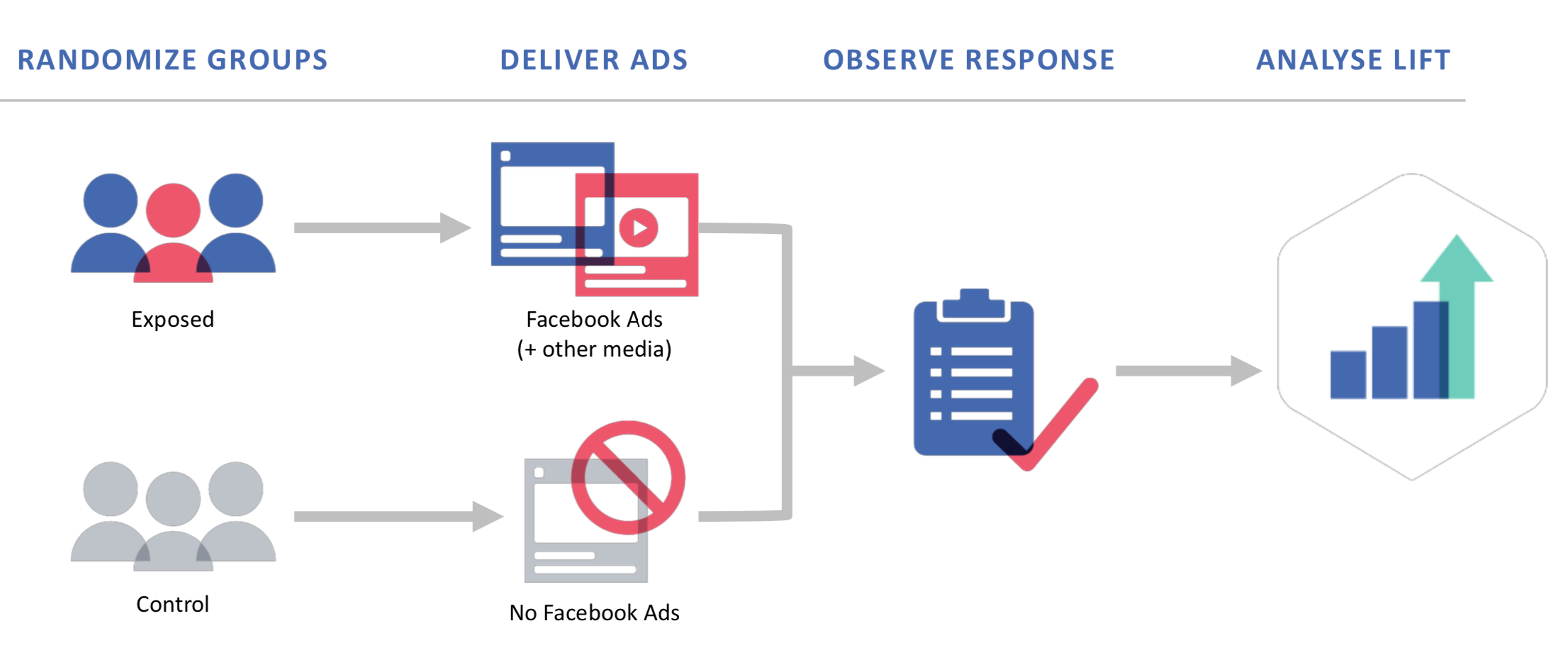
Do you want to know what real value advertising on Facebook generates for your brand? Through the study of improvement of the brand or Facebook’s Brand Lift we will be able to solve this question. But, what exactly is Facebook’s Brand Lift? The study of improvement of the brand or Facebook’s Brand Lift is a study through which we will know the real value that our advertising generates on Facebook in terms of notoriety and recognition of the brand in the market. It is very important that you work this hand in hand with your Facebook partner manager in order to configure it correctly, since the configuration of the study is carried out by the Facebook marketing team. The study can be done through a single advertising campaign or all the active campaigns of the account. They all have to have a common message and graphic so as not to confuse the user and thus contaminate the study. Facebook will launch our advertising dividing the audience into two parts: test group (who will show the ads) and control group (who will not see our ads). Once our audience is divided and the campaign starts serving impressions, Facebook will show both groups survey questions that we will have predefined based on ad recall, brand recognition, and our campaign/brand message association.

Type of questions to choose for the Brand Lift

Brand lift brand studies are prepared with 3 questions that you will have to select and adapt depending on your objective based on a template with different options and topics discussed above: ad memory, brand recognition and association of the message of our campaign/brand. Below we see an example of 3 questions that we could configure in a Brand Lift:

  1. Ad reminder: “Do you remember seeing an ad for [brand / product] online or on a mobile device in the last 2 days?” (This question is required)
  2. Brand awareness: “Have you heard of [brand / product]?”
  3. Reminder message: “What [brand / product] do you associate message X with?”


What are the minimum requirements?

The minimum necessary to carry out the study with the public in Spain (if it is carried out for other markets you will have to fulfill other minimum requirements) are the following:

  • Minimum reach of 2 million people
  • 7 million impressions.
  • 3 weeks duration (4 recommended)

The study itself is free, but to be statistically relevant it needs a minimal budget. The best way to calculate this minimum budget is to use the Campaign Planner.  

What results will I receive with Brand Lift?

Initial results will become available once the surveys have received 250 responses. Once the study is finished, and after ten business days, we will receive a presentation with the complete results. This report will include:

  • The general results, study and details of the campaign
  • A demographic breakdown of the results
  • Benchmarks for campaigns in the client’s industry and region where the study was conducted
  • Tips to optimize it
  • Breakdown of winning responses

In summary, results compared by audiences and knowing if there is an increase with the test group or not. In many cases, the budget that you are already dedicating to your campaigns is enough to carry out the study, so do not stop proposing it due to the investment, since it is very valuable when it comes to knowing the status of the brand in the market and identify new business strategies for the future.

Consent Mode: Google’s new solution to continue measuring conversions while respecting the consent rules

Consent Mode: Google’s new solution to continue measuring conversions while respecting the consent rules
The need to ask the user for express consent before installing cookies on their browser may lead to the loss of conversion measurement for those users who reject this consent. Google, with its new “Consent Mode” functionality, seeks to mitigate this impact. Therefore, it is important that we know how it works. Consent Mode focuses on two types of consent; analytics and advertising personalization. Introducing two new variables, ad_storage and analytics_storage in the configuration, allows you to inform your tags (Google Analytics, GMP and Google Ads) of the status of the user’s consent, adjusting their behavior accordingly. It should be clarified that Consent Mode is not a CMP (Consent Management Platform), but complements the system or solution that is installed to collect the consent of the users. The tags will always be executed, regardless of whether you have the consent of the user or not. The real change comes in the information they collect: If the user has given their consent, the tag will be executed normally, while if they have rejected it, the tag will be executed without collecting or sending cookie information. In this way, it is possible to continue having a basic and aggregated measurement instead of completely losing this information. With the information collected from users who have accepted consent, Google platforms will also be able to model conversions for those users who have not accepted it. Currently, this modeling is not active but it is planned in your roadmap. An additional functionality that can be activated with Consent Mode is the so-called “URL Passthrough”. This option will allow you to send the identifier of the click in the url to be able to continue associating it with a conversion in the absence of cookies. The implementation requires that you are using GTM or gtag, and consists of the inclusion of some lines of code for the configuration. If you want more information on this specific topic, do not hesitate to contact us. On the other hand, to facilitate the process, some CMPs (Consent Management Platforms) such as Cookiebot or OneTrust, among others, already have direct integration developed and facilitate activation. To end this article and summarizing the previous points:

  • Consent Mode arises from the need to comply with the user’s consent without completely losing the measurement. Such a basic and necessary element to allow us to analyze, improve and optimize the activation of advertising.
  • It is currently a beta tool that continues to be developed and will progressively include more features and options, such as the conversion modeling mentioned above.

If you want to know more about Consent Mode, don’t hesitate to contact Making Science and our experts.

Cómo hacer que tu newsletter se visualice bien a tus clientes

Cómo hacer que tu newsletter se visualice bien a tus clientes

How to implement successful digital strategies for Black Friday and Christmas campaigns

How to implement successful digital strategies for Black Friday and Christmas campaigns
If you want to download the detailed report prepared by Making Science regarding the event content , complete the form and we will send you the report. Last Tuesday we organized a breakfast together with Google in Peyote-San, in which we shared our strategic vision to face the digital marketing challenges and the required preparation for the Black Friday and the Christmas Campaign. José Antonio Martínez, CEO of Making Science, kicked off the event with a short introduction explaining what Making Science is and our vision. He introduced some of our success stories from our clients such as Black Limba and Habitissimo whom both in later sessions shared their experiences and improvements in the digital sector.
We’ve seen how Black Friday has become a key date for Spaniards, 70% of consumers have delayed purchases waiting for this day. In fact, the Spanish market is one of the markets with the highest interest per capita for Black Friday.
If you want to download the detailed report prepared by Making Science regarding the event content , complete the form and we will send you the report.

CDN service, advantages of its use and when to use it

CDN service, advantages of its use and when to use it
Im sure many of you have heard the acronym, CDN (CONTENT DISTRIBUTION NETWORK). A CDN is a network of servers spread around the world and connected to each other, so when a query arrives at a resource, the server closest to the site where it was made replies, in order to minimize the bandwidth required and minimize the waiting time of users. Every day we interact with a CDN, when we read a news item on a website, when we make online purchases, when we access a Youtube video or in interactions with social networks. How does the information travel without CDN? The information is shared no matter where a user is geographically, it is requested directly from the originating content server, which can be a great distance away from the user requesting it. How does the information travel with CDN? The perimeter servers distribute data from static websites to visitors who are close to their geographical area. The connection is faster because it is housed in nodes closer to each other. This results in a faster web browsing experience. The main advantages that we can obtain when implementing a CDN within a website are:

  1. Increase the caching of website content and as a consequence reduce the loading time of it.
  2. It reduces the bandwidth consumption of your server, reducing your web server scaling headaches.
  3. It buffers the web server’s need to manage capacity spikes due to traffic bursts.
  4. The geographical barrier disappears, so it is easier to serve content anywhere in the world and leads to a better international web positioning.
  5. Adds an extra security point, blocking spammers and fake bots and attacks on your website.
  6. It can save you money, since the CDN serves a large amount of content with not impact on our server.

A CDN is useful when you have users in different countries and when the pages include a lot of static resources(content). It is recommended that the pages with intensive use of traffic have a CDN, since the traffic load is distributed optimally. In addition, when many files are transferred, a CDN can be very beneficial, especially when many images or many videos are played.

Why bet on AMP?

Why bet on AMP?
We are facing a constant change in our consumption habits. The world wants to have access to information as soon as possible, especially if it is from a mobile device. If we are not satisfied with the initial load of a web page, the solution is very easy; we close the page and look for another information source It is in this time frame where AMP comes into play or, as its acronym indicates, Accelerated Mobile Pages. If we had to choose in a word how to define AMP we would use “speed”. The loading speed on mobile devices is crucial for the user. Pages that take 5 seconds to load are two times more expensive. For mobile visitors, the data does matter, a 3G connection can severely throttle the web bandwidth and take the mobile device up to 19 seconds of loading time. One out of every two mobile visitors leaves a page if it exceeds 3 seconds to load. Today one in two people expects the page load to take 2 seconds or less. AMP loads the pages so fast that they appear to open instantly. It controls all the downloads of resources and gives them priority. Download only what is necessary and previously store all the resources that slow down the load. The use of mobile phones to search is a reality. 96% of the searches from the mobile are made through Google. 69% of consumers in the world between the ages of 18 and 39 use mobile devices to research products before making a purchase. When we have to implement AMP on a website, Google recommends  to simplify code to the maximum to obtain the highest possible speed and a good user experience.  It is clear that Google is committed to AMP as evidenced by Gmail already have been migrated to the technology and Google also is adding AMP in the Web Master Tools. If you are not sure that your code is compatible with AMP or you just want to check if you are on the right track you can check it here link.

ccTLD and gTLD. What type of domain should I choose for my project?

ccTLD and gTLD. What type of domain should I choose for my project?

When starting a new project on the Internet, it is important to define what type of top-level domain we are going to choose for our website. But what is this higher level domain? www.makingscience.com In simple words it is the final part of the address that you type in the browser. The classics are .es, .com, .org, etc. In the world there are more than 300 different types of domain,  clear advantages and disadvantages of each of them so it is advisable to give consideration before choosing one for your website. In today’s discussion, we are going to focus on the two most common top-level domain types, ccTLD and gTLD.

Domains ccTLD (country code Top-Level Domain)

Examples: amazon.es, ebay.fr This type of domain only has two characters and are managed by organizations in each country. Each ccTLD refers to a specific country. The “.es”, characteristic of Spain, are managed by the public entity Red.es, under the Ministry of Industry, Commerce and Tourism. They are recommended especially for those sites that are looking for local geographic segmentation.

  • CcTLD advantages

This type of domain is the most powerful indicator for Google that a web page is oriented to a country, given the existence of high-level domains associated with specific countries (.es, .mx, .fr, etc.). This facilitates positioning at the “local”/national level.  In international SEO strategies, where there are different versions of the same site, the location of the server is irrelevant when defining the ‘location’ of the website. Search engines recognize the domain’s own geographic extension (and not the server’s location) when serving the correct version.

  • Disadvantages ccTLD

In some countries, such as Australia or Argentina, the requirements for using ccTLD domains are strict. The use of ccTLDs to implement an international SEO strategy involves higher costs and efforts than a strategy with gTLDs and subdirectories.

Domains gTLD (generic Top Level Domain)

Examples: amazon.com, microsoft.com, meneame.net, wikipedia.org The gTLDs have a minimum of three character extensions and are not associated with any specific country. Its management depends on international organizations, such as the Internet Corporation for the Assignment of Names and Numbers (ICANN). They are recommended mainly for sites that are looking for a global geographic segmentation.

  • GTLD advantages

Although they are designed for global segmentation, they can be geographically oriented from Search Console. In international SEO strategies with gTLD domains that rely on subdirectories (/ es ​​/, / fr /, / mx /, etc.) the link juice transfer from the main domain favors a faster positioning compared to an expansion through of ccTLD domains. The prestige and notoriety of the .com domains, which are usually understood as the ‘standard’ domain type on the Internet, can mean indirect advantages for a website.

  • Disadvantages gTLD

The most requested denominations in the main gTLDs are usually really expensive (and scarce). It is possible that a gTLD domain with a geographic subdirectory is not sufficient for users to recognize this local segmentation. For example, “/ is /” may correspond to both the language (Spanish) and the country (Spain).   In conclusion, the choice of a higher level or another type of domain will depend on the objectives of each web page. The costs of implementation and the geographical focus that you want to give the project are the two main variables to have in account to make the final decision.