
Search Generative Experience – Google’s AI Search Engine

The fact that AI has exploded across the globe is almost an understatement – and now Google’s latest addition is here (at least if you’re in the US). The not-so-short name of the service is ‘Search Generative Experience’ (nicely abbreviated to SGE) and will enrich your search experience through AI.

Google gives a clear indication that AI is the way forward. Nothing new there really, but still a statement by the giant. The company has been working with AI for several years and back in 2017 they established an AI department as well as had a change of mindset to become an AI-first company. AI is the future!

The benefits of the new AI-loaded search engine will be that you can understand a topic faster, gain new perspectives and opinions as well as get more done – faster. Instead of having to split your searches into several different ones to get the answers you want, you can now ask several questions at the same time, and get answers to all of them – in a single search. For example, if you want to book a trip, you will receive suggestions for hotels, flights and activities – all at the same time. What’s more, you get everything in a ‘snapshot’ where you can find links to dive deeper into the topics you would like to explore. Here you can also choose to build on your search in a more conversational manner, by, for example, asking follow-up questions.
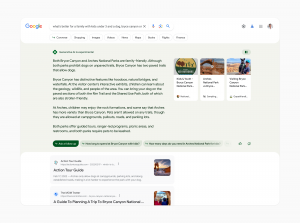


It is worth mentioning that this feature is still in the development phase and will get better with time, as the AI continuosly learns.

The shopping experience for the user is also enriched. You can gain insights so that you have a better chance of making informed decisions. Again, you get a snapshot of what Google’s AI considers the most important factors and the most relevant products based on your search. You also receive product descriptions that include relevant reviews, ratings, prices and product images. This, in turn, places added pressure on companies selling online. These attributes need to be well thought out. It’s important now, of course – but as you can see, competition is not going to decrease. Rather, the opposite.



Google’s “Shopping Graph” has an inventory of more than 35 billion products – making it the world’s most comprehensive dataset of products, vendors, brands, reviews and product information in existence. Over 1.8 billion products are updated as often as every hour, allowing the AI to provide fresh, updated and reliable search results on a consistent basis.

Numerous studies show that customers want to make informed decisions – and that other people’s opinions are incredibly important. Google has therefore designed its new search experience in such a way that it drives you to pages and content where you can get information to make an informed decision. Despite this, the sponsored ads will of course remain and have their dedicated places across the web. However, Google assures that they will maintain their promise of ad transparency and all paid ads will be easily distinguishable from the organic results.

If you’re keen to test Google’s Search Generative Experience, you can do so in the Labs HERE (Note: Currently only available in the US, Japan and India). When the service is launched in the UK, start your Search Generative Experience journey with us!
Search Ads 360: Enhancing Ad Performance

As a marketer in the dynamic landscape of online advertising, you’re likely constantly looking for innovative tools and platforms to amplify your activities’ impact, user engagement, and conversion rates. One of these potent solutions, which has garnered significant interest, is Search Ads 360 (SA360).

Developed by Google, SA360 is a feature-rich platform that enables advertisers to manage, optimise, and measure marketing campaigns across search engines on multiple channels. Today, we’re exploring the benefits of SA360 and delving into how it can elevate a digital advertising strategy.

Centralised Campaign Management

One of the distinctive features of SA360 is its ability to centralise campaign management. Advertisers often find themselves juggling different campaigns across various search engines and platforms. SA360 simplifies this process by providing a unified interface to manage campaigns on Google Ads, Bing Ads, and other search engines. This centralised approach streamlines campaign setup, monitoring, and adjustments, helping teams save valuable resources.

Enhanced Multichannel Optimisation

In today’s interconnected world, consumers interact with brands through multiple touchpoints before making a purchase decision. SA360 takes cross-channel optimisation to the next level by allowing advertisers to holistically manage and optimise campaigns across different channels. You can seamlessly allocate budgets, adjust bids, and refine targeting strategies to ensure consistent messaging and optimal results across various platforms.

Advanced Bidding and Automation

Effective bid management is at the core of search engine marketing success. SA360 enables advertisers to automate bidding strategies based on various factors, including keywords, position, device, time of day, and weather conditions. This level of granularity ensures that bids are optimised for maximum ROI, freeing professionals from manual bid adjustments and enabling them to focus on higher-level strategies.

Real-Time Performance Insights

The key to continuous advertising improvement lies in data-driven decision-making. SA360 provides real-time performance insights and robust reporting tools that allow advertisers to analyse campaign metrics, click-through rates, and conversion rates. These data points enable quick, informed changes, optimising campaigns for peak performance.

Integration with Google Analytics 4

SA360 seamlessly integrates with Google Analytics 4. This integration bridges the gap between clicks and conversions, comprehensively understanding how users interact with your ads before completing desired actions on your website. This holistic approach enables advertisers to refine their targeting and optimisation strategies based on a deeper understanding of user behaviour.

Efficient Collaboration and Workflow

In a collaborative work environment, efficient workflow and seamless collaboration are essential. SA360 offers multi-user access and streamlined workflows, allowing teams to collaborate on campaign creation, management, and optimisation. This feature ensures all stakeholders are on the same page and working toward shared objectives.

By harnessing the potential of SA360, advertisers can promote more efficient, targeted, and impactful campaigns that yield measurable results in today’s competitive digital landscape.

[button color=”accent-color” hover_text_color_override=”#fff” size=”large” url=”www.makingscience.co.uk/contact” text=”GET IN TOUCH” color_override=”#f0076f”]

Meet the Expert!🚀 Getting the most out of Meta Certified Buying Professional with Alice Hagyard

What are the advantages of being certified in Meta Buying Professional?

The main advantage in being certified in media buying for Meta is to have your knowledge and campaign data verified from the source. To know that you are making the right decisions, have the optimal setup, and are giving your campaigns and clients the best chance to perform.

You might think you know your stuff, but to be certified means you have the confidence to believe it.

Do you think being certified in Meta Buying Professional is essential to operate and improve the activity on the platform?

Yes, it’s essential to stay on top of platform best practice. The digital landscape changes quickly, the buying certification allows media buyers to ensure they are getting the most out of their clients advertising dollars.

What advantages of being certified do you think give more value to the client?

The client benefits by having a certified professional running campaigns, as it gives an insight into how the best advertisers are achieving success. Again, the certification is assurance for the client that the team running their ads are doing so with the best setup in mind.


Are you ready to extract the most value of Meta? Our team of experts can help you with any need or case you have related to the platform. Don’t hesitate to get in touch!

[button open_new_tab=”true” color=”accent-color” hover_text_color_override=”#fff” size=”medium” url=”www.makingscience.co.uk/contact” text=”Contact Us” color_override=”#f0076f”]

Meet the Expert!🚀 Getting the most out of Display Google Ads with Blade Rumfitt

What are the advantages of being certified in Display Google Ads?

Being certified showcases your knowledge to clients; the certification process allows you to gain valuable understanding and insight into how to manage the platform and achieve optimal results.

Do you think being certified in Display Google Ads is essential to operate and improve the activity on the platform?

Yes, whilst practical experience is an essential aspect of developing expertise it is also important to understand the workings of the platform to allow for a deeper level of understanding both for Display and for how it works within the wider Google Ecosystem.

What advantages of being certified do you think give more value to the client?

Being certified is certainly an advantage when it comes to our clients, it shows them we are a serious partner who will ensure our work is not only qualified but to the highest standard. It allows for our clients to trust us allowing us to grow together.

Are you ready to extract the most value of Display Google Ads? Our team of experts can help you with any need or case you have related to the platform. Don’t hesitate to get in touch!

[button open_new_tab=”true” color=”accent-color” hover_text_color_override=”#fff” size=”medium” url=”www.makingscience.co.uk/contact” text=”Contact Us” color_override=”#f0076f”]

Meet the Expert!🚀 Unleashing the Advantages of Google App Ads

What are the advantages of being certified in Google App Ads?

When you start running your first Google App campaigns, it can seem deceptively simple, especially if you’ve had previous experience with another less-automated platform such as Facebook Ads Manager. On the surface, Google App Ads appears to be this magical platform where you can set up your campaigns and then sit back and relax. However, completing the Google App Ads certification will help you understand how important it is to gain a deeper understanding of best practices, advanced optimisation techniques and how the Google algorithm works. This knowledge has greatly improved my efficiency in producing good campaign results.

Do you think being certified in Google App Ads is essential to operate and improve the activity on the platform?

Absolutely. To get the most out of your campaigns, you will need to understand how to manage them effectively and how to interpret their results in a helpful way. The Google App Ads certification is the place you should start. With this under your belt, you set yourself up for success on the platform.

What advantages of being certified do you think give more value to the client?

As a certified individual, your understanding of key concepts such as bidding and campaign goals will be elevated. As a result, the performance of the campaigns you manage will almost certainly be elevated as you notice and imagine new ways to optimise. This will lead to greater trust and confidence with the client, which every client will value.

Tell about a professional experience in which you had to apply your knowledge and know-how regarding the tool you are certified for.

One of our clients recently ran a promotion, and half of the budget for each of our active geos was reallocated into new campaigns to focus on this promotion. This presented problems as our BAU campaigns no longer had enough budget to optimise as far down the funnel as they had previously. We were forced to restart these campaigns with a higher-funnel focus, and the knowledge that I gained from the Google App Ads certification regarding optimisation and campaign setup was critical for ensuring that performance remained at an acceptable level.


Are you ready to extract the most value of Google App Ads? Our team of experts can help you with any need or case you have related to the platform. Don’t hesitate to get in touch!

[button open_new_tab=”true” color=”accent-color” hover_text_color_override=”#fff” size=”medium” url=”www.makingscience.co.uk/contact” text=”Contact Us” color_override=”#f0076f”]

Why Apple Search Ads Marketers Should Be Excited About New Placement Options

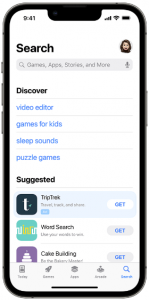
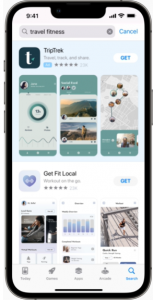
Apple Search Ads (ASA) now offers four placements for advertisers to promote their app. These are Search Tab, Search Results, Today Tab and Product Pages – while browsing. Search Tab and Search Results have both been long-standing options, but Today Tab and Product Pages were introduced earlier this year, since their announcement in July. The expansion gives advertisers more reach and the opportunity to drive installs from users wherever they might be in the App Store. 

What are the placements?


Today Tab

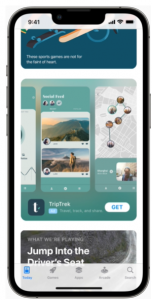
The Today Tab is the front page of the App Store, the first place a user lands when they open the app. Here you can reach users with highly engaging ads and impact them immediately. This placement is excellent for driving awareness as your ad will be one of the first pieces of content users consume when they enter the App Store. However, it’s worth noting that users here are likely to show less intent to download as they’ve not actively sought your app.

Ads on this placement are created from a custom product page set up in App Store Connect, and you’ll need to get approval for advertising before they can be run. 


Product Pages – while browsing

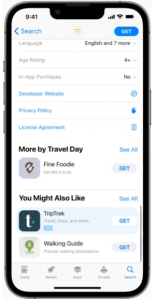
Advertisers can reach users while browsing relevant product pages on this placement. Advertisers can run ads across all relevant app categories or narrow their targeting to specific ones. Intent to download is expected to be higher than the Today Tab since users have expressed assumed interest in your app through engagement with related App Store pages. 

Here, ads are created from your App Store product page. They will display your app name, icon and subtitle.


Search Tab

Search is the primary placement for app discovery on the App Store. After a user has navigated to the Search Tab but before they search, your ad will show at the top of the suggested apps list. Whilst users on the Search Tab show good intent to take immediate download action, it’s important to note that your ad is shown before the search. Hence, advertisers rely on ASA’s machine learning algorithm’s interpretation of relevance to find the best users.

Here, ads are created the same way as Product Pages – while browsing ads from your App Store Product page.


Search Results

Target users with ads after they’ve searched with a relevant query. Advertisers have high control through Exact Match keyword targeting but can also use Search Match campaigns which target ads against queries ASA believes to be suitable from its interpretation of your app, primarily from your App Store page. Users on this placement show the highest intent to download. 

Default ads are created from your app’s product page, but advertisers can create bespoke ads and pages using custom product pages in App Store Connect.


Why should you care?

These new placements should be particularly welcome additions for advertisers using the platform. Whilst the quality of users on ASA is typically high – our data reports CTRs up to 16x higher and CPIs 3x lower than Google App Campaigns throughout October 2022 – the main limitation of the platform is reach, which is comparatively limited versus both Google and Meta’s app advertising platforms. 

In addition, advertisers who utilise ASA’s basic audience targeting options will see their campaigns throttled as their serving is limited to only those users who have opted into personalised advertising. To give some context to this impact, Apple reported that in the first quarter of 2022, 78% of iOS search volume on the App Store came from devices with personalised ads turned off. This is a significant challenge for marketers who wish to (or are required to in the case of specific app verticals like iGaming) target based on age or gender demographics. All of this is to say that the Today Tab and Product Pages placements give advertisers valuable additional reach on the platform. Both deserve consideration in an advertiser’s ASA strategy.

More reach means increased visibility and the ability to hit more users across the platform with potentially more engaging ads. Advertisers should undoubtedly take advantage of these new opportunities in a constant evolution of their strategy and activation. However, there’s no guaranteed success from the adoption of new formats. Each new environment needs further questions to be answered to leverage them most effectively. How do users behave in the placement? How high is their intent to install? How will my ad look? How are ads targeted? What is the competitor auction landscape like? How expensive will the auction be? As with any new feature, advertisers must test each of these placements properly to understand how they can work for their app and advertising goals. 

Does your business need help launching Apple Search Ads? At Making Science we have over 1000 experts who are happy and ready to help your business. Contact our team at info@makingscience.com🚀

Guide to Crypto advertising on Paid Media Channels

Cryptocurrencies are revolutionising how we use our money through investing, banking and paying. This also means we enter a new internet age, web 3.0, where blockchain technology and token-based economics are incorporated.

As with any emerging technology, we see regulatory and legislative restrictions being developed as the environment evolves. Paid media advertising is no different, and each platform’s landscape is constantly changing as new policies are announced. Here are the key action points when advertising your crypto or blockchain product.

Know the audience

In the UK, 18-29-year-olds were twice likely to own cryptocurrency than the older age group (45-60), with 29% admitting to owning at least one cryptocurrency. We could not see this as surprising, as this age group is considered the “iPad kids” age and would naturally be more accustomed to emerging technology as they age.

Females are also growing proportionally to males within cryptocurrency. They now hold 14% of the Bitcoin market and are increasing yearly.

What are the best channels?

As with all channels advertising crypto-related products, there will be restrictions, as you see with gambling and health products. So it is essential to follow each platform’s policy and ensure your brand follows safe advertising practices.

Facebook

An obvious choice is choosing Facebook for its reach; up until Q1 this year, there was the opportunity to even choose cryptocurrency interests, such as Bitcoin and Ethereum, in detailed targeting before they were removed. But before 2021, there was no possibility of advertising on Facebook.

The excellent news for NFT-based brands is that you do not need prior written permission from Facebook to start, as it is not virtual currency. Unfortunately, there will be specific requirements per country before getting this permission.

Twitter

If best practices are used, Twitter can be a fantastic advertising platform. There is a large crypto community within Twitter, and creating engaging ads will drive traffic and conversions to your product.

Like Facebook, it depends on prior written authorisation from Twitter. But, some third-party companies can act like gateways and help whitelist ad accounts free of charge.

Reddit

Arguably the largest community of crypto enthusiasts reside on this platform. Every topic under the sun is spoken about here, making it incredibly detailed regarding contextual targeting. Of course, the algorithm is not as sophisticated as Google or Facebook, but they have taken significant steps to starting competing with them.

Of course, it does not mean anything goes. Any trading platforms with high leverage or crypto lending are an absolute no-go. But it is evident from Reddit case studies big brands love to advertise.

Google

Once a ring-fenced area where no crypto brands could run, they have now let in a few gateways and allow, albeit restrictively, more and more brands in the blockchain world to promote their offerings.

An advertiser can run on all aspects of the platform as long as they comply with local laws and industry standards, plus they will need to be certified by Google. This still does not leave you in the clear. There are still some (annoying) issues that need to be addressed, such as a high frequency of false positive rejected ads, which can disrupt the learning process of your ads.

Other platforms

Due to its young demographic and relaxed restrictions on cryptocurrency, Snapchat is an excellent option to test out, especially for brand awareness with its unique AR lenses and filters.

Quora can help your brand validate when a user is looking for new crypto products and will help drive traffic to the site or app. There is a big issue with high disapproval rates, but this can be due to their terms of service, not from a crypto standpoint.


This list of platforms to use is not exhaustive, and many more crypto-related places, such as Cointelegraph, and coinmarketcap, can be advertised. For now, we focus on the larger, well-known platforms.

As web 3.0 and blockchain mature, we expect to see regulations clearer and more to the point. But for now, it cannot be easy to navigate it. If you want to know more about how to navigate crypto, contact us today!

Trends of a new era: Contextual Cookieless Targeting

Regulatory and technological changes are affecting the ways we reach potential customers. User expectations are evolving. These days, people demand more transparency, choice, and control over the use of their data online. The industry must change, too, to meet these user demands.

The elimination of cookies has already changed digital marketing in many ways:

  • Targeting: segmentation is limited due to the rapid decrease in the use of cookies.
  • Measurement and attribution: the current trend of measuring post-click campaigns means there is a significant loss of conversion data, leading to attribution issues for each channel.
  • Bidding: the algorithms are fed by the data. But, if the absence of cookies limits this data, the full potential of the automatic bidding algorithms is not used.

Programmatic Success in a Cookieless World

For these reasons, we need to find ways to continue impacting our users in the same skilled ways of the past.

The main objective that each marketing manager or paid media marketer should have is to maintain and increase the segments that can be activated after the limitation of cookies, with the following main objectives:

  • Increase the performance of campaigns with powerful results
  • Obtain real-time insights
  • Promote and maintain brand awareness and growth
  • Maximise profitability and boost ROI

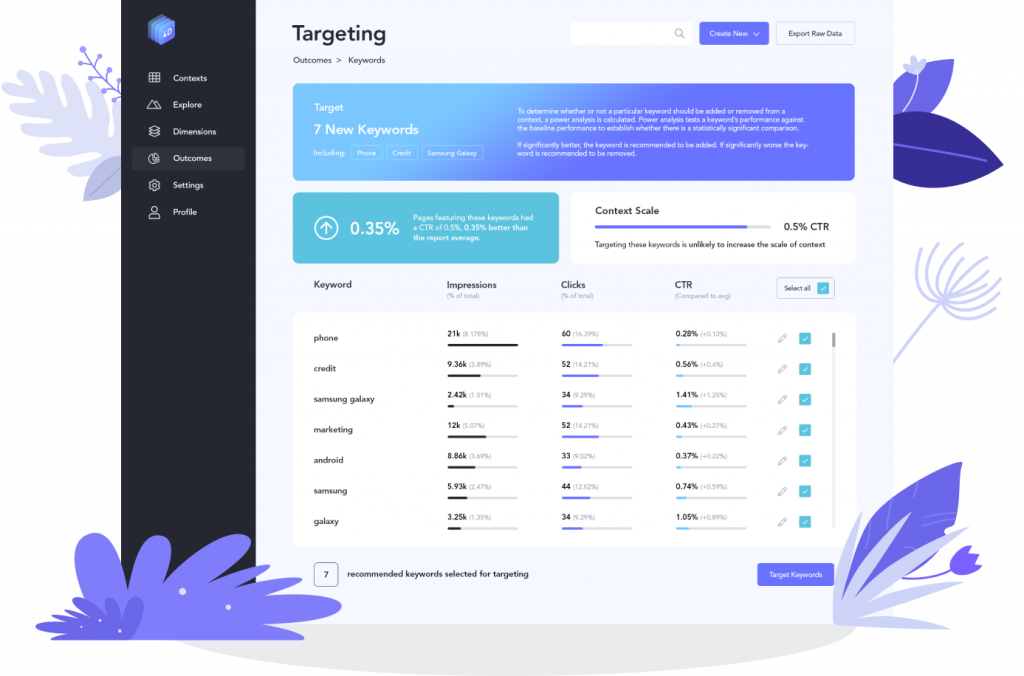
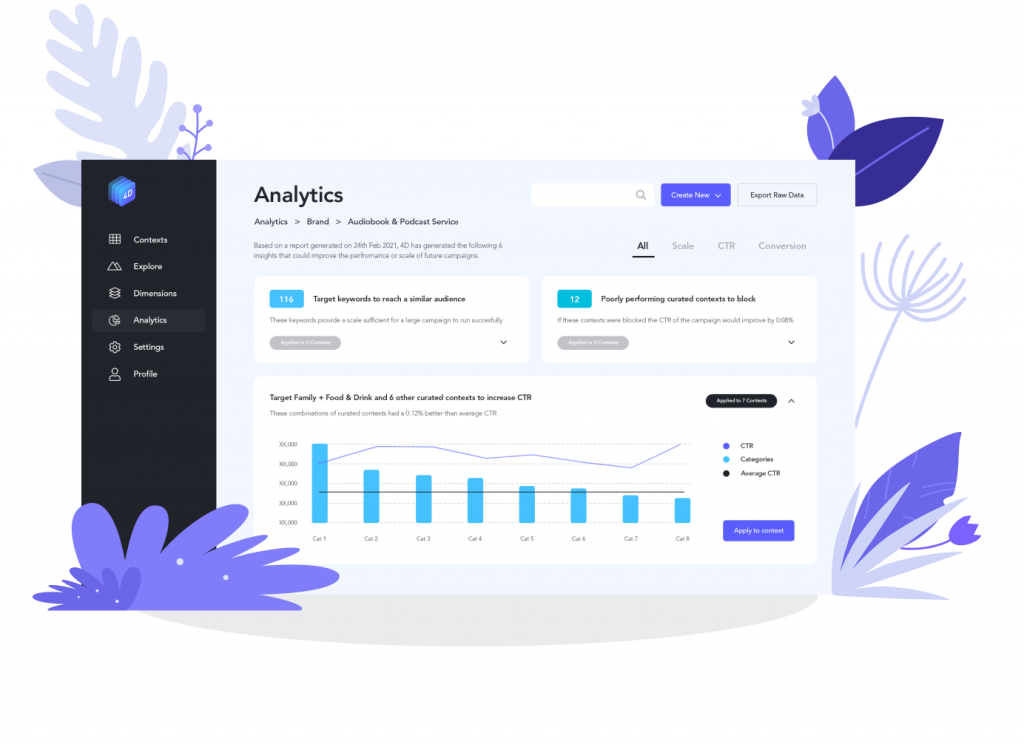
A few months ago, Making Scienceformalisedd a joint venture with the British group that developed 4D technology, a cookie-free solution based on contextual segmentation. This combines programmatic segmentation with Artificial Intelligence and the most advanced machine learning to offer real-time accurate, actionable, and scalable information and recommendations.

Technological Features

With 4D, we can obtain at least a 30% increase in sessions compared to campaigns that do not use this technology, to a 58% increase in unique users. These are some of the features that we can implement thanks to technology:

  1. 4D Tag: implementation of the 4D Tag in campaigns to collect data (privacy compliant) to obtain contextual insights and learnings and activate them later.
  2. Scanning of video and YouTube ads: 4D allows scanning creatives in video format, taking into account various elements to obtain insights and topics that can be activated in your programmatic campaigns.

  1. Advanced reporting based on topics to analyse in-depth the performance of each of your campaigns and reactivate those insights, improving the response rate of users.

Get ready to enter the world of post-cookie privacy with the most advanced machine learning together with the technology to reach customers in the right place and at the right time. It’s the future of digital marketing: its contextual targeting is redefined.

Do you want to know more about 4D technology and the cookie-free solution based on contextual segmentation? Do not hesitate to contact us so that we can analyze your specific case and offer you the best solution. We look forward to hearing from you!

Get in touch

Privacy – A deeper look on Data Privacy Day

2022 has already been identified as a year of digital transition and evolution. Highlights include the emergence of new technologies and the (r)evolution toward improved user privacy on the Internet. These indicate a present and future moment of change that will affect both people and brands.

The metaverse, cryptocurrencies, NFTs (Non-Fungible Tokens), are some trends that brands must understand to best reach their target audiences.

But before looking to the future, we need to remember our homework from 2021: adapting our digital activity to fit the new reality focused on privacy.

We estimate that companies that do not adapt to the current changes in privacy will lose up to 25% of their data if they do not implement new Privacy solutions.

User privacy online is something that fully affects both consumers and companies. With the disappearance of third-party cookies, companies and brands must find new ways to ethically collect and measure user data, while continuing to offer personalized experiences to each user.

Today, on Data Privacy Day, we tell you how you can best adapt and operate with the new privacy rules in order to keep making the most of your data.

2022, privacy’s peak

Companies that utilize customer data must rethink the way they operate online with the disappearance of third-party cookies. User privacy regulations (like the California Privacy Rights Act) affect:

  • what data we collect
  • how we collect it, and
  • how we activate it in our strategies

In the words of Paula Gómez, Data & Adtech Director at Making Science, “If we don’t adapt to this new scenario, it will lead to two major errors. First, it means that we are not respecting the relevant regulations, nor our customers. Secondly, it means our activity cannot be correctly measured, leading to errors in measurements and activations that will affect our business.”

To mitigate these effects, companies must integrate First-Party Data: customer data that the company owns directly. It’s crucial to make this data central to the marketing strategy. Then you can have control over the platforms that capture, process, and activate this data, working within an integrated ecosystem.

Along with this new strategy, we recommend implementing solutions that can help us develop campaigns and actions with the same normality as in the past.

Our most recommended solutions for a cookieless future include:

  • Google Analytics 4
  • Consent Mode
  • Server to Server (S2S)

Google Analytics 4

Google Analytics 4, or simply GA4, has new capabilities that improve user identification across devices and platforms; new capabilities to measure and gain compliant insights; and machine learning-based capabilities for new and advanced insights.

Consent Mode

Another option is Google’s Consent Mode. This solution allows Google tags (analytics and advertising) to adjust their behaviour based on the user’s consent. It can send the information as usual if the user consents. If not, it will send a cookieless ping.

Server to Server (S2S)

Server to Server uses server-side tracing, where a single tag sends information to the server and from there redirects the strictly necessary information to each platform, creating a more secure data flow.

Which option is best for you?

These days, privacy is a very serious matter. Companies must keep their online experience relevant and personalized without compromising the privacy of their customers.

If you haven’t gotten started yet, don’t wait until it’s too late. Our team of Google and first-party data experts would love to help you and your team prepare for this and the many other upcoming changes in the market.

Reach out to us at info@makingscience.com to book a call and see how we can help.

The new generation of Google Analytics: GA4

We welcome the latest version of Google Analytics!

 Google Analytics 4 , Google’s new type of property (yes, there are no views as we are used to) provides, among other things: much more expanded predictive information, deeper integration with Google Ads, more measurement capabilities between devices, and more specific data controls.

The launch is an expansion and renaming of the well-known App + Web property launched last year and marks an important first step in the evolution of Universal Analytics.


We are going to analyse some of its improvements:

  • On the one hand, it will provide us with new knowledge and predictions based on artificial intelligence. While knowledge-based machine learning Analytics has been available for some time, new knowledge and predictions that reach Google Analytics 4 can automatically alert the marketers of trends, such as the growing demand for a product. It will also predict results such as churn rates and potential revenue a business could earn from a specific customer segment. All this information can help us anticipate our clients’ actions in the future and thus focus on higher-value audiences.


  • Improved integration with Google Ads. Now we can generate and maintain audiences of our users on the web and in the application. For example, if a user is qualified for an audience list due to an action performed on the web and were removed from a list because they made an in-app purchase, the list would automatically update to remove the user and not be impacted with ads. In addition, Google Analytics 4 will report on the actions of the YouTube involved views that occur both in the application and on the web.


  • One of the most notable differences between Analytics 4 and Universal Analytics is the organization of the reports based on the customer lifecycle. These reports will help us delve into specific aspects of the customer journey. For example, we can see which channels generate new customers in the user acquisition report and then use the engagement and retention reports to understand the actions these same customers take and whether or not they stay after conversion. The new Analytics experience also aims to offer us a complete view of how customers interact with your business across devices and channels. We can also provide your user ID or enable Google signals to deduplicate users across devices, both in reporting and ad targeting.


  • Another benefit is event tracking without code implementation. This makes it easier for us to monitor and measure the important actions on the site, in the App, and in real-time (in Universal Analytics, events usually arrive with some latency). For example, we can measure a scroll event or the playback of a video without adding code or configuring event tracking in GTM.


  • We are also going to have a more specific user data control. Analytics 4 also includes options to help advertisers comply with data regulations like GDPR and CCPA. Consent mode is designed for sites that must have end-user consent to collect analytics data, and this new mode provides us with separate consent options for analytics and ads. Data deletion options have also been improved, allowing companies to fulfil user deletion requests without having to delete more data than is necessary. In addition, it includes a preview mode so that companies can verify the data they are about to delete.


  • How will it affect our analytics in the future without cookies? Well, as third-party cookies are removed, Google already anticipates that data scarcity will become the new norm. It will rely on machine learning to repopulate data gaps.


In conclusion, the new property of Google Analytics 4 provides a complete cross-channel view of the customer life cycle and uses that information with predictive marketing functions, providing us with more information and more efficient ways to act based on those discoveries.

We recommend that you configure a new property with this new version when you have to configure a new property. The previous one, Universal Analytics, will continue to be available, but we recommend activating GA4 since it will focus on improvements and news within Google and keep both measurements in parallel.

Our team of experts here at Making Science can help you accelerate digitally! Ask for information at info@makingscience.com.