

Making Science Launches Creative Hub, a Performance AI Tool that Boosts Ad Sales by Up to 20%

London, 19th June 2025 — Making Science, a global consulting firm specialising in AI-powered digital acceleration and performance marketing, has today announced the launch of Creative Hub, a game-changing performance AI tool designed to give marketers full control over how they can create, measure, optimise, and scale creative assets for advertising in the age of generative AI.

Unlike other AI creative development tools available on the market, Creative Hub provides brand teams with full control over the creative process while leveraging advanced generative AI to quantify creative elements, analyse their impact, and provide actionable insights to improve campaign effectiveness. This unique technology empowers marketers to make data-driven decisions about their creative assets, ensuring every visual and message statistically correlates with business KPIs.

Whether it’s the inclusion of people; the number of people; close-ups; distance; light; shade; nighttime or daylight; nature or city backdrop, as just a few examples. Every single creative attribute is analysed and refreshed so that the creative performance gets stronger, not weaker, over time. This process is a powerful multivariable analysis, with all attributes analysed together to provide understanding about how one attribute affects the others.

“Automating the creative process with AI isn’t a new concept, but enhancing and optimising ad creative, with full control, is. Creative Hub represents the next evolution in performance marketing,” said José Antonio Martínez Aguilar (JAMA), Founder and CEO of Making Science. “With Creative Hub, our clients can overcome the challenge of creative fatigue to rapidly refresh creatives based on what the data shows is working without handing over the creative process to a black box. You’re not guessing; you’re optimising with purpose, while also ensuring that the brand messaging is consistent”.

JAMA’s message is echoed by one of Creative Hub’s early adopters, hotel chain Bahia Principe. 

“Since integrating ad-machina technology into our operations, we have experienced a fundamental transformation in our ability to manage and optimise our visual assets,” said Enrique Ortiz de Zárate, Digital Acquisition Manager at Bahia Principe. “It has allowed us to scale the production and adaptation of our creative to an unprecedented level. We can generate variants of our ads for a myriad of formats and audiences, ensuring that every image, or video we use for our holiday destinations resonates uniquely with the ideal customer. This has given us massive personalisation without compromising the visual quality that defines us as a brand.” 

By freeing up the creative teams from the most repetitive tasks, ad-machina has enabled the hotel chain to spend more time on strategic ideation and less on manual adaptation. In turn, the company has experienced a remarkable increase in the relevance and performance of its campaigns, directly linked to the implementation of ad-machina. 

“Our CTR has increased by over 43% and web traffic by more than 8%,” remarked Ortiz de Zárate. “In pure brand terms, demand has grown by almost 27% and clicks by 12.9%, with our average basket value increasing by over 13%. Furthermore, our brand and destination bookings have increased by 68% and revenue by over 61%, in addition to a 28% increase in CVR.”

JAMA explained, “With Creative Hub, ad-machina not only automates 80% of tasks that consume creative time, such as image and video resizing or copy update and variation management, but it goes a step further through the integration of agentic AI. This technology allows not only autonomy but also the decision-making capability and control over every aspect of the campaign—something that becomes fundamental as AI becomes more autonomous.”

Having pioneered the development of automation tools for performance marketing with the launch of ad-machina almost a decade ago, the addition of Creative Hub to Making Science’s ad-machina portfolio is another way in which the company is setting a new standard for the industry. 

Key features and benefits include:

  • Quantifiable creativity: Creative Hub fuses AI and traditional ad production to push creative boundaries and turn subjective creative choices into measurable data points.
  • Enhanced campaign performance: Clients can achieve up to 20% more sales, 80% faster, through AI-driven creative optimisation and rapid asset modification.
  • Creative control: Brands can retain full creative oversight while harnessing the power of AI for design and production, ensuring brand integrity and originality.

“The differentiation point for ad-machina tools, including Creative Hub, is performance. Ad-machina was originally developed for Search with textual ads by utilising the information provided by the consumer to personalise the message. The introduction of generative AI has accelerated the evolution of our software to generate text as well as enable image and video, and empower teams to analyse and optimise each element, resulting in a bigger uplift,” concluded JAMA.

Within the continuously evolving landscape of advertising, Making Science remains ahead of the curve, helping businesses accelerate growth and unlock the full potential of their creative assets.

To find out more about Making Science’s ad-machina platform and Creative Hub, visit www.ad-machina.com
BeReal launches advertising in the UK and EMEA

A new era for authenticity in digital advertising

BeReal promotes authenticity and spontaneity in everyday sharing, setting itself apart in the social media landscape. After launching ads in the US, BeReal has expanded this feature to users in the UK and EMEA. The platform’s model preserves the genuine spirit that has attracted millions of users worldwide, providing companies with a new, authentic way to connect with audiences.

Advertising formats on BeReal

According to Aymeric Roffé, CEO of BeReal, the introduction of the ads aims to respect the platform’s core values. “We have always put authenticity first on BeReal, and our advertising model reflects the same principle. We offer companies the opportunity to connect with our audience in a way that feels authentic and engaging, while staying true to the ethos that has made BeReal a phenomenon”.

With the arrival of advertising, brands are able to use different formats, including native in-feed ads and high-impact takeovers. These advertising formats are designed to replicate typical posts on the platform, using the dual camera to offer a behind-the-scenes cue or capture consumers’ genuine reactions. BeReal’s goal is to integrate advertising in a way that does not interrupt the user experience, but complements it with content that feels like a natural part of the everyday narrative.

Nike, Netflix and Pepsi: the first brands to launch on BeReal

Among the first brands to take advantage of this are Nike, Netflix and Pepsi, who saw the platform as an opportunity to reach their audience in an innovative and personal way. This marks a significant step for BeReal, which is evolving from being a niche app to an attractive marketing channel for companies that want to communicate directly with their consumers.

The ability to publish ads that integrate naturally with user-generated content is a competitive advantage in a market increasingly sensitive to intrusive advertising overload.

BeReal’s numbers: an active and engaged audience

In January 2024, BeReal reached 23 million monthly active users globally. Although the platform is particularly popular in the US, it is also rapidly gaining ground in the UK and Germany.

70% of BeReal’s daily active users publish content every day and spend an average of 30 minutes on the app. This figure underlines the high level of engagement. The daily engagement is valuable for brands, who now reach a receptive audience ready to interact with content authentically.

What does it mean for brands?

For companies, BeReal offers a unique opportunity to interact with a more selective audience than other social networks. With 70 per cent of users posting daily and spending an average of 30 minutes on the app, the level of user engagement and loyalty is high compared to other social platforms.

BeReal represents a channel able to create more authentic connections, without being invasive. In an era where authenticity is becoming increasingly sought after by consumers, BeReal offers a new frontier for digital marketing. Here, companies can make a difference not only with their products, but with the way they choose to tell their stories.

Want to integrate BeReal into your strategies?

Contact us to find out how to use this platform in the most effective way for your brand.

[button color=”accent-color” hover_text_color_override=”#fff” size=”large” url=”https://www.makingscience.co.uk/contact/” text=”Contact us!” color_override=”#ff0067″]

Converting traffic into loyalty: Strategies for acquiring and retaining high-quality audiences

With digital competition fiercer than ever, the race to acquire traffic has evolved into something far more strategic: building customer loyalty. Brands no longer just face the challenge of drawing consumers in—which became a big focus after the pandemic — but rather the high stakes task of turning their interest into loyalty. Brands that stand out are the ones that prioritise customer retention by making every click count — leveraging adaptive, data-driven marketing strategies that facilitate personalised journeys across the entire marketing funnel.

Traditional approaches, including keyword optimisation and targeted ads, draw users in they’re no longer enough to keep customers invested. Instead, brands need to be adapting, delivering relevant, tailored experiences from the first interaction.

Real time data has become a game changer for brands aiming to create personalised customer journeys. By adjusting offers and recommendations based on live insights, brands can ensure that each interaction aligns closely with individual customer preferences and browsing behaviours.

For example, if a customer is browsing a brand’s website and spends several minutes looking at outdoor jackets, a pair of matching hiking boots or a discounted bundle offer on related gear can be instantly suggested to them based on that behaviour.

This approach helps brands attract high quality traffic that is more likely to convert in the moment, feel valued, and return to their website.

Personalisation at every step and segment

Today’s consumers expect brands to know what they like and what they need, whether they’re loyal buyers or first-time visitors. Personalisation at every step is critical, and brands must segment their audiences to speak directly to each group’s interests and position in the journey.

By tailoring content to frequent buyers, one time visitors, and new users alike, brands can attract the right audiences using fitting measures and set the foundations for fostering loyalty. For existing customers, this might mean personalised rewards or early access to products; for new customers, a warm welcome with a first time gift or an introductory experience tailored just for them.

Creating impactful connections goes beyond segmenting; it’s also about crafting a journey that speaks to each customer’s unique position. Brands that design meaningful experiences at every level make each interaction worthwhile, encouraging repeat engagement.

Take Cartier, for example. Instead of a one-off Valentine’s Day promotion, Cartier starts its campaign six weeks before the event, gradually rolling out messages that resonate on an emotional level and build anticipation. Through well-timed content, Cartier draws audiences into a memorable journey, creating a sense of exclusivity and making customers feel like they’re centric to the brand’s world.

Moving from vanity metrics to real engagement

While click-through rates and impressions provide a view into audience interest, they don’t guarantee loyalty. Brands that focus on genuine engagement build deeper, longer lasting relationships.

Of course, a customer loyalty strategy must still be measurable. But to gauge success, brands need to look beyond surface level metrics and focus on actions that reflect loyalty, such as repeat purchases, customer feedback ratings, customer lifetime value (CLV), and net promoter score (NPS).

Airbnb, for instance, has moved past mere engagement metrics to create experiences that foster a sense of community. Through programmes like Airbnb Experiences — which allows hosts to share unique local activities— it builds connections that make customers feel valued and, in turn, invested. This approach shifts the focus from impressions to interactions that develop loyalty, turning each stay into a memorable experience.

Real time personalisation with AI

In an age of automation, artificial intelligence (AI) is an essential tool for delivering real time, personalised experiences. With AI, brands can track user behaviour and adapt their messaging as customer preferences shift, making every interaction more effective. From predictive analytics to content generation, AI helps brands anticipate needs and respond quickly, allowing them to convert interest into loyalty.

Sephora is a great example of this approach in action. Sephora leverages AI to create a personalised, interactive shopping experience through tools like its Virtual Artist toolkit, which allows customers to “try on” products virtually. This real time interaction builds confidence in purchase decisions, while Sephora’s AI-driven recommendations ensure that each customer feels understood.

Having multiplied its online sales by four times and grown its brand loyalty since launching its AI infused strategy, Sephora has demonstrated how AI personalisation can turn one time shoppers into loyal customers by offering a convenient, tailored experience that resonates deeply.

From listening to action: how brands can learn from their users

Spaniards spend an average of nearly two hours a day on social media*. But what exactly are we doing during that time?

For older generations like Gen X and Baby Boomers, social media is primarily a way to stay connected with friends and family. Meanwhile, Gen Z and Millennials are more likely to use these platforms to keep up with current events, engage with content like memes and videos, and create their own posts. While each generation has its own preferences, behaviors, and concerns, they all share one common trend: we are spending more and more time online.

For brands, understanding the audience is critical to ensure that marketing efforts reach the right people. In today’s fast-paced, ever-evolving digital landscape, simply reaching an audience is no longer enough—brands need to make an impact.

How can brands achieve this?

It’s not just about knowing who the audience is, but about understanding how to connect with them: what they enjoy, where they spend time online, what concerns them, and the communication styles they use.

To gain this insight, brands have access to powerful tools that help them analyze everything from a user’s age and profession to their daily habits and activities. Additionally, social listening platforms allow brands to track real-time user interactions and responses across social networks and digital channels.

But how can brands make the most of this information?

The answer lies in engaging with users where they are and tapping into conversations that resonate with their interests. This is a golden opportunity for brands to become more relevant by joining discussions that matter to their audience.

A key strategy is to adapt to the unique communication styles of each platform while maintaining the brand’s voice. For example, memes have become a staple of online culture, and tapping into their viral potential is an effective way to increase brand visibility—though it requires quick action, as trends rise and fall rapidly. Social listening tools can identify trending content, allowing brands to adjust their messaging and boost engagement by fostering a more active and personalized online community.

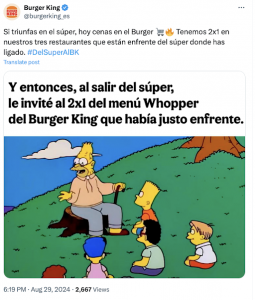
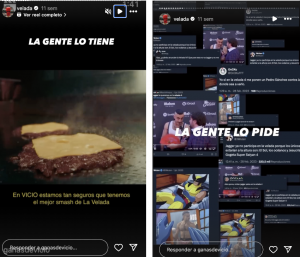
Speed is another essential factor. Reacting quickly to social media trends and events can amplify a brand’s impact. A prime example is “La Velada del Año,” the most-watched digital event on Twitch, which peaked at over 4 million viewers and proved that this platform isn’t just for niche audiences. With nearly half a million social media mentions, many brands, like Vicio, capitalized on the event by listening closely to what their audience wanted, breaking records for new followers and engagement.

In short, social listening not only helps brands understand user needs and preferences but also provides valuable insights for developing marketing strategies. It reveals how competitors are engaging with their audiences, uncovers user perceptions and demands, and highlights opportunities to join relevant conversations.

So, are you making the most of social media to build meaningful relationships with your target audience?

*Source: GWI Spain (16-64 years)

Google Backpedals on Third-Party Cookie Deprecation: A Win for the Industry, a Focus on User Choice

Google has significantly shifted its approach to third-party cookies, opting to maintain their use while introducing a new framework prioritising user control. After years of delays and industry concerns, this decision marks a departure from the company’s plan to fully deprecate cookies. Read more about the official announcement from Google here: https://privacysandbox.com/news/privacy-sandbox-update/

The rationale behind Google’s decision is clear: they listened to industry concerns about cookie-free futures. By preserving cookies while introducing enhanced privacy controls, Google aims to strike a balance between protecting user data and maintaining a thriving digital advertising ecosystem.

The core of Google’s strategy is to empower users, as they intend to provide users with greater transparency and choice over how their data is used, allowing them to opt in or out of tracking. This approach could level the playing field, as both cookie-based and cookie-less solutions will have the opportunity to compete for user attention.

Even though details about Google’s proposed changes are still emerging, this announcement undoubtedly relieves the industry. Businesses will have more time to adapt and invest in alternative tracking technologies while also addressing privacy concerns.

Our US Nick Tiano, Chief Revenue Officer, expressed,

“I think with the steps Google took, they were clearly listening to regulators and the adtech industry. This pivot appears to be warranted and is a major commitment from Google to give users and adtech providers a choice on the matter of 3P cookies. Now the Sandbox and other privacy-forward solutions can compete on merit and user preferences (or opt outs) will dictate performance and ultimately what technologies win out, 3P cookies or alternatives.”

Ultimately, Google’s decision to maintain third-party cookies while emphasising user control represents a thoughtful compromise. It’s a move that could shape the future of digital advertising for years to come. Read more about Google’s decision here: https://www.thedrum.com/news/2024/01/04/marketers-publishers-brace-impact-1-third-party-chrome-cookies-vanish-today or get in touch with our experts.


[button color=”accent-color” hover_text_color_override=”#fff” size=”large” url=”www.makingscience.co.uk/contact” text=”Get in touch!” color_override=”#ff0067″]

AI comes to Google: The future of SEO with SGE

SGE (Search Generative Experience) will be a major change in the search experience and the way results are displayed in the SERPs.

But first of all, what exactly is SGE? It’s a radical update from Google, which will start using AI to generate contextual answers to complex questions.

AI in search engines

The impact of ChatGPT since the end of 2022 and its very rapid integration into the digital status quo, especially among young people, has led tech giants (such as Google) to further accelerate the deployment of their AI-related technologies.

Within the search engine market, Microsoft has moved ahead with the integration of ChatGPT into Bing as early as 2023 and Google has responded quickly with the announcement of SGE, based on Gemini, its LLM that promises to be more powerful than GPT-4.

The common formula is the integration of an AI module on top of the search engine that not only directly answers complex queries accurately, but also enables deeper searches through a conversational interface.

What do we know so far about the impact of SGE on SEO?

SGE will bring about an evolution in the way we search for information on the Internet, as ChatGPT has already done.

SGE is being tested in the USA, and the SEO team at Making Science has already been testing this new experience to draw some preliminary conclusions before its final international roll-out:

Several sources of information

This new AI module draws from many sources to offer more complete information:

  • Media: Very relevant, especially in information searches. Media attention, through PR teams, is essential to manage the conversation around brands.
  • Shopping feeds: PDPs everywhere in searches closer to conversion. A good product feed is essential to appear here. It seems that achieving a more complete shopping experience is one of SGE’s main objectives.
  • Reviews: Google knows that reviews are powerful conversion triggers, and integrates them into SGE for searches close to conversion. The focus should be on optimal Schema markup and online reputation management.
  • Social media: Social media conversation is especially relevant for topical or trending searches. Inspirational approach.
  • Google Maps / Business Profile: Many of the searches, even when not explicitly geolocated from the query, return local SEO results.
  • Multimedia: Text, images, video, FAQs, social media… what seems evident is that covering searches with multiple formats is going to be essential to capture the key terms in SGE

SEO strategies impact

There are a few things that seem to be clear, and that don’t really change the ‘traditional’ approaches to SEO strategies that much:

  • The classic Google Top 3 will determine what comes out of this block.
  • There will still be ads (as they are Google’s main revenue stream), but to a lesser extent. At least at launch.
  • SEO-optimised elements or content will continue to be relevant in order to match users’ searches

And what will the SEO performance be like?

Organic traffic is expected to decrease because it is assumed that the traditional SEO results will show even lower in the SERPs (with the consequent drop in CTR): Google as a “media” in its own right, which means a drop in overall SEO CTR.

However, the user has the opportunity to become more qualified in conversational mode before clicking on a link, which could benefit SEO conversion.

In addition, users could make even more intensive use of Google, especially younger audiences, who now turn to platforms such as TikTok. In any case, it remains to be seen if this hypothesis is true and, if so, if it will compensate in terms of traffic for the drop in positions of traditional organic results.

Types of content that could be most affected by SGE

We predict that the impact of SGE will be even greater for some types of content:

  • General informational content: Direct answers to factual questions, definitions of concepts, general explanations of a topic, etc. SGE could directly answer many general information queries without the need to take the user to another website.
  • Comparative content: Such as product comparisons, rankings of best options, pros and cons reviews. SGE could generate this comparative content in an automated way.
  • Simplified content: Such as summaries, simplified guides, step-by-step explanations of a process. SGE could extract and synthesise the most relevant information.
  • Repetitive content: Such as similar listings on a topic, frequently asked questions, duplicate content. SGE would reduce the need for multiple pages of redundant information.
  • Local content: Location-specific answers, such as business hours, local business addresses, geolocated recommendations.

Websites that rely on this type of content for their organic visibility should rethink their SEO strategy with the arrival of SGE if they don’t want to be negatively affected.

Conclusion

Essentially, Google’s SGE marks a revolutionary development in SEO. With AI shaping the digital realm, it’s vital to keep pace with these shifts and comprehend their significance to uphold an advantage in online presence

Revolutionise Your Hotel Advertising with Tripmax

In the ever-evolving landscape of digital marketing, staying ahead of the competition is imperative, especially in the hotel industry. Google Ads has long been a powerful tool for advertisers, but there’s a game-changer on the horizon – Tripmax. In this article, we will provide an exploration of this innovative Google Ads product to help you understand how Tripmax can revolutionise hotel advertising campaigns; and we will conclude by mentioning some tips and best practices that Making Science has implemented with one of our clients.

Simplifying Hotel Advertising

Tripmax is part of the Performance Max for travel goals campaigns, tailor-made for hotel performance advertisers. It offers a streamlined approach to reaching your target audience across all Google properties, simplifying the process and driving more direct bookings. With a single, user-friendly setup, Tripmax empowers advertisers to create property-specific asset groups, enhancing the overall performance of their Google Ads campaigns.

Getting Started with Tripmax

Before you embark on your journey, there are essential prerequisites to consider. Let’s explore the steps to set the stage for a successful Tripmax campaign:

  1. Link to Hotel Center or Google Ads: To initiate the campaign, you must first link your account to either Hotel Center or Google Ads. This link serves as the foundation for your campaign setup, streamlining the process and enhancing efficiency. The choice between Hotel Center and Google Ads largely depends on the number of properties you have. If your account has no more than 100 hotels, linking to Hotel Center is the ideal choice. For those with over 100 properties, creating a hotel properties feed is the recommended path.
  2. Creating a Hotel Properties Feed: To maximise the benefits of Tripmax, it’s crucial to establish a hotel properties feed within your Google Ads account. You can achieve this in two ways: using the hotel picker or Google Maps URLs. Each method simplifies the creation of property lists and the management of assets, contributing to a more efficient campaign setup.
  3. Creating the campaign & asset groups: Once you have completed these tasks, you can create your Tripmax campaign by creating a new campaign as you would normally do. With “Sales” as the objective, choose “Hotels” under “What are you advertising?” and select your Hotel Property feed source. All other steps are the usual: specify budget, bidding, target, assets, etc; and publish! You can then create Asset Groups and link them to specific hotels. Google will automatically suggest headlines, descriptions, images and other assets, simplifying the process of setting them up – but they are 100% customisable.
  4.  Let the ads run! Once everything is ready, it is possible to activate the asset groups and start reaching your potential clients through Search, Gmail, Maps, YouTube, Display, Video & Discover.

Best practices & Other tips

  • Tripmax campaigns were originally designed to cover the Upper Funnel, increasing brand awareness. The more images (max 20) and videos (max 5) we include in the asset groups, the more options Google will have to show our ads in different networks. This is the reason why the recommended practice is to exclude the brand (through the creation of a brand list), preventing our ads from showing in searches that include the name of our brand. Apart from this, in settings of the campaign, you should select “Only bid for new customers”.
    • However! Since this is a tool that covers so many placements (even Search!), at Making Science we have started an experiment with one of our clients. For locations where the budget is limited and having different campaigns is not optimal, we have tried leaving only a Tripmax campaign, without excluding the brand. This way, we can cover all levels of the funnel while reducing costs – and it is working great. Even though this is not the ideal option, it is a very good solution for when resources are scarce. 
  • The best practice for promotions is to create a new asset group that is not linked to any hotel, and that will work as a normal PMAX asset group. In it, we will include all the headlines, descriptions and creativities of the promotion, and we will activate it only during this period of time (until the next promo!). Given that we cannot decide how the budget is distributed among asset groups, to make sure that the message is reaching our potential customers, with our client we add a couple promo titles and descriptions -as well as images and videos- to the Hotel Asset Groups, to maximise the possibility of Google showing the discount to users.
  • Adding audience signals to Asset Groups is recommended, because the platform will learn from these users and look for others that behave similarly. If you have a list of clients for each specific hotel, this will work even better!
  • We understand that sometimes, our ads reach users that we never wanted to impress, and it is inconvenient. If you see this happening to your campaign, there is a solution. Even though it is not possible to exclude certain terms or topics from Tripmax, you can always ask Google to create a “negative list” for you, where you include all terms that should be avoided by your ads.

All in all, Tripmax is a great tool for the Hotel industry, especially for investing in the upper funnel level. Google will recognise when users are interested in hotels that are similar to yours, and will impact them with your property – increasing your brand awareness and helping your business grow.

Mayborn Group, the parent group of Tommee Tippee, moves from ‘big six’ to Making Science

The partnership will cover digital media buying, including Paid Social, Search, Amazon, and Affiliate Marketing, across the EMEA region for the Tommee Tippee brand.


London, 13 November 2023 – Making Science has today announced a significant client win as Mayborn Group, owner of the Tommee Tippee brand, selects the digital acceleration company to manage its media planning and buying. The partnership will see Making Science deliver Paid Social, Search, Amazon ads, affiliate marketing and SEO across the UK, France, Italy, Germany and Spain. The brand previously partnered with performance marketing agency Reprise Digital.

Established for nearly 60 years, Mayborn strongly focuses on digital transformation and the partnership with Making Science further solidifies this. As a fast-growing, tech-driven digital company with a global presence, Making Science will deliver end-to-end digital performance and measurement across Mayborn’s media buying. 

Nicola Wallace, Head of Marketing at Mayborn Group, commented, “At Mayborn, we’re on a mission to become the world’s most-loved baby company; we’re driven to make a difference in the lives of our consumers, customers and employees. Our digital capabilities play a key part in how we deliver the experiences and services that ensure our innovative products reach families across the globe. Our new media buying partnership with Making Science reflects our journey in digital innovation, and we’re excited to be working with a fast-growing company, which has proven experience in key platforms such as Google, Meta, Microsoft, and Amazon.”

Xavier Klein, Marketing Services Director UK, at Making Science, said of the partnership, “Making Science is proud to be working with Mayborn Group as it continues its unwavering support for parents and carers through the Tommee Tippee products that it sells and the community initiatives it supports. The move comes at a time when brands are seeking greater value from their advertising partnerships. We’re seeing larger industry players consider moves to independent marketing and technology companies, like Making Science, who are delivering cost-effective measurement methods and optimised ROI for their clients, alongside digital acceleration through  cutting-edge tech solutions.”


To learn more about the partnership and our services, get in touch with info@makingscience.com.

The power [and problems] of value-based bidding

In an increasingly competitive and complex digital marketing landscape, it’s now more important than ever to ensure optimisation of both data and media to achieve marketing ROI. The best decisions are the ones informed by data and AI.

Across the two performance marketing behemoths, there are over 4 billion monthly active users worldwide on Google, and over 3 billion on Meta. Of course, not all users are created equal, far from it. Value-based bidding (VBB) gives advertisers the ability to adjust their marketing bids for their most and least valuable users. It combines the power of an advertising platform’s rich user data and AI smart bidding algorithms with a brand’s first-party conversion value data. In short, VBB drives stronger efficiencies and increased revenue for businesses by aligning the bidding goal with business outcomes.

It’s a powerful tool; Google’s study on its internal data in 2021 showed a 14% uplift in conversion value moving from tCPA to tROAS, Meta has quoted up to 35% improvement in ROI from their value bidding strategy and Making Science’s proprietary predictive VBB solution – Gauss Smart Advertising – drives 10-30% uplift in lifetime value ROI.

So why would an advertiser not harness the power of VBB? Well, it’s not always easy.

To start, advertisers need to understand clearly what value means to them – revenue, lead quality, customer lifetime value, new vs returning customer ratio, conversion propensity (and countless more) are all applicable value metrics, requiring distinct optimisation strategies.

Below the surface, advertisers need robust measurement solutions in place to track customer value in online and offline environments. This data needs to be accurate and accessible. Bidding experts are required to steer VBB algorithms through a volume, efficiency and efficacy balancing act. The necessity for predictive modelling arises when advertisers want to make quick decisions on bidding and investment.

All of this is to say that effective VBB is far from a flick of a switch. Durable VBB is best viewed as a journey to maturity, on which accuracy, speed and actionability are the guiding stars.

If you’re interested in understanding how better bidding can deliver you more ROI, please reach out.


[button color=”accent-color” hover_text_color_override=”#fff” size=”large” url=”www.makingscience.co.uk/contact” text=”Get in touch!” color_override=”#ff0067″]

Google says goodbye to the familiar SA360 interface! Everything you need to know about the migration and the new interface

Google has announced that at the beginning of 2024, the Search Ads 360 interface that we all know (one of the most popular tools of the Google Marketing Platform (GMP) marketing suite) will cease to exist for good and be replaced by a new one. The new interface was created to improve the experience for advertisers and to help achieve better results with better management of search campaigns across multiple channels.

While it may seem straightforward, not migrating to the new interface can affect advertisers. Keep reading to find out how to avoid potential conflicts!

What conflicts can arise from not migrating to the new SA360 interface?

If advertisers do not migrate, these are the issues that will arise:

  • Disconnection of the SA360 API with reporting platforms.
  • The loss of custom columns
  • Misconfiguration of conversion goals and Smart Bidding
  • Forced synchronisation issues with search engines

What are the differences between the current and new Search Ads 360 interface?

With a modern infrastructure, the new Search Ads 360 can offer better support across multiple advertising channels and search engines, including third-party partners. This means advertisers can access more features from other search engines.

  • Current Search Ads 360 has limited search engine functionality, conversion goal setting at the bid strategy level and automatic daily search engine synchronisation with manual forcing for instant updating.
  • The new Search Ads 360 interface offers expanded coverage of other search engine features, campaign/account level conversion targeting and actions, and the ability to create rules to adjust the value of conversions. In addition, it will allow us to differentiate between campaign conversion targeting, bidding strategies and budgeting strategies and automatically synchronise real-time changes to search engines.

When should you migrate to the new Search Ads 360 interface?

Before you consider this migration, we recommend that you take a look at Google’s timeline:

  • Up until January 2024, we recommend scheduling the migration of your bidding and budget management strategies to the new Search Ads 360 experience.
  • During February 2024, we recommend to proceed with the migration to ensure continuity of service.
  • Between February and April 2024, the old Search Ads 360 interface will no longer be available to all users. Google will notify all advertisers at least 60 days in advance.

Need support migrating? Our Google Marketing Platform team can help you with this migration and advise you on how to approach the new interface. 🚀

[button color=”accent-color” hover_text_color_override=”#fff” size=”medium” url=”www.makingscience.co.uk/contact” text=”Contact us” color_override=”#f00067″]