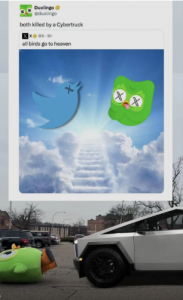
Instagzam: If It Ain’t Broke, Do We Fix It?

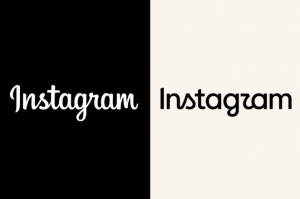
In August 2026, Instagram quietly refreshed its logo. Not the camera icon, that stayed put, just the cursive wordmark that’s been sitting under it for a decade. A small, low-stakes tweak, the kind of thing a design team probably spent months debating internally and expected zero people to notice.

The internet noticed. Within hours, the new lowercase “r” had fused visually with the “g” next to it, and half of social media was convinced the app now spelled its own name “Instagzam.” Then came “Instagwam.” Then “Instaguam,” for reasons nobody can fully explain. Adam Mosseri, who runs Instagram, called the change “cleaner and more modern” in a post announcing it, which is exactly the kind of sentence that ages badly within a day.

It’s a funny story on its own. But it’s also the latest entry in a much longer, much pettier genre: companies changing something nobody asked them to change, and the internet making them regret it. Sometimes the backlash is background noise. Sometimes it’s a warning shot the company should have listened to. The tricky part, and the actual subject of this piece, is that you often can’t tell which is which just by looking at how loud the mockery gets.
Why “Instagzam” Actually Happened

The typo-that-wasn’t-a-typo has a pretty simple explanation once you look at the letterforms side by side. The old wordmark kept its “r” and “g” visually distinct. The new one leans harder into a single continuous cursive stroke, and when the diagonal tail of the r rolls straight into the bowl of the g, your eye does what eyes do with ambiguous shapes: it reaches for the nearest thing it already recognises. For most people scrolling at arm’s length, that nearest thing is a z.

There’s a more interesting thread hiding underneath the joke, too. Plenty of the online commentary leaned into a “kids can’t read cursive anymore” narrative, and there’s a real, if messy, data point behind that instinct: cursive instruction has been quietly declining across the US, Canada, and parts of Europe for years, so the joke landed on a nerve that was already exposed.

That said, it’s worth resisting the tidy version of this story. Plenty of design critics pushed back on the idea that this is really a Gen Z literacy problem at all, pointing out that ambiguous, overlapping letterforms will trip up readers of any age when a wordmark prioritizes flourish over legibility. In other words, the logo didn’t get harder to read because young people forgot cursive. It got harder to read because it’s genuinely harder to read.

The “Why Touch It At All” Question

Here’s the thing about Instagram’s logo refresh, though. Once the jokes die down, it isn’t actually a big deal. The icon didn’t change. The colors didn’t change. Nobody’s grandmother is going to open the app store looking for the old one and fail to find it. It’s cosmetic, and cosmetic changes have a pretty forgiving safety net: if people hate it, you quietly revert a wordmark and nobody remembers it in six months.

Compare that to Jaguar. In late 2024, the car company didn’t refresh a logo, it gutted its entire brand identity, and it did so on purpose, as a personality transplant rather than a paint job. Jaguar had spent decades as the choice of, in the branding world’s own phrasing, a “masculine,” heritage-obsessed, largely British buyer who wanted a car that felt like old money. The rebrand deliberately walked away from all of it, chasing what Jaguar’s own leadership described as a “design-minded, cash-rich, time-poor” younger audience who’d never bought a Jaguar in their life. The teaser campaign that announced this shift didn’t show a single car, just models in colorful outfits standing in empty rooms, alongside a tagline, “Copy Nothing,” lifted from founder William Lyons. Even Elon Musk couldn’t resist asking the obvious question in public: “Do you sell cars?”

Here’s the part that makes Jaguar different from every other case study in this piece: the company didn’t stumble into alienating its base, it planned to. Jaguar’s own brand chief, Rawdon Glover, said upfront that the company expected to keep only 10 to 15% of its existing customers through the transition. That’s not a rebrand that miscalculated the backlash. That’s a rebrand that budgeted for it, on the theory that the old customer base was aging out anyway and the brand needed a completely new personality to survive its next century.

The market’s response wasn’t a meme cycle, it was a balance sheet. By April 2025, Jaguar’s European sales had dropped 97.5% year-on-year. Not a rough quarter. A near-total collapse. Some of that decline is genuinely a supply story rather than a demand one: Jaguar had deliberately paused production of its entire lineup ahead of the EV-only relaunch, so dealers had almost nothing left on the lot regardless of what anyone thought of the new ads. But that supply gap was itself part of the same personality transplant, the company cleared out its old identity, old products and old customers all at once, betting that a new luxury audience would show up before the old one finished walking out the door. Jaguar’s leadership didn’t exactly treat any of this as a crisis, either: one executive argued that people were talking about the brand more than they had in years, so from where he sat, there’s no such thing as bad publicity. Whether “everyone is talking about how we disappeared” counts as a marketing win is a question I’ll let you sit with.

The gap between Instagram and Jaguar is really the whole thesis of this piece in miniature. One touched the letters. The other rewrote its entire personality and dared its own customers to leave. Getting mocked online happened in both cases. The actual consequences did not look remotely the same, and worth flagging now: Jaguar hasn’t reversed course, but “didn’t reverse course” and “it worked” are not the same claim, a distinction we’re going to keep coming back to.

The Reversal Club: Gap

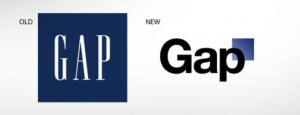
If you want the platonic ideal of a rebrand nobody asked for, Gap’s 2010 logo change is still the gold standard, fifteen years later. The company swapped its classic, boxy wordmark for a generic sans-serif logo with a small blue gradient square floating off to the side, the kind of design you’d expect from a mid-tier tech startup, not a mall retailer with decades of brand equity.

The backlash was immediate and, honestly, kind of impressive in its speed. A parody Twitter account appeared almost instantly. A site literally called “Craplogo” let anyone generate their own version of the new mark as a joke. Gap even tried to save face by crowdsourcing a replacement design from the public, which also failed. The whole saga coincided with roughly $247 million in stock value lost, though that figure lines up with a disappointing sales report Gap put out around the same time, so the logo wasn’t necessarily carrying that number alone.

The logo lasted six days.

Here’s the detail that makes this story worth telling, though, and the one I think gets lost in the “haha, Gap panicked” retelling: an Ipsos poll conducted just three days after the launch found that 80% of respondents hadn’t even noticed the logo had changed. Read that again. The backlash was loud, fast, and expensive, and the vast majority of Gap’s actual customer base had no idea anything was different. The reversal wasn’t really a response to broad customer sentiment. It was a response to a very loud, very online minority who happened to have the internet’s full attention that week.
The “Ignore It And It Works Out” Club: Airbnb

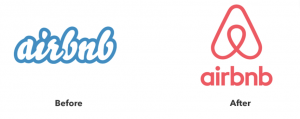
Airbnb’s 2014 rebrand got roasted just as hard as Gap’s, maybe harder. The new logo, a looping symbol the company called the “Bélo,” was widely mocked online for looking like body parts that had absolutely nothing to do with vacation rentals. It became an instant punchline, complete with the requisite wave of parody images.

Airbnb did not revert it. Not after six days, not after six months, not ever. Rick Barrack, chief creative officer at the brand agency CBX, told Fortune at the time that the outrage would go away very quickly, and that Airbnb should stay the course rather than react to it. That’s exactly what happened. The Bélo is still Airbnb’s logo today, over a decade later, and most people who use the app couldn’t tell you the internet ever found it hilarious.

This is the case study that should make you slightly uncomfortable with the “always listen to your customers” instinct, because here, listening to the loudest reaction would have been the wrong move. Airbnb didn’t have Gap’s problem, either: nothing about the new logo asked people to relearn how to find or use the product, it was purely a symbol sitting next to a name that hadn’t changed. The backlash was real, it just wasn’t about anything that mattered to the business.
X: The Rebrand That Didn’t Mark the Spot

And then there’s the rebrand that makes Instagram’s font tweak look positively cautious by comparison.

In July 2023, Twitter became X. Gone was the bird. Gone was the name. Gone, within a couple of years, was any pretense that this had been a strategic branding decision rather than an announcement of ownership. Twitter hadn’t just built a product, it had built one of the small handful of brand names that became a verb in everyday use. We tweet the way we google something or uber home from a bar. “Tweet” made it into Merriam-Webster in 2011. That is about as high as brand equity gets, and it’s exactly what got thrown out.

Years later, the numbers make it pretty clear the new name never actually landed. A 2024 survey of British adults found that 70% still called the platform “Twitter,” compared with just 4% who said “X.” Even among people who used X daily, 78% defaulted to the old name. This wasn’t early-adopter lag that would smooth out with time. It held steady well past the one-year mark.

Then came the detail that really seals it: X Corp itself later filed a lawsuit to protect the Twitter trademark when a separate startup tried to claim it. Buried in that legal filing was the company essentially admitting, in writing, that Twitter never actually left and remained exclusively its own property. So the company that spent millions ripping the old branding off its own headquarters ended up in court defending its right to keep owning the name it had supposedly discarded.

Why didn’t this one stick, when Airbnb’s arguably weirder logo did? A few things were working against it at once. First, verb-brands are uniquely hard to dislodge, because you’re not just asking people to recognise a new logo, you’re asking millions of people to change how they talk. Second, the motive read as obviously personal rather than customer-facing. Where Instagram and even Jaguar at least gestured at a rationale about modernising for their audience, the X rebrand was widely understood as Elon Musk marking new territory, not addressing an actual user complaint. And third, there was no transition period. No “X, formerly Twitter” phase-in to let habit catch up with the branding. Just an overnight switch, followed by years of the world quietly refusing to follow along.

Plotting It All Out

Line these five stories up and a pattern starts to emerge that has nothing to do with how much mockery a company received, because every single one of them got mocked. What actually separates them is two different questions, and it’s worth being precise about which one you’re asking: how deep the change went, and whether the company kept it. Notice that’s not the same question as whether the change actually worked.

Kept Reverted / Never Adopted
Cosmetic change Instagram Gap
Total overhaul Jaguar, Airbnb X


Instagram and Gap both made surface-level changes and both got mocked, yet one was a total non-event and the other triggered a corporate reversal in under a week. Gap, notably, reverted a change that 80% of its own customers hadn’t even clocked, which tells you the decision to revert was about managing a loud news cycle, not about actual damage.

Jaguar and Airbnb both blew up their entire identities, got mocked just as hard, and both companies kept the new branding rather than backing down. But don’t let “kept” do more work than it’s earned here, because these two outcomes look nothing alike once you check on them a year later. Airbnb’s logo quietly became invisible in the best way, nobody thinks about it anymore, which is exactly what a successful rebrand looks like. Jaguar’s logo is still on the cars, and European sales are still down 97.5% year-on-year. One company held its nerve and won. The other held its nerve and is still losing money. “We didn’t reverse course” was true in both cases and meant something completely different each time.

X sits in its own corner: a total overhaul the company also never reversed, technically, X Corp is still X Corp, but one the public simply never adopted. Years later, most people still call it Twitter, and the company itself ended up in court defending a trademark on the name it supposedly buried. That’s a third distinct failure mode: not reverted, not embraced, just quietly ignored by the exact people it was rebranded for.

So “did they keep it” tells you almost nothing about whether the change worked. If backlash volume were the thing that predicted outcomes, these cells wouldn’t be scattered like this, and if “they kept it” were the thing that predicted success, Jaguar and Airbnb wouldn’t be sitting in the same box while pointing in opposite directions. What actually seems to matter is whether the change touches something the audience was genuinely relying on: a near-identical shape they navigate by habit, like Gap’s near-invisible swap, or an entire vocabulary built around a verb, like Twitter’s. Cosmetic tweaks and even bold total overhauls can survive a rough launch week just fine, as long as they don’t ask people to unlearn something they already know by heart. But “surviving the launch week” and “the rebrand actually working” are, as Jaguar proves, two entirely different scorecards.

The Actual Lesson For Marketers

None of this is really an argument for never changing anything, or for changing everything and hoping for the best. It’s an argument for asking a better question before you panic over a mentions spike.

A few worth asking before you decide whether the backlash means anything:

Is this actually showing up in usage or sales data, or only in sentiment and mentions? Gap’s stock took a real hit, but that was driven by media coverage of the backlash itself, not by shoppers actually abandoning the store, which the Ipsos number makes pretty clear.

Is the criticism about the design, or about what the design represents? Jaguar’s ads not featuring a car at all is a substance complaint, not a taste complaint, and substance complaints tend to matter more.

Does the change ask your audience to unlearn something? A shape they navigate by muscle memory, a name they use as a verb, a habit built over a decade. If yes, you’re playing a much riskier game than a font tweak, no matter how confident the internal pitch deck sounds.

And maybe most usefully: has anyone actually checked whether the loud reaction represents your customer base, or just the segment of it currently online and typing? Gap’s answer was 80% of people who hadn’t noticed a thing. It’s worth finding your own version of that number before you decide the internet has spoken.

Instagram’s wordmark will probably be forgotten within a month. Jaguar’s ad campaign will get taught in marketing classes for the wrong reasons for years. And X, all these years later, is still fighting in court for the name it tried so hard to bury. Turns out the hardest part of a rebrand was never the design. It’s figuring out whether anyone actually wanted it fixed in the first place.
The End of Keywords? How AI Assistants Will Replace Search Ads

You’re late for a meeting, and you desperately need a coffee. Do you meticulously type “best-rated independent coffee shop near me open now” into a search bar? Or do you simply ask your phone, “Hey, where can I get a great coffee, like, right now?” and trust the friendly voice to guide you?

Welcome to the age of instant answers. We’ve outsourced our impatience to AI assistants like Gemini, ChatGPT, and Claude. We want information served up on a silver platter — quick, clear, and without the tedious effort of actually searching. This shift in human behavior isn’t just changing how we find a good latte; it’s sending shockwaves through the world of paid advertising. As AI-powered answers become the norm, the familiar ground of keyword bidding is starting to feel a lot less stable. For us Paid Search Managers, this isn’t a distant threat; it’s the new reality knocking at our office door. But is it an apocalypse or an opportunity? Let’s find out.

Part 1: The good old days of keyword herding and its limits

Remember when our lives revolved around Excel sheets filled with thousands of keywords? We were digital librarians, meticulously curating lists of broad, phrase, and exact match terms. We obsessed over every “KTV Karaoke in Soho” and “best nude matte lipstick“, believing that with enough granularity, we could capture every possible user query. It was a game of precision, control, and endless A/B testing of ad copy. 

But let’s be honest, it was a flawed system. 

This manual approach had its limits:

  • The long-tail blind spot: We could never keep up with the sheer volume of unique, conversational search queries. As Google has noted for years, 15% of queries every day are new searches they’ve never seen before. This manual, keyword-first approach meant we were constantly missing a growing segment of user intent.
  • The intent guessing game: A keyword is just a clue, not the full story. We were constantly trying to infer the user’s true intent, and often getting it wrong.
  • The burnout: The sheer effort of managing these sprawling campaigns was immense. It was a reactive, often exhausting, process of plugging leaks in a dam that was constantly springing new ones.

We were playing checkers while our users started playing 3D chess with their search behavior.

Part 2: The AI tsunami and the challenges it brings

Enter the AI revolution. Platforms are no longer just matching words; they’re interpreting intent. With assistants like Copilot in Microsoft Advertising and Gemini powering Google’s ad stack, the game has fundamentally changed.

In Google’s ecosystem, this shift is most visible in two key areas: Performance Max and the recent upgrades to standard Search campaigns with AI Max for Search. This isn’t a new campaign type, but an optimisation layer that infuses traditional Search with PMax-style AI. The engine behind this, Gemini, can now understand long, complex queries and match ads based on inferred intent, not just keyword syntax, to improve two main things:

  1. Search term matching: It moves beyond keyword syntax to match your ads to queries based on the inferred intent of the user.
  2. Asset optimisation: It dynamically customises your ad copy and can even expand your final URL to a more relevant landing page on your site.

This presents several challenges:

  • Shrinking visibility & plummeting CTRs: The most immediate impact is the rise of the “zero-click” search. AI overviews answer user questions directly on the SERP, meaning there’s less reason to click. Studies show this can reduce click-through rates by 8 to 12 percentage points, a staggering 20–40% relative drop. Ads are simply being seen and clicked less.
  • The great ad placement shuffle: Ads are being pushed around. As Google’s AI Overviews prioritise direct answers, ads are often relegated below the fold, especially for longer, more descriptive queries. The top spot isn’t what it used to be.
  • The CPC paradox: While CTRs may fall, the clicks we do get are often from users with higher intent who didn’t get their full answer from the AI. This leads to better-qualified traffic, but also more intense competition and higher cost-per-click for those valuable top spots.
  • From keywords to “intent layers”: As Google Ads Product Liaison Ginny Marvin explained, keywords are now just one of many signals. The system’s ability to understand a user’s goal makes our granular keyword lists less and less effective. The AI is now the one making the connection between a query and an ad.
  • The black box problem: With AI making more decisions about ad serving and asset combination — especially in PMax, which runs across all of Google’s channels — there’s a growing sense of opacity. We provide the ingredients (assets, landing pages, audience signals), but the AI is the chef, and it doesn’t always share its recipe.

The ground has shifted from “gaming the system” with keywords to genuinely “being the best answer” for a user’s underlying need. The impact isn’t uniform. The auto industry sees volatility as AI tries to answer complex, feature-based queries. Meanwhile, sectors like legal and finance face a direct threat as AI becomes capable of answering complex informational questions, potentially disintermediating them entirely.

Part 3: Ride the wave with key strategies to embrace AI in PPC

Fearing AI is like being angry at the tide. It’s coming, whether we like it or not. The good news is, we can learn to surf. Here are the key strategies to not just survive, but thrive in the age of AI-powered paid search.

Strategy 1: Feed the machine (the AI-Max approach)

The first strategy is to embrace the tools the platforms give you. The advantage of AI-Max is its ability to expand your reach and find new pockets of relevant customers you might have missed, all while (ideally) maintaining your CPA or ROAS goals. It takes the manual labor out of chasing the long tail.

However, its primary limitation is that it’s only as good as the ingredients you provide. If your creative assets are weak or your landing pages are not well-optimised, the AI has little to work with. It automates the matching, but it doesn’t solve the foundational challenge of creating highly relevant, granular ad variations at scale. For businesses with vast inventories or complex service offerings, this can still be a major hurdle.

Here are the key steps to succeed:

  • Leverage Broad Match & Smart Bidding: This is non-negotiable. Use Google’s automation to your advantage. Trust that modern Broad Match, paired with a ROAS or tCPA bidding strategy, is far more intelligent at identifying relevant traffic than manually curated keyword lists.
  • Focus on high-intent keywords: Lean into queries where AI is less likely to provide a complete, satisfying answer. These are often commercial-intent keywords that signal a user is ready to buy, book, or sign up, rather than just researching.
  • Build richer ads: In a more crowded, visually dynamic space, your ads must work harder. Use rich ad extensions — sitelinks, images, callouts, structured snippets — to provide more information at a glance and maximise your SERP real estate.

AI is only as smart as the data it’s given. Your new job is to be a master purveyor of high-quality “ingredients.” For Lead Gen, focus on assets and conversion data (with Enhanced Conversion for Leads); Without this, the AI might just optimise for cheap form fills. For Retail, a flawless product feed is your best asset! Use lifestyle imagery and focus on ROAS to tell the AI to find customers who not only buy, but who spend more.

Strategy 2: Own the Machine (The AdMachina Solution)

What if, instead of just feeding the machine, you could command an entire factory? This is where technology like AdMachina, a proprietary AI solution from Making Science, comes into play.

As explained in the article “AdMachina, the AI that creates and optimises Google Ads campaigns“, AdMachina is not just an optimisation layer; it’s a campaign generation engine. It connects directly to a business’s data sources — be it a product feed, an internal API, or a CRM — and uses that data to automatically create, manage, and optimise thousands of hyper-granular ad groups and ads.

How it works and its advantages:

  • Hyper-granularity at scale: AdMachina builds campaigns with a one-to-one structure: one keyword, one ad, one landing page. This achieves maximum Quality Score and relevance, a feat that is impossible to do manually for thousands of products or services.
  • Real-time synchronisation: If a product’s price or stock changes, AdMachina automatically updates the ad copy or pauses the ad group. This eliminates wasted ad spend on out-of-stock items and ensures ad compliance.
  • Control and transparency: Unlike the “black box” nature of some AI tools, AdMachina provides full transparency. The campaigns it builds are visible and fully under your control within your Google Ads account. You see exactly what’s being created.

While any business can benefit from automation, the perfect profile for AdMachina is an advertiser with complexity and scale. For such businesses, AdMachina turns a massive operational challenge into a powerful competitive advantage:

  • Large e-commerce & retail: Businesses with thousands of SKUs, where manual campaign creation is impossible.
  • Travel & Real Estate: Companies with constantly changing inventory (flights, hotels, properties).
  • Classifieds & marketplaces: Platforms that need to generate ads for thousands of individual user-generated listings.

The limitation? AdMachina requires a structured data source to work its magic. It’s not a fit for a small local business with five services. But for businesses whose data is their lifeblood, it turns a massive operational challenge into a powerful competitive advantage.

Conclusion

The end of keywords is not the end of paid search. It’s a transformation. It marks the end of the PPC mechanic and the rise of the PPC strategist. Our role is evolving from repetitive manual tasks to a more strategic, holistic function focused on understanding the customer journey, creating high-value content, and feeding the AI the best possible data.

AI is not here to take our jobs; it’s here to take our boring tasks. By embracing this change, we can free ourselves from the tyranny of the keyword list and focus on what truly matters: delivering value to our audience and driving better results for our businesses. So, take a deep breath. The future of search is not something to be feared — it’s something to be built.

Frequently Asked (and feared) Questions


  • Will I lose all control over my campaigns?

You’ll lose granular control but gain strategic influence. Instead of micromanaging keywords, you’ll be guiding the AI by providing the best possible assets, landing pages, and business data. Your control shifts from the “how” to the “what” and “why.”

  • How do I compete if my ads are pushed below AI Overviews?

The goal is to be cited within the AI Overview. This happens when your content is deemed authoritative and directly answers the user’s question. Furthermore, Google has confirmed that ads are a core part of this new experience and will continue to appear in various slots within and around AI Overviews.

  • Is Broad Match still a budget-killer?

Not like it used to be. Modern Broad Match, combined with smart bidding and powered by models like Gemini, is far more sophisticated. It’s less about syntactic matches and more about understanding the user’s ultimate goal, leading to more relevant, albeit sometimes unexpected, query matches.

  • How can I ensure AI optimises for lead quality, not just quantity?

Data is your best friend. As Google’s official guidance states, the more high-quality conversion data you share, the better. By implementing full-funnel conversion tracking, assigning values to different types of conversions (a “demo request” is more valuable than a “newsletter signup“), and feeding this data back into the ad platforms, you teach the AI what a high-quality lead looks like.

  • If AI Max and Performance Max overlap, which one wins?

The ad with the highest Ad Rank wins. Google’s system will select the ad — whether from a Search or PMax campaign — that it predicts will be most relevant and performant for that specific auction. You can use brand settings to keep your branded search traffic separate if needed.

Threads Ads Go Global: What Paid Social Marketers Need to Know

A New Placement, A New Opportunity

On January 21st, 2026, Meta announced that ads on Threads would be expanding to all users globally, marking the full monetisation of a platform that has quietly become one of the most significant new advertising channels in years. For paid social marketers, this isn’t just another placement toggle in Ads Manager. It’s the opening of a 400-million-strong audience that, until now, has been largely untouched by advertising.

The rollout is gradual. Meta has stated that ad delivery will initially remain low as global availability scales over the coming months. But for brands and agencies already running Meta campaigns, the time to start thinking about Threads is now.

How Threads Ads Work

If you’re already advertising across Meta’s ecosystem, Threads ads will feel familiar. The placement sits within Meta Ads Manager alongside Facebook, Instagram, and WhatsApp, meaning there’s no separate platform to learn or budget to ringfence.

Here are the key details for advertisers:

  • Formats: Image ads, video ads, carousel ads, Advantage+ catalog ads, and app ads are all supported. The 4:5 aspect ratio, already a staple of Instagram feed advertising, is also available on Threads.
  • Campaign setup: The Threads feed placement is switched on by default for new campaigns using Advantage+ or manual placements. Advertisers can opt out via manual placements if preferred.
  • Account requirements: Your Threads and Instagram usernames must match in order to run ads or manage Threads account permissions in Meta Business Suite.
  • Management: Threads accounts can now be reviewed and managed within Business Settings alongside your other Meta properties, simplifying cross-platform campaign management.

In practice, this means existing Meta advertisers can extend their reach to Threads with minimal additional effort. Your current creative assets, audience strategies, and reporting workflows all carry over.

Why Threads Matters: The Numbers Behind the Platform

Threads has experienced remarkable growth since its July 2023 launch. The platform reached 200 million monthly active users by mid-2024, grew to 320 million by January 2025, and now sits at over 400 million. For context, CEO Mark Zuckerberg has stated his belief that Threads has a realistic path to one billion users within the next few years.

Perhaps more importantly for advertisers, Threads is now outperforming its closest rival in key metrics. According to Similarweb data from January 2026, Threads recorded 141.5 million daily active mobile users globally, compared to 125 million for X (formerly Twitter). Meanwhile, a Buffer analysis of 10.2 million posts found that Threads drives a median engagement rate of 6.25%, compared to 3.6% on X. That’s a 73.6% difference.

These aren’t vanity metrics. Higher engagement rates suggest a more attentive, interactive user base, exactly the kind of environment where paid content has the potential to resonate rather than be scrolled past.

Brand Safety: A Competitive Advantage

One area where Threads has moved quickly to reassure advertisers is brand safety. Meta has extended third-party verification, already available on Facebook and Instagram feeds and Reels, to the Threads feed through its Meta Business Partners programme. Verification partners including DoubleVerify, Integral Ad Science (IAS), and Scope3 now provide independent brand safety and suitability reporting for Threads placements, with Zefr support expected in a future update.

These partners use AI-driven analysis to assess the context in which ads appear, providing advertisers with safety and suitability scores, content examples, associated risk levels, and impression-level data.

It is worth noting that Meta received MRC accreditation for content-level brand safety on Facebook and Instagram feeds in June 2025 but subsequently withdrew from the MRC’s annual auditing program in September 2025, resulting in that accreditation being revoked. Meta has stated that it wants the MRC to prioritise third-party brand safety audits instead. This doesn’t affect the independent verification provided by DoubleVerify, IAS, and Scope3 on Threads, but it is a development advertisers should be aware of when assessing Meta’s brand safety posture more broadly.

That said, this is particularly relevant when you consider the challenges facing X, which has struggled with content moderation issues, including the proliferation of illegal deepfakes. For brands operating in regulated industries or those with strict brand safety requirements, Threads still offers a notably more controlled advertising environment backed by established third-party verification.

What We’d Recommend

As with any new placement, the smart approach is to test with intention rather than dive in blindly. Here’s how we’d suggest approaching Threads ads:

Start with Advantage+ inclusion. Since Threads is on by default for Advantage+ campaigns, let Meta’s algorithm determine how much of your budget it allocates to the placement. Monitor performance at the placement level to understand how Threads compares to Facebook and Instagram feeds.

Don’t create Threads-specific creative just yet. Your existing Meta assets will work. The supported formats and aspect ratios align closely with what you’re already producing for Instagram feed. Focus on monitoring performance before investing in bespoke Threads content.

Watch your CPMs closely. Early industry estimates suggest Threads CPMs are currently lower than those on established Meta placements, though official figures from Meta are not yet available. As ad load increases and more advertisers opt in, expect these to rise. There’s a genuine first-mover advantage for those who test early.

Consider the tone of the platform. Threads is conversational and text-first. While image and video ads are the available formats, the surrounding content is predominantly text-based discussion. Ads that feel native to this environment, less polished and more direct, may outperform heavily produced creative.

Keep brand safety front of mind. If you operate in a sector with strict compliance requirements, take advantage of the third-party verification tools available through DoubleVerify, IAS, and Scope3 to ensure your ads are appearing in appropriate contexts from day one.

The Bottom Line

The global rollout of Threads ads represents one of the most significant new paid social opportunities in recent memory. With 400 million monthly active users, engagement rates that outpace X, seamless integration into Meta’s existing ad infrastructure, and robust brand safety provisions, Threads is positioning itself as a serious consideration for any advertiser already investing in the Meta ecosystem.

The window of lower competition and favorable CPMs won’t last indefinitely. For brands and agencies looking to maximise efficiency and reach new audiences, now is the time to start testing.

To learn more about how your brand can make the most of Threads advertising, get in touch with our team of experts.

Brands Gone Wild | The Case for Embracing Chaos

The internet has always been a weird place. Brands, however, have only recently figured out that leaning into that weirdness might be their best marketing move yet. They’re threatening customers with cartoon owls, selling water under a death metal aesthetic, and building entire identities around not taking themselves seriously. It’s called “unhinged marketing” and for companies targeting Gen Z, it might just be the smartest move they can make.

The Pioneers: Brands That Did It First (and Best)

To understand why unhinged marketing works, it helps to look at the brands that wrote the playbook.

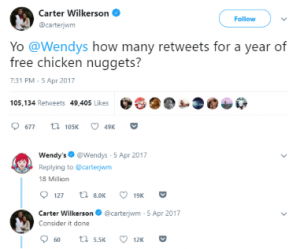
Wendy’s is widely credited with firing the starting gun. In January 2017, the brand ditched its standard corporate social media tone for something sharper and more combative, after recognising that younger audiences gravitated toward humor and authenticity on social platforms. What followed became legend: the #NuggsForCarter campaign, in which Wendy’s challenged a Twitter user to reach 18 million retweets for free chicken nuggets for a year, became the most retweeted tweet of all time until 2019, knocking Ellen DeGeneres’ famous Oscar selfie off the top spot, and attracting support from Apple Music and Microsoft. The financial results over that period were hard to argue with. Wendy’s net income rose from $129 million in 2016 to $194 million in 2017, though naturally a company’s bottom line reflects many factors beyond any single campaign. Their social following grew just as fast: Twitter followers climbed from 2.1 to 2.4 million in just six months. The social strategy had a simple internal logic: by eliminating the strenuous bureaucratic approval process for their Twitter account and empowering their social team, Wendy’s transformed the account from a one-way communication machine into something that felt genuinely alive. Turns out, letting your social media team actually be funny is a good business decision.

             Wendy's chicken nugget challenge Wendy's twitter post

Duolingo then took that blueprint and ran it somewhere far stranger. From the beginning, the brand’s owl mascot Duo had a unique social media presence, acting more as an influencer than merely a logo for a large corporation, becoming famous for an unhinged sense of humor and a knack for jumping on the latest trends. The whole thing culminated in February 2025 with one of the most audacious marketing stunts in recent memory. On February 11, Duolingo users found their familiar green owl mascot dead, tongue out, eyes replaced with cartoonish Xs, marking the start of one of the most bizarre and viral campaigns in the app’s 14-year history. The company released a series of mournful social media posts, including a video of Duo being fatally hit by a Tesla Cybertruck, followed by other Duolingo mascots holding his funeral and then being killed off too. Users were then directed to a website where completing language lessons could “bring Duo back.”

The numbers that followed were genuinely ridiculous. On the day of the announcement, mentions of Duolingo’s mascot spiked by around 25,560%, and the hashtag #ripduo was used more than 45,000 times. According to digital market intelligence firm Similarweb, global downloads on Android jumped 38% the day after the campaign launched and web searches increased by 58%. On iOS, it was the highest number of worldwide downloads for Duolingo all year. By the brand’s own account, news outlets around the world published 450 articles about Duo’s death, 60% of which came from what Duolingo defines as top-tier publications, making it a bigger earned media moment than Duolingo’s own 2021 IPO.

And before anyone calls it a happy accident: Duolingo’s spokesperson confirmed to NPR that “at its core, this campaign was about engaging our community in a way that only Duolingo can, by making entertaining content that reminds our fans to do their lesson.” Marketing professor Matt Williams, a former CEO of the Martin Agency, assessed it plainly: “By using the Owl’s resurrection as an incentive for more users to do their lessons, Duolingo spiked engagement with their product. And they did it in a way that’s completely consistent with the Owl’s character. That’s a win for the business and the brand.”

duolingo death

Why Gen Z Demands Something Different

The stakes for reaching Gen Z have never been higher. According to Bank of America projections cited by EMARKETER, the generation’s global spending power is set to grow from $2.7 trillion in 2024 to $12.6 trillion by 2030, making them the most consequential consumer cohort marketers have ever faced, if those estimates prove accurate.

Getting their attention through traditional advertising, though, is a lost cause. Gen Z is most likely, compared to every other generation, to use social media for product discovery, and being product-centric is one of the attributes they care about least in brand posts. The hard sell doesn’t just fail to work. It actively puts them off.

What they want instead is to be entertained. Marketers need to prioritise content that entertains and makes audiences feel seen, with products integrated into the story as relevant.

The Platforms Shaping the Chaos

Knowing where Gen Z actually spends its time matters here. According to Sprout Social’s 2025 Index, 89% of Gen Z social media users are on Instagram, 84% on YouTube, and 82% on TikTok, and Gen Z consumers report TikTok is their favourite channel for product discovery, closely followed by Instagram.

These platforms reward spontaneity, humour, and native internet fluency. A brand posting polished corporate content gets scrolled past in seconds. A brand posting something genuinely strange gets shared to group chats.

Sprout Social’s Q4 2024 Pulse Survey found that 48% of Gen Z consumers plan to make more purchases through social media in 2025 than in 2024, with TikTok Shop leading the way. Social media is no longer just a discovery channel. It’s the storefront. Which means the content living there needs to work harder than ever.

What the Research Says About Gen Z and Authenticity

Academic research backs up what marketers are learning the hard way. A 2025 paper published on SSRN synthesises industry reports and brand case studies to identify authenticity, short-form video content, and purpose-driven branding as the dominant forces reshaping how brands engage with Gen Z.

Authenticity is the key word. Gen Z values authenticity and community, often using platforms like TikTok and Instagram to express themselves and discover new products. User-generated content and micro-influencers with niche, engaged audiences consistently outperform polished campaigns, because they feel real.

Unhinged marketing, at its best, taps directly into this. The chaos is a signal: we’re not performing a brand, we’re just here. Whether that’s genuine or a very sophisticated performance of genuineness is, perhaps, beside the point.

The Risk Calculus

None of this means every brand should immediately start faking the death of a beloved mascot. The strategy demands a real understanding of your audience, consistency of voice, and a tolerance for risk that not every organisation has. Gen Z is a cynical generation and they can spot a brand awkwardly attempting internet culture from miles away. The backlash, when it comes, is swift and merciless.

Sprout Social’s Q1 2024 Pulse Survey found that 57% of Gen Z took a social media detox in 2023, and 63% planned to in 2024, the highest rate of any generation. A cohort that is simultaneously the most active on social media and the most likely to log off is one that demands brands earn their attention rather than assume it.

The brands winning with chaos aren’t simply being random. They’re being precisely, strategically weird in ways that resonate with a generation that grew up fluent in memes, irony, and the particular humour of the internet. Getting that right is less a creative accident than a discipline. And as Gen Z’s spending power keeps growing, it’s a discipline that brands can no longer afford to ignore.

Be Human. Actually Human.

Here’s the thing that all the data, case studies, and marketing frameworks eventually point back to: people want to talk to people. Not brand accounts. Not corporate entities carefully managed by a committee of seventeen. People.

Wendy’s didn’t go viral because they had a bigger budget than McDonald’s. They went viral because someone, somewhere in their organisation, was given permission to be genuinely funny online and trusted to pull it off. Duolingo didn’t dominate the cultural conversation around the Super Bowl by buying an ad slot. They did it by killing a cartoon owl in a Tesla Cybertruck and making millions of people feel something about it. Industry observers noted at the time that the key was engaging audiences as active participants, not passive viewers. A principle that sounds obvious until you look at how few brands actually manage it.

That distinction matters more than any tactic, trend, or platform strategy. Nearly 40% of Gen Z consumers trust influencers more than they did a year ago, and Gen Z is more likely than any other age group to say that influencer content has the most impact on their decision to buy a new product. What they’re actually responding to isn’t influencers specifically. It’s the feeling of being spoken to by a real person, with a real perspective, who actually understands their world.

The brands that get this right aren’t asking “how do we go viral?” They’re asking something much harder: “who are we, and do we actually know who our audience is?” The unhinged stuff only works when it’s rooted in a genuine understanding of the community around a brand. Without that foundation, it’s just noise. Expensive, cringeworthy noise that ends up getting screenshotted and mocked in the very group chats you were trying to reach.

So no, you probably don’t need to fake the death of your mascot next quarter. But you might want to start by asking whether your social media could pass the most basic test of all: would a real person, scrolling on their lunch break, stop and actually care? If the honest answer is no, no amount of chaos will fix it. The good news is that the bar for feeling human online is, somehow, still remarkably low. The brands willing to clear it are the ones writing the next chapter of this story. The ones that aren’t will keep boosting posts and wondering why nobody’s listening.


The Death of the Control: Why Meta’s Andromeda is Killing the Standard A/B Test

Meta’s launch of the Andromeda retrieval algorithm has fundamentally altered the mechanics of the ad auction. For years, as marketers we relied on a “standard” test-and-learn process—changing one variable at a time—to find winners and optimise our ad creative. But in 2026, this slow, methodical approach is often the very thing preventing brands from scaling.

This blog post explores why traditional A/B testing is struggling to keep up with Meta’s new AI-driven reality.

In the world of digital marketing, the “Scientific Method” has long been our North Star. We were taught to isolate variables: one headline, one image, one audience. Change just one thing, and find the one optimal combination.

But as we move through 2026, that one optimal combination is becoming harder to find. With the full rollout of Meta’s Andromeda retrieval algorithm, the very nature of how ads are delivered has changed. We are no longer testing ads in a static environment; we are feeding a high-speed prediction engine that thrives on creative variety, not isolated volume.

What is Andromeda? The 10,000x Shift

Andromeda isn’t just a minor update; it’s a massive upgrade to Meta’s ads retrieval stage. Powered by NVIDIA’s GH200 chips, it is reportedly 100x faster at matching users to ads and can process 10,000x more ad variants in parallel than previous systems.

Previously, retrieval was a bottleneck. Meta had to narrow down millions of potential ads to a few dozen before truly “ranking” them for a user. Now, Andromeda allows the system to consider thousands of creative variations for every single person who opens Instagram or Facebook.

The Testing Paradox: Why Standard A/B Tests Fail

The “standard” test-and-learn process—changing only a headline or a single button color—is now too slow for three critical reasons:

  • The Problem of “Entity IDs”: Andromeda uses advanced computer vision to group similar-looking ads under a single Entity ID. If you test two ads with only minor tweaks, Meta’s AI may view them as the same asset and only give delivery to one, effectively “breaking” your fair test before it begins.
  • The Velocity of Trends: By the time a traditional 14-day A/B test concludes, the cultural trend or “hook” you were testing may have already peaked. Brands that win in 2026 are those that act like newsrooms, producing 50–100 ad variations per month rather than 5–10.
  • Forced Efficiency: When you run separate ad sets for a “fair” test, you fragment your budget and data signals. Andromeda performs best when it has a consolidated pool of budget to find the right person for the right creative in milliseconds.

Lean Into the Algorithm: From Testing to Discovery

Instead of trying to out-engineer the Meta algorithm with manual controls, modern marketers must pivot toward Creative Diversification.

Under the Andromeda framework, your content is your targeting. Each unique creative angle acts as a signal that pulls in a different audience segment.

To maximise results, you should lean on Meta’s automated features like Advantage+ Creative and Flexible Ad Formats. These tools allow Meta to automatically mix and match your headlines, descriptions, and media to find the combination that resonates with each specific individual.

In the Andromeda era, the goal has shifted from finding a single “optimum” ad to maintaining a state of complete creative variation. While we can still use historical performance data to identify winning themes—such as leaning into short, snappy headlines if they consistently drive volume—the key is to deploy those insights and iterate across diverse new concepts rather than simply duplicating a single winner.

The Bottom Line

The goal in 2026 is no longer to find a “winning ad” to scale indefinitely. It is to build a consistent creative pipeline that feeds Andromeda fresh signals every 7–14 days.

If we spend our time obsessing over a/b testing a single variable, we are underutilising an engine built for massive parallel processing. The goal is to stop testing for perfection and start testing for conceptual variety. Trust the algorithm to do the matching; our job is to give it the options it needs to win.

Why Google Can Now Target iOS Users Better Than Ever (Thanks to Apple)

For years, the narrative in digital marketing was simple: Apple’s App Tracking Transparency (ATT) had “blinded” Google and Meta. When the “Ask App Not to Track” prompt became the global standard, the industry assumed that the era of precision targeting on iPhones was dead.

Fast forward to February 2026, and the landscape has shifted in a way few predicted. Ironically, by forcing Google to abandon “lazy” tracking (cookies) and lean into “advanced” tracking (AI), Apple has inadvertently helped Google build a targeting engine that is more resilient, more predictive, and—most importantly—more profitable than ever before.

Here is how Google turned Apple’s privacy walls into a competitive advantage.

  1. The Gemini-Siri Integration: The Ultimate Intent Signal

The biggest plot twist of the decade occurred when Apple integrated Google’s Gemini 3 into the core of Siri. While Apple maintains its “Private Cloud Compute” to mask individual identities, the sheer volume of Intent Data flowing through this partnership is unprecedented.

When a user asks Siri to “find the best running shoes for flat feet,” Gemini processes that request. Even without knowing “John Smith” by name, Google’s AI models can now map the nuanced intent of the iOS user base in real-time. This allows Google to optimise its Search and Shopping ads with a level of context that old-school tracking pixels could never dream of.

  1. The “On-Device” Attribution Loophole

Google has successfully implemented On-Device Conversion Measurement for iOS. This technology is a masterclass in “Privacy-Preserving Computation.”

How it works: Instead of sending a user’s data to Google’s servers to see if they bought a product, the data stays on the iPhone.

The Result: The device itself matches the ad click to the purchase and sends a simple “success” signal back to Google.

The Benefit: Google gets the Attribution Data it needs to prove ROI to advertisers, while technically adhering to Apple’s rules because no “personal data” ever leaves the device

  1. The Failure of Privacy Sandbox and the Rise of “Modeled Data”

By 2025, Google’s “Privacy Sandbox” proved that the industry wasn’t ready to let go of cookies entirely. While Apple blocked third-party cookies in Safari, Google spent that time perfecting AI Modeling.

Today, Google doesn’t need to “see” every Apple iOS user to target them. Its AI uses Predictive Modeling—taking the behavior of the “visible” users (those who opt-in) and projecting those patterns onto the “invisible” users. In 2026, these models have become so accurate that Target ROAS (Return on Ad Spend) bidding on iOS is now nearly indistinguishable from Android in terms of performance.

  1. YouTube: The “Logged-In” Fortress

While Apple can restrict what happens between different apps, it has much less power over what happens inside a logged-in ecosystem.

Most iPhone users stay permanently logged into the YouTube app. This creates a “First-Party Data” goldmine. Because YouTube is a “destination” app, Google can track every search, view, and engagement within that walled garden. Advertisers are now shifting their iOS budgets away from the open web (Safari) and into YouTube Shorts and In-Stream ads, where Google’s targeting remains surgically precise.

The Bottom Line for Advertisers

The “Privacy Wars” didn’t kill targeting; they just made it more expensive and technical. Google’s survival instinct led them to build an AI-first infrastructure that actually thrives in a cookie-less, opt-in world.

If you’ve been holding back your iOS ad spend because of “tracking issues,” 2026 is the year to return. The data is back—it just looks a little different than it used to.

Paywalls and Privacy: Why Meta’s Subscription Model is a Wake-Up Call for Marketers

Navigating Meta’s New “Consent or Pay” Ecosystem in 2026.

For over a decade, the social media contract was simple: you give Meta your data, and they give you a free platform. But as of January this year, that all changes. In response to strict regulatory pressure from the European Union’s Digital Markets Act (DMA) and the UK’s Information Commissioner’s Office (ICO), Meta has officially rolled out its “Consent or Pay” model across Europe and the United Kingdom.

As marketers, this isn’t just a platform update but a seismic shift in how we reach our audiences. If you’ve seen the new pop-up prompts on your own device, you will know that users will now be more aware than ever of how much of their privacy they are trading for ‘free’ access.

1. How the Opt-Out System Works

The system currently differs slightly between the UK and the EU due to different regulatory landscapes.

In the United Kingdom: Following guidance from the ICO, Meta offers a binary choice to ensure consent is “freely given”:

  • Ad-Supported Tier: Users continue for free but must agree to Meta using their information across accounts for personalised ads and tracking via cookies.
  • Ad-Free Subscription: For a monthly fee—starting at £2.99 on web or £3.99 on mobile—users can opt out of all ads and tracking for advertising purposes.

In the European Union (EEA): To satisfy more stringent DMA requirements, Meta introduced a third “middle ground” option in January 2026:

  • Less Personalised Ads: Users can choose a free experience that uses significantly less data. These ads are based on limited context (like age, gender, and current location) rather than deep behavioral tracking.
  • Reduced Pricing: Meta slashed EU subscription prices by 40% in late 2025, dropping web fees from €9.99 to €5.99/month to make the choice feel more “fair” to regulators.

2. How This Affects the Advertising Ecosystem

This new era of choice creates several immediate “ripple effects” for brands and digital agencies.

The “Luxury Privacy” Gap

One of the most significant concerns is audience shrinkage. Data suggests that high-income, tech-savvy, and privacy-conscious users are the most likely to pay for ad-free experiences. For luxury, finance, and premium travel brands, this means a significant portion of their most valuable target audience may become invisible to traditional paid campaigns on Meta.

CPM Inflation

Economics dictates that when supply (ad slots/audience) drops and demand remains high, prices rise. As more users move to ad-free tiers or “less personalised” tiers and therefore fewer available impressions, advertisers may expect a steady climb in CPM.

Measurement “Darkness”

Attribution is becoming increasingly complex. When users opt for less personalisation, the conversion matching between an ad click and a purchase becomes harder to track. This makes retargeting and lower funnel marketing harder than ever. As granular cross-platform tracking fades, advertisers must move away from “last-click” dependency and embrace Marketing Mix Modeling (MMM) to illuminate the true impact of their spend.

3. Strategic Pivots: Success in the 2026 Landscape

To continue to thrive independent of this change, we recommend careful consideration of the following:

  • Lean into the Meta algorithm: allow it to continue to find the most valuable users for your brand amongst the “opted-in” users.
  • Diversifying the Retargeting Mix: Multi-channel agility is no longer a luxury; it is a necessity. If a significant portion of your site traffic has opted in to Meta’s ad-free tier, those users become “invisible” to traditional social retargeting. To prevent your top-of-funnel investment from evaporating, you must establish secondary conversion bridges. Consider Programmatic Display and YouTube retargeting to maintain signal continuity. By diversifying your retargeting channels, you ensure that high-intent prospects who have paid for privacy on one platform don’t drop out of your ecosystem entirely.
  • While Meta is leading the charge into the “Consent or Pay” era, other major platforms like TikTok and Snapchat represent a strategic opportunity to maximise your in-market audience. As of early 2026, these platforms have not yet broadly implemented similar monthly subscription fees to opt out of ads, meaning their “signal continuity” remains more intact for a larger portion of their user base.
  • Organic Content is No Longer Optional: Since paid ads cannot reach all subscribers, your organic presence is essential and could be the only way to stay in their feeds. 
  • The Power of Influencers: Creators and micro-influencers act as a “backdoor” to ad-free users. A subscriber won’t see your Sponsored Post, but they will see a Reel or Story from a creator they follow voluntarily.

The Bottom Line

Meta’s rollout of the “Consent or Pay” model marks a fundamental shift in the digital landscape, turning user privacy into a premium service across the UK and EU. To thrive in this new ecosystem, marketers must remain agile, trust the Meta algorithm, and consider putting some budget behind influencer advertising. As well as this, a varied and vast media mix becomes essential for effective targeting and remarketing – especially for industries like luxury, finance, and travel.

To learn more about how your brand can thrive in this new ad-world, get in touch with our team of experts.

[button color=”accent-color” hover_text_color_override=”#fff” size=”large” url=”www.makingscience.co.uk/contact” text=”Get in touch!” color_override=”#ff0067″]

Making Science Unveils ‘AWAKE’: The AI Venture Studio Industrialising Startup Creation and AI-First Innovative Solutions

  • The disruption generated by AI enables the acceleration and industrialisation of the creation of internal solutions and start-ups through centres of excellence in Chicago, Madrid and Tbilisi.
  • This model has already proven its commercial and innovative power through the acceleration of startups like ad-machina, which has multiplied its value by 10 since joining the Making Science ecosystem.

London, 23 December 2025 —  Making Science, the global digital acceleration consultancy, today announced the launch of AWAKE Venture Studio. This “AI-first” model represents a new era in systematic innovation, designed to identify, prototype, and scale both internal proprietary solutions and independent AI-native startups with global reach.

The launch of AWAKE is motivated by the significant efficiency gains of orders of magnitude that Making Science has already achieved through the internal integration of AI. By applying these methods, the firm has achieved a 2x acceleration in tech feature development reducing time in the deployment of AI Agents. This model has already proven its commercial and innovative power through the acceleration of startups like ad-machina, which has multiplied its value by 10 since joining the Making Science ecosystem. These proven benchmarks serve as the technical foundation for AWAKE’s two interconnected engines, which formalise this efficiency into a repeatable manufacturing process for innovation.

This process begins with AI Create, a discovery and validation engine that uses internal AI tools for trend monitoring and horizon scanning. Validated concepts then transition immediately into AI Forge, the building and scaling engine. AWAKE is built upon core pillars—AI-first thinking, Global Integration, and Shared Infrastructure—that work in tandem to eliminate the traditional frictions of the startup lifecycle. By prioritising opportunities where autonomous agents and foundational models provide a 10x competitive advantage, AWAKE ensures every project has an AI-native DNA. This is amplified by a global operational structure that leverages distributed technology hubs in Chicago, Madrid, and Tbilisi, ensuring that ventures are born with a global value proposition and access to international talent from day one. By utilising a centralised infrastructure backbone, AWAKE drastically reduces the time and resources required for launch, allowing talent to focus relentlessly on disruption and market leadership.


A Declaration of Intent for the AI Era

“AWAKE is more than a venture studio; it is a declaration of intent to industrialise the next generation of AI-native solutions,” said José Antonio Martínez Aguilar, CEO and Founder of Making Science. “We have already seen the impact of this model within our own walls. By establishing this repeatable engine, we are freeing entrepreneurial talent to focus relentlessly on scale. Whether we are forging a new internal tool or a global startup, Making Science’s expertise in data and AI is the backbone of that evolution.”

Attribution in the Privacy Era: How Predictive Models Close the Gap for CMOs?

Introduction: The Attribution Challenge in a Cookie-less World

In today’s dynamic digital marketing landscape, CMOs face a monumental challenge: how to measure the true impact of every marketing investment when user privacy is paramount? The post-cookie era has left a void, making it difficult to understand which channels and touchpoints truly drive conversions. This is where attribution becomes the indispensable compass. But how can we gain a clear, actionable view of attribution in an environment with increasingly strict data regulations? The answer lies in the adoption of advanced predictive models. This post will explore how these tools are redefining budget decision-making, allowing marketing leaders to optimise their strategies with confidence and precision.

The Problem with Traditional Attribution

For years, attribution relied on simplistic models like “last-click” or “first-click,” which failed to capture the complexity of the customer journey. These models, often dependent on third-party cookies, are now insufficient. The demise of cookies and growing privacy concerns have created a “privacy gap” that directly impacts CMOs’ ability to make informed decisions about their marketing budget allocation. Without a clear understanding of what drives performance, decisions become less strategic and more speculative, potentially leading to inefficient spending.

The Solution: Predictive Models and Machine Learning

The key to closing this gap lies in the power of predictive models and machine learning. These technologies allow for the analysis of large volumes of first-party and contextual data, identifying patterns and correlations that traditional methods cannot. By leveraging sophisticated algorithms, we can go beyond simple correlation to understand causation, assigning appropriate credit to each touchpoint in the customer journey, even in scenarios with limited or anonymised data. This not only improves the accuracy of attribution but also allows CMOs to anticipate trends and proactively optimise their campaigns.

Tangible Benefits for CMOs

For CMOs, implementing predictive models for attribution translates into tangible benefits:

  • Optimised Budget Decisions: By understanding the true ROI of each channel, CMOs can allocate their budgets more intelligently, maximising the impact of every dollar spent.
  • Improved Customer Experience: Accurate attribution allows for personalised interactions and more relevant messaging, enhancing the overall customer experience.
  • Privacy Compliance: These models are designed to operate with aggregated and anonymised data, ensuring compliance with privacy regulations like GDPR and CCPA.
  • Competitive Advantage: Companies that master predictive attribution will gain a significant advantage by being able to react faster to market changes and consumer preferences.

Conclusion: The Future of Attribution is Predictive

In summary, attribution in the privacy era is no longer an unsolved puzzle. Predictive models offer a clear roadmap for CMOs, enabling them to make informed and strategic budget decisions, even in an evolving data landscape. It’s time to move beyond guesswork and embrace the power of artificial intelligence to unveil the true impact of your marketing efforts.

Are you ready to transform your attribution strategy and take your marketing to the next level? Share your thoughts and experiences in the comments! Because as the famous marketing consultant said, “To measure is to know, but to predict is to master.”

Clickless Advertising: How to Measure What Isn’t Touched (and Why You Should Start Now)

How do you measure the success of a campaign if no one clicks? In the new cookieless era, the answer is not only possible but essential.

Clickless advertising has gone from being a rarity to a priority for brands focused on brand recognition, mass reach, and effectiveness in environments where the click simply doesn’t exist. With the rise of channels like YouTube on Smart TVs, DOOH, digital audio, and CTV, it is time to move beyond models based solely on direct interaction.

In this post, we tell you what clickless advertising is, why it matters in 2025, and how you can measure it effectively with Google Marketing Platform (GMP) to demonstrate real results in campaigns where visual impact is worth more than the click.


What is Clickless Advertising and Why is It Gaining Ground?

Clickless advertising encompasses campaigns where the goal is not for the user to click, but for them to remember, recognize, and interact with the brand later on. This type of impact is generated in environments where direct interaction is not possible (or does not make sense):

  • YouTube on Connected TV
  • Spotify, podcasts, or programmatic audio
  • DOOH (Digital Out Of Home), such as digital billboards or screens in shopping centers
  • CTV (Connected TV)

With the progressive phasing out of third-party cookies and the increase in media consumption without a browser, measuring without clicks is no longer an option—it is a necessity.

According to Nielsen, 65% of offline sales are influenced by advertising without direct interaction.


GMP: Your Ally for Measuring What Cannot Be Clicked

The key is to adopt new measurement tools and methods based on aggregated data, modeling, and first-party data. This is where Google Marketing Platform shines as a comprehensive solution:

🎯 Campaign Manager 360: Measuring Impressions and Viewability CM360 allows you to track impressions, viewability, frequency, and cross-channel reach. It is the central hub for validating that your message has reached the right audience.

🧠 Google Analytics 4: Behavior After Exposure Even without clicks, GA4 helps analyze user behavior after viewing an ad: direct traffic, brand searches, completed forms, etc. Thanks to its advanced attribution models, it compensates for the lack of cookies and protects privacy.

🔗 Integrated Platform: GMP as an Ecosystem The combination of CM360 + GA4 + DV360 + SA360 allows for a holistic view of campaign performance, uniting awareness and performance metrics under one umbrella.


Strategies That Work (Even if No One Clicks)

🧪 Brand Lift and Brand Awareness Use studies like YouTube Brand Lift or post-exposure surveys to measure ad recall, consideration, or purchase intent.

🗺️ Geo-testing and Incrementality Compare exposed and unexposed regions with tools like GeoLift to evaluate the real impact on searches or sales.

👤 First-Party Data and Indirect Signals Analyze direct traffic, brand searches, and completed forms after exposure. Supplement with user panels or surveys.

🔒 Consent Mode v2 and Conversion Modeling Even without cookies, you can estimate conversions with modeling and platforms like Ads Data Hub, ensuring compliance with privacy regulations.


Real-Life Cases That Prove It

  • YouTube on CTV: Campaigns with a +20% brand recall, without clicks or calls to action.
  • Spotify Ads: Direct correlation between full ad listens and peaks in brand searches.
  • DOOH in shopping centers: Increase in store visits (footfall) and geolocated sales following campaigns without digital interaction.


Conclusion: Measuring Without Clicks Is Not Only Possible, It Is Essential

In a cookieless world with increasingly dispersed consumers, clickless advertising represents the natural evolution of digital marketing. It is no longer just about chasing interactions, but about understanding the real impact of the message on the user’s mind and decisions.

GMP gives you the tools to do this with precision, respect for privacy, and an omnichannel approach.

And you, are you ready to measure without relying on the click? If you want to know how to implement this type of measurement in your strategy, let’s talk. Because the future of marketing is not measured in clicks, but in connections.