ad-machina, the innovative AI technology from Making Science launches in Meta.

  • ad-machina uses generative AI to streamline the creation, activation, measurement, and optimization of creative assets at scale in Meta.
  • The tool incorporates new measurement, analytics, and optimization functionalities, closing the loop and optimization, closing the creative loop, and offering a 360° solution.
  • ad-machina integrates data from product catalogs and other key metrics to effectively provide up-to-date ads.
  • The platform offers automatic translation and adaptation of ads to different audiences, maximizing the global reach of your ads.


London, November 7, 2024—Making Science, a leading global digital transformation company, launches its innovative ad-machina technology for Meta. This end-to-end solution, designed to manage creative assets in advertising campaigns, allows companies to automatically create, activate, measure, and optimize their ads at scale using generative A– overcoming one of the main limitations companies face in today’s digital landscape.

In turn, ad-machina removes hurdles in traditional creative development by using generative AI by scaling advertising assets, including text, images, and video. This allows brands to automate the creative process of dynamic creatives, such as promotions, special offers, and featured products, automatically adapting them to user behavior and each company’s business interests. In this way, ads are not only more effective but also more profitable.

With this launch, ad-machina expands its analytics, measurement, and optimization capabilities, providing a complete solution for 360 creative management. The platform integrates key data from the brands’ product catalog and other internal indicators, such as profit margins and product category details, to keep ads up to date. In addition, ad-machina analyzes creative elements such as color or design and offers different insights into these aspects. The branding insights allow more accurate decisions to be made when creating new ads and ensuring that each element contributes to the campaign as a whole.

One of ad-machina’s most outstanding features is its ability to operate in multiple languages and adapt creatives to different markets and audiences by automatically translating ad elements. It allows brands to expand their global reach and impact.

“The ability to automate and personalize ad creation is crucial to optimize marketing campaigns. With ad-machina for Meta, we provide companies with a tool that allows them to create their creative assets and campaigns efficiently and in real-time while optimizing their advertising spend”, concludes Eduardo Sarciat, Managing Director of ad-machina at Making Science.

About Making Science

Making Science is a digital acceleration company with more than 1200 employees and a presence and technological development in 15 markets: Spain, Portugal, Mexico, Colombia, France, Italy, UK, Ireland, Sweden, Denmark, Norway, Finland, Germany, Georgia and USA. As a consulting partner of Local Planet, the world’s largest network of independent media agencies, Making Science offers digital, technology, and performance marketing services to an international audience. The areas in which Making Science operates are digital marketing and MarTech, software and cloud, and artificial intelligence and SaaS, with a firm commitment to innovation.

As part of its commitment to innovation, Making Science offers its clients the end-to-end capabilities required for consulting, development, integration, and maintenance of advanced IT solutions that offer maximum scalability, cost-effectiveness, and efficiency. In addition, it has a global network of delivery hubs that drive job creation and the availability of highly qualified technological talent for the development of projects that accelerate transformation and modernization.

Making Science participates in several ESG initiatives, including the Climate Pledge, the United Nations Global Compact and the Pledge1% initiative, supporting non-profit organizations in its community with a strong commitment that will have a great impact in the future.
Shopify Checkout Extensibility

Installing GTM on Shopify’s Checkout Extensibility


What’s happening?

Shopify has changed how its checkout manages third-party scripts. Historically Shopify ecommerce sites have used Checkout.liquid and added scripts to the code for measurement. However, Shopify is moving towards a new feature called Checkout Extensibility. To quote Shopify:

“In February 2023 we announced that checkout.liquid is deprecated, and that we’re moving to Checkout Extensibility, a new foundation for checkout that is more secure, performant, upgrade-safe, and customized using apps. Relying on obsolete checkout.liquid code past the deadlines below poses risks that may impact your business.”

Important Dates

August 13, 2024: Deadline to upgrade your Information, Shipping, and Payment pages. Automatic upgrades begin on January 6, 2025, and all checkout.liquid customizations for these pages will be lost.

August 28, 2025: Deadline to upgrade Thank you and Order status pages, including your apps using script tags and additional scripts.

Custom Pixels

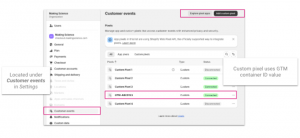
Checkout Extensibility forces Google Tag Manager (GTM) to be implemented in a custom pixel. These can be created in the Settings section of your Shopify Plus account.

Adding Google Tag Manager

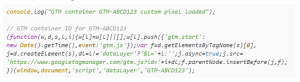
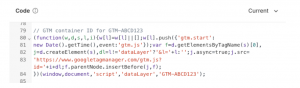
Firstly, copy the container snippet from GTM. Then to add the GTM container script to Shopify, select the ‘Add custom pixel’ button and past the code into the pixel.

Starting a custom pixel with console.log message will enable you to confirm the script is being loaded.

With that the foundation of GTM on Shopify is complete. We still need to cover a few topics to complete the setup.

  • Add Consent Mode
  • Enable debugging
  • Subscribe to events

Configure Consent Mode for GTM on Shopify’s Checkout Extensibility

One of the bigger challenges for Checkout Extensibility is configuring Consent Mode in GTM. For Consent Mode to work the values need to be sent within the custom pixel. Setting default values is easy enough, Consent Mode default values can be passed above the GTM container snippet. This is simple to do but implies the User’s consent is denied. Shopify’s official document sets granted as default – this is bad practice. The better approach is to set denied and then check for the user’s current consent state. To do this we need to accomplish two things:

  1. Set consent as denied
  2. Retrieve the user’s consent
  3. Set the Consent Mode consent update functionality

Set Default Consent Mode Status

Set the default Consent Mode status, this is placed above the GTM script. Adjust the settings to suit your operating requirements.

Retrieve User’s Consent Status

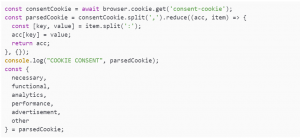
The user’s consent status can be retrieved from a cookie, it must be in a cookie. Shopify’s sandbox environment means that Consent Management Platforms (CMPs) using localStorage cannot be read. Secondly the cookie value must be sent to the domain, rather than each subdomain. The consent cookie should be set to .example.com rather than www.example.com.

With this in place the consent can be retrieved from within the custom pixel.

Update Consent Mode Status

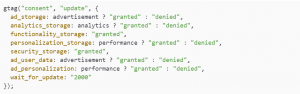
Having retrieved the consent values from the cookie, the final step of the consent process can be completed and the Consent Mode gtag update values can be set.

With the GTM script already in place, it is now possible to check that Consent Mode is working correctly by reviewing the console.log and checking the gcs parameter value in the GA4 network requests.

Configure an E-Commerce Datalayer for Shopify’s Checkout Extensibility

Part three of our Checkout Extensibility masterclass is to add the ecommerce object and dataLayer to our custom pixel GTM script.

How Shopify provides data

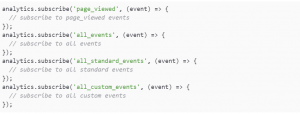
Shopify has an Analytics API that has a number of events that can be subscribed to. When first using the API, subscribing to all events is useful to see what fires and when during the checkout process. It is good to make a note of this for your internal analytics documentation.

Each Shopify event has a data object containing data about the event, the page, etc. It is good to review these to see how Shopify builds its data structure and the values that are being passed for products, etc. Adding a variable called shopify.data and logging it to the console.

The output of which will be in the console when each event fires.

Calling Events

Events can be set up in two ways. There is “the way” but having experienced problems with the purchase event in the past, there is also an alternative. The preferred approach is to request only the event you require.

The alternative is to request all events and then use an if function to work with the event you need.

Configuring Page Views

The checkout is a single-page application (SPA) – it doesn’t send page views itself and needs either History Change enabled or a page_view event to be sent to the dataLayer. Fortunately there is a page_viewed event that can be subscribed to via the API that also contains all the details needed to create your own page_view event.

This unfortunately leads to a mess as page_views during the checkout don’t necessarily match the displayed URL and are not useful for humans.

Creating your own page views

A useful approach to get a full picture of the checkout funnel and user journey is to write your own and send them with the checkout events. For example:

SHOPIFY EVENT GA4 EVENT PAGE PATH
checkout_started begin_checkout /checkout/begin
checkout_shipping_info_submitted add_shipping_info /checkout/shipping
payment_info_submitted add_payment_info /checkout/payment
checkout_completed purchase /checkout/thank-you

These can then be sent as part of each ecommerce event. The output will be 2 dataLayer pushes per ecommerce event – 1 sending the page view, 1 sending ecommerce data.

This will result in nice clean page_views appearing in your analytics account and be easy to understand for all users.

Locating Product Data

The first challenge when creating an ecommerce dataLayer in Checkout Extensibility is understanding the products object. This varies depending on the event that has been fired.They are split by:

  • collection_viewed
  • cart_viewed
  • Checkout events (checkout_started, purchase, etc.)

There is an element of sifting through the data to find the value you require but it is important to get a consistent ID for each step that can try each item together across the checkout process.

Shopify Event Item data location Notes
collection_viewed collection.productVariants
cart_viewed cart.lines Item data is split across different sections. cart.lines.merchandise.product contains product ID and name. Price is found under cart.lines.cost.totalAmount.amount
Checkout events checkout.lineItems Item data is stored under the variant. checkout.lineItems.variant.product. Price data is found item.variant.price.amount

Building a Products Array

The most efficient way to pull in products is to create a function that will map the products data to your liking. This is done outside of the analytics subscribe events and will then be called from each event. A function is needed for each source data type:

  • collection_viewed => createCollectionItemsArr
  • cart_viewed => createCartItemsArr
  • Checkout events => createCheckoutItemsArr

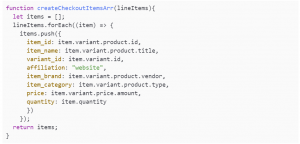
The function is just mapping existing data. Using a GA4 ecommerce dataLayer as the template, a checkout items function will look like:

The values for each variable will need updating for each function but the format will stay the same.

Using the Items Array Function in your Event

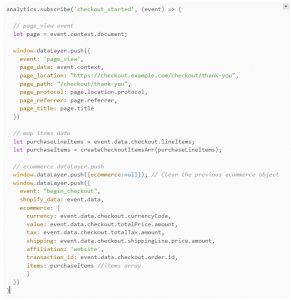
The final part is to call the items array as part of your function and map the remaining ecommerce attributes that are not item specific, e.g. currency, order_id, etc.

This will produce an analytics subscribe event that looks like:

Review the console logs, network requests and analytics data to confirm everything is being collected correctly.

Summary

Getting the Shopify Checkout Extensibility GTM pixel set up correctly can be a challenge. The key is to enable logging to make troubleshooting easier and remember the order of code snippets:

  • Consent Mode default values
  • Cookie consent values
  • Consent Mode update values
  • GTM container snippet
  • Items array functions
  • Analytics.subscribe events

Happy tagging!


Making Science launches two new solutions on Google Cloud Marketplace

  • Gauss Offline Data Connection generates up to 20% revenue growth through segmentation 
  • Gauss Dynamic Creatives enables the optimisation of resources through advanced campaign personalisation

Madrid, 15 October 2024 – Making Science, a leading global digital transformation company and a Google Cloud Premier Partner for the Sell, Service and Build engagement models,  announced that two of its innovative technologies, Gauss Offline Data Connection and Gauss Dynamic Creatives, are now available on Google Cloud Marketplace. These tools enable businesses to optimise the effectiveness of their advertising campaigns by connecting offline data and automatically personalising creatives.

Gauss Offline Data Connection is designed to help companies automatically integrate offline data, such as in-store sales, bookings, and visits, into leading digital marketing platforms. By connecting this data with their online campaigns, companies can gain a more complete view of the customer journey and optimise their campaigns in real-time. This approach provides more accurate and relevant targeting, translating into increased revenue of up to 20%.

In addition, Gauss Dynamic Creatives enables companies to create dynamically personalised ads at scale based on user behavior. As consumers interact with products and services online, the tool automatically tailors ad elements, such as prices and descriptions, to the user’s specific needs. This advanced personalisation not only improves click-through rate (CTR) and conversion rate but also strengthens brand awareness, allowing companies to reduce creative costs while optimising campaigns.

“With the availability of Gauss Offline Data Connection and Gauss Dynamic Creatives on Google Cloud Marketplace, we can offer businesses a complete solution that covers both offline data optimisation and large-scale creative personalisation,” said Eduardo Sarciat, Managing Director ad-machina at Making Science. “These tools maximise the return on advertising investment, optimise operational efficiency and significantly improve campaign results,” he adds.

Unifying offline data and dynamically personalised creatives allow companies to deliver more relevant ad experiences, driving both business results and user satisfaction.

“Bringing Making Science to Google Cloud Marketplace will help customers quickly deploy, manage, and grow the digital marketing solutions on Google Cloud’s trusted, global infrastructure,” said Dai Vu, Managing Director, Marketplace & ISV GTM Programs at Google Cloud. “Making Science can now securely scale and support customers on their digital transformation journeys.”

The addition of these new tools on Google Cloud Marketplace is a testament to Making Science’s relationship with Google Cloud. By combining Making Science’s digital marketing expertise with Google Cloud’s robust infrastructure, businesses can fully leverage the potential of their data and optimise their marketing campaigns efficiently.

About  Making Science

Making Science is a digital acceleration company with more than 1200 employees and a presence and technology development in 15 markets: Spain, Portugal, Mexico, Colombia, France, Italy, UK, Ireland, Sweden, Denmark, Norway, Finland, Germany, Georgia and USA. As a consulting partner of Local Planet, the world’s largest network of independent media agencies, Making Science offers services in digital marketing, Adtech and Martech, cloud technologies and software, and cybersecurity globally, through delivery hubs that drive job creation and the availability of highly skilled technology talent. 

Making Science is comprised of 4 business lines: the Global Digital Agency with Technology, with 360 digital advertising services that integrate strategic planning, creative, data and technology; the Cloud, Software and Cybersecurity business, with cloud-based solutions that deploy data intelligence and a dedicated cybersecurity team; the Artificial Intelligence and SaaS division, with more than 400 engineers and data scientists for the development of platforms and digital solutions with AI technology applied to marketing; and the Making Science Investment area, with Ventis and TMQ, as a line of business diversification and implementation of the capabilities of all areas of Making Science.  

In addition, the company participates in various ESG initiatives, including the Climate Pledge, the United Nations Global Compact and the Pledge1% initiative, supporting non-profit organisations in its community with a strong commitment to making a positive impact on the future.

Making Science

Mónica González, Marketing and Communication Manager – monica.gonzalez@makingscience.com T. 91 309 02 09

Making Science Communications Office

Victoria Blanc | vblanc@kreab.com | T. 635 590 319

Raúl de Pablos | rdepablos@kreab.com | T. 635 586 496

José Luis González | jlgonzalez@kreab.com | T. 661 850 384

Keyword Advertising and the Future of Social Commerce on TikTok

TikTok has revolutionized the way we consume content, so it’s no surprise that the platform is now taking the next step in digital marketing. With the launch of keyword advertising in the US, entirely new opportunities are opening up for brands to reach their target audience more directly and effectively.

TikTok has become a go-to search engine, and according to TikTok over half of its users are actively searching and more than 20% search for something within 30 seconds of opening the app. This feature lets brands connect with users at the exact moment they’re searching, tailoring ads to their specific needs. 

TikTok on mobile phone

What is Keyword Advertising on TikTok?

Keyword advertising on TikTok works similarly to traditional search engine advertising. When a user searches for a specific word or phrase on TikTok, your ad can appear at the top of the search results. This gives you a unique opportunity to reach users actively searching for products or services you offer.

By targeting specific keywords, you can reach a highly relevant audience that’s already interested in what you’re selling. Your ads will appear directly where users are searching, increasing their visibility and making them more likely to be clicked. With detailed performance metrics, you can easily track the success of your campaigns and make data-driven adjustments to your bids and messaging to reach different audiences and keywords.

Preparing for the Future

While keyword advertising is currently only available in the US, it’s important to start preparing now. Here are some tips:

  • Identify Relevant Keywords: What words and phrases do your target audience use to find products or services like yours?
  • Optimize Your Product Catalog: Ensure your product information is accurate, complete, and easy to find.
  • Create Engaging Content: Develop video content that is both informative, SEO-based, and entertaining to attract new customers.
  • Stay Updated: Keep up with the latest news and trends in TikTok marketing.

Full-Funnel Marketing on TikTok

To maximize your investment in TikTok, you should use a full-funnel strategy. This means combining different types of ads and content to reach users at all stages of the customer journey.

  • Awareness: Use broad audiences and engaging content to create awareness of your brand.
  • Consideration: Target specific audiences and use more informative content to show how your products or services solve customers’ problems.
  • Conversion: Use clear calls to action and create a seamless purchase process to drive conversions.
  • Loyalty: Build long-term relationships with your customers by creating loyalty programs and engaging them in conversations.

TikTok full-funnel marketing

Additionally, tracking needs to be in place to leverage your marketing efforts based on your data. Include server-side tracking for the most precise full-funnel marketing.

At Making Science, we have in-depth knowledge of TikTok and can help you with everything from developing a tailored TikTok strategy, create engaging content (either from scratch or based on content you already have), optimize your campaigns for maximum ROI to stay up-to-date with the latest trends. 

Contact us for more information on how you can seize the Q4 Opportunity on TikTok.

[button color=”accent-color” hover_text_color_override=”#fff” size=”large” url=”https://www.makingscience.co.uk/contact/” text=”Contact us!” color_override=”#ff0067″]

From listening to action: how brands can learn from their users

Spaniards spend an average of nearly two hours a day on social media*. But what exactly are we doing during that time?

For older generations like Gen X and Baby Boomers, social media is primarily a way to stay connected with friends and family. Meanwhile, Gen Z and Millennials are more likely to use these platforms to keep up with current events, engage with content like memes and videos, and create their own posts. While each generation has its own preferences, behaviors, and concerns, they all share one common trend: we are spending more and more time online.

For brands, understanding the audience is critical to ensure that marketing efforts reach the right people. In today’s fast-paced, ever-evolving digital landscape, simply reaching an audience is no longer enough—brands need to make an impact.

How can brands achieve this?

It’s not just about knowing who the audience is, but about understanding how to connect with them: what they enjoy, where they spend time online, what concerns them, and the communication styles they use.

To gain this insight, brands have access to powerful tools that help them analyze everything from a user’s age and profession to their daily habits and activities. Additionally, social listening platforms allow brands to track real-time user interactions and responses across social networks and digital channels.

But how can brands make the most of this information?

The answer lies in engaging with users where they are and tapping into conversations that resonate with their interests. This is a golden opportunity for brands to become more relevant by joining discussions that matter to their audience.

A key strategy is to adapt to the unique communication styles of each platform while maintaining the brand’s voice. For example, memes have become a staple of online culture, and tapping into their viral potential is an effective way to increase brand visibility—though it requires quick action, as trends rise and fall rapidly. Social listening tools can identify trending content, allowing brands to adjust their messaging and boost engagement by fostering a more active and personalized online community.

Speed is another essential factor. Reacting quickly to social media trends and events can amplify a brand’s impact. A prime example is “La Velada del Año,” the most-watched digital event on Twitch, which peaked at over 4 million viewers and proved that this platform isn’t just for niche audiences. With nearly half a million social media mentions, many brands, like Vicio, capitalized on the event by listening closely to what their audience wanted, breaking records for new followers and engagement.

In short, social listening not only helps brands understand user needs and preferences but also provides valuable insights for developing marketing strategies. It reveals how competitors are engaging with their audiences, uncovers user perceptions and demands, and highlights opportunities to join relevant conversations.

So, are you making the most of social media to build meaningful relationships with your target audience?

*Source: GWI Spain (16-64 years)

Making Science Appoints Marcus Cooper as Business Director, UK, Amidst Strategic Expansion Fuelled by SOPEF Funding

London, September 11 2024: Making Science, a leading digital acceleration company specialising in data, artificial intelligence and proprietary ad tech technologies, is pleased to announce the appointment of Marcus Cooper as the New Business Director, UK. The appointment comes at a pivotal time for the company, following the recent announcement of up to €40 million in investment from the SOPEF fund, underscoring Making Science’s determination to accelerate its growth and enhance its service offerings.

In this role, Cooper will oversee the company’s commercial strategy, consolidate strategic partnerships, drive revenue goals, and identify growth opportunities in the UK region. With an extensive background in sales and business development, he brings over 18 years of experience in scaling businesses and leading high-performance teams in the digital and technology sectors.

The recent SOPEF funding will be directed towards expanding Making Science’s subsidiary, Making Science Marketing & AdTech, enabling the company to deliver even greater value to its clients and continue the development of its proprietary technologies.

Commenting on the announcement, José Antonio Martínez Aguilar, CEO of Making Science, said, “The combined expertise of Marcus Cooper marks a new chapter in Making Science’s growth journey. With SOPEF’s substantial investment backing, we are well-positioned to expand our footprint and enhance our service offerings to clients worldwide. We are thrilled to have Marcus onboard to bring our commercial success in the UK to new heights.”

Cooper, who will be based in London, echoed the enthusiastic sentiment: ‘’It is an exciting time to be part of a company that is at the forefront of digital innovation. I am eager to work alongside a high-performing team and contribute to Making Science’s mission of helping businesses navigate and thrive in an increasingly digital world.”

Cooper’s appointment coincides with the addition of José Luis Pulpón as Managing Director for Making Science, Spain. A former Google executive, Pulpón brings long-standing expertise in the digital space, particularly in digital marketing and ad technology. His leadership is expected to bolster Making Science’s expansion across Europe.

These appointments further signal Making Science’s commitment to reinforcing its leadership team with seasoned professionals who can drive profitability and innovation. As the company continues to broaden its global footprint, these strategic hires will play a vital role in delivering on Making Science’s promise of cutting-edge digital transformation solutions for clients across industries.

About Making Science

Making Science is a digital acceleration company that currently has more than 1,200 employees and a presence and technological development in 15 markets: Spain, Portugal, Mexico, Colombia, France, Italy, UK, Ireland, Sweden, Denmark, Norway, Finland, Germany, Georgia and USA. As a consulting partner of Local Planet, the world’s largest network of independent media agencies, Making Science offers digital marketing, Adtech and Martech, cloud technologies and software, and cybersecurity services globally, through delivery hubs that drive job creation and the availability of highly skilled technology talent.

Making Science is composed of 4 business lines: the Global Digital Agency with Technology, with 360 digital advertising services that integrate strategic planning, creative, data and technology; the Cloud, Software and Cybersecurity business, with cloud-based solutions that deploy data intelligence and a specialised cybersecurity team; the Artificial Intelligence and SaaS division, with more than 400 engineers and data scientists for the development of platforms and digital solutions with AI technology applied to marketing; and the Making Science Investment area, with Ventis and TMQ, as a line of business diversification and implementation of the capabilities of all areas of Making Science.

In addition, the company participates in various ESG initiatives, including the Climate Pledge, the United Nations Global Compact and the Pledge1% initiative, supporting non-profit organisations in its community with a strong commitment to making a positive impact on the future.

Making Science, first company globally to pass Google Cloud EMEA’s Generative AI specialization process

  • This recognition highlights the company’s extensive experience in developing innovative Generative AI solutions through the Vertex AI platform.
  • A specialization that distinguishes Making Science for its ability to help its customers leverage the potential of generative AI to drive their businesses in EMEA.
  • Improved operational efficiency, increased user satisfaction or growth opportunities are some of the key benefits of the consultancy’s generative AI solutions.

London, September 5, 2024 – Making Science, a technology and digital marketing consultancy specialising in ecommerce and digital transformation, has been recognised as the first company worldwide to complete the process and achieve Generative AI services specialisation by Google Cloud in EMEA. This distinction recognises the company’s extensive experience in developing innovative Generative AI solutions through the Vertex AI platform along with a range of other AI-related services.

This certification distinguishes Making Science for its ability to help its clients harness the full potential that Generative AI can offer to drive their businesses forward. Through the Google Cloud’s unified development platform, Vertex AI, the consultancy firm creates customised and scalable solutions based on this technology. Among the main advantages of these tools, both entities highlight the improvement in operational efficiency, increased customer satisfaction and the unlocking of new growth opportunities with its use.

Among the company’s Artificial Intelligence applications that have been instrumental in obtaining this specialisation, Trust Generative AI stands out. This advanced machine learning platform offers a comprehensive and customisable solution designed to address data management and privacy in enterprise-scale content creation. Thus, Trust Generative AI has managed to improve the sales and positioning of companies belonging to the retail and ecommerce sector with increases of 8% in sales and a 43% improvement in visibility and web positioning. In addition, Trust Generative AI is positioned as a solution that improves efficiency in content creation processes with a 90% reduction in operational costs.

Another key solution has been its Conversational AI Agent applied to the real estate sector. This Generative Artificial Intelligence solution has managed to improve the real estate search experience thanks to its ability to understand and respond in natural language. Thanks to the Retrieval-Augmented Generation (RAG) technology, the virtual agent offers more relevant and personalised responses based on property inventory and location parameters from Google Maps, facilitating the search for real estate and improving the experience and revenue.

Álvaro Verdeja, COO Cloud, AI, Cybersecurity & Software Engineering en Making Science, adds: “One of our main priorities is to drive the growth of the companies we work with through innovative technologies such as generative Artificial Intelligence. By achieving this fifth specialisation, we are once again demonstrating that uniting our innovation with partners like Google Cloud is the key to continuing to improve the ecosystem in which our customers operate.”.

About  Making Science

Making Science is a digital acceleration company that currently has more than 1200 employees, with a presence and technological development in 15 markets: Spain, Portugal, Mexico, Colombia, France, Italy, UK, Ireland, Sweden, Denmark, Norway, Finland, Germany, Georgia and the USA. As a consulting partner of Local Planet – the world’s premier network of independent media agencies – we deliver a suite of digital marketing, Adtech, Martech, software and cloud solutions and cybersecurity services globally, through delivery hubs that foster job creation and the availability of highly skilled technology talent.

Making Science is composed of four business lines: the Global Digital Agency and Technology, with 360 digital advertising services that integrate strategic planning, creative, data and technology; the Cloud, Software and Cybersecurity business, with cloud-based solutions that deploy data intelligence and a specialised cybersecurity team; the Artificial Intelligence and SaaS division, with more than 400 engineers and data scientists for the development of platforms and digital solutions with AI technology applied to marketing; the Making Science Investment area, with Ventis and TMQ, as a line of business diversification and implementation of all of Making Science business capabilities.

In addition, the company participates in various ESG initiatives, including the Climate Pledge, the United Nations Global Compact and the Pledge1% initiative, supporting non-profit organisations in its community with a strong commitment to making a positive impact on the future.

Google Backpedals on Third-Party Cookie Deprecation: A Win for the Industry, a Focus on User Choice

Google has significantly shifted its approach to third-party cookies, opting to maintain their use while introducing a new framework prioritising user control. After years of delays and industry concerns, this decision marks a departure from the company’s plan to fully deprecate cookies. Read more about the official announcement from Google here: https://privacysandbox.com/news/privacy-sandbox-update/

The rationale behind Google’s decision is clear: they listened to industry concerns about cookie-free futures. By preserving cookies while introducing enhanced privacy controls, Google aims to strike a balance between protecting user data and maintaining a thriving digital advertising ecosystem.

The core of Google’s strategy is to empower users, as they intend to provide users with greater transparency and choice over how their data is used, allowing them to opt in or out of tracking. This approach could level the playing field, as both cookie-based and cookie-less solutions will have the opportunity to compete for user attention.

Even though details about Google’s proposed changes are still emerging, this announcement undoubtedly relieves the industry. Businesses will have more time to adapt and invest in alternative tracking technologies while also addressing privacy concerns.

Our US Nick Tiano, Chief Revenue Officer, expressed,

“I think with the steps Google took, they were clearly listening to regulators and the adtech industry. This pivot appears to be warranted and is a major commitment from Google to give users and adtech providers a choice on the matter of 3P cookies. Now the Sandbox and other privacy-forward solutions can compete on merit and user preferences (or opt outs) will dictate performance and ultimately what technologies win out, 3P cookies or alternatives.”

Ultimately, Google’s decision to maintain third-party cookies while emphasising user control represents a thoughtful compromise. It’s a move that could shape the future of digital advertising for years to come. Read more about Google’s decision here: https://www.thedrum.com/news/2024/01/04/marketers-publishers-brace-impact-1-third-party-chrome-cookies-vanish-today or get in touch with our experts.


[button color=”accent-color” hover_text_color_override=”#fff” size=”large” url=”www.makingscience.co.uk/contact” text=”Get in touch!” color_override=”#ff0067″]

Why Privacy Matters: The Advantages of Leveraging First-Party Data

In today’s digital age, privacy has become a cornerstone of consumer trust and brand integrity. As an agency, we understand that safeguarding user privacy is not just a regulatory obligation but a strategic advantage. This blog post explores why privacy matters and how leveraging first-party data can elevate your marketing strategies while fostering a trustworthy relationship with your audience.

The Importance of Privacy

Consumer Trust and Loyalty: Privacy is a significant concern for consumers. According to various studies, a majority of consumers are more likely to trust and stay loyal to brands that protect their personal information. When users feel confident that their data is secure, they are more willing to engage with your brand, share their preferences, and provide valuable insights to drive more personalised and effective marketing campaigns.

Regulatory Compliance: Privacy laws such as the GDPR in Europe and CCPA in California mandate stringent data protection measures. Non-compliance can result in hefty fines and damage to your brand’s reputation. By prioritising privacy, you not only avoid legal repercussions but also demonstrate your commitment to ethical business practices, which can be a competitive differentiator.

Brand Reputation: In the era of social media, news about data breaches or misuse of personal information spreads quickly. Such incidents can severely damage a brand’s reputation. By ensuring robust privacy measures, you can prevent potential breaches and maintain a positive public image.

Leveraging First-Party Data

First-party data refers to the information you collect directly from your audience through your own channels, such as your website, mobile app, social media, and email campaigns. Here are the advantages of leveraging first-party data:

Accuracy and Relevance: First-party data is collected directly from your audience, making it highly accurate and relevant. Unlike third-party data, which can be outdated or incorrect, first-party data provides real-time insights into your audience’s behaviours, preferences, and needs. This accuracy allows for more precise targeting and personalisation, leading to higher engagement and conversion rates.

Control and Ownership: When you collect first-party data, you have complete control over how it is gathered, stored, and used. This control ensures that you can maintain high data quality standards and comply with privacy regulations. It also eliminates dependency on third-party data providers, reducing the risk of data breaches and privacy violations.

Cost Efficiency: Relying on third-party data can be expensive. By focusing on first-party data, you can reduce data acquisition costs and invest more in strategies that enhance data collection from your own audience. This cost efficiency can significantly improve your marketing ROI.

Enhanced Customer Experience: First-party data allows you to create a seamless and personalised customer experience. By understanding your audience’s journey across different touchpoints, you can tailor your messaging, offers, and content to meet their specific needs. This personalisation not only enhances the customer experience but also increases satisfaction and loyalty.

In conclusion, privacy matters more than ever in today’s digital landscape. By prioritising privacy and leveraging first-party data, you can build a foundation of trust with your audience, ensure regulatory compliance, and enhance your marketing effectiveness. As an agency, we are committed to helping you navigate the complexities of data privacy and harness the power of first-party data to achieve your business goals. Let’s work together to create a privacy-first strategy that drives sustainable growth and lasting customer relationships.


[button color=”accent-color” hover_text_color_override=”#fff” size=”large” url=”https://www.makingscience.co.uk/contact/” text=”Contact us!” color_override=”#ff0067″]

Embracing First-Party Data: The Key to Digital Marketing Success

As we navigate through 2024, marketers face an increasingly complex challenge: effectively optimising first-party data (1PD) amidst the evolving landscape of third-party data (3PD). Once a cornerstone of digital marketing, 3PD is now undergoing a profound transformation. With tightening regulations, growing consumer demand for data privacy, and the deprecation of third-party cookies, the quality of external data is diminishing. This shift marks a critical turning point where 3PD is merely the icing on the cake, and 1PD becomes the essential base.

In this evolving landscape, brands must ask themselves how to secure a significant slice of the 1PD pie. Those who leverage innovative solutions to create more personalised, relevant experiences will drive higher returns on investment and gain a competitive edge.

The Rise of First-Party Data

Our expert report together with Performance Marketing World emphasises the importance of utilising artificial intelligence (AI), generative AI, and automated solutions to unlock the full potential of performance marketing campaigns. Alarmingly, many organisations currently adopt a passive 1PD strategy, opting to wait and see what others do. This approach, however, can be detrimental.

Rodney Perry, Head of Data & Analytics at Making Science UK, warns, “By doing nothing, brands’ marketing strategies are moving backwards, and the effectiveness of campaigns will decline. Embracing and understanding the impacts of 1PD early provides a competitive advantage.”

Implementing a Successful 1PD Strategy

A successful 1PD strategy hinges on implementing automated solutions that deliver personalised experiences to each user. In today’s economic climate, first-party data offers a massive opportunity for leading brands to solidify their market position and for challengers to gain market share. However, optimising and automating marketing campaigns using 1PD often requires expert support.

Partnering with an agency that combines marketing knowledge with innovative technology solutions is crucial. Advertising-first companies play a key role in building brand awareness, understanding customers, and adapting communication across channels. Their expertise in creating effective communication strategies, engaging content, and managing campaigns is invaluable.

The Power of Technology

Technology is the differentiator in the current market. At Making Science, the integration of adtech with advertising expertise allows for the full utilisation of technology, identifying limitations, and developing solutions to overcome them. This enables brands to analyse large volumes of data, generate insights, and create customised solutions that adapt to the changing needs of customers and partners, providing a comprehensive view of the digital ecosystem.

Digital campaign success relies on a smart 1PD strategy, which in turn relies on the collaboration between marketing expertise and advanced technology solutions, particularly AI and generative AI. Combining marketing and technology, Making Science aims to make investments more efficient, maximise the use of data, and gain a competitive advantage in the digital market.

Conclusion

In summary, the shift towards first-party data in 2024 presents both a challenge and an opportunity for marketers. Those who proactively implement automated, AI-driven solutions to optimise their 1PD will be better positioned to deliver personalised experiences, drive ROI, and secure a competitive edge. Embracing this change early is key to future-proofing digital marketing strategies and achieving long-term success.

Download our expert report together with Performance Marketing World to learn more about first-party data and how automated solutions can transform your performance marketing.

[button color=”accent-color” hover_text_color_override=”#fff” size=”large” url=”https://insight.performancemarketingworld.com/how-automated-solutions-can-transform-your-performance-marketing” text=”Download the expert report!” color_override=”#ff0067″]